
Could we handle another Hurricane Katrina in the midst of COVID-19?
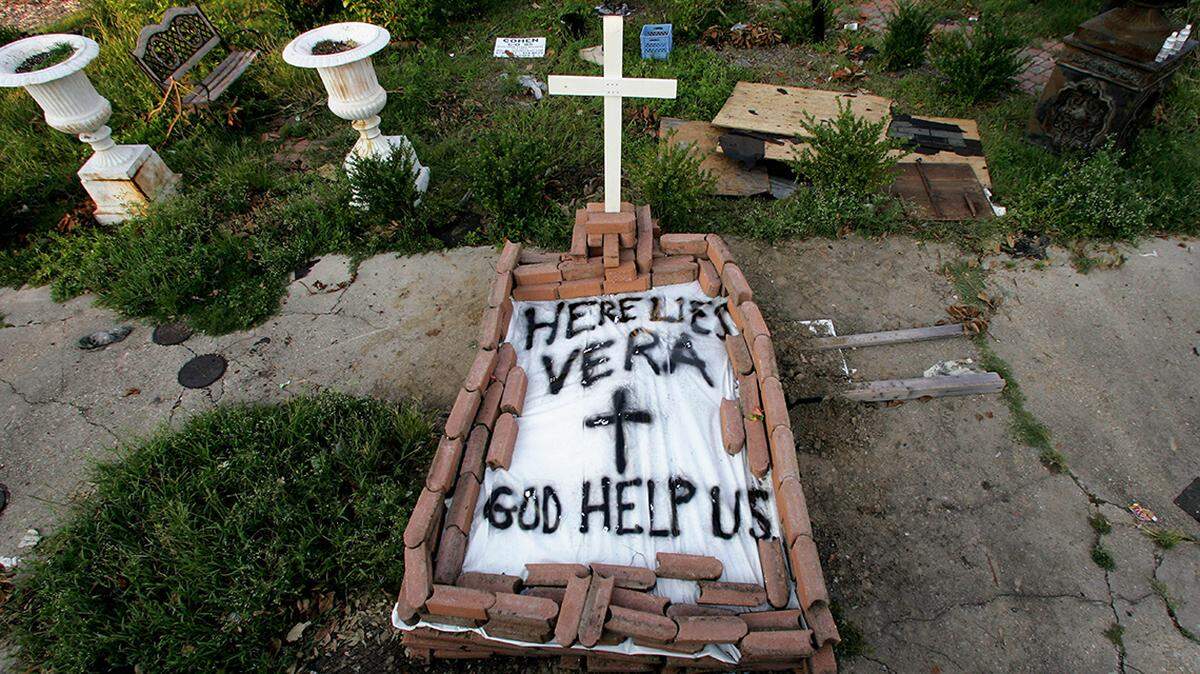
This weekend, a series of tornadoes ripped through South, killing at least 18 people. On Monday, 93 million Americans were under a tornado watch. Not only is this a tragedy, but it’s also a serious warning about what is to come.
We are currently experiencing one of the most extreme health care challenges in U.S. history. Every day, frontline medical workers are risking their lives as tens of thousands of Americans suffer from COVID-19, the disease caused by the novel coronavirus. For those of us who have spent our lives working in crisis response, there is a scenario you do not want to imagine, but must: A Category 5 hurricane hits a community as it grapples with a pandemic.
It’s a perfect storm for the huge loss of life that would bring our country to its knees.
Imagine if 10 to 12 weeks from now, a natural disaster strikes a coastal city in Alabama, Florida or Texas. The hospitals are full with COVID-19 patients and the Federal Emergency Management Agency issues an order to evacuate. The closest potential receiving hospitals are themselves too full to receive an influx of additional sick patients because of COVID-19. They are short on ward beds, intensive care unit rooms and ventilators.
Health care professionals responsible for evacuating the patients from the hurricane zone are placed in an impossible situation, with few good options. Those displaced are diverted to churches or school gymnasiums. Unfortunately, these large spaces facilitate the spread of the coronavirus and other infectious diseases, and create a greater need for the nonexistent hospital beds. With health care workers faced with no place for to rest between shifts, dwindling safety equipment and constant exposure to the virus, they become ill themselves.
We cannot sit by and let this happen to our best defense against COVID-19.
Hurricane season runs from June to November, peaking in September and overlapping with peak tornado season. Last month, the National Oceanic and Atmospheric Administration predicted that we will see three to four Hurricane Katrina-size storms in the Atlantic Ocean this year. Meanwhile, if the last few years were any indication, wildfires will likely dominate disaster relief resources in the western United States, where earthquakes are also a looming threat.
Under normal circumstances, we could anticipate that this would push FEMA and other agencies to their limits. However, our disaster preparedness and response this year are already consumed by a pandemic that is rapidly moving from cities to rural communities, and we have a health care infrastructure utterly stressed to its limit.
Health care professionals, epidemiologists and biomedical researchers are already in the midst of one of the greatest challenges of the modern era. We are scrambling to simultaneously slow the progression of COVID-19 nationwide, support those who are suffering with the illness and create therapies and a vaccine. Moreover, tens of thousands of frontline workers are exposed to great personal risk every day to protect our loved ones. Compounding the challenge, the U.S. pandemic response has been characterized by insufficient supply in all aspects: tests, face masks and other types of personal protective equipment, medications, hospital space, ventilators and workforce.
Almost 15 years ago, on the shores of Biloxi, Mississippi, construction-based nonprofits such as Architecture for Humanity assessed the damage caused by Katrina after it ravaged the Gulf Coast. For the next four years, these agile organizations collaborated and supported communities in “building back better” — recovering in ways to mitigate damage in future disasters. This one storm changed the way we look at disaster preparedness by forcing philanthropy and civic society to think about climate change and its impact on human need, and how to step in urgently to begin to fill that need.
However, we never envisioned what to do if there is already a disaster unfolding. This is a challenge on top of an impossible challenge — but we must either face it head on or resign ourselves to loss of life on an unthinkable scale.
The solutions are complex. We need centralized national coordination for resources so that we can simultaneously shift supplies to include disaster zones in parallel with COVID-19-related demand. We need to double down on pushing forward with technological innovations in health care, from telemedicine to 3D printing of devices. We need to stimulate the supply chain of tests, medicines and personal protective equipment through all possible means. We need to acknowledge the humanity of the people who make up our workforce, bolster their capacity and afford them space and time for the demands of this crisis.
Together, we are lead advisors for a multidisciplinary team at Jupe Health, one of many entrepreneurial social impact groups tackling this daunting challenge. Designed and built in Texas and California, Jupe Health rapidly deploys rest and sleep pods for medical professionals, mobile medical treatment and isolation units for patients, and fully off-grid intensive care units. These facilities are being built to be affordable, easily disinfected, flat packed and shipped in bulk. Moreover, they make up one example of American optimism and ingenuity in a time of crisis.
Our coalition works like many others that have emerged or pivoted in the last few weeks.: emergency room doctors up all night chatting with architects, critical care teams taking time between patients to jot down notes about what an in-the-field ICU room needs for space and electric vehicle engineers, modular housing experts connecting with ultrasonographers about remote diagnostics. Born out of cross-collaboration, Jupe Health is just one of many needed solutions beyond masks and face shields.
We must build solutions faster as we head into hurricane, tornado and fire season to be potential lifelines for areas hit simultaneously by pandemic and natural disaster. These incoming natural disasters could worsen the COVID-19 crisis, even as COVID-19 derails our existing natural disaster response. Frontline medical professionals and entrepreneurs are working as if lives depend on it. Because they do.
Esther Choo is the Chief Medical Advisor to Jupe Health. She is a practicing emergency medicine physician, co-founder of Equity Quotient and a health advocate. She writes a regular column in The Lancet focusing on health disparities and has appeared on CNN, MSNBC, #AspenHealthForAll ACTIVATE and TEDConnect speaking about the health care response to the COVID-19 pandemic.
Cameron Sinclair is the Chief Humanitarian Advisor to Jupe Health and CEO of Worldchanging Ventures. He was awarded the TED Prize for his work creating mobile health clinics in sub-Saharan Africa and community-centric housing solutions in areas of need. Recently, he led a coalition of humanitarian groups to implement rapidly deployable educational facilities for refugee children in Jordan.
This story was originally published April 14, 2020 at 3:00 AM with the headline "Could we handle another Hurricane Katrina in the midst of COVID-19?."