As La Niña fades, weather service issues spring forecast for Whatcom County
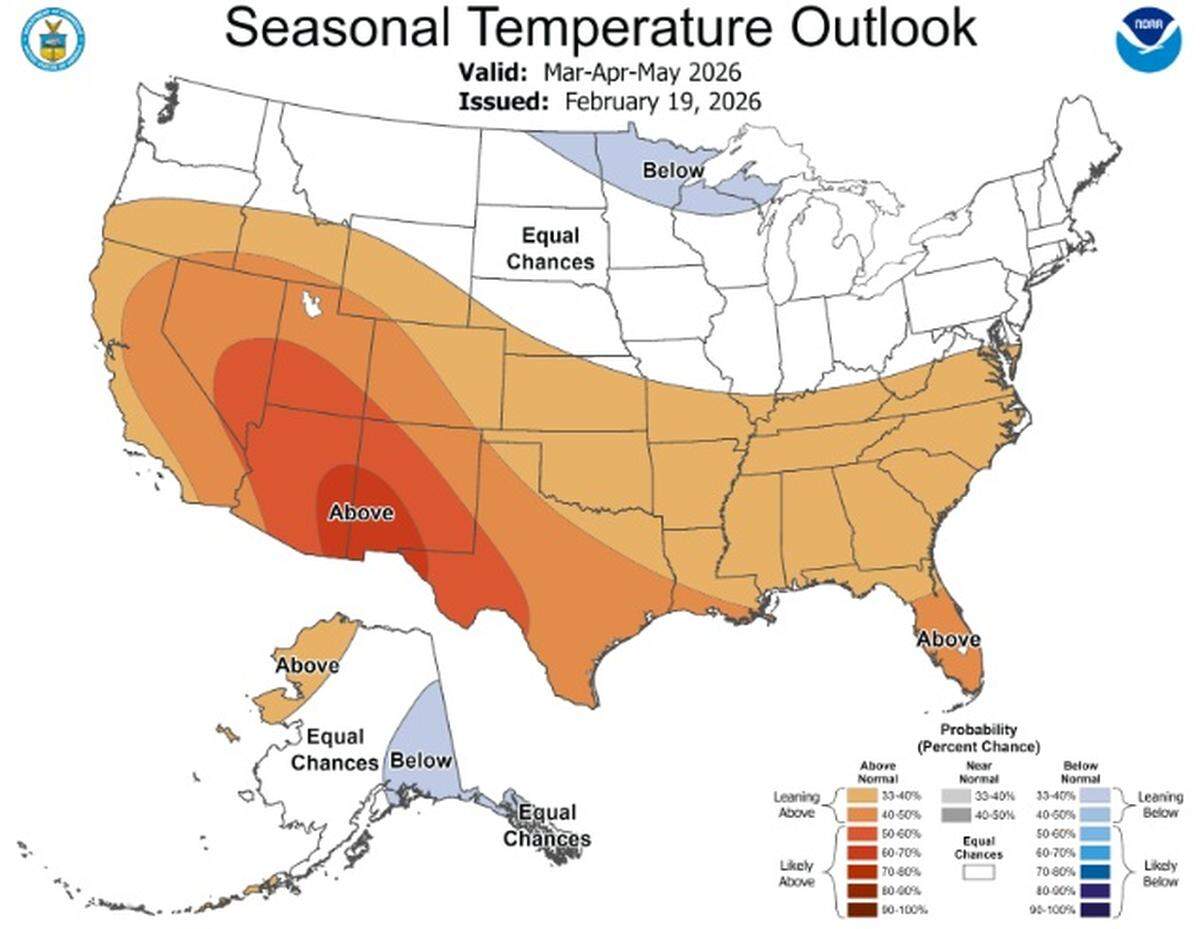
Spring in Western Washington could be close to normal in terms of temperature and rainfall, according to the National Weather Service’s long-range forecast issued Thursday.
La Niña, the seasonal pattern that brings cooler, wetter weather to the Northwest, is expected to slip into a neutral phase, according to the forecast for March through May, the months that meteorologists call spring.
That means average daytime highs of 53 degrees in March, 58 degrees in April and 66 degrees in May.
It could be a slow transition, however, because there’s of 60% chance that La Niña will linger into April, according to a Feb. 12 report from the Climate Prediction Center.
If that happens, it will be good news for the Nooksack River watershed because the mountain snowpack will have a chance to recover from an abnormally dry January. The “snow-water equivalent” in the Mount Baker area was at 87% of normal in January but had increased to 116% of normal by Feb. 20, according to data from the Natural Resource Conservation Service.
“Snowpack is of critical economic and ecological importance to Western communities. Consequential economic impacts have already occurred, especially for the recreation sector and the communities that rely on it. Water supply concerns continue to increase, impacting key economic sectors like agriculture, recreation, and energy,” according to a statement at a Feb. 11 webinar with the National Integrated Drought Information System.
If the snowpack drops again, or if an abnormally warm spring melts the snowpack too quickly, then Western Washington could remain in a drought and possibly see more wildfires, smoky skies and even water restrictions, deputy Washington state climatologist Karin Bumbaco said at the webinar.
“It still looks bad. We’re less likely to have some sort of miracle in making up our snowpack,” Bumbaco said.