So why did Sudden Valley see the worst of the storm while its neighbors were hardly affected aside from a few branches and short power outages?
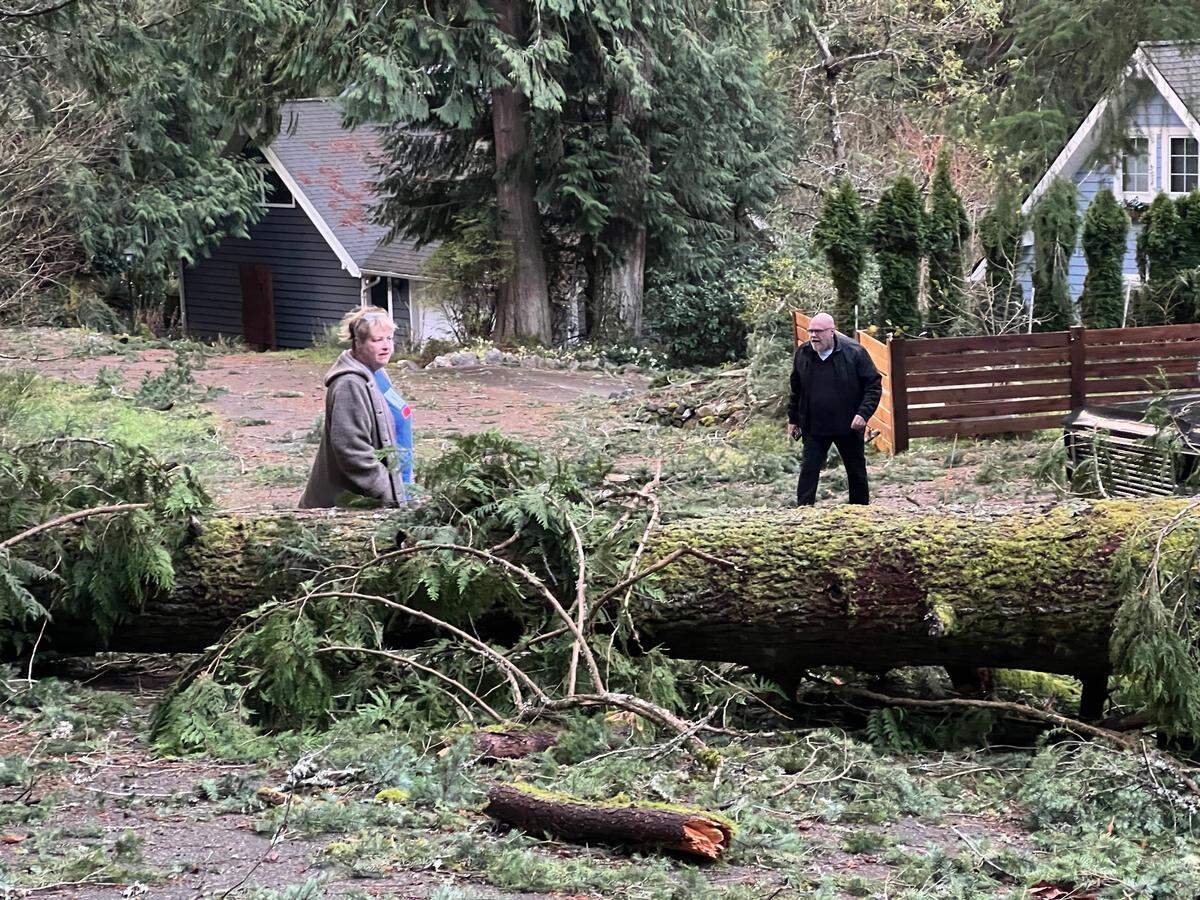
Neighbors on Sudden Valley Drive discuss the windstorm that devastated their community on Wednesday, Nov. 20 east of Bellingham, Wash. Robert Mittendorf The Bellingham Herald
Bomb cyclone brought winds from the east
“The key factor was the wind’s strength and direction — coming from the east, which is unusual,” Amy Cloud, public information office at Whatcom County’s Division of Emergency Management, told the Bellingham Herald in an email.
As a result, the winds built up as they came down the Cascade mountains and through gaps in the mountain range, according to Kayla Mazurkiewicz, a meteorologist with the National Weather Service in Seattle.
“Since we had the easterly winds, that wind’s coming off the Cascade foothills, so areas around there would be more affected,” Mazurkiewicz told the Herald in a phone interview.
Had the winds come from the west, Bellingham could have likely been hit harder, according to Mazurkiewicz.
“Usually we see, in typical wind events here, that we get more westerly wind. That may affect Bellingham just a little bit more, because all that wind kind of forms in the Strait of Juan de Fuca there,” Mazurkiewicz said.
Sudden Valley’s location just off of Lake Whatcom could have played a role as well.
“If I had to guess, maybe the open space — there’s nothing blocking it,” Mazurkiewicz said.
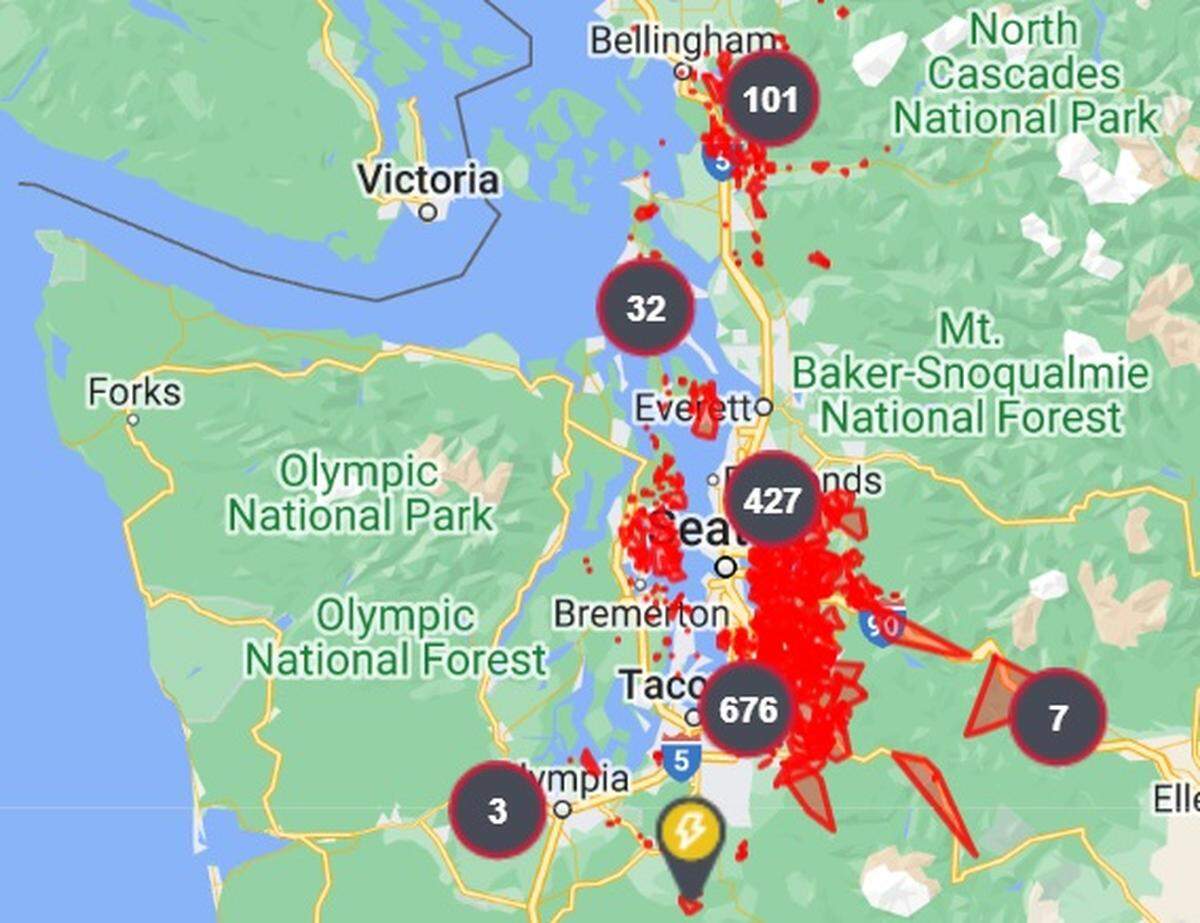
A Puget Sound Energy map shows power outages around the Puget Sound region early Wednesday, November 20. Puget Sound Energy Courtesy to The Bellingham Herald
Mountains saw strongest winds
The geographic factors working against Sudden Valley might not have played that big of a role. According to Mazurkiewicz, the highest wind speeds that NWS recorded in Whatcom County were registered in Kidney Creek in the mountainous eastern part of the county. But wind speeds measured in more coastal areas were only slightly lower.
“It looks like the place that we have the highest right now is Kidney Creek, with a 48 miles an hour gust,” Mazurkiewicz said. “Bellingham airport had an around 40 miles an hour gust. Ferndale, Boundary Bay, Kidney Creek had up to 40 miles per hour gusts there.”
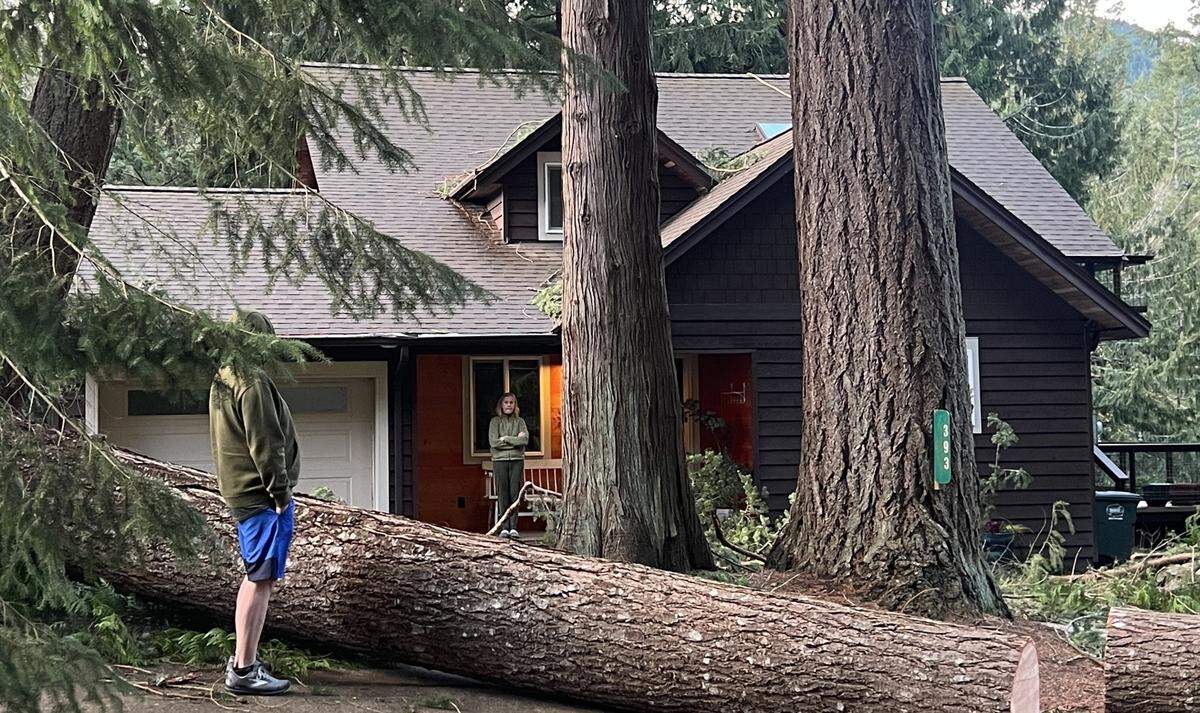
Bellingham residents examine a tree that fell across a road, severely damaging a home off Sudden Valley Drive. Robert Mittendorf The Bellingham Herald
East winds brought down untested trees
But even if the direction of the winds only made them slightly stronger in the eastern parts of Whatcom County, it still resulted in more damage. Since winds typically come from the west, weak trees that are vulnerable to winds from that direction have likely come down already, but trees vulnerable to winds from the east haven’t been tested much. With such strong winds suddenly blowing in from an unusual direction, several weak trees that are exposed to the east came down at once.
“These bomb cyclone winds arrived from the east, an unusual direction, which meant that the strong winds were hitting trees that hadn’t been tested much by prior winds,” Cloud said. “The more vulnerable trees came down as a result.”
The reason Sudden Valley was hit so hard, according to Cloud, could come down to the fact that it’s relatively dense with both trees and houses.
“Sudden Valley is hilly and dense with trees — as compared with urban and other rural areas around the county — and abuts Lake Whatcom,” Cloud said. “The Sudden Valley housing community, like the surrounding areas including Camp Firwood — further south on Lake Whatcom Boulevard, and also hard-hit — has a high number of tall trees, which had been mostly well protected during prior storms with winds from more typical directions.”
Daniel Schrager is the service journalism reporter at the Bellingham Herald. He joined the Herald in February of 2024 after graduating from Rice University in 2023.Support my work with a digital subscription