An Excessive Heat Watch has been issued for Whatcom this weekend, but how hot will it get?
If you haven’t invested in extra fans or a portable air conditioner or even a plane ticket to somewhere cooler, now would be the time to do so — the National Weather Service has officially placed Bellingham on “Record Watch.”
A tweet by the National Weather Service in Seattle listed Bellingham as one of five cities in Washington state likely to break record daily and monthly high temperatures this weekend and potentially even see all-time record heat, as it is predicting a “strong, multi-day heat wave in Western Washington.”
An Excessive Heat Watch already has been issued for Whatcom County from 2 p.m. Friday, June 25, until 5 p.m. Monday, June 28, meaning potentially “dangerously hot conditions.”
“In case you missed it ... this weekend it’s going to be ... hmmm what are all the synonyms for HOT you can come up with?” another tweet by the agency read.
For the record, the all-time hottest day in Bellingham, according to the tweet, was 96 degrees set July 29, 2009. The National Weather Service isn’t forecasting heat that high, yet, but the all-time records for June — 93 degrees recorded June 9, 1955 — is definitely in danger of being eclipsed more than once, as are daily records for Friday through Monday.
Here is what the latest forecast as of Wednesday morning is predicting for this weekend:
▪ Friday: Sunny with a high near 85 degrees and a low Friday night around 65. Bellingham’s record high for June 25 is 84 set in 2017.
▪ Saturday: Sunny with a high near 93 degrees and a low Saturday night around 70. Bellingham’s record high for June 26 is 83 set in 2015.
▪ Sunday: Sunny with a high near 94 degrees and a low Sunday night around 70. Bellingham’s record high for June 27 is 87 set in 2015.
▪ Monday: Sunny with a high near 90 degrees and a low Monday night around 66. Bellingham’s record high for 28 is 84 set in 1995.

The good news is highs are supposed to ONLY reach 83 on Tuesday, the National Weather Service says. But even temperatures that high without much relief at night can make things uncomfortable and potentially dangerous in an area where few homes have air conditioning.
And temperatures likely will be even hotter further inland.
“Things change rather quickly on Friday and we will all be in the cooker through Monday afternoon,” a Whatcom County Sheriff’s Office Emergency Management briefing on Wednesday read. “Temperatures will climb into the mid to upper 90s with the potential for 100-degree readings in Sumas Saturday and Sunday.
“At night temperatures will drop down into the mid to upper 60s. There will be a little breeze during this period from the south/southwest to about 10 mph.”
In addition to the dangers from the heat itself, area vegetation will likely dry with the high temperatures and low moisture, increasing the risk for wild fires.
As of 5 p.m. Friday, June 25, a Stage 1 Burn Ban issued by the Whatcom County Fire Marshal’s Office will go into effect for unincorporated portions of the county, prohibiting the use of fire to clear land and get rid of yard debris. Recreational fires are still allowed with the landowner’s permission, but certain requirements must be met to help reduce fire risk.
“Drier conditions will lead to an increased fire risk, especially in areas of brush near interstates and highways,” the National Weather Service tweeted. “Be fire wise this weekend and be careful with fire triggers.”
Heat risks
Along with the high temperatures comes other associated risks, and the National Weather Service issued the following warnings Tuesday in its weather bulletin:
▪ High Heat Risk for people either exposed to the sun and active or those who are sensitive to heat. Those most vulnerable to the impacts of excessive heat, according to another National Weather Service tweet, are women who are pregnant, newborns, children, the elderly and those with chronic illness.
▪ Potential health complications for those who don’t adequately hydrate or overheat. The symptoms of dehydration, according to a Washington Emergency Management tweet, are thirst, dry skin, headache, dry mouth, less frequent urination and a rapid heartbeat.
▪ Poor air quality is possible with little relief from winds.
▪ Possible power outages as electrical demands increase.
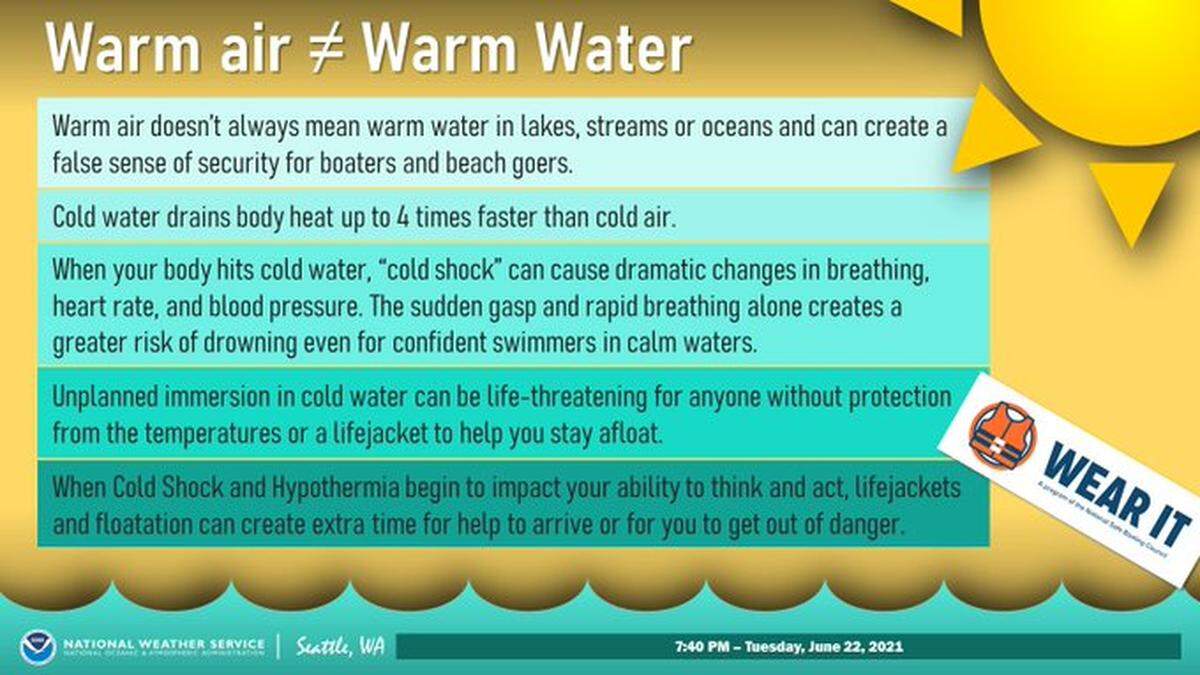
▪ A risk of quick-onset hypothermia for those who seek relief from the heat in area lakes and rivers, where water temperatures remain cold.
“Warm air temperatures can create a false sense of security, but cold water can quickly become a life-threatening situation,” a National Weather Service tweet reads. “The decision to wear a life jacket or use floatation devices can save a life.”
Staying safe
The Whatcom County Sheriff’s Office’s update recommended the following tips to stay safe during the excessive heat:
▪ Stay in an air-conditioned location if possible.
▪ Drink more water than usual, even if you are not thirsty.
▪ Check on friends and neighbors and make sure someone checks on you.
▪ Limit outdoor activity.
▪ Use sunscreen if you are outdoors.
▪ Pace your activity and start slow.
▪ Complete tasks early in the day to avoid the highest heat.
▪ Wear light fabric to stay cooler.
▪ Beware of surface temperature of metal and plastic surfaces that can become hot enough to burn skin.
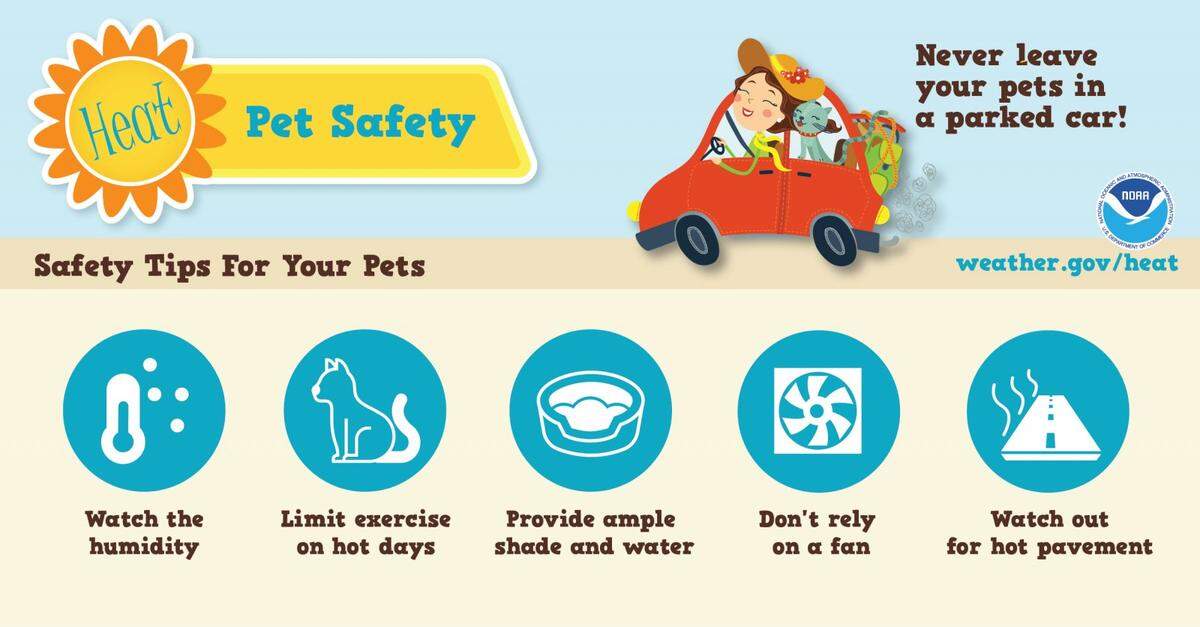
Additionally, the sheriff’s office cautioned about the dangers of leaving small children or pets in cars as temperatures increase.
“It only takes 10 minutes for the temperature to reach 104 degrees if the outside temperature is 85 degrees,” the sheriff’s office update states. “In 20 minutes, the temperature will reach 114 degrees. And in 30 minutes, it will be 119 degrees.”
And with outside temperatures expected to exceed 85 this weekend, heat inside a car will increase even faster.
Staying cool without A/C
According to a Seattle Met story, only approximately one in three homes in Washington state had air conditioning in 2015.
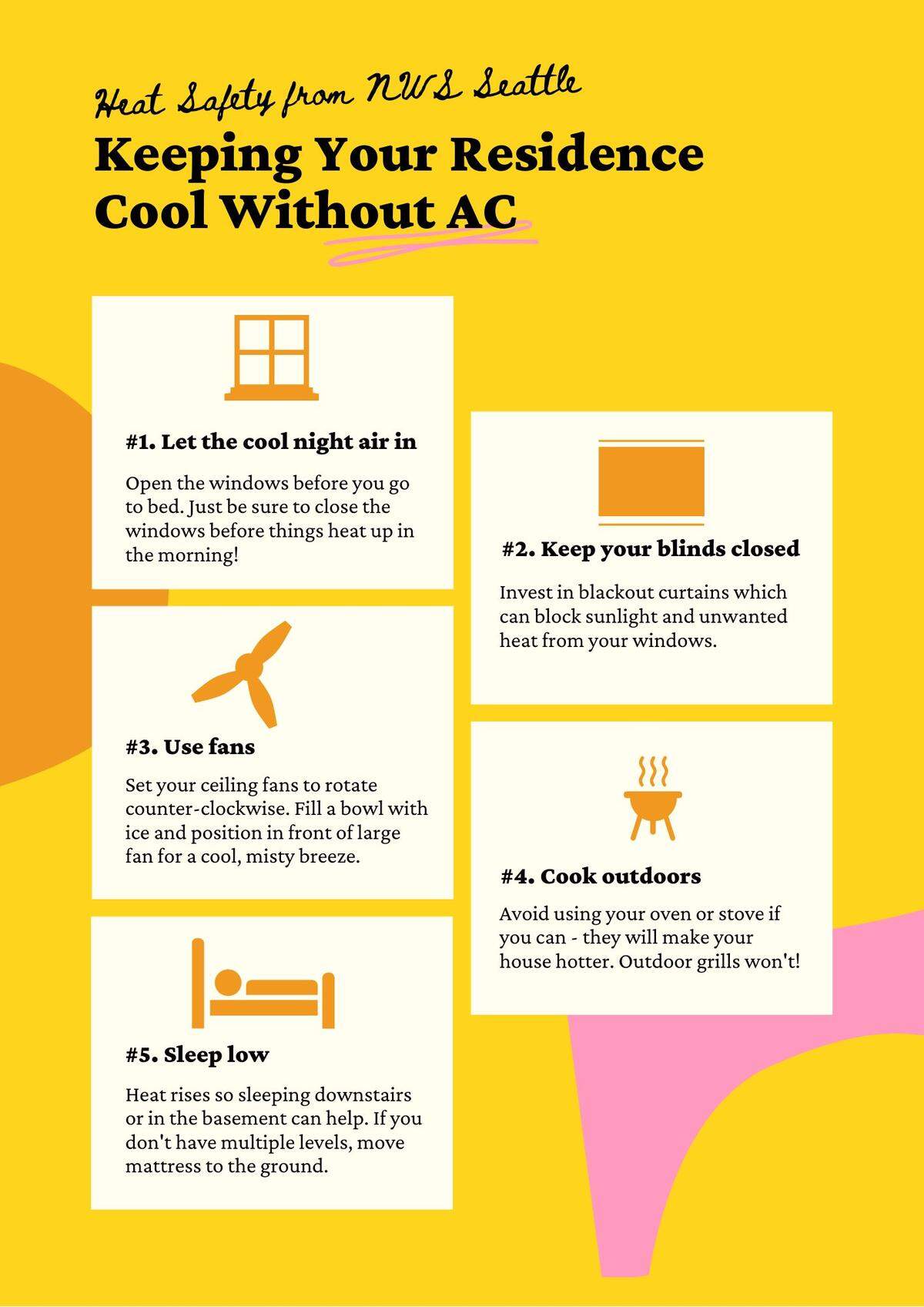
So how do the rest of us keep our homes from feeling like they’re melting? The National Weather Service and Washington Emergency Management tweeted these suggestions:
▪ Open the windows before going to bed and close them before temperatures start to climb in the morning to keep cooler air inside.
▪ Keep blinds closed or invest in blackout curtains to block out sunlight. Even aluminum foil-covered cardboard placed in windows can help.
▪ Use fans — setting ceiling fans to rotate counterclockwise — and place a bowl of ice in front of large fans to spread a cooler, misty breeze.
▪ Cook outdoors to reduce the extra heat in your home from turning on the oven.
▪ Sleep as low as possible — first floor or the basement are best, but even putting the mattress on the floor on upper floors helps.
▪ Add insulation and weather-strip doors and windows to keep the heat out.
▪ Stay indoors or in the shade during the hottest portions of the day.
This story was originally published June 23, 2021 at 10:05 AM.