Traffic backed up onto the highway at your exit? Here’s what you should do to stay safe
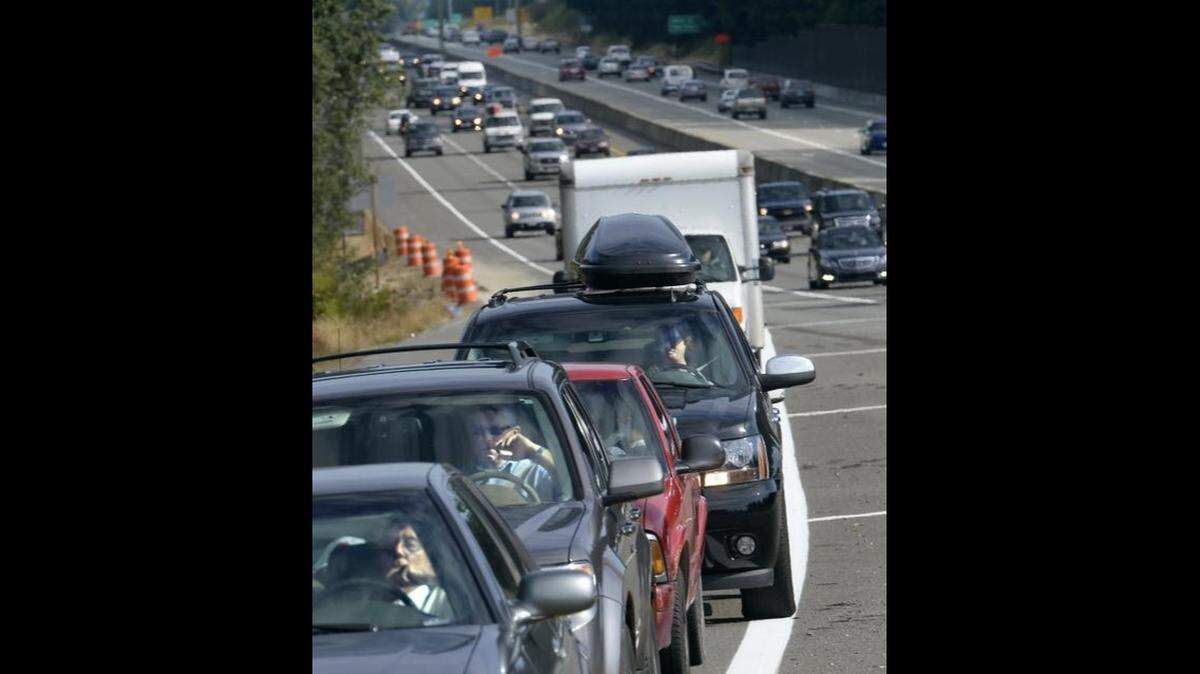
Question: Traffic on the freeway has increased over the years and now exiting traffic sometimes comes to a stop in the traffic lanes of the freeway. It’s really scary to have to come to a stop and see traffic piling up behind me. I almost feel like staying in the left lane and taking the next exit. What are your suggestions when encountering this situation?
Answer: One of the drawbacks of living in a place where lots of people want to be is that we end up with lots of people. Longtime Washington residents can remember when rush hour was really only an hour and you almost had to leave the state to find a legitimate traffic jam. But we couldn’t keep it to ourselves and now the infrastructure can’t maintain pace with the popularity of Washington.
In the past 10 years, Washington’s population increased by almost 1 million people. That’s a 13% increase in the population. In roughly the same period, the lane miles of roads in Washington increased by, oh wait, I meant decreased by almost 5%, according to Federal Highway Administration and Washington DOT data.
Side note: Building more roads won’t fix the problem because of something called induced travel. Some people avoid driving in heavy traffic because it’s not worth it to them. If you add a lane to fix a traffic jam, the increased road capacity entices those drivers onto the road, and soon you’ve spent millions of dollars to get back where you started.
When a bunch of those people all want the same exit, you end up with what you’ve described – a backup that stretches onto the freeway. Ideally, you have the option to avoid the whole situation by traveling at a different time or taking an alternative route. Of course, not everyone can adjust their work hours to better fit traffic flow or, for those in the service industry, tell their customer they aren’t coming because they live by the worst off-ramp in the city.
You might also not even know it’s a problem until you get there, especially if you’re driving in an area you’re less familiar with. If you’re caught off guard by the slowdown, other drivers probably are, too. That might make the left lane more appealing. If you’re already in it, and your next exit isn’t too far, it might be better to stay where you are than to make a quick maneuver that other drivers don’t expect.
If you’re committed to taking the exit, there are some things you can do to minimize the chances of other drivers piling into you from behind. First scan the road far ahead. That’s always good advice because it gives you more time to respond. Get in the exit lane early. As it gets more crowded you’ll have a harder time finding a gap. If the exit lane is crawling compared to the rest of the freeway, you don’t want to be in that faster lane at the exit lane speed. Begin slowing down well before you catch up to the drivers in front of you who are also taking the exit. Use your turn signal and apply your brakes early enough to make sure the driver behind you understands your intention and has plenty of time to respond.
It comes down to this: If you can’t avoid it altogether, pay attention to what’s happening and use the tools you have to communicate the best you can to other drivers. And remember, you’re not just in traffic, you are traffic, so do what you can to make traffic better.