
Controversial plan to kill owls is underway in WA. Here’s who’s leading the way
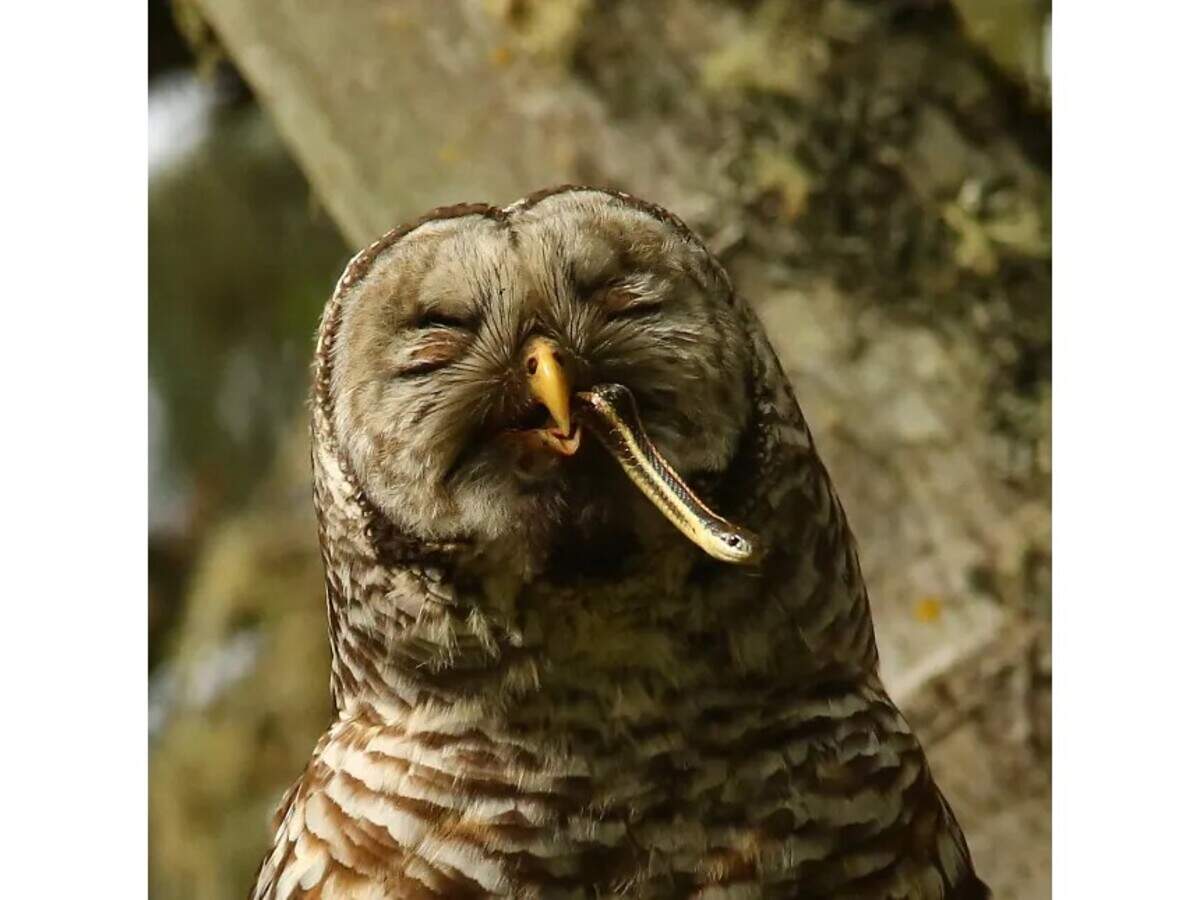
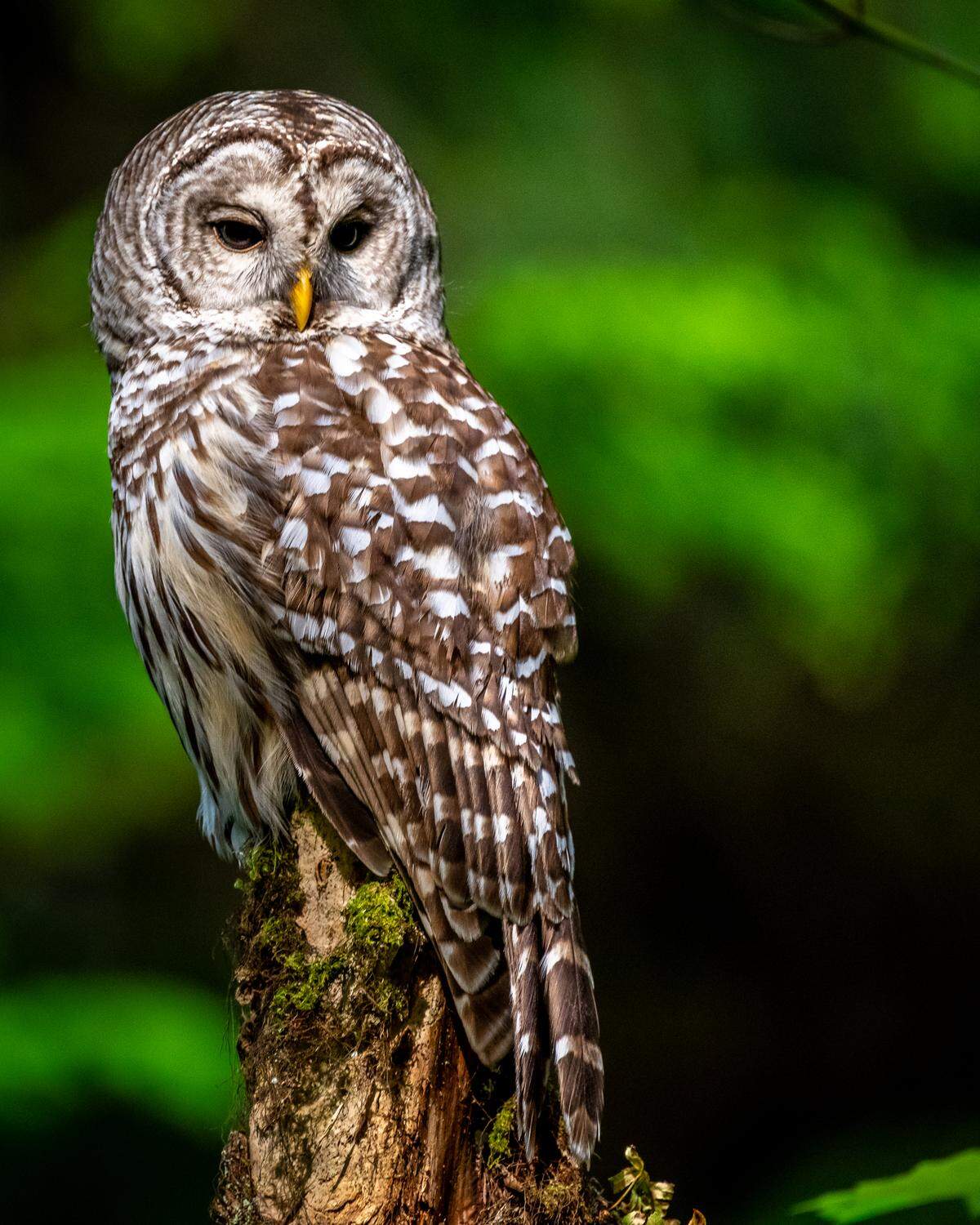
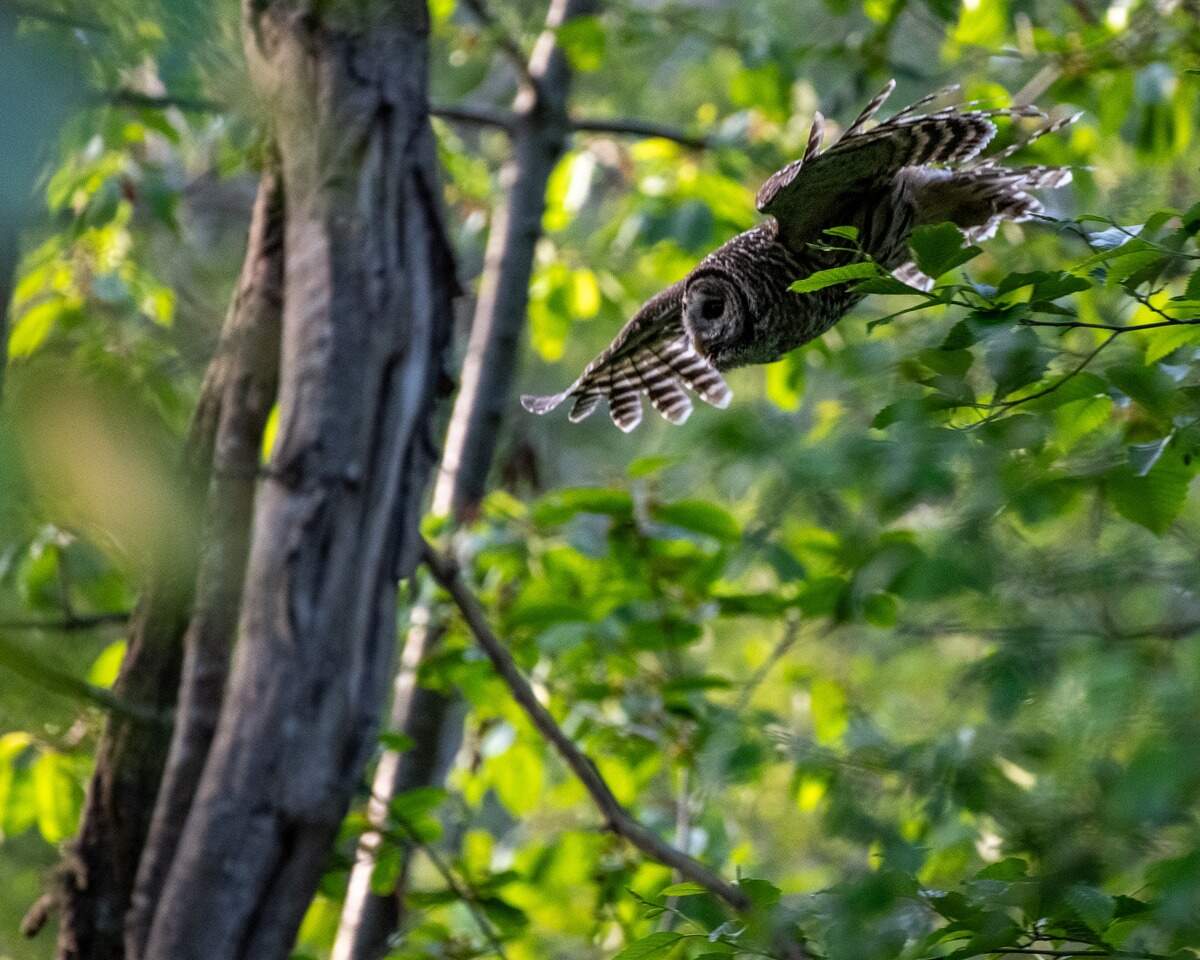
Barred owls, the famously aggressive and territorial species known to attack Pacific Northwest hikers and joggers, are now officially under attack themselves.
Theoretically, they’ve been in danger since the U.S. Department of Fish and Wildlife released its barred owl management plan in 2024, announcing its intention to kill tens of thousands of barred owls per year for up to 30 years in the interest of protecting the northern spotted owl and California spotted owl populations.
The federal government and some environmentalist groups have agreed that protecting the endangered northern spotted owl is necessary, but some animal-rights advocates argue that the plan is inhumane and exists only to aid the timber industry.
It’s been two years since the plan’s announcement, but only since November has a group in Washington officially begun killing barred owls, a species that has been protected for over 100 years by the Migratory Bird Treaty Act.
The News Tribune learned that the Yakama Nation Tribe in South Central Washington has initiated barred owl management on reservation lands and is actively killing the once-protected species. They are the first and currently the only group in Washington to do so.
Why target barred owls?
Barred owls, a species that has ranged from Maine down to Florida since the Pleistocene era, have only in the past 100 years migrated to Mexico and the West.
The first barred owl in Washington state was documented in 1965.
“They’ve moved further west due to their own actions,” Wayne Pacelle from Animal Wellness Action, a nonprofit from Washington D.C., told The News Tribune. “They’re not like Burmese pythons, which were captured for the pet trade in Southeast Asia and brought to the U.S.”
In 2024, the Washington Department of Fish and Wildlife reported the northern spotted owl population had decreased up to 90% in some federal landscapes across Washington and that the barred owl was to blame.
In response to the rapid decline of the spotted owl species in the West, the U.S. Fish and Wildlife Service released the barred owl management plan, with intentions to legally permit selected groups and agencies to cull tens of thousands of barred owls from the West every year for 30 years.
The plan includes the potential to open barred owl hunting in 14 national parks, including Mount Rainier, Olympic and North Cascades.
Northern spotted owls are listed as threatened under the Endangered Species Act, but barred owls are not.
In November 2025, Tom Wheeler, executive director of the California-based nonprofit Environmental Protection Information Center, told Owen Clarke at Outside Magazine that barred owl removal is a habitat-protection strategy.
“Barred owls outcompete spotted owls and are driving the species to extinction,” Wheeler said. “Barred owl removal is likely to provide both long- and short-term habitat protection.”
At the time, Outside Magazine reported that the Sierra Club, Earthjustice and the Center for Biological Diversity were on board with the plan.
Some animal rights activists disagree with the plan.
Is killing barred owls futile?
The News Tribune recently spoke with Wayne Pacelle, author and president of Animal Wellness Action, while he walked his beagle Asher in the woods near his home. Pacelle argued that barred owls live only in North America and that range expansion is normal.
“All species are range-expanding,” Pacelle told The News Tribune. “And birds have greater range expansion potential because they fly. Moving from the Dakotas to Washington state is not that far.”
Pacelle says barred owls are adaptive just like coyotes and deer, but northern spotted owls are not. He also thinks that culling hundreds of thousands of barred owls in a 30-year span is futile.
“If you shoot barred owls out of a particular area,” he told The News Tribune, “you will have the juveniles move in and take it back over. So it’ll just be a treadmill. They’re going to start shooting owls, and they’re never going to be able to stop. And they’re not going to reduce the densities and pressure on the spotted owls. We probably have three to four million barred owls in the United States. You shoot a small percentage of them, and they’ll fill the gap very quickly.”
Another point of concern is opening up owl hunting in national parks. Beyond killing a protected species, Pacelle doesn’t trust the public to be able to spot the differences in spotted owls, barred owls and even great gray owls.
“It’ll just be open season on all owls,” he said.
Pacelle admits that spotted owls are losing the competition for nesting sites but says that it’s just animals having a natural effect on an ecosystem.
“Isn’t that nature?” he said.
According to Pacelle, the timber industry is primarily to blame for the management plan.
“It’s worse than the fact that it won’t work to protect spotted owls,” Pacelle said. “It’s worse than the fact that they’re violating a 100-year-plus protective act against barred owls, and it’s worse than opening up hunting season of owls in our national parks.
“It’s that this is going to be a new age of the cutting down our old-growth forests. And how environmentalists can go along with this because they’re so concerned about the spotted owl is mystifying to me.”
Pacelle emphasized that spotted owls have been on the decline for a long time.
During the timber wars in the 1980s and 1990s, environmentalists fought to stop the clear-cutting of old-growth forests that spotted owls depended on, which greatly affected the spotted owl. Older trees have deeper cavities where spotted owls like to nest, and due to the loss of that habitat, spotted owls began to decline.
By the 1990s, the survival of the spotted owls didn’t look great, and barred owls were still extremely rare in the Pacific Northwest.
For the renewal of old-growth clear-cutting, Pacelle blames the one big beautiful bill and its massive increase in timber harvest on public lands.
He has a theory about the environmental offset of cutting down old-growth trees.
“You have an offset created by the barred owl management strategy,” Pacelle explained. “Otherwise, they wouldn’t be able to cut down old-growth trees that the spotted owls depend on. That’s the scheme. It’s to allow the killing of barred owls, so the timber industry can cut down more trees and meet the new quota. Particularly in Oregon.”
The damage: the loss of old-growth trees. The offset: the culling of an invasive species (barred owls).
On June 3, Pacelle met with the U.S. District Court in Portland in a forum to hear concerns about the implementation of the management plan. On June 6, he emailed The News Tribune the following statement:
“We asked the court to vacate the barred owl management plan, which means that the agency cannot implement the plan as designed and will be unable to hand out permits to allow third parties, including timber companies, to engage in the mass killing of owls in the Northwest.
“The judge had very few questions for either side today about the details of the actual plan, including its implementation and its likelihood of success. She mostly listened to both sides without interruption, so there were no real indicators of how she might be viewing this highly complex scheme.”
So who’s killing owls now?
In May, the News Tribune reached out to the Washington Department of Fish and Wildlife to ask whether it had begun implementing the barred owl management plan in Washington State.
“Although the Washington Department of Fish and Wildlife supports the strategy and intends to implement barred owl management to support spotted owl recovery in Washington, we have not yet done so,” Bridget Mire from the WDFW responded, “We are currently working on permitting and funding.”
Mire said that the WDFW has applied for federal funding, and awards have not been announced. She then noted that federal permitting is typically a long process.
The News Tribune later learned that the Yakama Nation Tribe in South Central Washington has initiated barred owl management on reservation lands and is the first and only group in Washington to do so.
Mark Nuetzmann, a Yakama Nation wildlife biologist, spoke to The News Tribune about the management plan last month. He said he wasn’t ready to publicly release much information or talk in depth to reporters until he had more data, but he did answer a few questions.
“We’ve been training,” Nuetzmann told The News Tribune. “We need to provide training to get on the Fish and Wildlife permit. We’ve been doing that on and off since November last year. Now we’ve completed that and are ramping up removal efforts.”
When asked, Nuetzmann said he was aware that Yakama Nation was the first to implement the barred owl management plan in Washington state.
Yakama Nation has applied for more federal money but has enough funding to continue culling efforts through September 2027. The culling efforts so far have been carried out with shotguns.
Nuetzmann said the plan now is to continue their efforts, monitor how the remaining spotted owl populations on reservation lands are doing and note whether their culling efforts have had a positive impact.
This story was originally published June 8, 2026 at 5:00 AM with the headline "Controversial plan to kill owls is underway in WA. Here’s who’s leading the way."
.jpg)