
Almost anything goes in bonkers paddle race across Puget Sound
Hopping into a small watercraft and paddling across the Puget Sound might sound like madness to some Washingtonians, but it’s a fairly common and regular occurrence in our part of the world.
Indigenous tribes have been doing it for thousands of years, as well as the University of Puget Sound crew team. And Tacoma-born “Dune” author Frank Herbert once rowed from Tacoma to the San Juan Islands when he was 9 years old.
But how many people have paddled from Tacoma to Port Townsend in one straight shot?
Anyone who’s taken part in a bonkers race across the Puget Sound called SEVENTY48.
On your marks
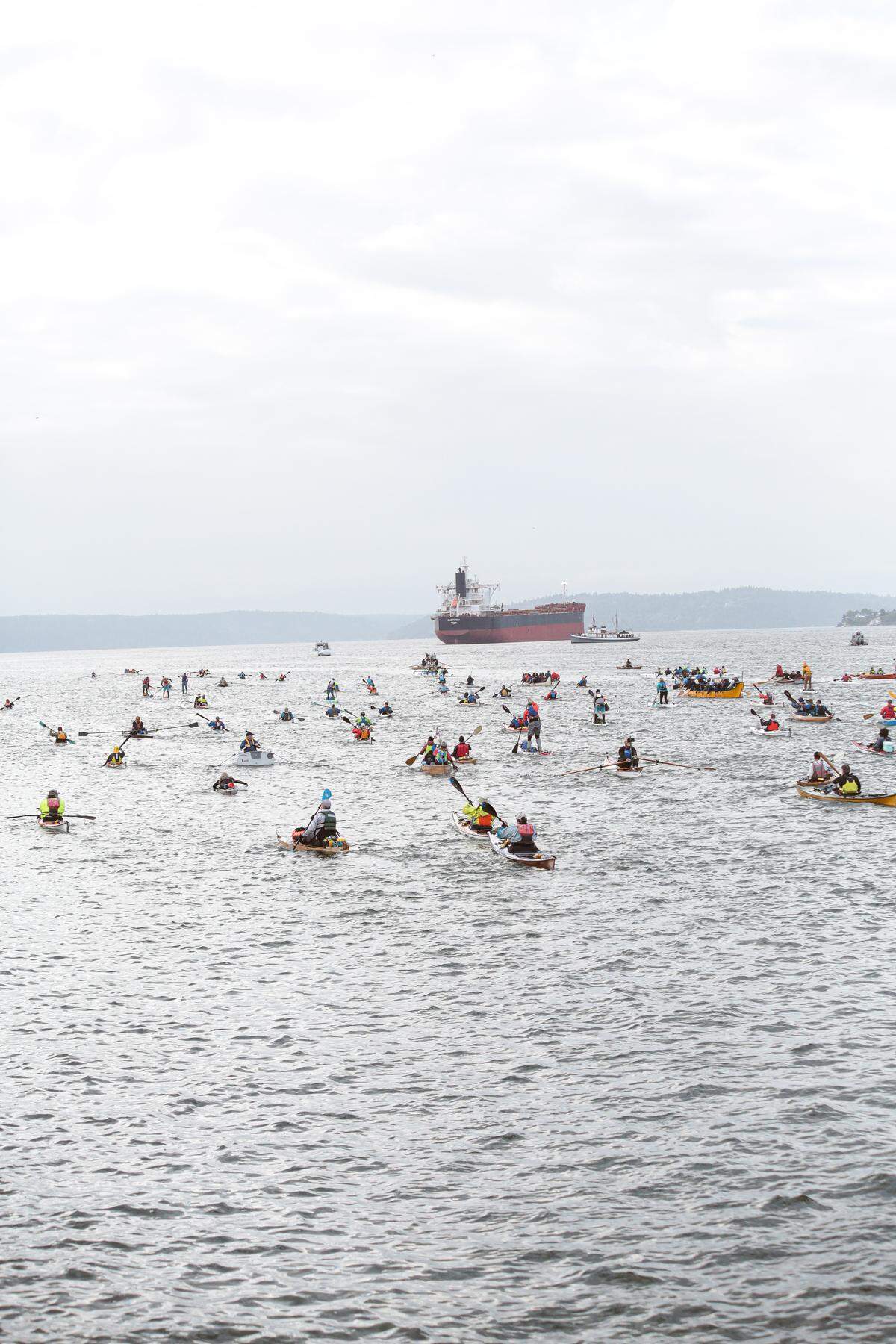
Friday at 7 p.m., 133 paddlers and rowers took to the waters in Tacoma in a race called SEVENTY48 (Seventy miles in 48 hours), run by Northwest Maritime, a seafaring nonprofit and education center in Port Townsend.
The vessels cast off on the Thea Foss Waterway and swarmed Commencement Bay on their way through the labyrinthine waterways of Puget Sound.
Port Townsend is the finish line, and the only craft allowed in this particular race is human-powered--pedal, paddle, or row. No motors, no wind, and no additional support is allowed.
This year saw canoes, kayaks, stand-up paddle boards and two people who attempted it on prone boards, which are basically just long surfboards that you paddle but never stand up on.
SEVENTY48 race boss Jesse Wiegel says this was the first year he’s seen that.
“It’s the craziest, dumbest way to do it, and I love it,” Wiegel told The News Tribune while piloting a power catamaran through the Ballard Locks on Monday.
Wiegel said one of the prone boards made it all the way, and one of them didn’t.
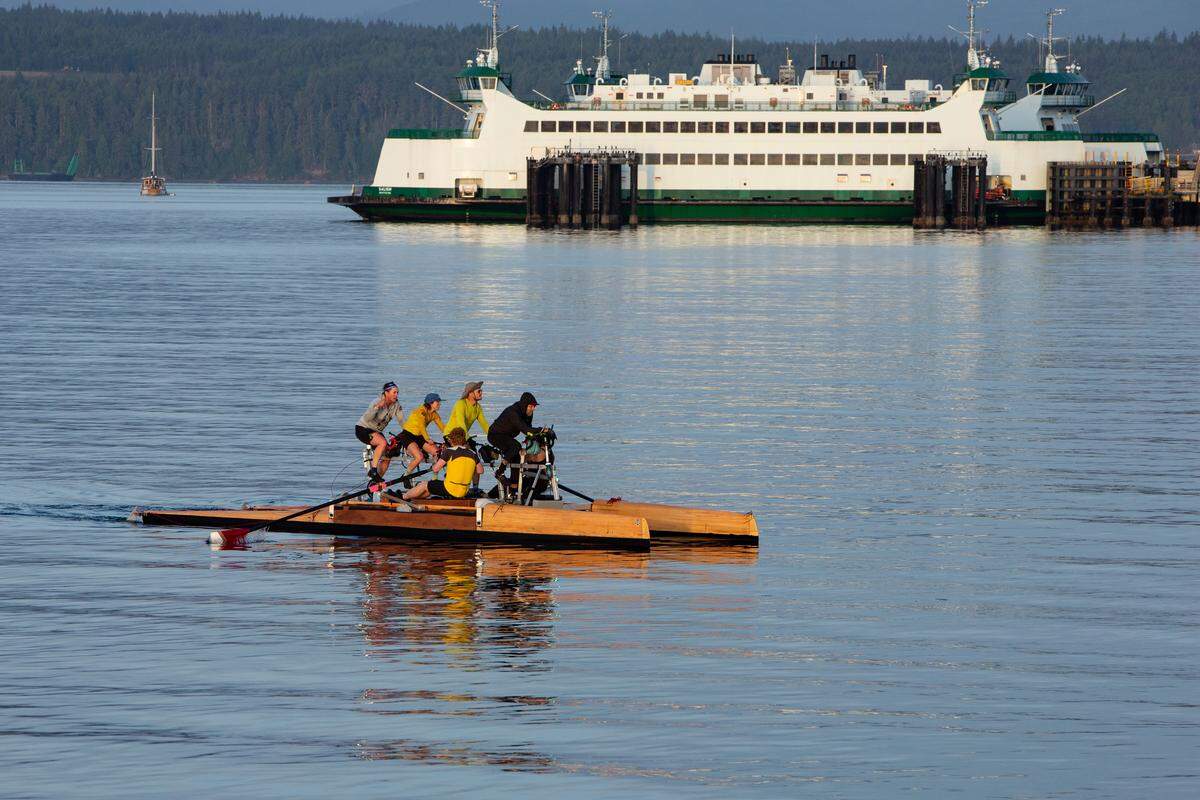
The winners this year were Team Tritons from San Clemente, California. They arrived at the finish line in Port Townsend at 4:50 a.m., exactly 9 hours and 50 minutes after leaving the Thea Foss Waterway, having missed the course record by 15 minutes.
Tacoma’s own Boogie Beast took second place and Shoreline, Washington locals Beasts from the East finished third.
A long night
SEVENTY48 is a race of hijinks, oftentimes with contestants ending up in the water and running across the shore, which is called portaging. Portaging is legal in this race and regularly done. Though the craft must be human-held while portaging, with no assistance other than the contestants who are on your team.
Wiegel says the best portaging story of 2026 belongs to Beasts from the East, who at one point were in second place, drafting behind first-place Team Tritons. Then they took an interesting detour.
“Friday night got cold and breezy,” Wiegel said. “Specifically on the north end of Colvos Passage. As [Beasts from the East] were crossing through to Blake Island, they decided they needed some calmer water.”
While on the west side of Blake Island, they peeled off from their battle with Team Tritons and headed up through Agate Pass, then, inexplicably to Wiegel, they decided to explore and went to Poulsbo.
“Poulsbo is a dead end,” Wiegel continued. “You can’t get there from here. I was watching them on the tracker and was very curious. They got out and found a series of roads at like one in the morning. They picked up their surfski and carried it through Poulsbo to quieter and quieter backroads. The police were called on them because they didn’t turn off their navigation lights, so there were three weird guys in life jackets running through town carrying a big paddle craft.”
Beasts from the East stopped for photos with the police, then continued their portage journey. Eventually, they crossed someone’s property and finally made it to the water. “They put it in at Hood Canal and still nabbed third place,” Wiegel said. “Which is pretty crazy.”
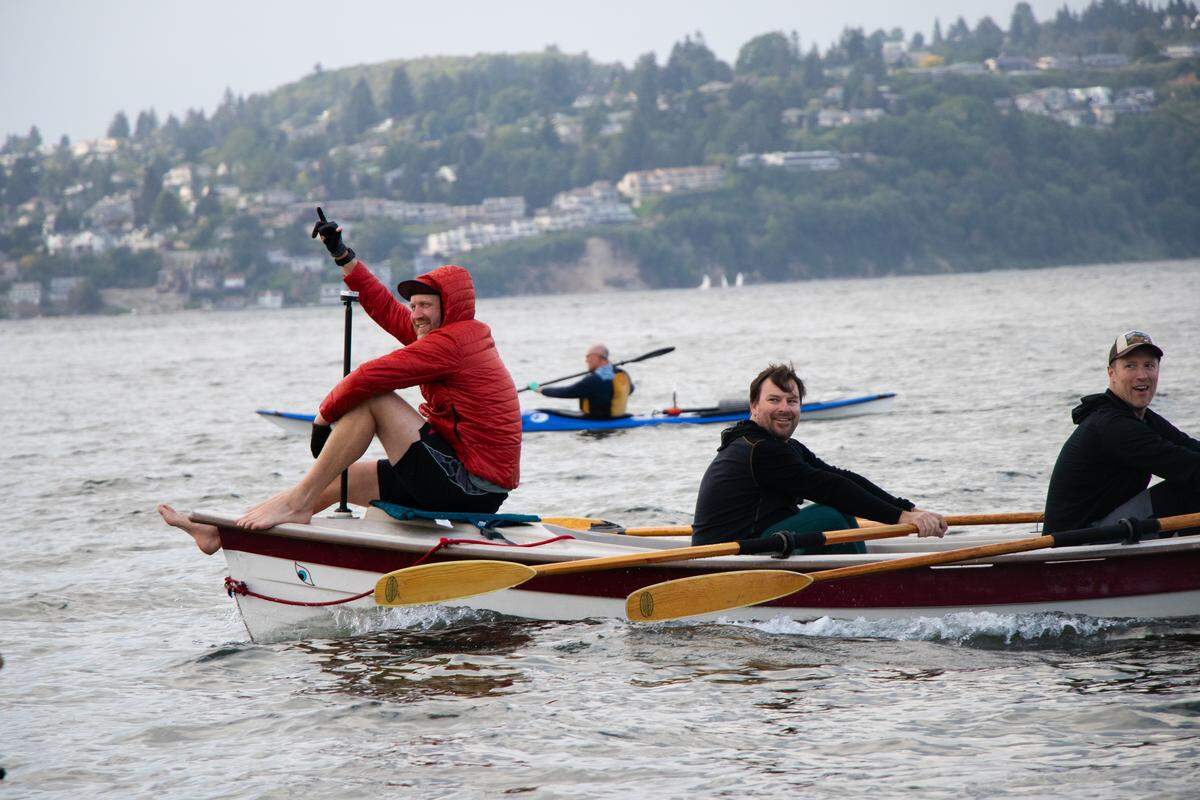
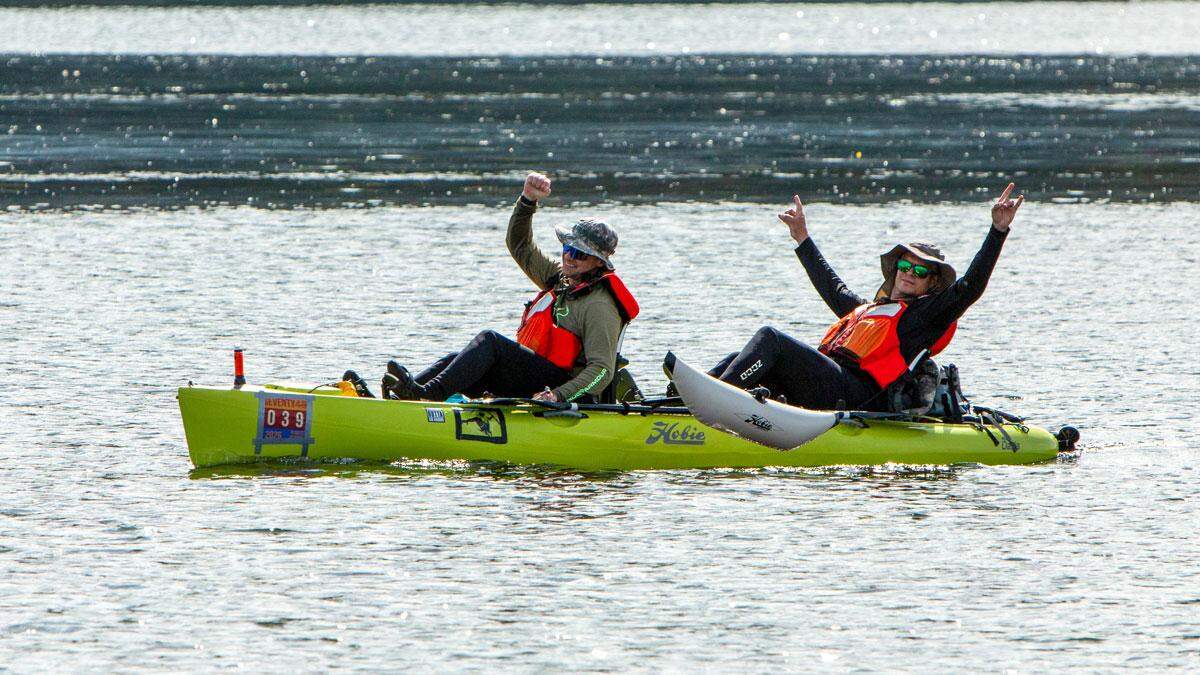
After Team Tritons finished just before 5 a.m. on Saturday, other teams trickled in throughout the day. They were met with photographers, cowbells, costumes and warm food.
Much merriment
Wiegel reports that 70% of the participants finished this year and that there were no major injuries.
“There are always a few people who get extremely cold,” Wiegel said. “And then we get things like strains and sprains and old shoulder injuries, but I didn’t hear about anything serious happening.”
The prize pool depends on participants, but this year it amounted to $13,300, split between eight parties. Team Tritons took home half of that pool, and the rest was divided up confusingly, including one eighth to a random finisher.
“It’s a little confusing, but it’s meant to be,” Wiegel said.
Next up for Wiegel and Northwest Maritime is the Race to Alaska, where human-powered teams race watercraft to Alaska. First prize is $10,000 in cash nailed to a piece of wood.
Any craft without an engine is welcome on this one, including sail. Wiegel says they’re still pondering whether they’d allow someone to just swim it.
“We tend to not constrain ourselves with conventions.”
This story was originally published June 3, 2026 at 5:00 AM with the headline "Almost anything goes in bonkers paddle race across Puget Sound."
.jpg)