
AI data center with a different mission being considered in Tri-Cities
AI-generated summary reviewed by our newsroom.
- Information requested for another possible data center in the Tri-Cities area
- Battelle indicated the small data center could start at 2 megawatts
- The possible center could host AI infrastructure for training large language models
Information has been requested on behalf of the Department of Energy for a possible data center on the premises of Pacific Northwest National Laboratory as soon as 2028.
“We’re considering the possibility of a small data center due to increased focus on AI at PNNL,” the lab confirmed in a statement Wednesday, referring to its interest in using artificial intelligence to advance research.
The primary campus for PNNL is in Richland in Eastern Washington, and the national lab also has nearby facilities on DOE land along the Columbia River that is part of the Hanford nuclear site just north of Richland. That area of Hanford is secure and closed to the public.
The possibility of a PNNL data center makes at least four data center projects proposed or being considered for the Tri-Cities area.
Battelle, which operates PNNL for DOE, indicated in its request for information that the data center could be smaller than many, with an initial power requirement of 2 megawatts in 2028. That could be expanded in the future to 40 megawatts, according to the Battelle notice.
According to the International Energy Agency, average-sized data centers typically require about 5 to 10 megawatts of power, but increasingly large hyperscale data centers require 100 megawatts or more.
The Battelle request for information asks about recommendations for on-site power for the data center if utility power distribution is limited.
The proposed data center associated with PNNL would have advanced artificial intelligence computing infrastructure capable of training and operation of multi-data large language models for scientific and national government missions with stringent security, according to the request.

The request for information, with acceptance of replies now closed, is intended to help Battelle understand potential market capacity and design requirements and to identify potential contractors. It is not a request for bids.
Among the information it sought was whether a possible AI data center could be housed in a containerized or modular structure rather than a traditional building.
It also wanted to know what sustainable energy for the project might be an option, including a power purchase agreement, on-site solar or nuclear. In addition, PNNL is interested in whether the heat from an AI data center could be reused, such as for industrial processes.
PNNL and artificial intelligence
PNNL was tapped in February to work on three key research challenges for the Trump administration’s Genesis Mission, an ambitious project to dramatically increase the pace of scientific discovery.
The Genesis Mission, led by DOE, is bringing together all 17 of the U.S. national laboratories to use artificial intelligence systems, in combination with supercomputers and emerging quantum technologies, to transform how science is done.
Energy Secretary Chris Wright has compared the initiative to the Manhattan Project.
Under the Genesis Mission, Pacific Northwest National Laboratory will be collaborating in efforts to strengthen the nation’s electric grid, analyze nuclear materials related to national security and help integrate artificial intelligence workflows to improve experiments.
In early December, the nation’s energy secretary visited PNNL for the first time and commissioned a first-of-a-kind prototype system using artificial intelligence to accelerate the speed at which biological science is done.
The system, the Anaerobic Microbial Phenotyping Platform, or AMP2, combines robotics and artificial intelligence to conduct research using microbes, such as bacteria and fungi.
Construction is planned to start this year on an addition to the Environmental Molecular Sciences Laboratory on the PNNL campus to house a similar but much larger system to explore questions about microorganisms that can play important roles in industrial processes to make chemicals, fuels and biomaterials.
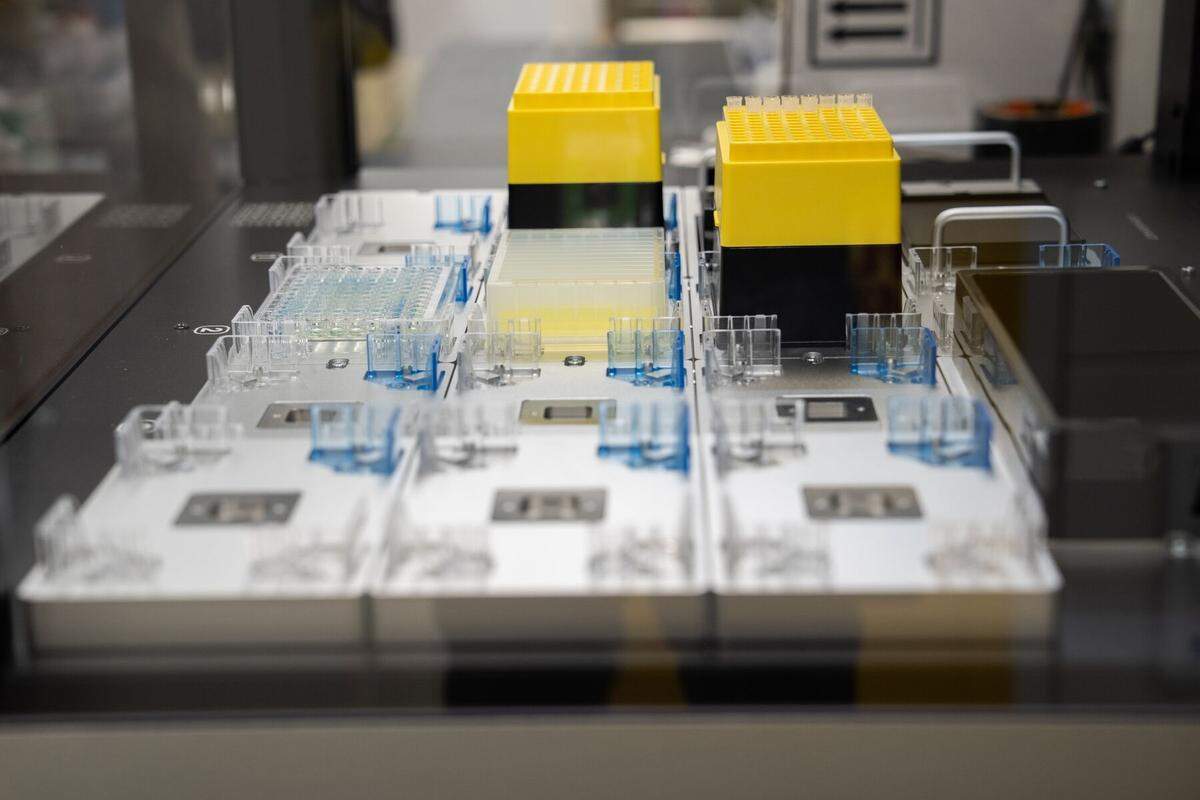
AMP2 will be used in collaboration with other labs, combining resources for automation, robotics and data analysis.
PNNL researchers will work on what they are calling a translation system to help instruments and data sources speak the same language.
“What that means is we can ask a question, for example, in the language of a mass spectrometer instrument and get an answer in the language of genes,” said Chris Oehmen, a technical lead for the project, earlier this year. “The goal is to have a platform that can speak multiple data languages, integrate those data and tell us which experiments to do next.”
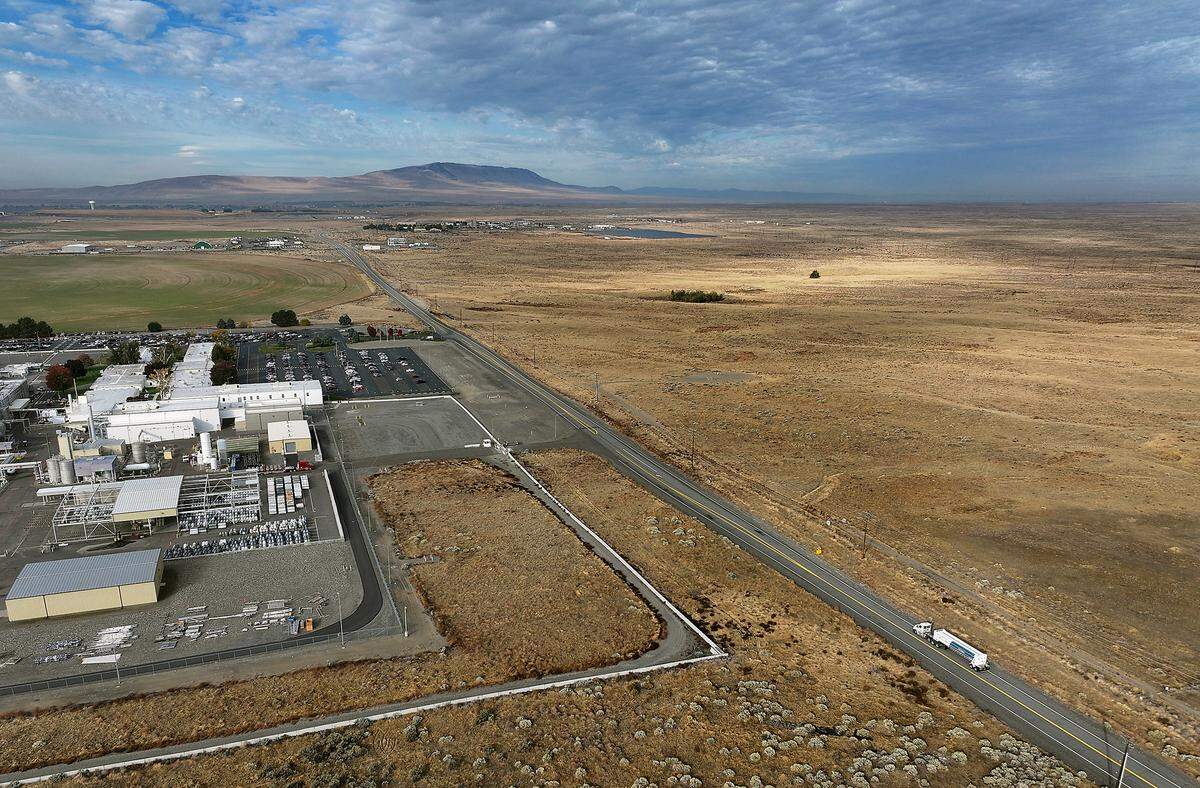
Tri-Cities area data center projects
Three other data center projects are pending in the greater Tri-Cities region in addition to the project PNNL is exploring.
Amazon Web Services intends to develop a $5 billion cluster of 16 data centers at Wallula Gap Business Park to support its AI initiatives. It recently closed a $34 million deal to buy more than 500 acres from the Port of Walla Walla.
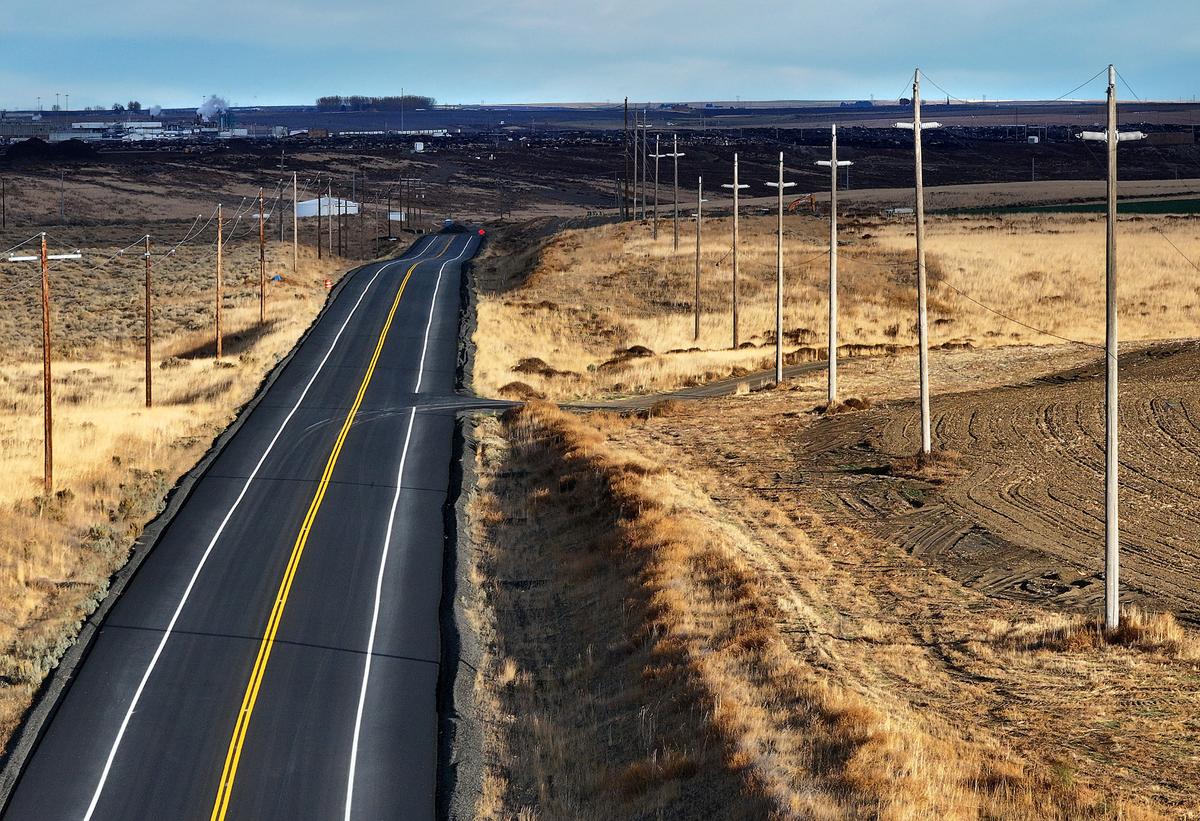
Atlas Agro, better known for its plan to construct a low-carbon fertilizer plant in north Richland, plans to facilitate a $500 million data center development next door. The company has a $24 million deal pending with the city of Richland to buy 275 acres on Horn Rapids Road near the Framatome campus.
Trammell Crow Company, a global real estate firm with a data center division, confirmed it is scrutinizing at a site at the Lewis & Clark Ranch development area in West Richland after former Mayor Brent Gerry disclosed the plan at a public meeting. No further details have been shared.
This story was originally published April 24, 2026 at 11:17 AM with the headline "AI data center with a different mission being considered in Tri-Cities."