
Wildfires are increasingly common in Western WA. Here’s what to expect this year
AI-generated summary reviewed by our newsroom.
- WA restored $60 million in wildfire-preparedness funding in the 2026 legislative session.
- DNR says state faces a challenging wildfire season amid fourth straight year of drought.
- About 90% of WA fires are human-caused and over 95% last year were kept under 10 acres.
Last year, after the state Legislature slashed Washington’s wildfire-prevention funding in half, Public Lands Commissioner Dave Upthegrove sounded the alarm.
“We’re going to be OK this summer,” he told McClatchy in May 2025. “But the Legislature needs to come back next year and fill that hole, or else we risk threats to public safety.”
Upthegrove, who heads the Department of Natural Resources (DNR), then made it his agency’s top priority to get the Legislature to restore that $60 million. Lawmakers did, returning the wildfire-preparedness funding to $120 million in the recently wrapped 2026 session, he said in a call April 22.
Prevention and preparedness funding helps pay for aviation assets, smoke-detecting AI cameras, staffing, grants for rural fire departments and prescribed burns, which aid in reducing dangerous fuel loads, he said.
“We now have the funding we need to prepare and be well-positioned for this upcoming fire season,” Upthegrove said.
Preparing for ‘challenging’ season
Upthegrove wrote in a recent Facebook post that Washington will endure drought conditions for the fourth consecutive year. Droughts boost the risk of wildfires, he said, meaning that the state will stare down a “challenging wildfire season this summer.”
The commissioner said April 22 that long-term consequences of sustained drought includes worsened forest health, including disease and insect infestations. Extended drought also can shift how fires move through larger forests, as bigger vegetation might not be getting fully saturated.
Still, he said, it’s hard to predict risk.
“There’s always interest in the community and in the media,” Upthegrove said. “But … a lot of this is an act of God and an act of people — and wind is a big factor.”
About 90% of fires in the state are human-caused, Upthegrove said. Though most wildfires have historically been located in Eastern Washington, a growing number have recently burned in Western Washington, such as last year’s Bear Gulch Fire.
Typical wildfire seasons in Washington stretch from May to October, according to the Western Fire Chiefs Association.
It’s much cheaper to prepare for and prevent fires than it is to extinguish them, Upthegrove said.
“We spent almost $300 million last year putting out wildfires, and that was a fairly average season,” he said.
More than 1,800 fires started last year, but over 95% of those were contained to under 10 acres, he said. DNR is gearing up for the coming season, including by hiring seasonal staff and work crews.
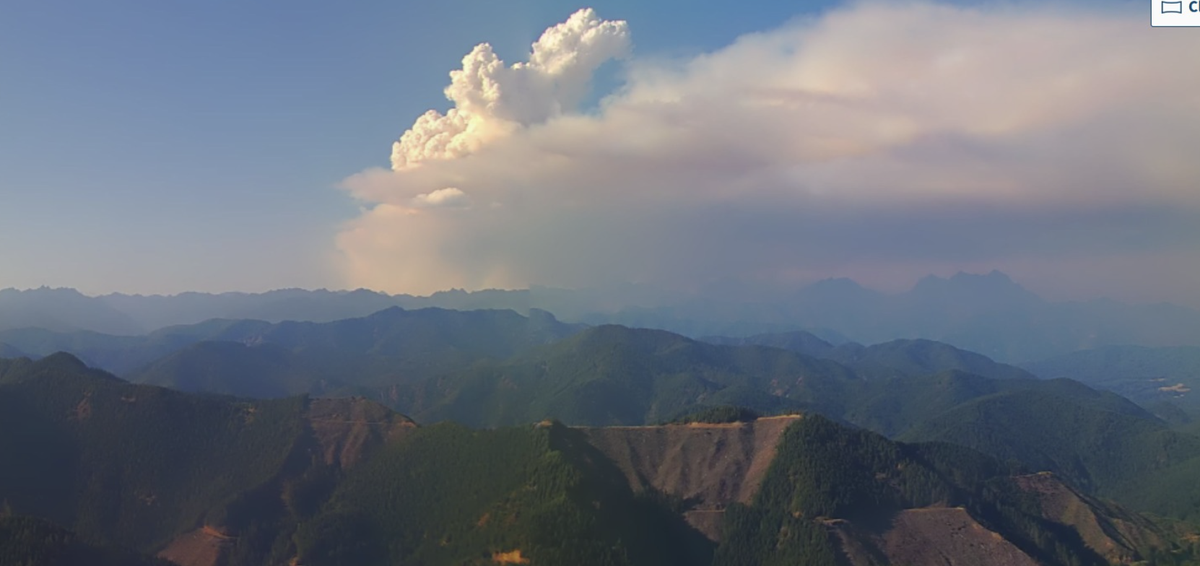
In addition to drought, spring conditions matter when it comes to wildfires, said state climatologist Guillaume Mauger. If the next few months are wet and cool, that will delay the beginning of fire season and put the state on better ground.
Mauger pointed out that in June and July, Eastern Washington is expected to have a higher fire potential, citing monthly wildland-fire outlooks from the National Interagency Fire Center.
Some reporting has questioned whether there could be a link between this year’s wildfire season and the climate pattern El Niño.
El Niño happens irregularly and is associated with above-average sea surface temperatures in the Pacific Ocean. It tends to load the dice toward drier and warmer conditions during the winter, with smaller effects on summer temperatures, according to an April 6 Washington State Climate Office newsletter.
As for whether El Niño will weigh on this summer’s wildfire season? Mauger doesn’t think so. He noted that the climate pattern typically doesn’t develop until late summer or fall in most cases.
Upthegrove urges Washingtonians to ensure that, when burning something on their property, they do it safely and follow the rules. When camping, it’s important to check that extinguished campfires are cold to the touch. Don’t park a hot car on dry grass and be careful with fireworks, he said.
Homeowners who live near forests should clear away firewood from their homes, trim lower branches and clean their gutters, Upthegrove added; DNR has programs to help such work with grants and assistance.
“That can make a big difference — what we do as residents of this state,” he said.
This story was originally published April 23, 2026 at 5:00 AM with the headline "Wildfires are increasingly common in Western WA. Here’s what to expect this year."
.jpg)