
State funding for Pierce Co. schools has soared. Why are some still struggling?
AI-generated summary reviewed by our newsroom.
- State funding doubled in Pierce County since 2014–15, yet districts face shortfalls.
- Rising special education, insurance and utility costs outpace state revenue increases.
- Districts rely on local levies and bonds, prompting staff cuts and program reductions.
Pierce County school districts are getting a lot more money than they used to.
According to data The News Tribune collected from the Washington Office of Superintendent of Public Instruction, all 15 school districts in Pierce County saw the amount of money they received from the state increase on average by about 107% between the 2014-2015 school year and the 2024-2025 school year.
The Franklin Pierce School District saw the lowest percent change with an increase of about 71%. The Orting School District saw the highest percent increase, with about 137% across the same time frame.
But many school districts say it’s not enough. District leaders said state funding has failed to keep up with inflation and the rising costs of items like utilities, insurance and special-needs services.
Tacoma Public Schools is a prime example. Despite the 82% increase in state funding between 2014-2015 and 2024-2025, the district has faced multi-million dollar budget shortfalls in the last few years, which have endured long enough for the district to deplete its reserves. District officials have said they’re doing their best to keep budget cuts from impacting students, but that’s starting to change. The district eliminated dozens of teacher and support staff positions in 2025, which parents and families have said will hurt the district’s most vulnerable students.
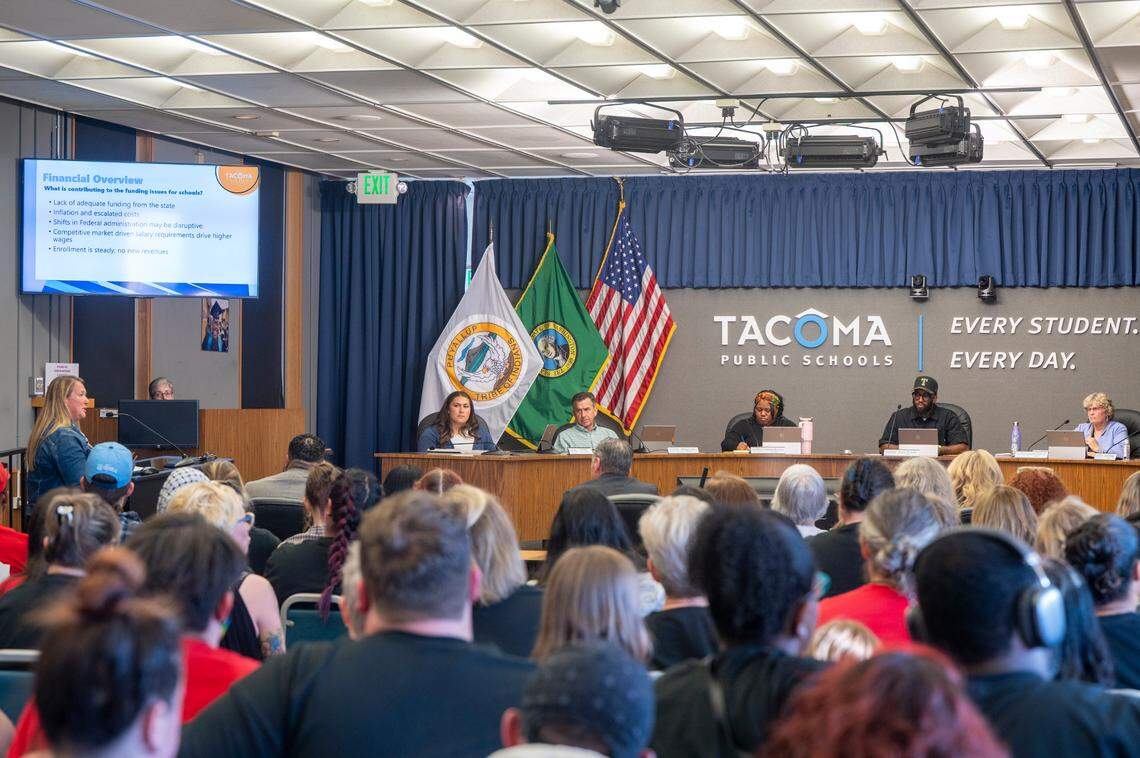
As the 2026-2027 budgeting process approaches, Rosalind Medina, Tacoma Public Schools’ chief financial officer, is getting nervous.
“We are so tight on resources, we are just trying to hold it together as long as we can, see if we can’t right the ship and turn ourselves in a better direction,” Medina told The News Tribune.
Tacoma was able to balance its budget for the 2025-2026 school year, but not every district could. The Seattle Times reported earlier this year that Bellevue Public Schools entered what the state calls “binding conditions” – a step that districts must take if they’re not able to cover all their expenses and state budget officials have to get involved. State education officials have told The News Tribune that more districts are on binding conditions in recent years than ever before.
Where is the money going?
Not everyone agrees that the state should bear the brunt of the blame.
“Never before in our state’s history have we put more money into K-12, ever, as far as the dollar amount, right,” Republican state Rep. Travis Couture, District 35, said in an interview Jan. 19. Couture serves as the ranking minority member on the House Appropriations Committee, which considers bills related to the state’s operating budget.
Couture said that in his analysis of where the money is going, districts are giving pay raises to their employees that not all of them can afford.
“ … you start to have these collective bargaining agreements that are so wildly financially out of touch, but then the school districts themselves are put between a rock and a hard place where they must either set this or potentially face a strike,” he said.
A report from the League of Education Voters Foundation cited OSPI data in 2023 showing that Washington districts spend over 80% of their district budgets on employees’ salaries and benefits. Tacoma Public Schools pays its staff the highest starting and top salaries in the state, the district has reported.
Larry Delaney, president of the Washington Education Association, pushed back on the claim that teachers in Washington are overpaid. The organization has worked hard to ensure that teachers in Washington make enough to live in their state, he said. WEA is the state’s largest union representing public school educators.
“We believe that teachers should be compensated with more than just a living wage, and we’re in that place,” Delaney told The News Tribune. “Now what the state has to do is ensure that the funding to districts meets those increased needs of districts.”
How is education funded?
In Washington state, schools get their funding from two main sources: the state and local taxes. Per the state constitution, it’s the state’s “paramount duty” to “make ample provision for the education of all children residing within its borders, without distinction or preference on account of race, color, caste, or sex.”
The state is obligated to cover “basic education” as defined in state law. The term encompasses a list of elements, including books and supplies, 180 days of school per year, qualified teachers and staff who are paid at competitive rates and additional programs such as special education services and multilingual or English learner programs. It doesn’t include everything a school needs to function, such as facilities maintenance, as explained in a post from the Washington Office of Superintendent of Public Instruction.
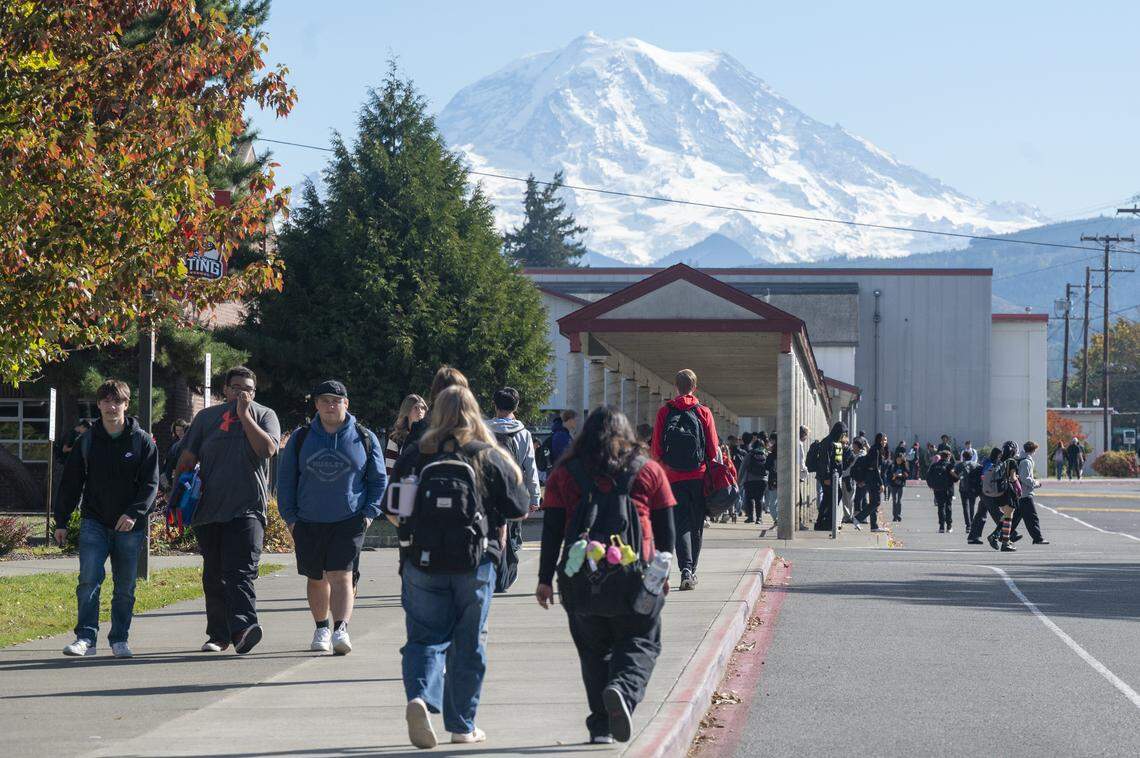
That state funding is distributed to school districts through what’s called a “prototypical funding model,” which involves calculating the “level of resources needed to operate a school of a particular size with particular types and grade levels of students,” as outlined in state law. The complex formula takes into account student enrollment, class sizes and a variety of other factors.
In 2007, two families alleged that the state failed to meet its legal obligation to fund basic education, kicking off a landmark education lawsuit in Washington known as McCleary et al. v. State of Washington, sometimes referred to as “McCleary.” The state Supreme Court agreed with the allegations and ruled in 2012 that the state, not local levies, needed to be the main source of funding for basic education and that the state needed a plan to make that happen. The Court began imposing fines of $100,000 per day after the state failed to produce that plan in 2014.
In November 2017, the Court ruled that the state had made progress toward resolving the case, except for school salary increases that the Legislature planned to fund in the 2019-2020 school year. The McCleary case officially ended in June 2018.
Districts still struggling. Why?
McCleary was supposed to eliminate concerns school districts had about insufficient state funding, but that hasn’t been the case.
When the Legislature revamped education funding as part of McCleary, it added a “regionalization” factor that added a percentage to the state’s base salary allocation for school staff. Districts where the median home value is higher than the state’s median value were eligible for regionalization, which could be as high as 18% for the top third of districts ranked by median home value, as explained in a report from the Washington Research Council.
Regionalization was supposed to help districts offset the cost of living for their staff in areas where it’s more expensive to live, said Charlie Brown, a lobbyist to the Legislature who works with multiple Pierce County school districts, including Tacoma and Puyallup.
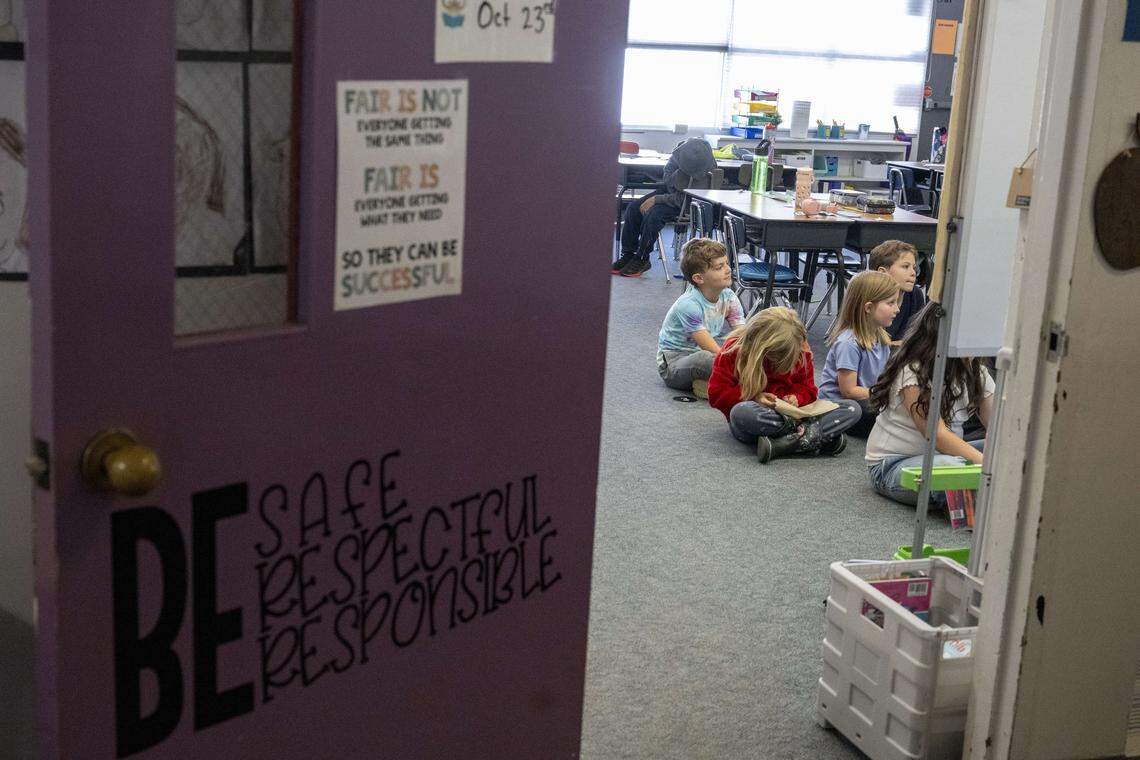
Instead, the result was more inequity. Brown explained that in order to offer competitive pay and keep their teachers from leaving for districts that got a higher regionalization percentage and thus offered higher salaries, districts in areas with lower property values had to make up the difference.
“It was an idea that was well-intentioned, but the economics of it haven’t played out the way people envision,” Brown said.
Rising insurance costs are also hurting districts, leaders say.
Bethel School District Superintendent Brian Lowney said that his district has seen double-digit increases in its insurance rates each year. Over the last year, the district’s insurance went up 32%, he said.
“We come up $20 million short every year from the revenue we get from the state and the expenses,” he said. “And again, those are not discretionary. It’s not like we can budget to do less ... Insurance costs what it costs. Turning on the lights, we turn them off on the weekends, and lower the temperatures in the evening, and we do all the things we can to save money.”
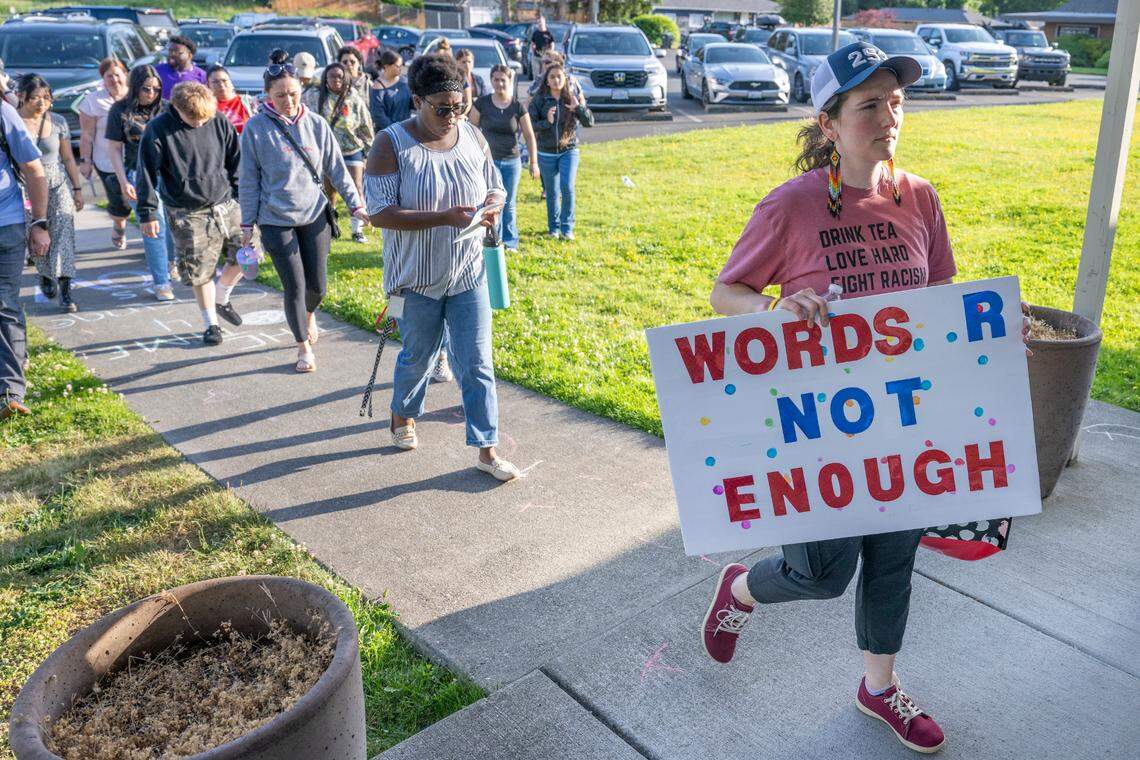
The Bethel School District spent $6.7 million on insurance in the 2024-2025 school year, making up 1.7% of its total expenditures that year, Bethel School District spokesperson Douglas Boyles wrote in an email. It spent $5.6 million on utilities, or 1.5% of its total expenditures for the year.
In East Pierce County, the Puyallup, Sumner-Bonney Lake and Orting school districts have all experienced massive growth.
Some districts say that rapid growth is a double-edged sword. On one hand, they get more funding from the state because each district receives a certain amount of funding per student. On the other hand, it forces districts to rely more on local levies.
During the 2023-2024 school year, the Puyallup School District received $330 million in state funding – almost double the $167 million it received from the state during the 2014-2015 school year.
“While per-student funding has increased over the last decade, those increases have not matched inflation, rising labor costs, or the expanding needs of students, meaning districts still face structural gaps,” Sarah Gillispie, spokesperson for the Puyallup School District, wrote in an email to The News Tribune. “State funding provides a foundation, but it does not fully cover the cost of educating nearly 23,000 students or operating 34 schools. This gap is why districts like Puyallup must rely heavily on local levies to maintain programs, staffing, and day-to-day operations.”
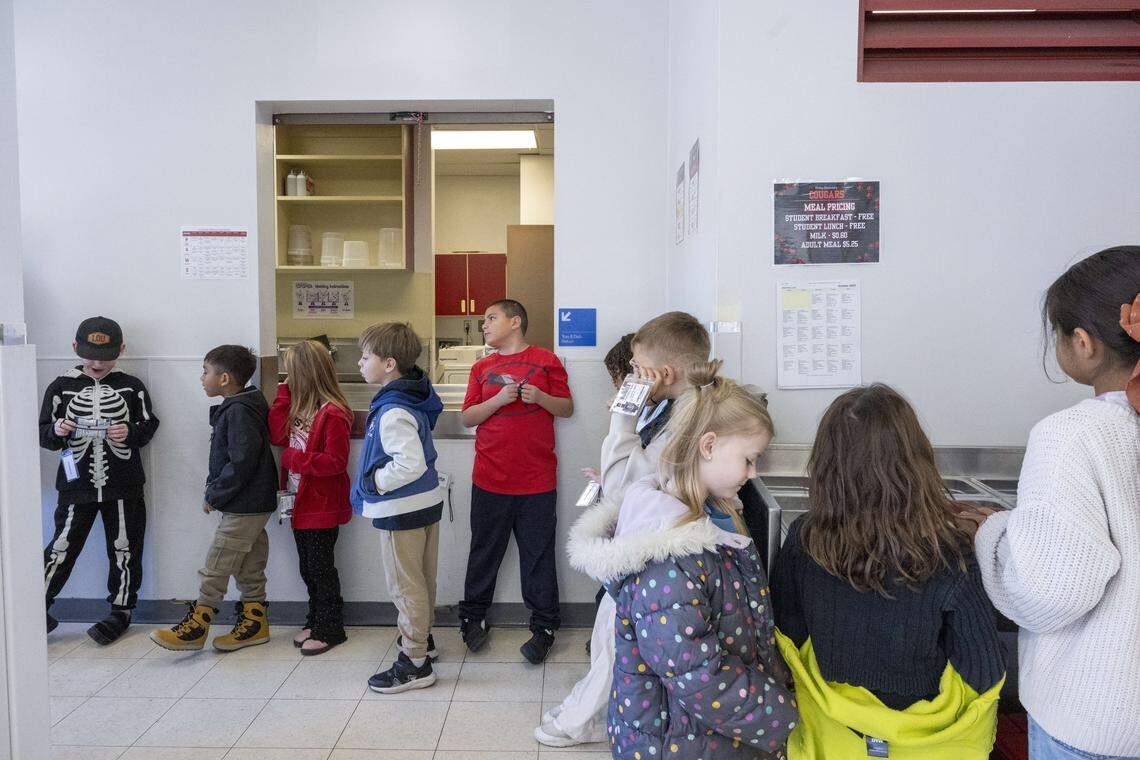
Parents in districts that have seen budget cuts don’t often have patience for district leaders’ explanations. Many in Tacoma have pointed to district leaders’ six-figure salaries in comparison to the hourly rate that education support professionals earn, which is somewhere between $27.75 and $56 an hour. Josh Garcia, the superintendent at Tacoma Public Schools, earned $403,217 in the 2024-2025 academic year – compared to Governor Bob Ferguson’s $218,744.
According to Tacoma Public Schools, teachers and education support professionals make up 72 percent of all the money the district spends on wages, compared to administrative staff and principals which make up about 11 percent.
For TeyAnjulee Leon, a parent at Blix Elementary in Tacoma, two things can be true: The state might not be giving schools enough money for education, but districts are also spending too much of the money they do get at the top.
“There’s always enough money to bloat with administrators, and that’s what’s happening at our school district,” Leon told The News Tribune. “And our school district refuses to be held accountable for that.”
The district implemented staffing cuts in 2025 to mitigate its budget deficit, and Leon said ever since then she’s been getting reports about one of her sons acting out in class. Leon knows her kids aren’t perfect, but the common denominator for the behavioral issues she hears about isn’t that anything has changed for her sons – it’s that Blix has fewer adults now than it did last year, she said.
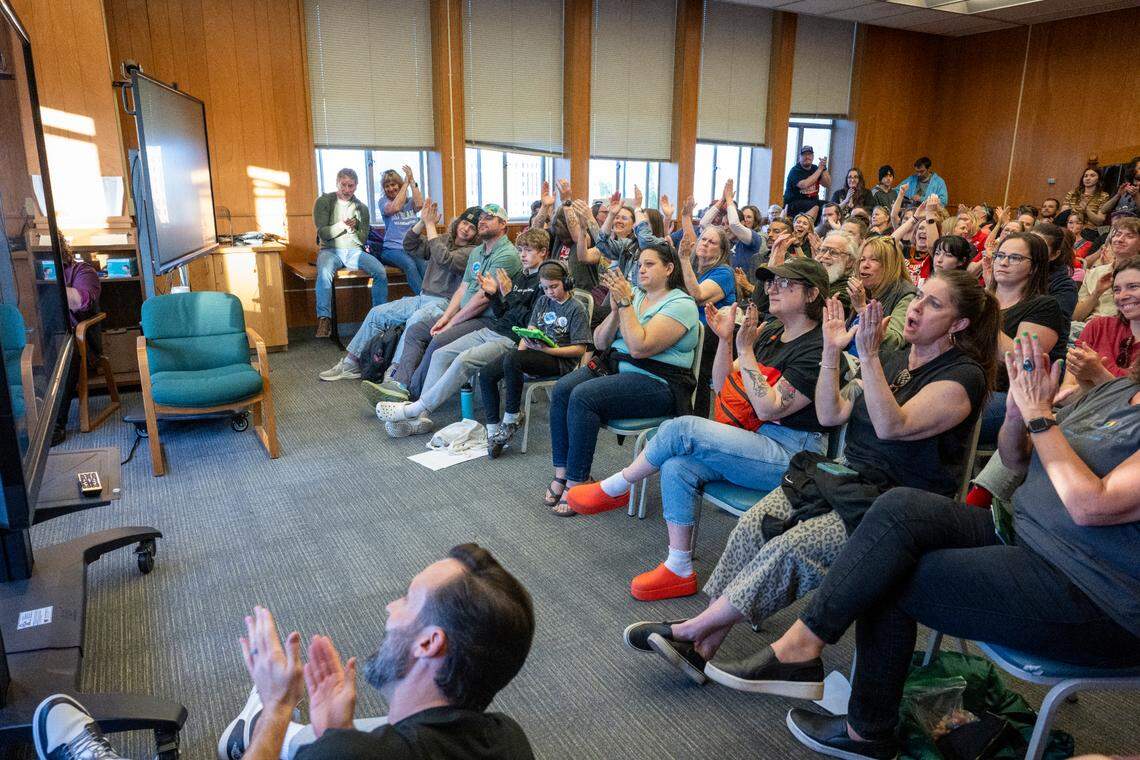
“Our children are responding to us and letting us know the best way that they know how, which is through their behavior, that they’re not getting their needs met,” she said.
Alisha Chang is a parent of four students at Franklin-Pierce School District, which has dealt with budget cuts over the years. Her oldest child graduated from Franklin Pierce High School in 2024, and she has two students – one in the 12th grade and one in the 10th grade – who attend FPHS. Her youngest child is an 8th grader at Ford Middle School.
In 2024, the district laid off 60 full-time staff, including 41 teachers. In 2025, it cut 9.5 additional full-time positions and made cuts to its art programs.
The News Tribune previously reported that teachers of color were the most impacted by the lay-offs due to seniority. About 60% of the district’s student population identify as a person of color.
“It’s left my kids feeling a little disconnected from staff because a lot of the staff that has gotten laid off because of the budget cuts were younger staff, staff of color, that they could relate to,” Chang told The News Tribune. “[They were people] they felt comfortable with, and a lot of those teachers are gone now.”
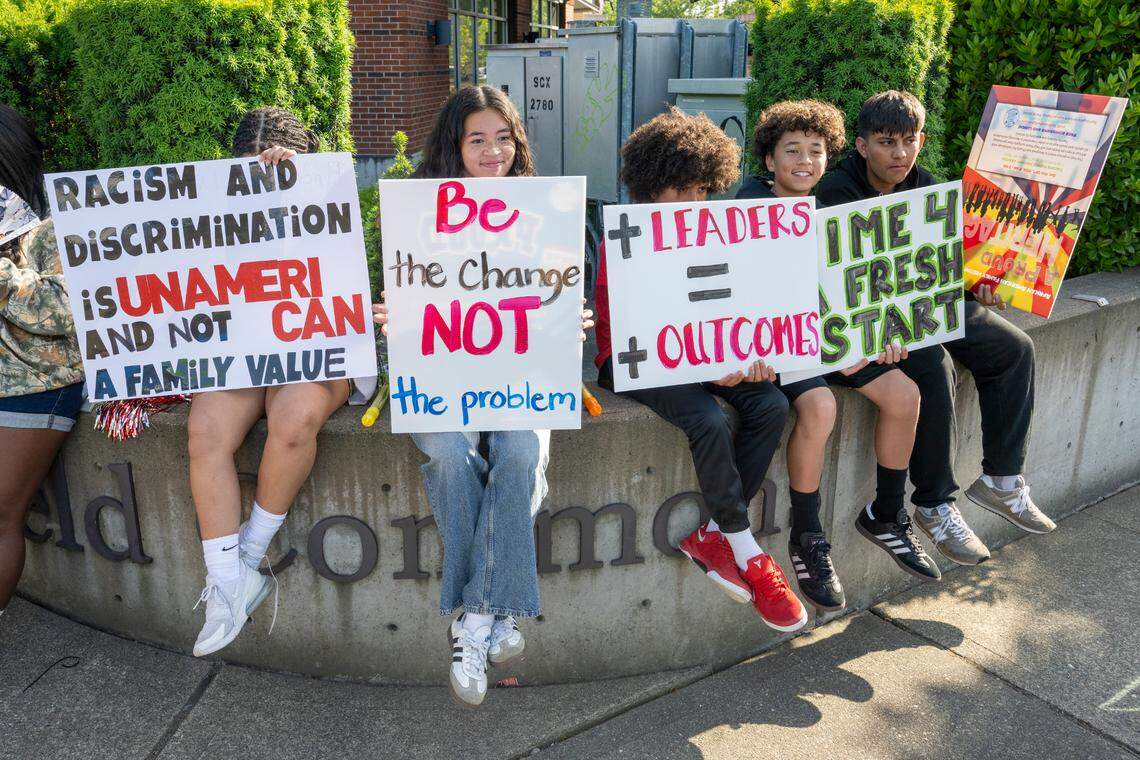
Chang said the biggest change was the shift from an 8-period school day to a 6-period school day, which has forced her 10th grader to make some difficult choices.
“She’s a band student but she also loves leadership and because they’re down to a 6-period day, she has to choose between the two – and so she’s in band and can no longer participate in leadership,” Chang said. “It’s mostly the CTE [Career and Technical Education] classes, the fun, hands-on classes – the electives that kids enjoy, that keep them engaged – those are the ones that either aren’t being offered or are super limited.”
Chang said the staff reductions have caused existing staff to be spread thin, limiting their ability to help students and adequately engage with parents.
“These positions are going away but the responsibilities aren’t – they’re just disseminating them to full-time employees that already have a full workload,” Chang said. “I am already starting to see the impacts of that in the interactions that I have with certain staff.”
What’s next?
Change could be on the horizon soon. After the end of the last legislative session, the Legislature charged State Superintendent Chris Reykdal’s office with identifying a more “adequate and equitable” funding model for schools in Washington. Reykdal said his office had two-and-a-half years to finish it, but intends to deliver a plan earlier, likely by fall 2026.
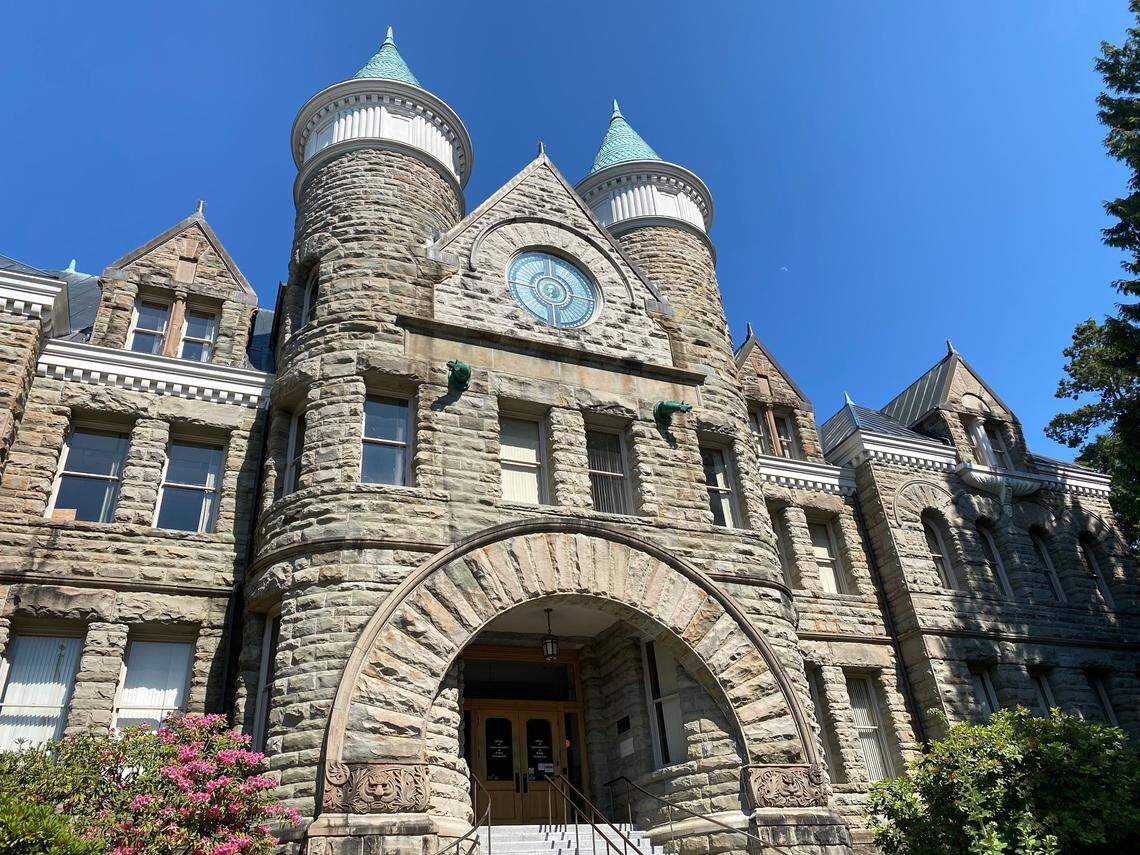
For Washington’s schools to get enough funding, Reykdal said, it’s billionaires who will have to step up in the form of taxes. As a state without a corporate or personal income tax, one of nine in the country, the burden of funding services falls on individual consumers. Half of the state’s tax revenue in 2022 came from retail sales-and-use taxes, The News Tribune previously reported.
“This isn’t a matter of just fun political debate,” he said. “Our state will be weaker if we don’t shift our tax burden from the middle class to the very wealthy.”
Democratic lawmakers in Washington earlier this week unveiled plans for a millionaire’s tax, but Gov. Bob Ferguson has said he can’t back the legislation as is.
Brown, the lobbyist to the state Legislature who works with multiple Pierce County school districts, said the state could make meaningful progress if it chose to eliminate the sales tax on contract special education services and increase investments in materials, supplies and operations for school districts. The state could also restore funding for the transportation of homeless and foster youth, which wasn’t covered in the 2025-2027 state budget, he said. Districts are required to provide transportation to school for homeless and foster youth while they face unstable housing, under the McKinney-Vento Homeless Assistance Act.
Meanwhile, the state faces a serious budget deficit. Gov. Bob Ferguson pegged the gap at $2.3 billion in his proposed 2026 supplemental budget, noting in a news release that the state plugged a $16 billion gap in the last legislative session. By 2027-2029, the hole is projected to be at over $4 billion, according to a presentation to the House Appropriations Committee Dec. 4.
Brown said lawmakers will have to navigate the pressure to meet other needs in the state budget as they consider how to fund education.
“And they’ve got a hard job,” he said. “I don’t envy the jobs of these budget writers. But I do know that where we are today for education is not sustainable for the long run, and that’s why we’re seeing more and more districts on the edge of binding conditions, which is basically insolvency.”
Despite what could change in the short term, experts and leaders in education across Washington seem to agree that the state is ripe for another lawsuit like McCleary.
Reykdal said Washington has followed a vicious cycle when it comes to education funding: a lawsuit over insufficient state funding for education, an increase in state funding, and then another lawsuit when funding inevitably falls short again. Typically, that pattern has meant about 30 years between lawsuits, but Reykdal said this cycle has been shorter than usual – McCleary was only resolved by around 2018.
“We’ve done this litigation thing with the state Supreme Court two or three times in our state’s history,” he said. “This cycle seems to be tighter.”
Medina, Tacoma’s CFO, agreed that Washington is due for “another McCleary.” But those lawsuits take time to go through the legal system – McCleary took about 11 years to get resolved.
Some say Washington’s students can’t wait for another lawsuit. What will happen in the meantime?
Medina had a bleak outlook.
“Cuts, cuts, cuts,” she said.
This story was originally published February 5, 2026 at 5:00 AM with the headline "State funding for Pierce Co. schools has soared. Why are some still struggling?."

