
Dangerous nuclear waste in aging WA pool at risk of quakes. What’s being done
AI-generated summary reviewed by our newsroom.
- Hanford moves 1st radioactive capsules from underwater storage.
- The capsules could break and release radiation in a severe earthquake.
- Dry storage should be safer and reduces maintenance and monitoring costs.
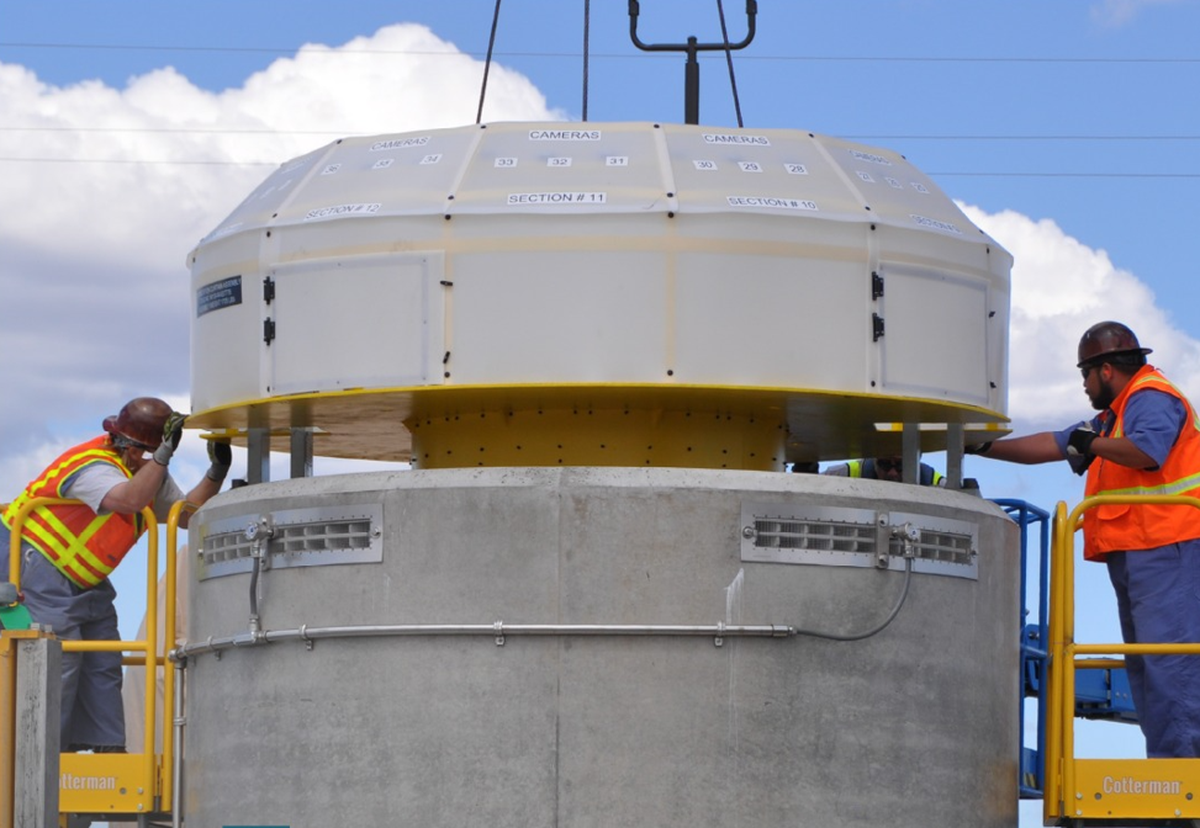
The first capsules of high-level radioactive waste have been removed from a water-filled pool at the Hanford nuclear site to prepare them for safer dry storage in steel-lined, reinforced-concrete casks.
It’s progress that has been 10 years in the making, said Ray Geimer, the new Department of Energy manager of Hanford, speaking at the Oregon Hanford Cleanup Board.
Now the capsules, which contain 30% of the radioactivity at the Hanford site, or about 80 million curies, are at risk of being damaged and releasing radiation in the event of a severe earthquake.
They are stored in a stainless-steel-lined pool that has designed to be used only until about 2004. The pool is in the Waste Encapsulation and Storage Facility (WESF) on the end of B Plant in central Hanford.
“By transferring the capsules to protective casks and moving them to the nearby Capsule Storage Area, we ensure safe and compliant storage of the capsules and reduce extensive monitoring and maintenance costs,” said Bob Wilkinson, president of DOE contractor Central Plateau Cleanup Co. (CPCCo) in a memo congratulating employees on the start of the project.
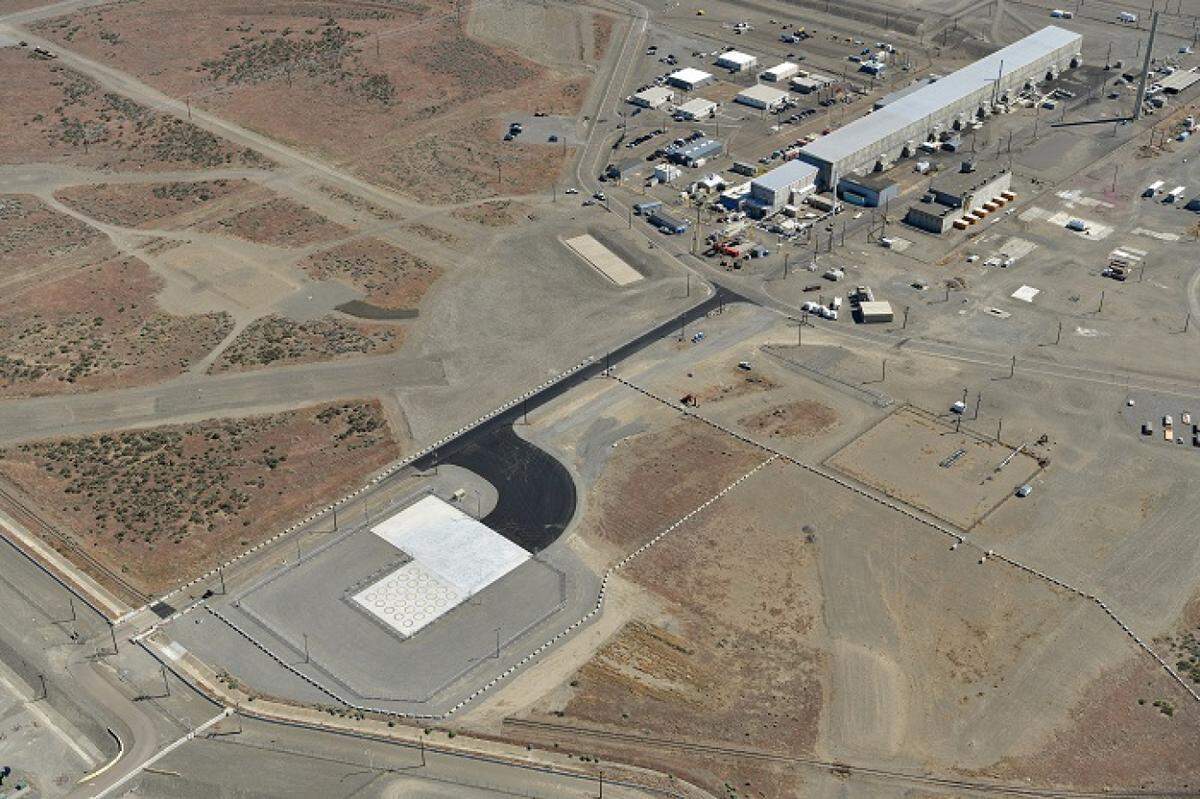
The containers will be stored on outdoor pads, much like those used to temporarily store used nuclear fuel at commercial power plants, including at the Columbia Generating Station near Richland.
Pulling the initial capsules out of underwater storage is just the first step in what’s projected to take several years to move nearly 2,000 capsules, most about 22 inches long, to safer storage.
Filling the first dry-storage casks with radioactive capsules and transferring then to the outdoor pads until it can be permanently disposed will take about two months, according to the Washington state Department of Ecology, a regulator on the project.
In all, 18 casks are expected to be filled and moved to dry storage, it said.
Severe earthquake risk
In 2013, the Oregon Department of Energy raised concerns that the concrete walls of the WESF pool had lost structural integrity due to high radiation exposure over four decades.
The next year the Department of Energy Office of Inspector General found that the pool, built in 1973, could be at risk in a severe earthquake.
The 2014 inspector general memo said that WESF was the DOE facility at the greatest risk in the case of a natural disaster beyond what it was designed to sustain.
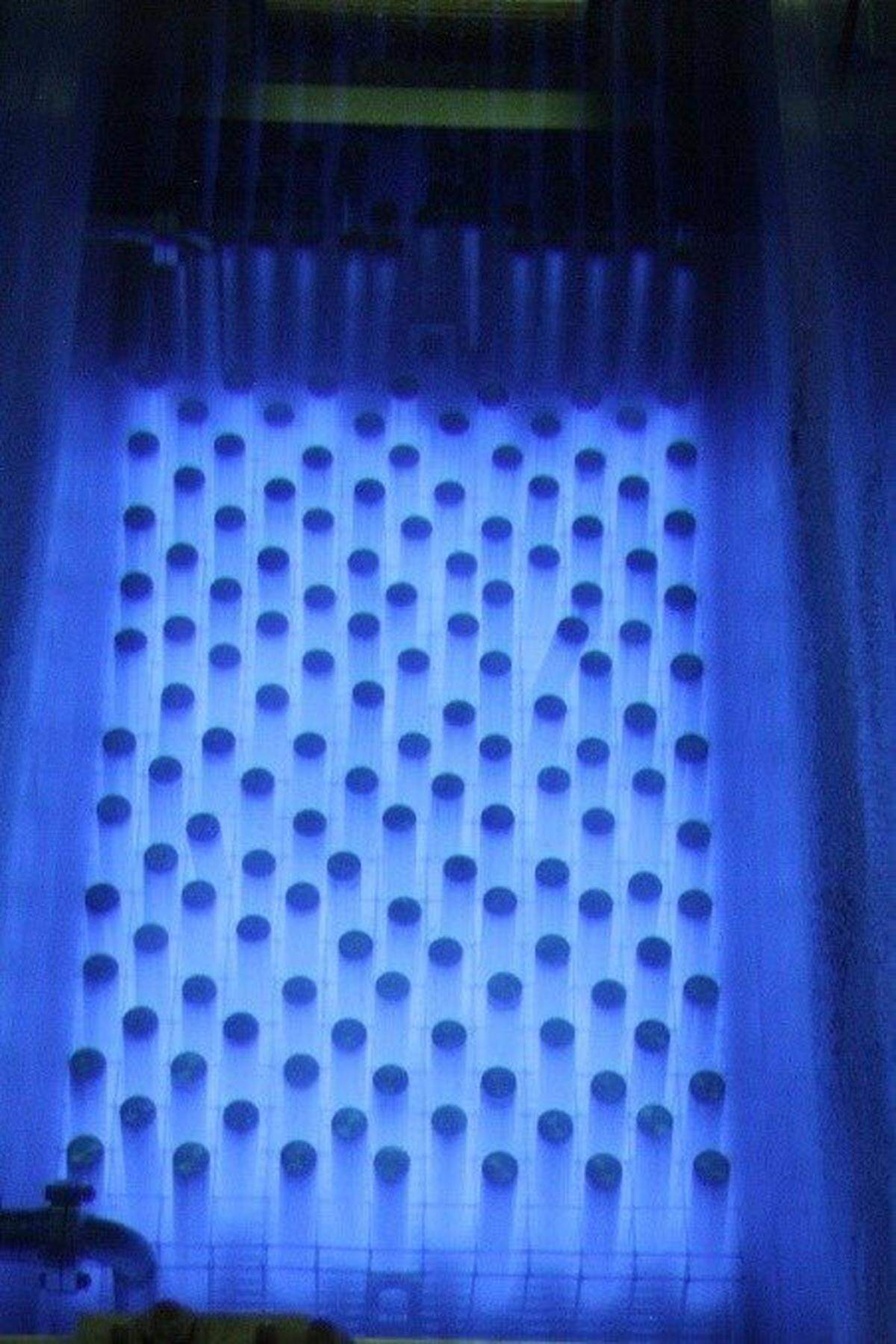
Some 1,335 cesium capsules and 601 strontium currently are stored in the WESF pool under 13 feet of water to protect workers from their radiation and to help cool the capsules. They can be as hot as 1,000 degrees Fahrenheit.
The likelihood that WESF could be damaged in a severe earthquake is not high, but a loss of water in the WESF pool would cause a substantial risks to Hanford workers, the general public and the environment, said the Tri-City Development Council in comments in 2018 urging DOE not to delay moving the capsules from the pool to dry storage.
A loss of power to WESF or a loss of water to cool the capsules could cause them to overheat and break, making the building too radioactive for workers to enter, according to a 2000 report by former contractor Fluor Hanford, which looked at a worst-case scenario for the WESF pool.
The cesium and strontium were removed from Hanford’s underground waste storage tanks from 1967 to 1983 to reduce the rate at which heat was generated in the tanks and improve the stability of the tanks.
The Hanford site was used from World War II through the Cold War to produce nearly two-thirds of the plutonium for the nation’s nuclear weapons program.
Uranium fuel irradiated in Hanford reactors was chemically processed to remove the plutonium, leaving a stew of 56 million gallons of radioactive and hazardous chemical waste stored in underground tanks.
Hundreds of the cesium capsules were leased for commercial use and government research in the 1980s, with moving them out of water storage potentially damaging the metal of the capsule.
In 1988, a leak of cesium was detected in a capsule being commercially used by a radiation sterilization company in Georgia, and DOE’s leasing project ended with cesium capsules being returned to WESF.
DOE began preparations in 2016 to move the capsules out of the WESF pool using remotely operated equipment to protect workers.
The first step was modifying the building’s aged ventilation system and filling six of its contaminated hot cells with grout. The remaining hot cell, G cell, is being used to help prepare the capsules for dry storage.
In 2020 a full-scale mock-up of G cell was built in an unused Hanford building to test equipment and allow workers to practice tasks, including using manipulators like those that are operated outside the hot cell during capsule packaging.
Additional construction was done in recent years not only to modify WESF for packaging the capsules, but also to build the outdoor storage area for the capsules.
The project required a heavy-haul road to new reinforced concrete pads for dry storage of the capsules a half mile from WESF.
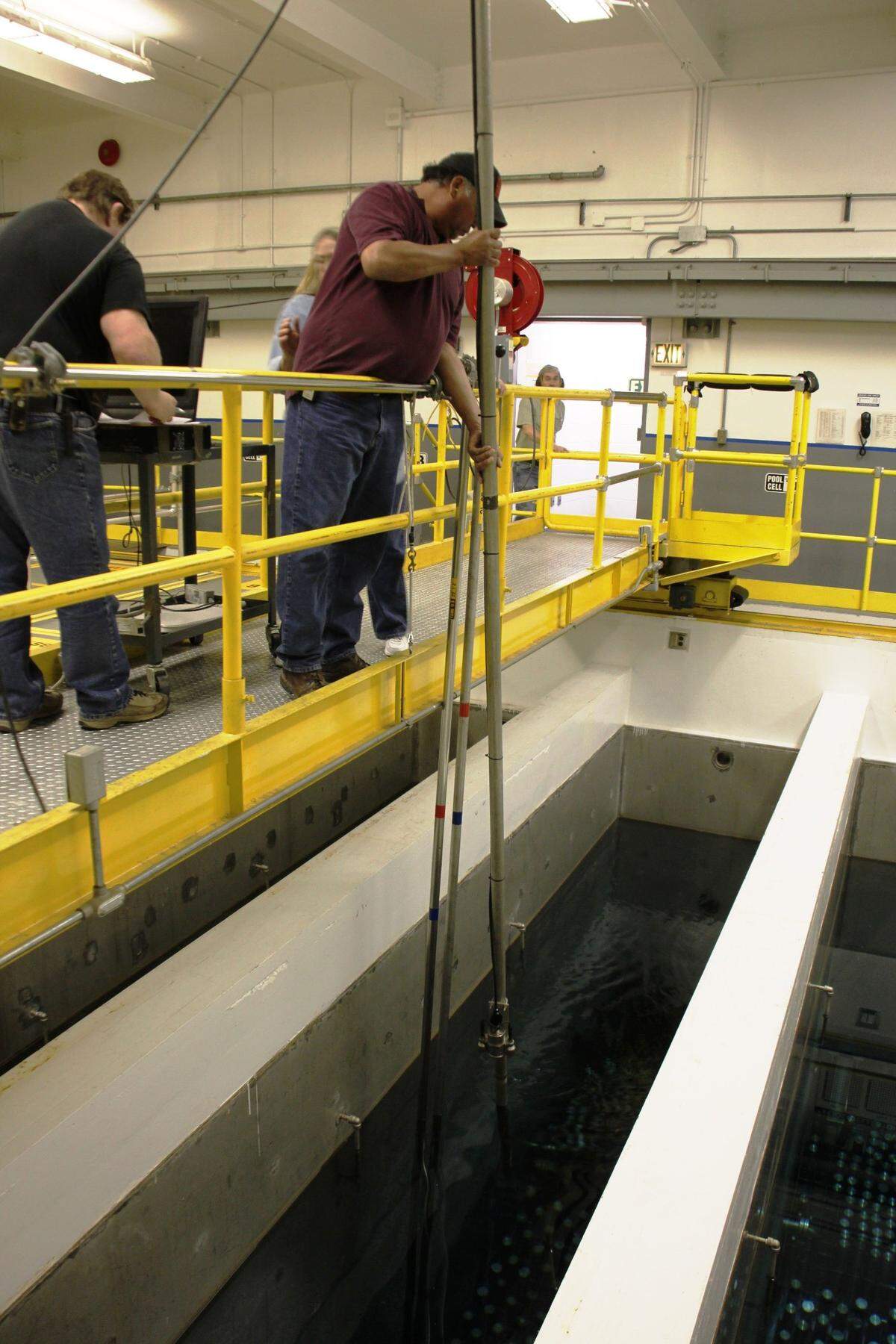
As work starts to remove the cesium capsules, CPCCo workers stand above the pool where they are stored and used long-handled tools to move the highly radioactive capsules into chutes and transfer them to G cell.
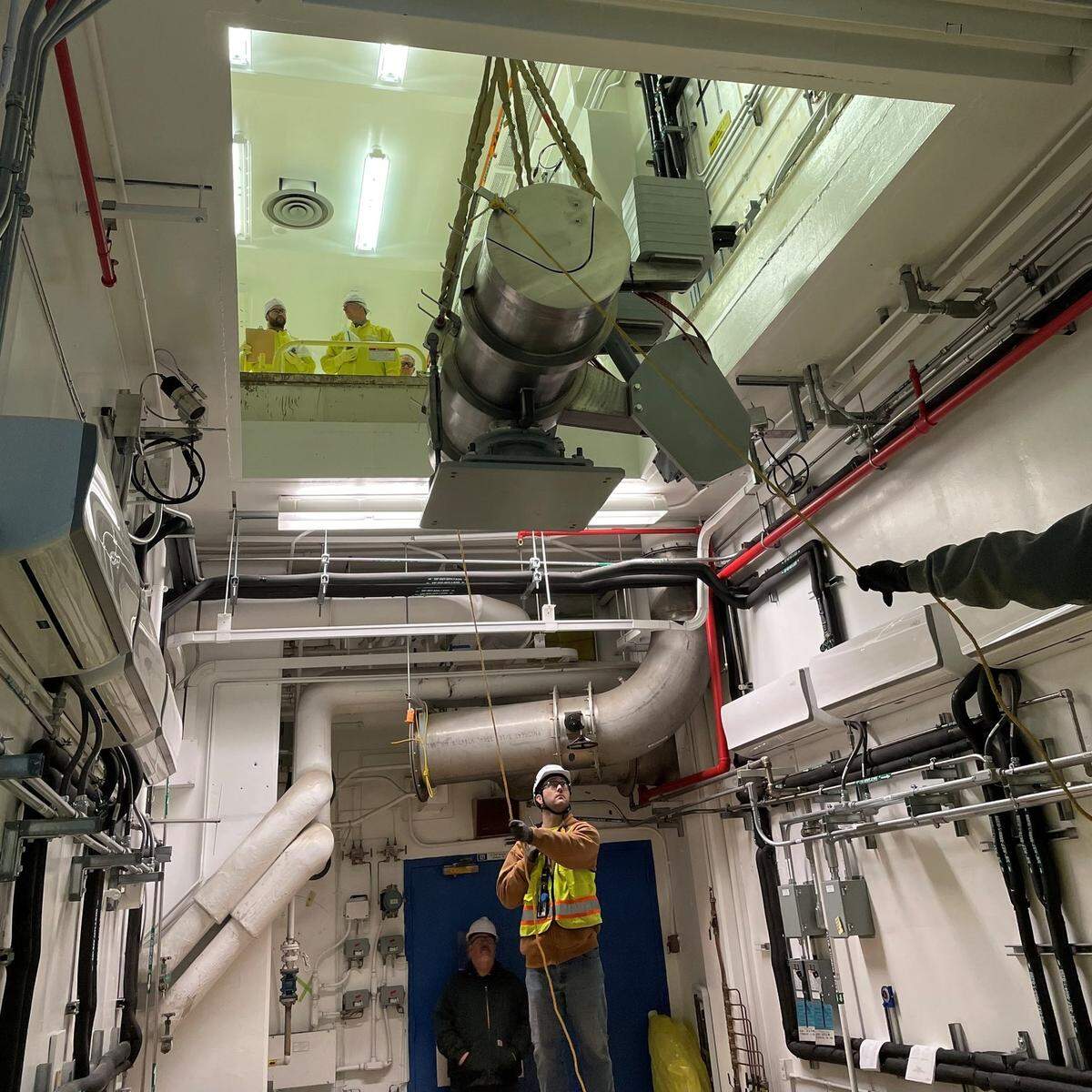
In the cell the capsules are inspected for damage by workers looking through a leaded glass window into the cell, and then workers outside the cell use manipulators to place the capsules in a stainless steel container that can hold six of them. The air in the container is replaced with helium to help dissipate the heat from the capsules.
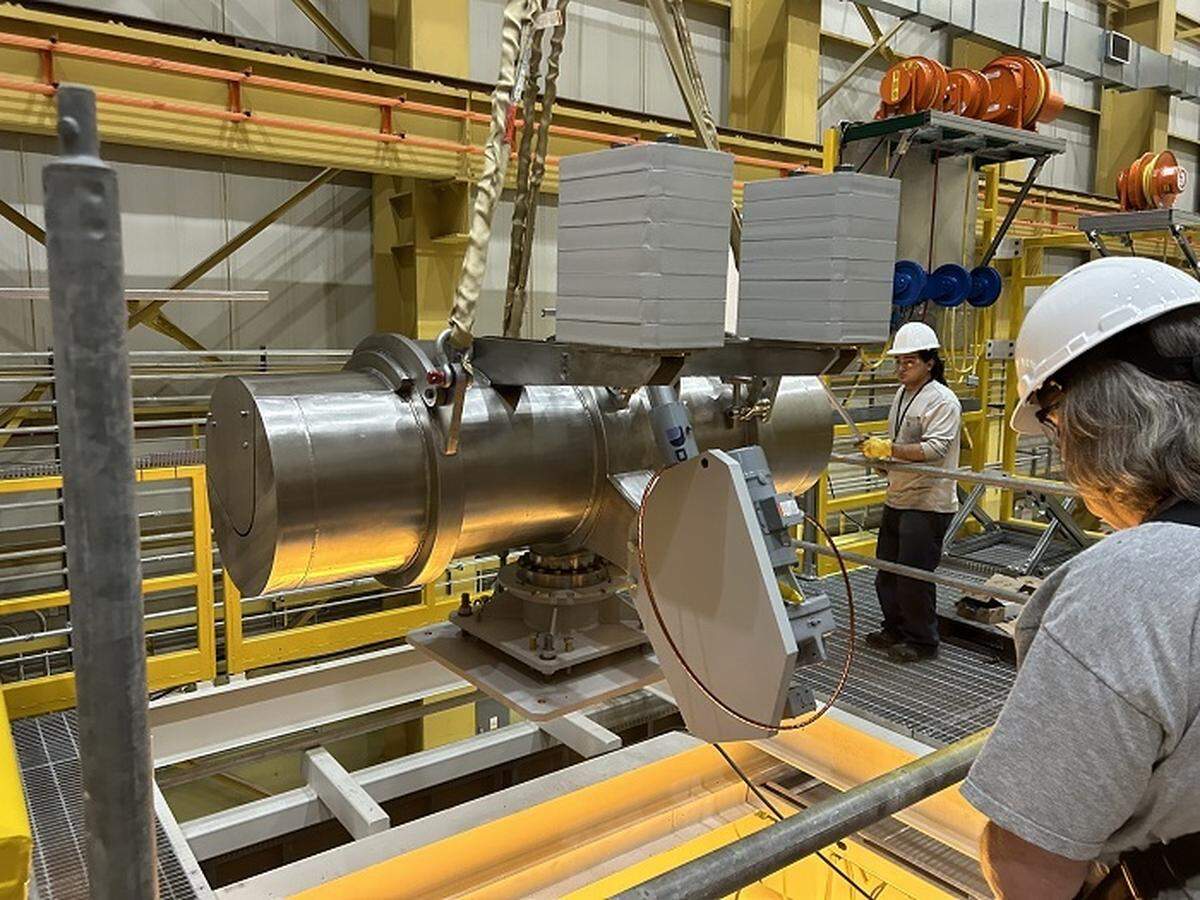
The filled containers are transferred out of the top of G cell and moved by crane in a shielded transfer system to the WESF truck port, where the containers are lowered into a shielded transfer cask.
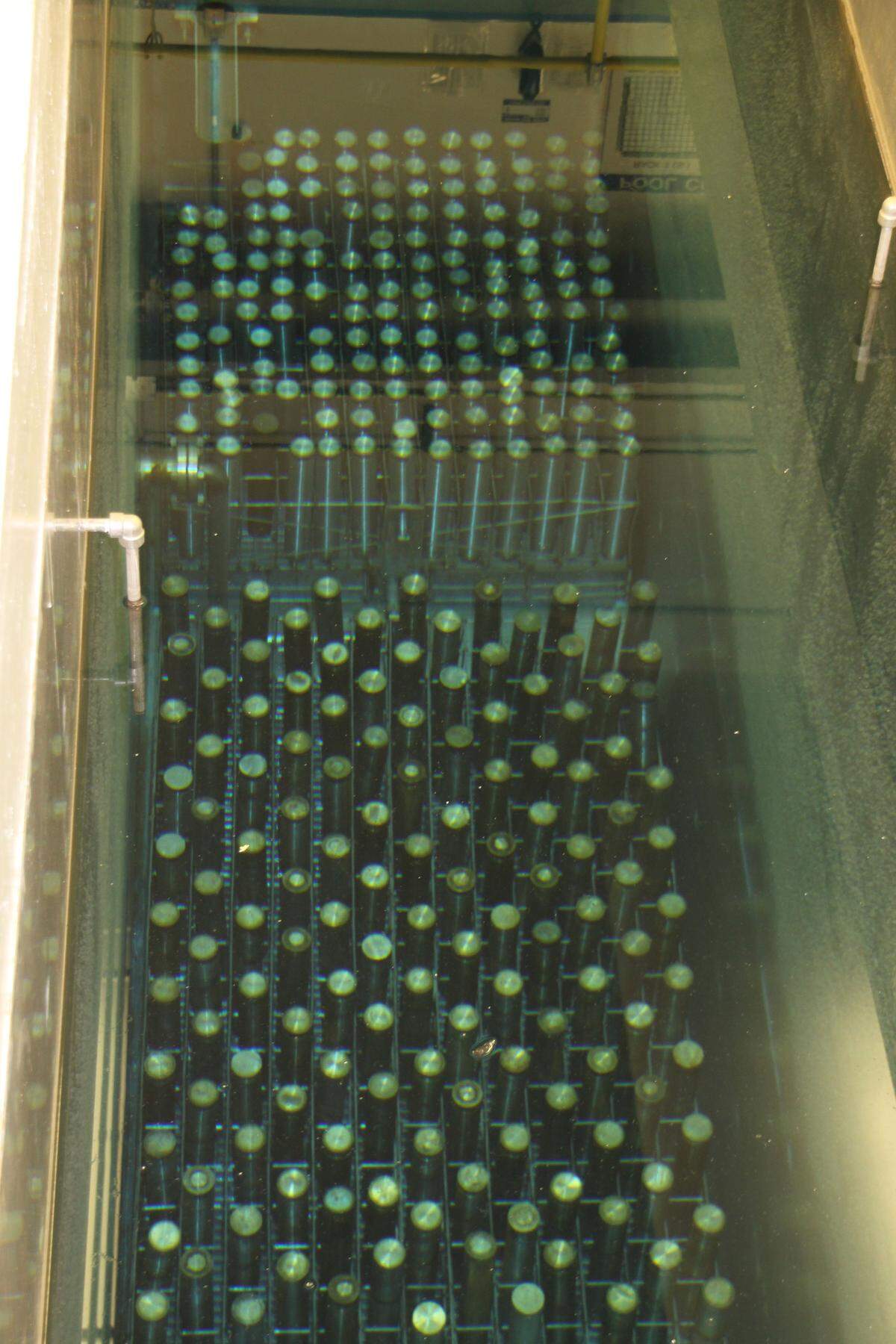
There the containers packed in G cell will be packed into an 11-foot tall, 10-foot diameter cask shielded with reinforced concrete that can hold up to 132 capsules.
A robotic welder will seal the lid of the cask’s inner storage container and helium will be used again to replace air. Then an outer lid also will be welded into placed.
The cask will be loaded onto a transporter repurposed from DOE’s West Valley, N.Y., nuclear remediation project, saving taxpayers nearly $2.5 million., to be hauled to the new storage pads. Each cask weighs 163,000 pounds when loaded.
The new pads include a temperature monitoring system and the dry cask storage system allows airflow for passive cooling.
Removing all the capsules from underwater storage will allow WESF to be deactivated, saving as much as $6 million a year, according to DOE.
When DOE began considering dry storage in 2014, it was spending $7.2 million annually on constant monitoring and maintenance for underwater storage.
“We’re glad to see this project moving forward,” said the Department of Ecology in a statement. “It’s integral to the goal of cleaning up the Hanford site and reducing threats to the surrounding environment and communities.”
This story was originally published November 17, 2025 at 12:53 PM with the headline "Dangerous nuclear waste in aging WA pool at risk of quakes. What’s being done."