
Can I get a ticket for speeding on a highway ramp in WA? Follow these rules
From zipper merging to drinking in the car and allowing children to ride in the front seat, Washington has a lot of state laws governing safe driving practices.
One reader recently asked about speeding when taking exits on highways and interstates.
“What is the legal speed limit on an on- or off-ramp?” the reader asked. “When is your acceleration excessive on the on-ramp?”
The Tri-City Herald reached out to experts about driving on highway exits in Washington state. Here’s what we found out:

What is the speed limit for on-ramps and off-ramps in Washington?
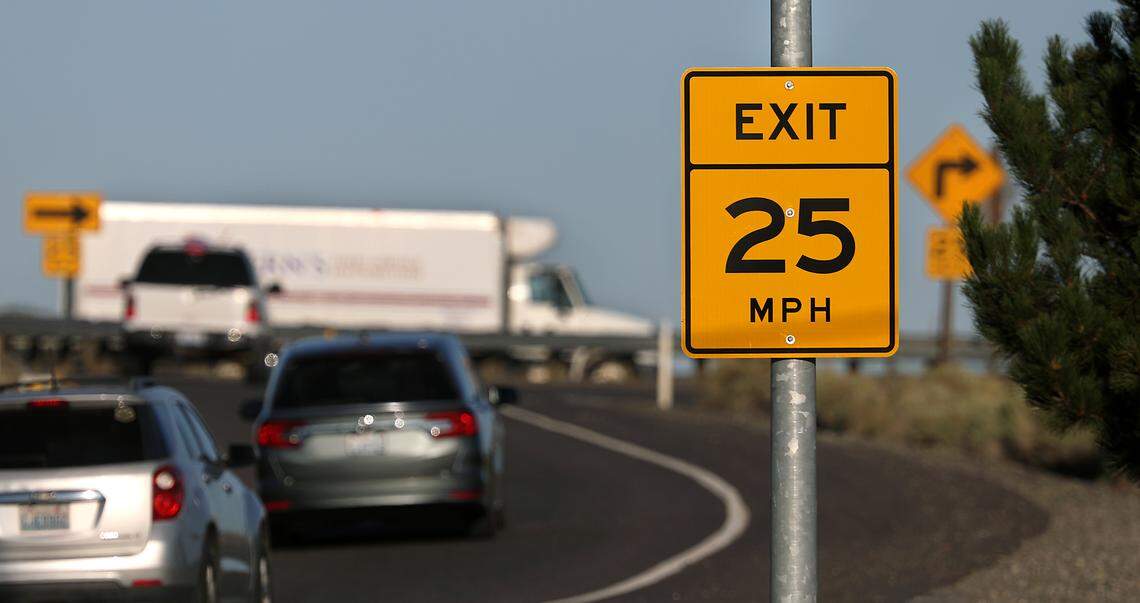
Most highway ramps in Washington state — especially off-ramps — have posted speed signs. Each yellow sign indicates the recommended speed for the ramp drivers are about to enter.
If an off-ramp is curved or leads to a city street, for instance, the sign might advise drivers to travel no faster than 35 mph.
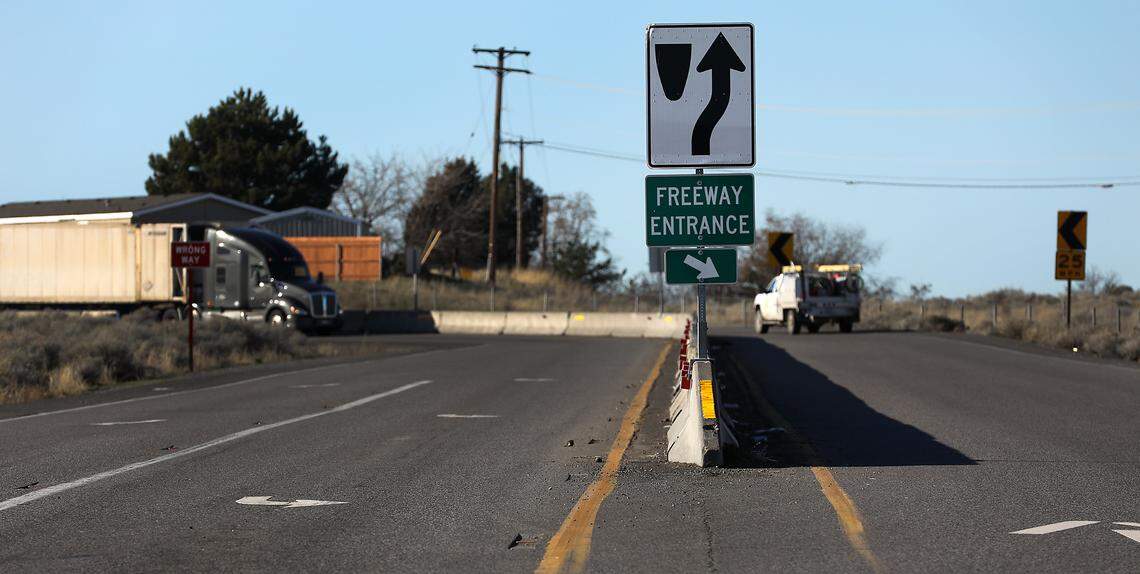
A sign at the on-ramp from Columbia Drive in Kennewick to Highway 395 recommends that drivers go 25 mph because of the 90-degree turn to enter the merging lane.
“Washington State Department of Transportation engineers look at the road, the curvature, the angle and all that,” Washington State Patrol Trooper Daniel Mosqueda told McClatchy. “(Then) they come up with a proper speed, a safe speed for the public to be able to drive on that.”
The posted speeds are just recommendations, Mosqueda said, explaining that drivers can travel the ramp at the speed best suited for their capabilities, within reason.

Can I get a ticket for speeding on a highway exit?
According to Mosqueda, speed recommendations are not enforceable in Washington state — meaning that you generally can’t be pulled over for exceeding them.
However, he said, there is still an expectation of safety.
Driving so fast that you’d break a nearby speed limit would still be considered speeding, Mosqueda said, even on a ramp.
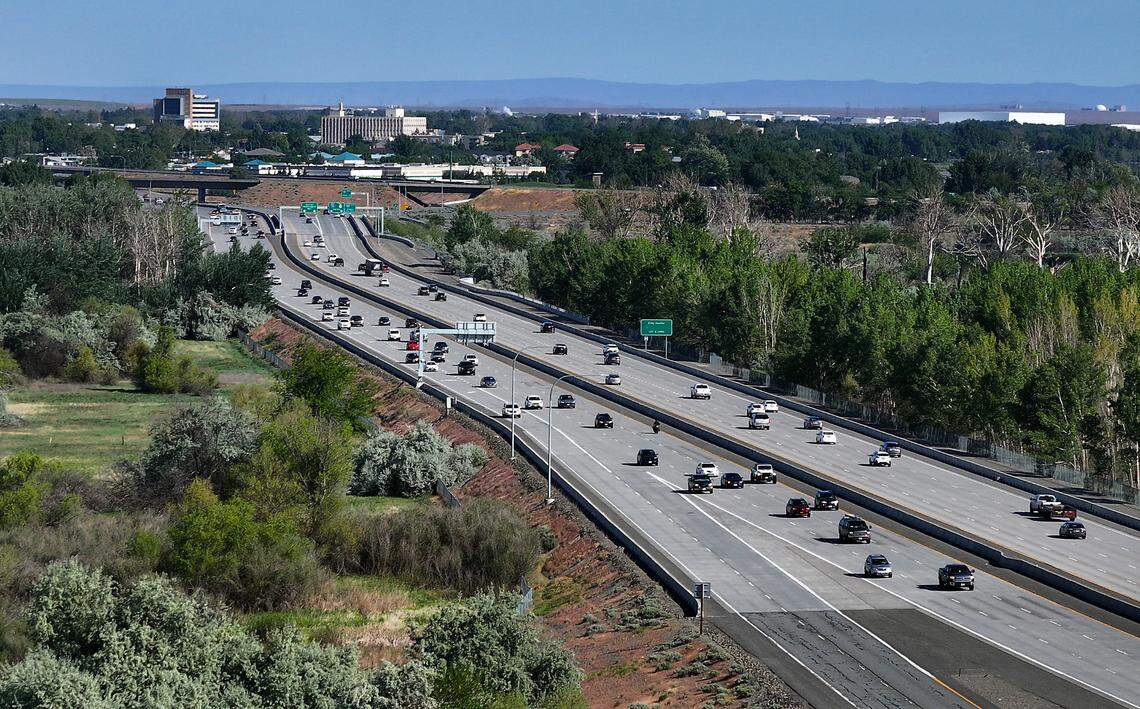
For example, Mosqueda said, drivers should travel no faster than 35 mph on the ramp connecting westbound Interstate 182 and eastbound Interstate 82.
The ramp has a low recommended speed because it requires drivers to navigate a tight circle, he explained.
Despite many posted signs and warnings, the trooper said, drivers attempt to take this ramp too fast every year, resulting in crashes.
What if there’s no recommended speed posted?
If there is no sign indicating a recommended speed for a freeway on- or off-ramp, you should still take the exit at a safe speed.
Ramps are meant to connect two different flows of traffic with minimal impact, the Washington State Driver Guide says, so you should use a speed that allows you to enter a roadway without becoming a danger to other drivers.
If you’re going too slow, you could cause another driver to slam on their brakes, Mosqueda said. If you’re going too fast, however, you could wind up hitting your own brakes.
Rather than the speed limit on the highway you just left, the trooper said, you should be thinking about the speed limit for the road you’re about to get on.
Mosqueda said you should begin slowing down as soon as you see a sign alerting you to an upcoming reduction in speed. Don’t wait until you see signs with the lower speed limit.
Can I go as fast as I want on a freeway on-ramp in Washington?
While recommended speeds aren’t enforceable on ramps, drivers are still expected to drive safely, Mosqueda said.
“No person shall drive a vehicle on a highway at a speed greater than is reasonable and prudent under the conditions and having regard to the actual and potential hazards then existing,” the Revised Code of Washington says.
Instead, you should control your speed “to avoid colliding with any person, vehicle or other conveyance on or entering the highway,” state law says.
According to the Revised Code of Washington, drivers should stick to these maximum speeds unless other speed limits are posted: 25 mph on local streets, 50 mph on county roads and 60 mph on state highways.
Drivers should use “an appropriate reduced speed” when approaching intersections, curves, hill crests and narrow and winding roadways, state law says, and when there are special hazards, weather or highway conditions.
What are the penalties for speeding in Washington state?
If you’re pulled over for speeding in Washington state, your fine will depend on your speed and the posted speed limit, according to the Washington Courts’ Bail Schedule.
If the speed limit is 40 mph or less, you could pay a $140 fine for going up to 5 mph faster than you’re supposed to.
If you’re caught going 36 mph or more over the speed limit in the same zone, however, you could pay $437 in fines.
Going 36 mph or more over the speed limit in the same zone could cost you a $437 fine.
When the speed limit is higher than 40 mph, fines for speeding range from $119 to $437.
There may be additional situational fines, including:
- Failure to reduce speed for conditions: $150
- Speeding in a school zone, playground or crosswalk: $228 or more depending on speed
- Speeding in a construction zone: $163 or more depending on speed

What should I do if I get stuck behind a slow driver?
Because drivers have different capabilities for safest speeds on roadways, you may find yourself suddenly stuck behind a slower motorist.
Mosqueda recommends always looking down the road to assess the speed of the cars ahead of you.
This way, you can spot slower drivers before you’re forced to pump the brakes.
If there is only one lane of traffic headed in the same direction, be patient and adjust your speed, the driver guide recommends.
Washington state law says slower drivers should pull over once five or more vehicles are following behind them.
In that case, the slower motorist should let the faster drivers pass them, then safely return to the road.
Mosqueda reminded drivers that a lot of convoys with agricultural equipment will be hitting the highways as harvest season begins in Eastern Washington.
These vehicles generally drive 35 mph to 45 mph, the trooper said, and the slower speed can catch many people off guard.
“That’s a trigger for a lot of motorists but it doesn’t need to be,” Mosqueda said. “If people just look farther down the road, they can move over and slow down in advance with no issue. The problem is when people get startled by them.”
Knowing what to look out for can prevent collisions, backups and unsafe driving practices, he said.
This story was originally published August 25, 2025 at 5:00 AM with the headline "Can I get a ticket for speeding on a highway ramp in WA? Follow these rules."