
Returning to the Earth by becoming earth. Why some WA folks choose human composting
Not everyone has the chance to walk on the land they’ll one day fertilize.
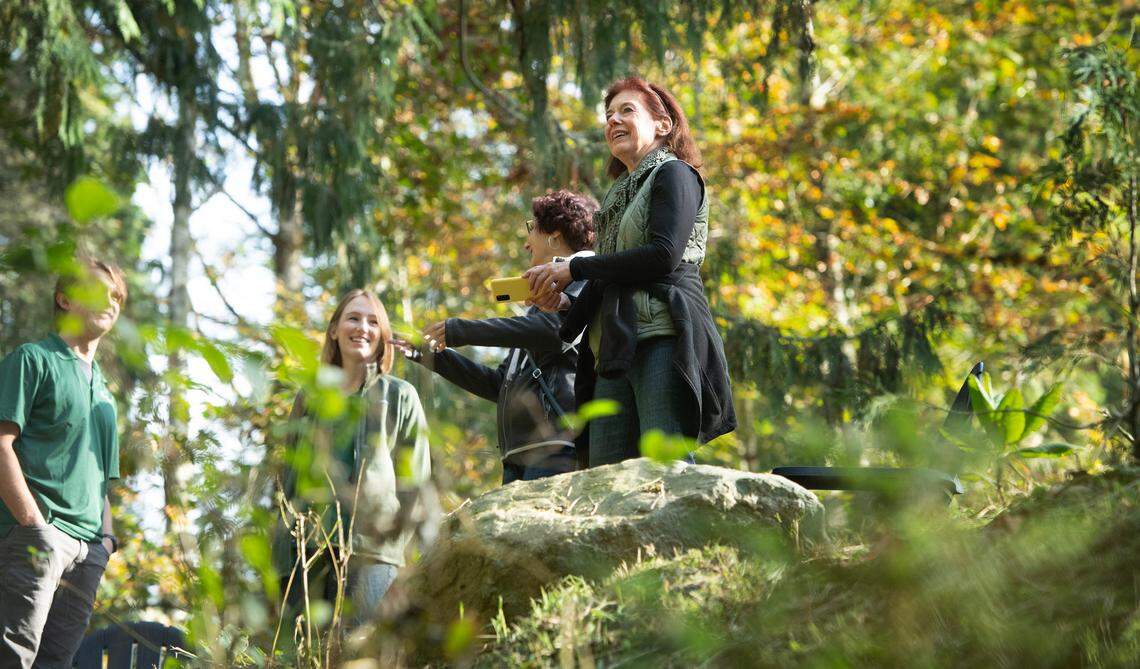
Lorna Moore did just that in early October when she visited the property that human-composting company Earth Funeral uses near Quilcene on the OIympic Peninsula. She plans on having her earthly remains spread among the towering cedars and firs on the property.
Eschewing burial and cremation, the 76-year-old Woodinville resident will one day be turned into garden-grade compost. While she has no plans to shuffle off her mortal coil anytime soon, she knows the inevitable will happen and the idea of returning to the Earth by becoming earth appeals to her.
“You become part of the ecosystem,” she said. “And that’s very important to me.”
Human composting, also referred to as soil transformation and terramation, is slowly but steadily gaining popularity in the United States, but Washington is one of only a handful that allows it. Companies like Auburn-based Earth Funeral and another, Recompose, promote the process as carbon neutral. Proponents say the process doesn’t use land and material resources like graveyards, nor does it produce the pollutants that cremation creates.
The process costs just under $5,000, according to Earth Funeral spokesperson Haley Morris.
“I believe human life is sacred, but I do not believe human remains carry that with them,” Moore said. “The fact that we have millions of people buried in the ground, taking up ground space, just doesn’t make any sense to me.”
The composting process involves placing a body inside a chamber (the industry refers to them as vessels). Then, organic material like wood chips, alfalfa and straw is added. The process takes 30-45 days. The process produces from one half to a full cubic yard of compostable soil per body. That’s many times the volume of a traditional cremation.
Olympics’ shadow
According to research by the National Funeral Directors Association, 68 percent of the public is at least interested in green funeral options. That’s up from 55.7 percent in 2021.
Earth Funeral deposits the human compost from its clients on its conservation land, a 5-acre, sloping parcel overlooking Crocker Lake and in the lee of the Olympic Mountains. It was last logged in 1965. Today, it’s a protected green space with alders and big leaf maples.
Each family decides how much of the soil they want to keep and how much is brought to the site.
“They can put it in their backyard. They can put in their garden,” said Scott Roycroft, who oversees the company’s conservation efforts. “They can scatter it along one of their favorite trails. The rest of the soil comes here.”
About half of the parcel is forest and the other half is wetlands. The company is exploring plans to legally conserve it for perpetuity, he said. It has no plans to ever log or sell it.
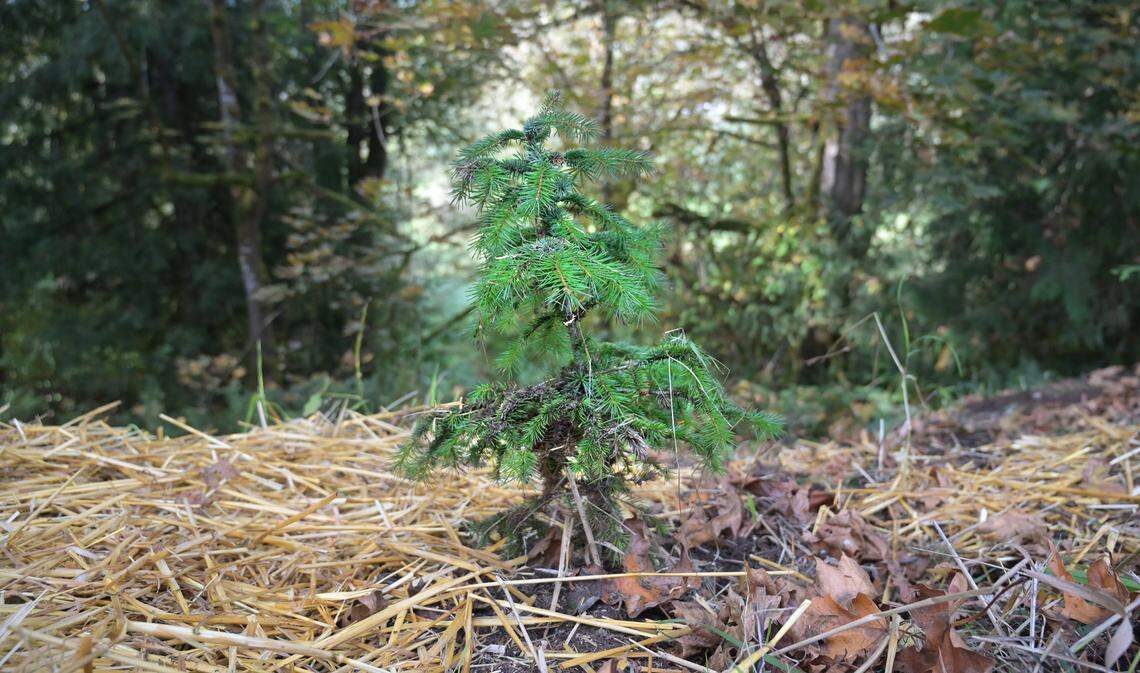
The soil is brought to the site on a monthly basis and then spread over targeted areas and covered with straw. Once it’s integrated into the original soil, native plants like huckleberry and cedar trees are added.
The property was chosen both for its need to be restored but also for its aesthetic qualities, Roycroft said.
Site visit
Lacey resident Chris Gourley, 43, visited the Quilcene site during the weekend of Oct. 5. It was the first time the location was open to families.
Gourley’s father, Seattle resident Richard Nadolny, died in April 2022 at age 63. His remains were composted by Earth Funeral and then spread at the site.
“My husband and my daughter came with me,” Gourley said. “It was, of course, raining that day, so we got to get nice and muddy walking around.”
Earth Funeral has built trails on the sloping, forested site.
Nadolny took his own life and died without a will, his daughter said. He had a partner, but, because they weren’t married, a lot of post-death decisions suddenly fell in Gourley’s lap.
The choice to go with human composting was a “no brainer,” she said.
“He was a very green, environmentally conscious person, and had been his whole life,” she said. His partner was all-in on the decision, as well.
“She had filed all the paperwork and everything, but as the next of kin, I was the one that ended up signing everything and approving,” Gourley said.
The process was easy, she said. Earth Funeral worked with the local coroner and other authorities. She said the experience was smoother than when her mother recently died and was cremated through a funeral home.
Planning ahead
Gourley, Nodolny’s partner and other family members received small amounts of the soil. The rest was spread at the Quilcene site.
Gourley is an environmental planner who works with restoration sites. She approved of Earth Funeral’s conservation work.
“The plants that they chose looked really great, and the overall landscape was well developed,” Gourley said. “I was surprised to hear that they have 250 approximate people’s composted soil there.”
Gourley, who said she’s not sentimental, didn’t have any strong emotions during her visit. But the experience was akin to when the avid hiker and mountaineer is in the wilderness.
“It felt like when I’m outside,” she said. “I get this open and free feeling.”
Because Gourley had so much to do following her father’s death, she is now a preacher of planning ahead.
“I just will hammer home to every person I meet from now until eternity is make the plans ahead of time,” she said.
Circle of life
Moore has planned ahead. That’s what allowed her to visit the site in early October. Until composting became an option for her, Moore planned on cremation and to have her urn buried at her parents’ grave site in upstate New York.
An avid gardener who grew up on a farm, she said the circle of life has always been part of her philosophy.
“This seemed like a really good alternative,” she said of composting. “I think our Earth is for the living. I don’t need to take up space in a underground vault of any sort. I’m just happy to be out here contributing to things that are growing.”
This story was originally published October 22, 2024 at 1:09 PM with the headline "Returning to the Earth by becoming earth. Why some WA folks choose human composting."
