
WA created its own wildfire air quality detection tech. Here’s how you can access AQI data
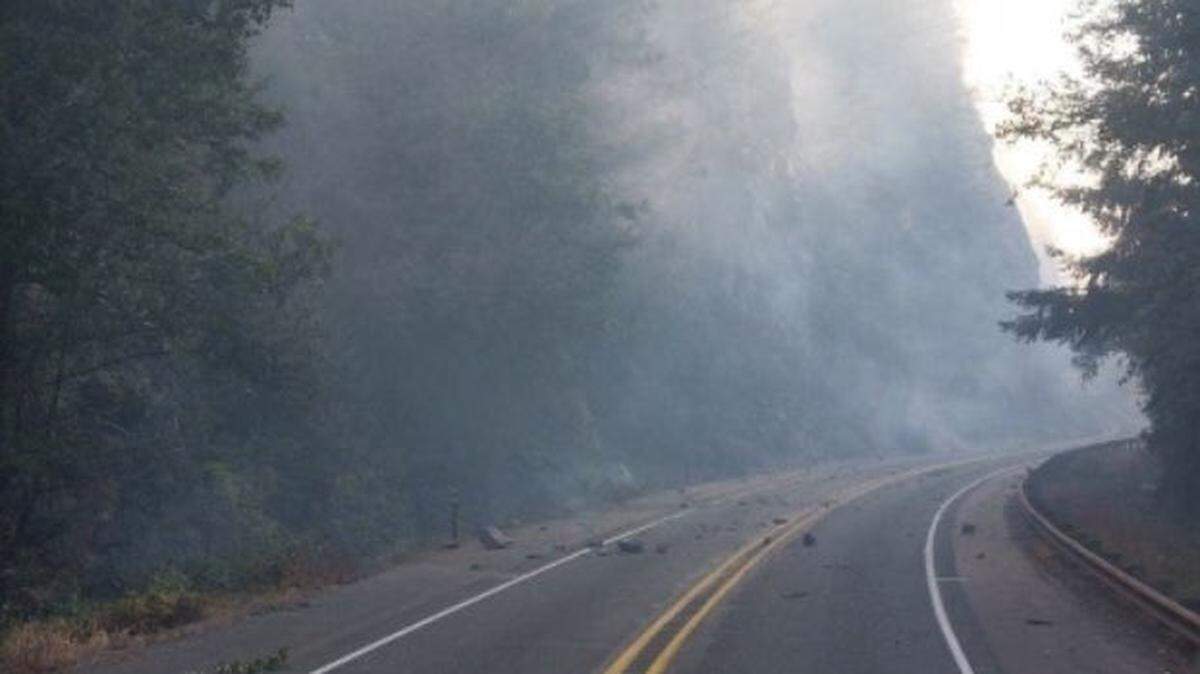
As wildfire season continues in Washington, the state’s Department of Ecology continues to work on a new tool to help manage its effects.
Back in 2018, the department developed a prototype for its own air quality monitor after it couldn’t find an available air quality monitor that met its needs.
“There have been consumer sensors on the market for many years, and we had found that none of the ones that were commercially available were really the right fit for our monitoring needs in Washington,” DOE Air Monitoring Coordinator Jill Schulte said in a video call with McClatchy.
The monitor, called SensWA, is tailored to Washington state’s specific needs, Schulte said.
“Since the components are relatively inexpensive, we wanted to build a sensor device that was really customized to our specifications,” Schulte said. “So we’re able to use really higher quality components than a lot of the commercially available ones, and we’re able to have them be connected via a cellular modem, so they don’t rely on Wi Fi or, you know, cable communication, or anything like that.”
The resulting device is small and portable, and can be used to detect fine particle pollution, resulting from particles under 2.5 micrometers wide. In Washington, its primary application is detecting wildfire smoke.
Air quality data in WA
The department uses SensWA, as well as its other, more traditional monitors, to maintain an air quality dashboard, giving Washingtonians access to updated information on the smoke pollution in their area.
“We first started using them for public data reporting in 2022, and then every year we’ve been adding new sites, and ... sometimes we relocate sites that are better suited to another location.”
The state currently has over 130 SensWA monitors, although the majority of them are currently paired with a traditional monitor to test their accuracy. 46 are in use without a pair, Schulte said.
“It’s helpful to have a portable and lower cost tool that we can use to do monitoring in kinds of places we wouldn’t have been able to reach with traditional monitoring equipment, which is much larger and more expensive, requires a bigger footprint and more infrastructure, that kind of thing,” Schulte said.
Air quality monitoring where it’s needed most
The monitors have allowed DOE to monitor less-populated, rural areas in ways that they haven’t in the past. According to Schulte, while those areas are typically hit worst by wildfire season, Environmental Protection Agency regulations ask the department to focus on more densely-populated areas.
“One of the challenges with the traditional air monitoring network is that we’re focused on populated areas, that’s what the EPA requires,” Schulte said. “So the SensWA allows us to be in a lot of smaller rural communities.”
Washington’s biggest cities have their own air quality monitoring agencies, although they collaborate with the DOE to decide how to monitor air quality and have DOE tools available to them.
“So we have seven of them in Washington, typically in the more populated urban areas, and in those areas, we work in partnership with those agencies to kind of figure out what the monitoring needs are and what the best ways to address them,” Schulte said.
Can you access SensWA air quality data?
While the DOE doesn’t specify if data comes from a SensWA monitor or a traditional one, you can check the statewide air quality on the DOE’s dashboard. The dashboard allows you to filter by particle type and location.
The dashboard lists a given location’s Air Quality Index score. Here’s how to interpret the results:
A score between 0 and 50 indicates good air quality and little risk from pollution
Scores between 51 and 100 mean there’s moderate pollution. People who are particularly sensitive to air pollution are advised to spend less time outdoors and be on the lookout for any symptoms
Scores between 101 and 150 mean that the air is unhealthy for those who are sensitive to air pollution
If an area’s AQI score is between 151 and 200, it’s considered unhealthy for everyone. Officials recommend minimizing the amount of time you spend outdoors and avoiding strenuous activity.
If the score rises to 201 or higher, it’s considered very unhealthy. People are advised to avoid the outdoors and ensure that indoor air is properly filtered
Scores above 300 are rare, but when they do occur, officials recommend staying inside, filtering air, keeping windows and doors closed, and wearing an N95 mask if you can’t avoid exposure to outdoor air
This story was originally published August 31, 2024 at 5:00 AM.