
Dog finds 6 million-year-old mastodon bone at Hanford. Where to go see it
The manager of cultural resources for Grant PUD brought the September meeting to a halt when he opened his backpack.
“Show and tell time,” said Brett Lenz.
He pulled out a fossilized mastodon jawbone that he estimates could be 6 million years old.
It was found on U.S. Army Corps of Engineer land on the upper Hanford Reach where the Columbia River flows through the Hanford nuclear reservation site.
But Lenz found the jawbone on Facebook.
He was randomly scrolling through social media when he came across the page of a corrections officer and rock hound who had spotted the fossil and recognized it as potentially important, Lenz said.
The rock hound thought it might be a dinosaur bone and posted a photo to social media to see if anyone could give him information.
“I knew right away it was a mastodon,” Lenz said.
Dog finds mastodon jaw
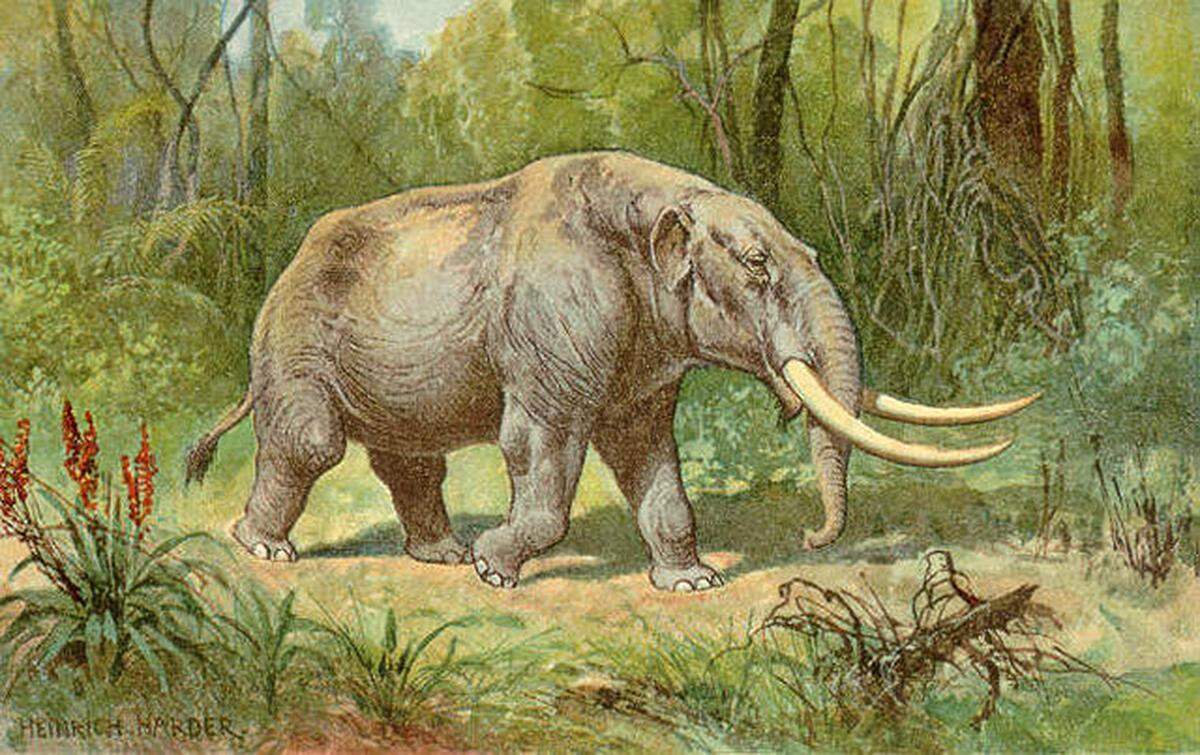
Both mastodons and mammoths are distant relatives of the modern elephant, but mammoths are more closely related.
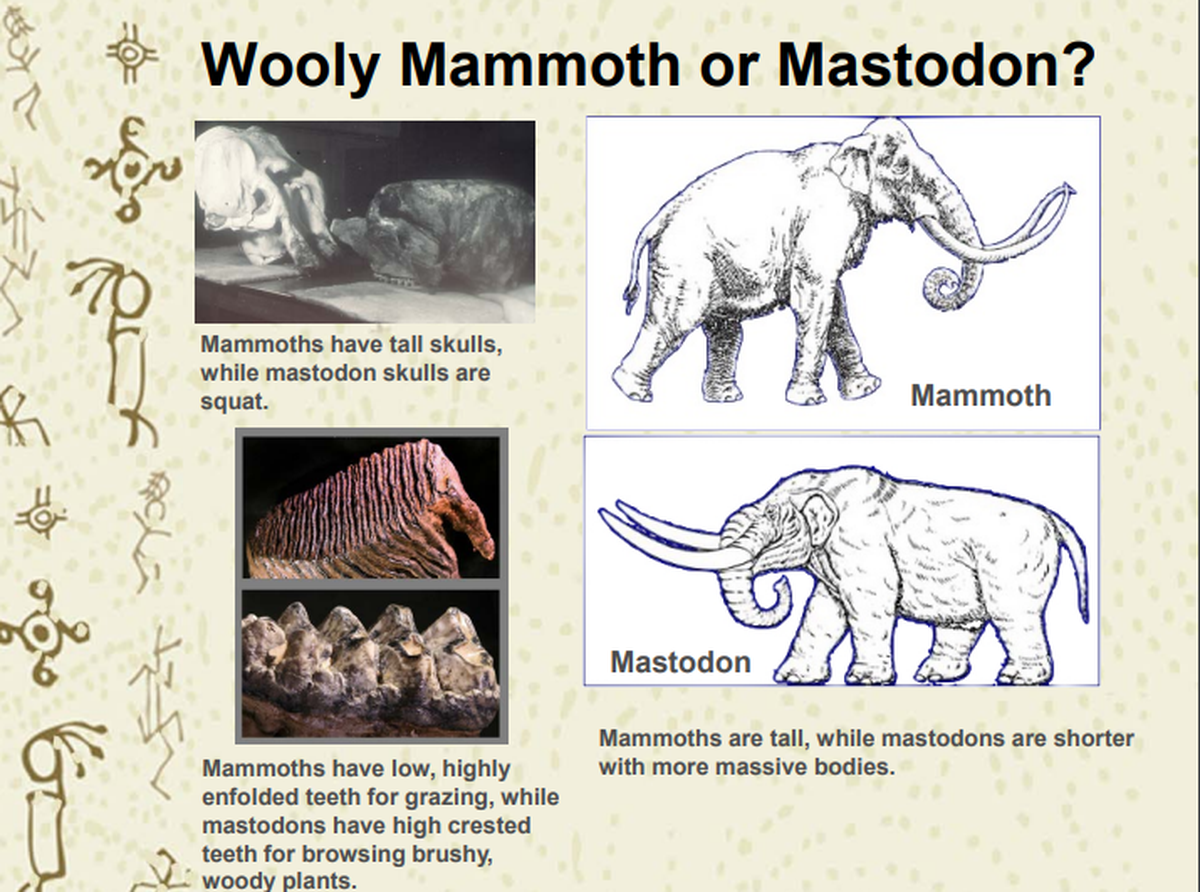
Columbia mammoths, like the one with bones found just south of the Tri-Cities at the Coyote Canyon Mammoth Site, ate grass. Their molars look ridged and flat on the surface and are shaped for grinding.
But mastodons eat woody material, like twigs, leaves and barks, and their molars had pairs of cones that could handle their crunchy diet.
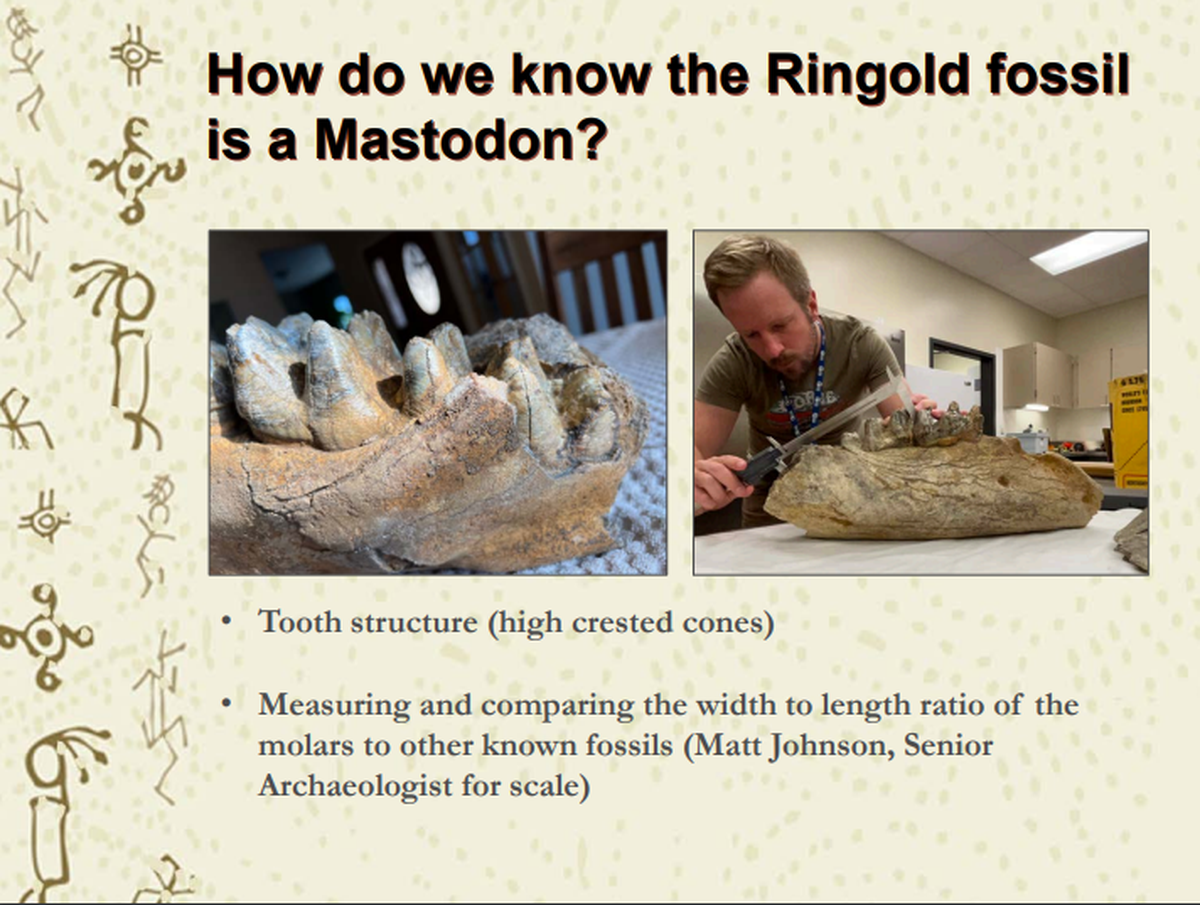
“The tooth structure is real clear,” Lenz said.
He has past experience excavating mammoth fossils in Ukraine.
Lenz contacted the rock hound, who took him out to where he had left the jawbone on the Hanford Reach, close to where he had found it but hidden from view.
He had been looking for agates in March when his dog started sniffing around the fossil, Lenz said.
The jawbone was in a rockslide of the Ringold geologic formation, which is 3 million to 9 million years old, leading to Lenz pick a date in the middle to estimate the age for PUD commissioners.
It likely is on the earlier end of that date range, he said.
Jaw reveals mastodon’s age
Measurements of the jawbone and teeth showed it may be more similar to the Pacific mastodon, a species of mastodon in North America only recognized in recent years, than the better-known American mastodon.
But he believes the jawbone is so old that it may be an ancestor of the Pacific mastodon, he said.
The teeth also allowed Lenz to estimate its age.
The animal was likely an adult 20 to 25 years old, because its third molar had not erupted when it died, Lenz said. Mastodons could live to be 55 to 60.
They were shorter and stockier than mammoths, with females about 7 feet tall and males about 10 foot similar to modern-day elephants, according to the San Diego Natural History Museum.
For comparison, the mammoth bones being unearthed at Coyote Canyon likely was 10 to 13 feet tall at the shoulder. Carbon dating shows the mammoth’s bones are about 17,450 years old.
Mastodons also had a flat head, lacking the tall bone that mammoth had at the top of their head.
Both animals had tusks, but mastodon tucks were shorter and straighter, according to the National Park Service.
Lenz could not tell from the jawbone found on the Hanford Reach if that animal was male or female.
It died resting on its left side, based on the fossilization process.
Lenz didn’t remove the jawbone when he went out to see it, instead coming back later with Army Corps of Engineers’ cultural experts and the Wanapum River Patrol.
The Corps retrieved the jawbone.
Mastodon fossil to be displayed
But Lenz applied for a permit to study and display the fossil. He will have it for six months.
The fossil contributes to the understanding of the types of animals that lived in the Ringold formation, he told PUD commissioners.
The Ringold formation has sediment laid down by the Columbia River, when it was a system of braided channels, in most of Grant County and parts of Benton, Franklin and Adams counties.
The fossil also indicates that the land then could have been much different than the current shrub steppe, with woody areas to provide food for the mastodon, he said.
The fossil will soon go on temporary display at the Wanapum Heritage Center in Mattawa, Wash. The fossil was found on the ancestral homeland of the Wanapum.
Then it will be transferred to its permanent home at the Visitor Center at Ice Harbor Dam near Burbank, 13 miles from the Tri-Cities.
This story was originally published September 18, 2022 at 11:49 AM with the headline "Dog finds 6 million-year-old mastodon bone at Hanford. Where to go see it."