‘Someday they will come home. They won’t be forgotten.’ These are their names
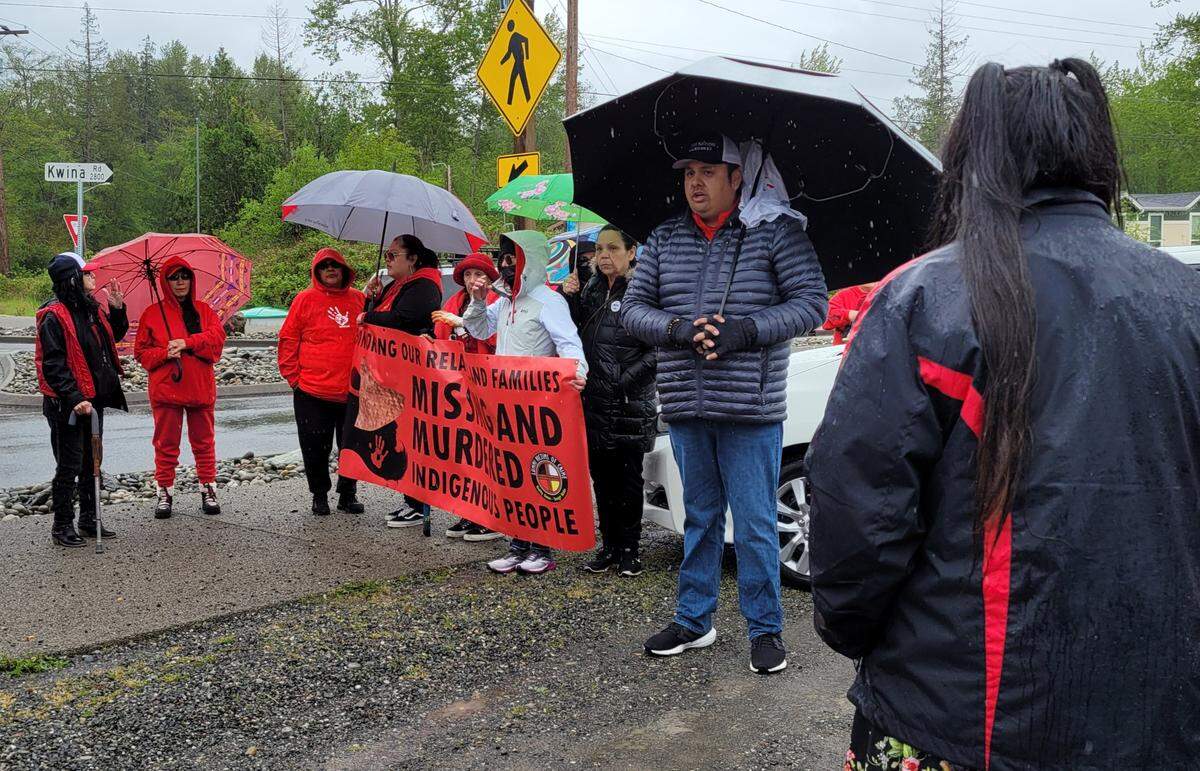
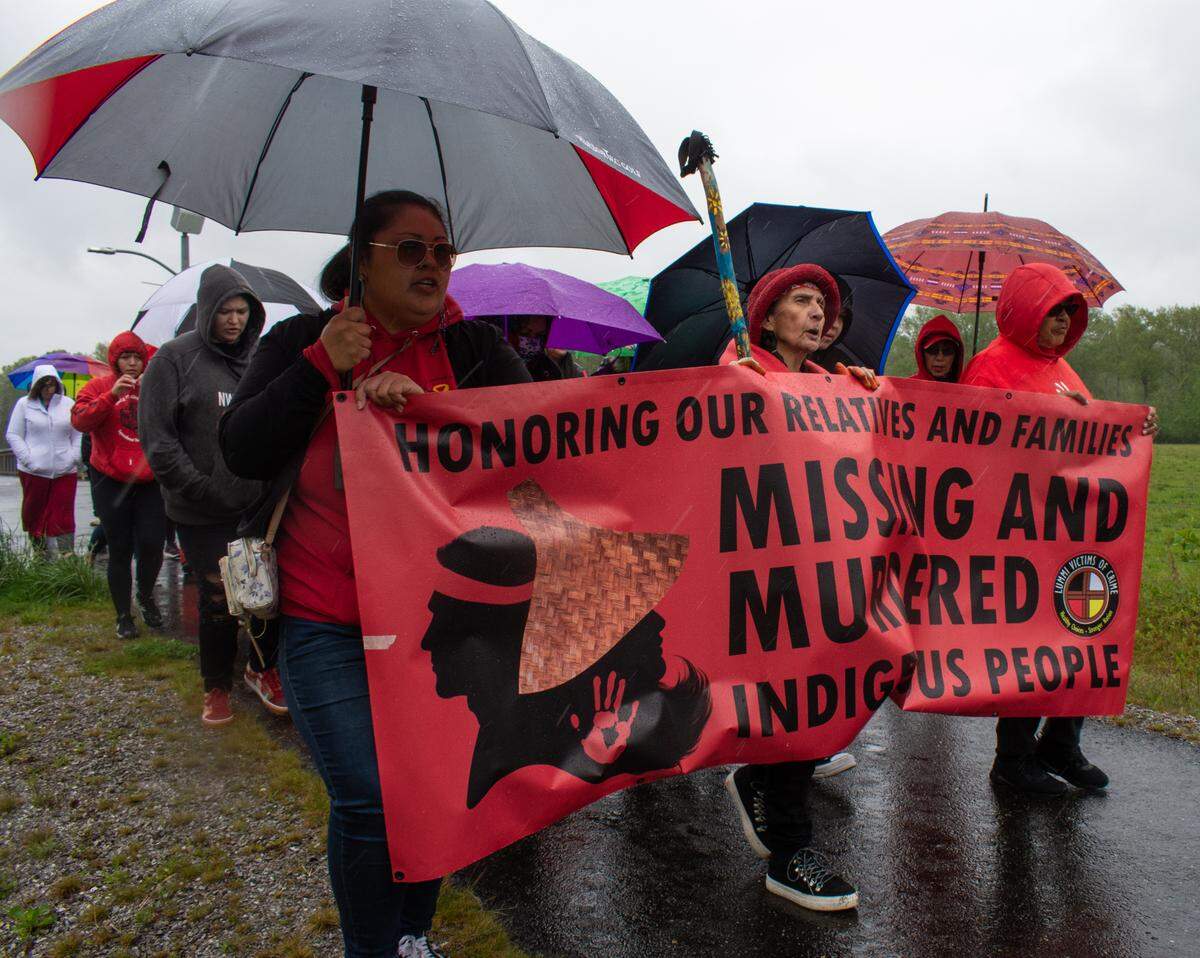
A sea of red formed at the Haxton Way and Kwina Road roundabout as Lummi Tribal members gathered in honor of Missing and Murdered Indigenous Women and People Awareness Day Thursday, May 5, on the Lummi Nation Reservation near Bellingham.
With posters, drums and wearing red, the official color of the movement, the group walked down Haxton Way to highlight the crisis. According to Washington State Patrol’s Missing Native American Persons report, as of May 2, there are 126 Indigenous people currently missing in the state — 40 men, 34 women, 31 girls and 21 boys.
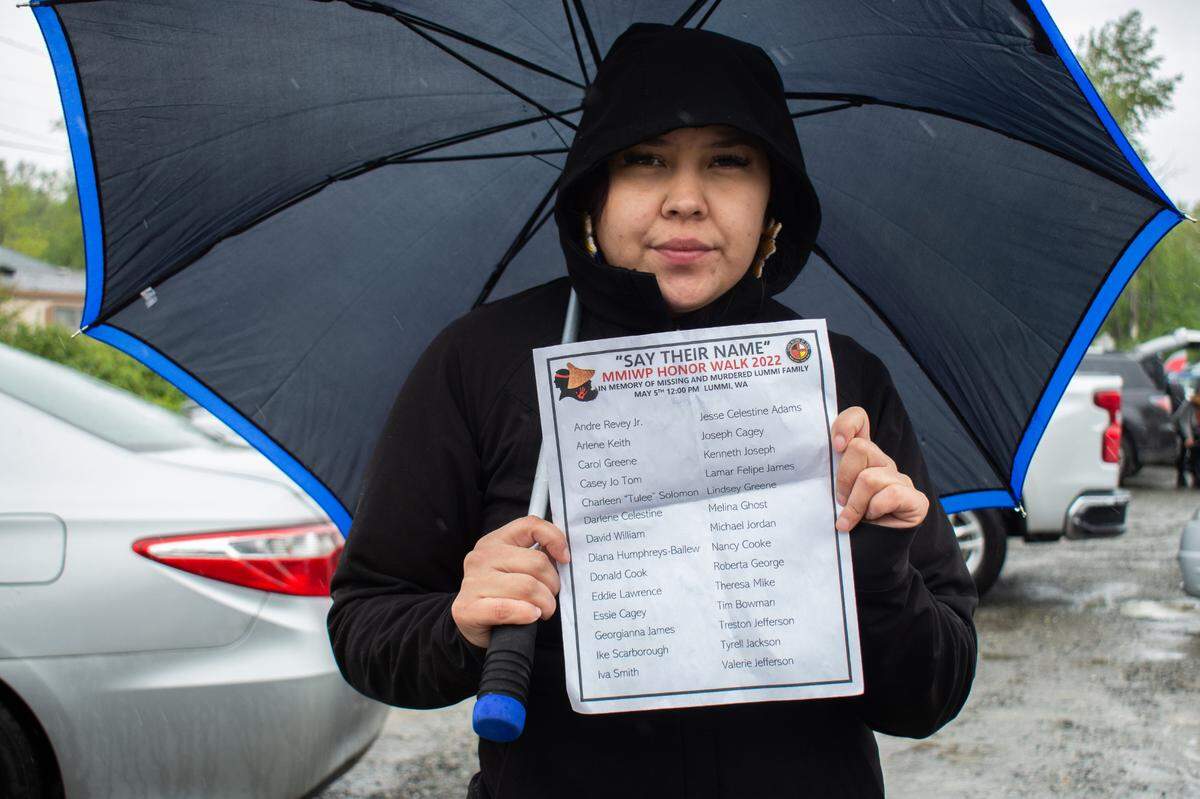
Led by Santana Rabang, who is of Coast Salish and Stó:lō Nation heritage, the group chanted the names of the missing and murdered: Andre Revey Jr., Arlene Keith, Carol Greene, Casey Jo Tom, Charleen “Tulee” Solomon, Darlene Celestine, David William, Diana Humphreys-Ballew, Donald Cook, Eddie Lawrence, Essie Cagey, Georgianna James, Ike Scarborough, Iva Smith, Jesse Celesinte Adams, Joseph Cagey, Kenneth Joseph, Lamar Felipe James, Lindsey Greene, Melina Ghost, Michael Jordan, Nancy Cooke, Roberta George, Theresa Mike, Tim Bowman, Treston Jefferson, Tyrell Jackson and Valerie Jefferson.
“We continue to pray and keep them in our hearts. Someday they will come home. They won’t be forgotten,” Lummi Indian Business Council Vice-Chair Terrance Adams said.
Organized by the Tribe’s advocacy and support services group, Lummi Victims of Crime, the march highlighted the high rate of disappearances and murders Indigenous people face.
According to Lummi Victims of Crime and a study commissioned by the Department of Justice, the murder rate of Native women is more than 10 times the national average.
“Just to be together and raise awareness and acknowledge the truth and realities that we face as a people, we come together today with the vision of a better future. A vision, a dream that one day our daughters, our wives, our sisters, our aunties, our mothers, our grandmothers will live a life without fear,” said Lummi Indian Business Council Member Anthony Hillaire. “Each and every one of us carry a responsibility to educate ourselves of the truth of what’s happening here to our women. We carry the responsibility to share our voice, to share our stories and to empower each other to share yours.”
In Washington, more than four times as many Indigenous women go missing than white women, according to research conducted by the Urban Indian Health Institute in Seattle.
The institute’s research found Washington state has the second-highest number of cases of missing and murdered Indigenous women in the U.S. Of the 71 urban areas studied, Seattle had the highest number of murdered Indigenous women and Tacoma had the highest number of missing cases.
In March, Washington passed the country’s first-ever alert system for missing or murdered Indigenous women and people shortly following the launch of the state Attorney General’s Missing and Murdered Indigenous Women and People Taskforce.
On Wednesday, President Biden proclaimed May 5 Missing and Murdered Indigenous Persons Awareness Day.
“We remember the Indigenous people who we have lost to murder and those who remain missing and commit to working with Tribal Nations to ensure any instance of a missing or murdered person is met with swift and effective action,” he said.
The President said he is committed to building on the successes of the Violence Against Women Act and implementing the requirements of Savanna’s Act and the Not Invisible Act — legislation focused on combating the issues surrounding missing or murdered Indigenous persons.
He also announced that through the American Rescue Plan, an additional $35 million in grants will be allocated for Tribes to provide temporary housing, assistance and supportive services to victims of domestic and dating violence, supplemental funding for the StrongHearts Native Helpline and additional funding for services for sexual assault survivors.
Asst. Secretary of the Interior Bryan Newland hosted a listening session this week with Washington Tribal members, leaders and state Rep. Deborah Lekanoff, D-40th District, and U.S. Rep. Dan Newhouse, R-4th District. Newland heard from the community about the urgent need to establish a missing and murdered unit in Central Washington.
“We will make sure those who are missing or murdered are not invisible,” Newland tweeted following his visit to Yakama Nation.
The Justice Department and the Department of the Interior announced this week the Not Invisible Act Commission is set to begin its active advisory role in combating violence against Native people.
This story was originally published May 6, 2022 at 5:00 AM with the headline "‘Someday they will come home. They won’t be forgotten.’ These are their names."