‘This is the new fishing, this is the new hunting and gathering’ for some WA tribal families
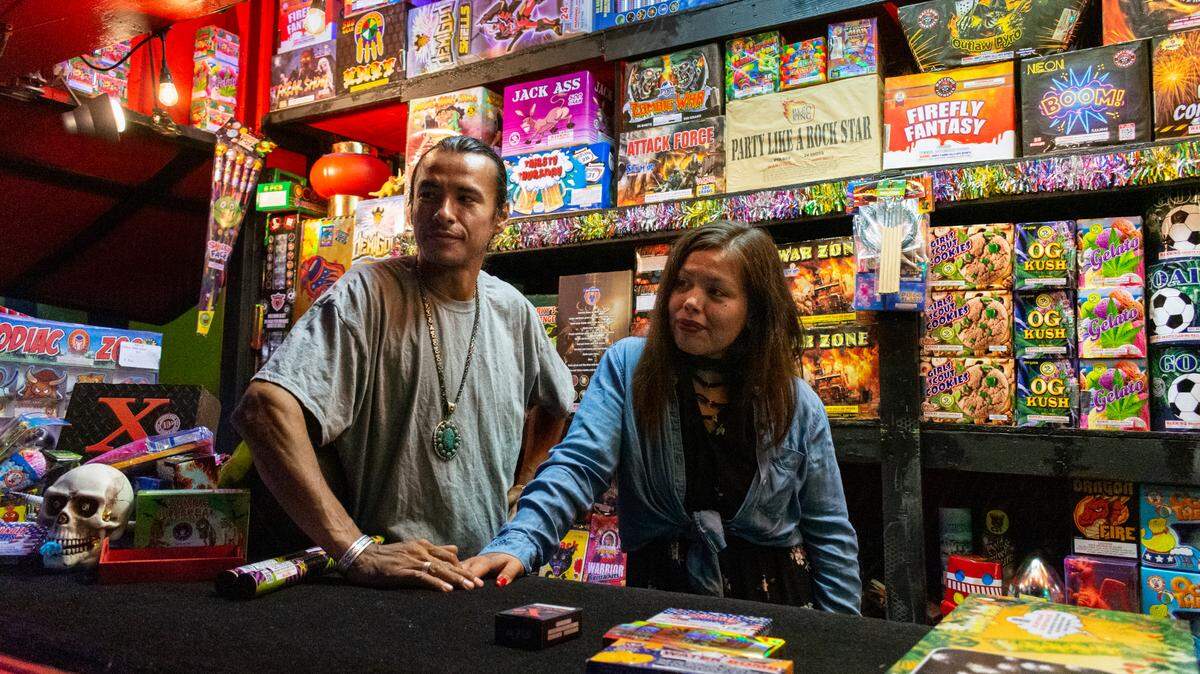
“We got it all —big and small. Things that go up and fall. Things that crawl and light up the night. Everything that’ll make your Fourth of July right,” Dashna Begay-Apodaca bellows to customers in a melodic voice from behind a bright red firework stand. “Aye,” he sings in harmony with his wife Domanik Moses.
“He sounds like a car salesman,” she says jokingly, “But it really brings them in.”
Since 2019, the couple has sold fireworks at their stand — named Noise Pollution after AC/DC’s 1980 song “Rock And Roll Ain’t Noise Pollution” — at Boom City, the Tulalip Tribes’ annual firework market located on the reservation. The Tulalip Tribes—which include the Snohomish, Snoqualmie, Skykomish — have more than 5,000 members with the reservation located north of Everett in northwestern Snohomish County, Wash.
Moses, a Tulalip tribal member, runs the stand with Begay-Apodaca, who is Navajo. The couple, like many tribal firework sellers across the state, rely on the profits from the sales to sustain them and their four children throughout the year.
Though this is only the third year Noise Pollution has been in business, the pair said this season has offered more struggles than what they faced during the height of the pandemic. The tribe considered shutting down Boom City last year, but tribal members fought back, Moses said.
“A lot of these people are out of work and can’t pay their bills or put food on the table. A lot of people really look forward to this time of year,” she said.
COVID restrictions aside, tribal firework sellers are used to navigating ever-increasing firework bans and are pushing through this year’s shortage. Despite the challenges, they say firework sales are here to stay.
“It’s our way of life, the way we provide for our families. When the berries are ready, we’d go down to fish and hunt so that we can sustain ourselves… This is all two weeks and it’s gotta last you all year. This is the new fishing, this is the new hunting and gathering,” Begay-Apodaca said.
‘There was nothing left’
In 2020, Noise Pollution had so many boxes of fireworks that there was nowhere to walk behind the counter. Like many other stands, their stock spilled into the walkway. With public firework displays canceled due to COVID restrictions, many turned to do-it-yourself options, leaving no shortage of customers to buy the stock. The stand and many others sold out, inspiring more tribal members to apply for Boom City licenses this year, Moses said. But the national fireworks shortage, caused by the global shipping container shortage, led many stands to close.
“There’s about 120 stands and 35 or 36 that are open,” Moses said. “Everybody’s been worried about the shortage. It’s a big income for all of us.”
This year, the stand’s stock could all fit in their wooden structure. Family packs, their top sellers, were few and far between.
“We had the money, but there was nothing left. We had to do a lot of running, use a lot of gas and go a lot of miles just to get what we do have,” she said.
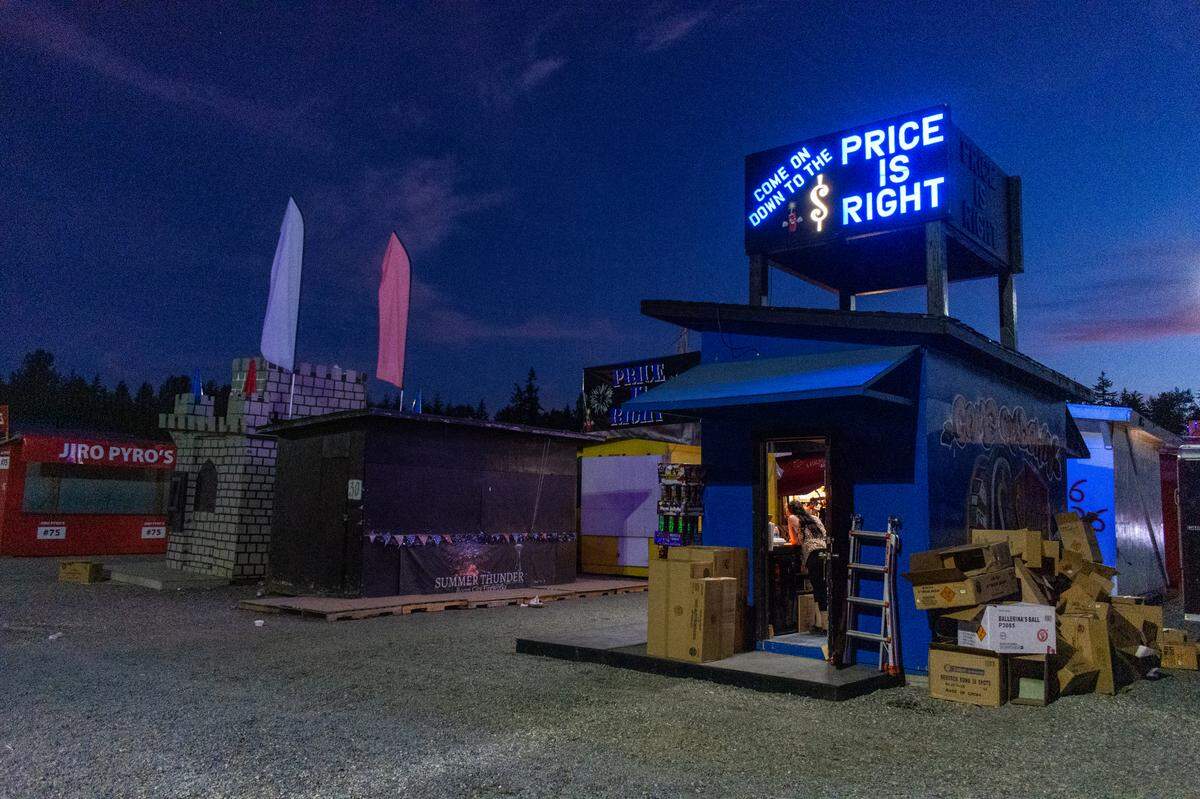
Another seller posted on their website they expect the shortage to last through the 2023 season. With fireworks and fan-favorites in low supply, prices have surged 30% to 50% across the board, they wrote.
With the price increases offsetting costs and the continuation of canceled public displays, Noise Pollution says they’re holding out hope for a successful summer. But customers aren’t happy about the markups.
Toby Bill, Moses’ father and a member of the Sauk-Suiattle Indian Tribe of Washington, has sold fireworks for more than 40 years. He explained warehouses raised prices due to the low supply caused by shipping delays. Many tribal firework sellers could not afford to buy in bulk this year, leaving most to buy their stock on credit or buy fewer items, contributing to price hikes that discourage loyal and local buyers.
Noise Pollution sees about 100 people a day with a lot of customers from California, Oregon, Idaho, Montana and Illinois.
“I don’t see a lot of our loyal locals. We were once able to just make straight-up deals or what’s called ‘throw-ins.’ I’d be like, ‘Alright, man, you know what? You and your family go out and have fun tonight. Take this on us.’ And now it’s like, ‘I can give you a packet of sparklers?’ And that’s going to hurt me,” he said. “You want to be that loyal person to them because they come back every year. They expect it. And usually, we’re good for it. But this year just really kicked us.”
Bans, bans, bans
“Arlington — banned. Brier — banned. Edmonds, Everett, Gold Bar, Lake Stephens, Maryville, Mill Creek, Mountlake Terrace, Mukilteo, Snohomish county unincorporated — banned,” Bill reads off his phone to a customer.
Many cities and counties, citing concerns about injuries, property damage and wildfires have banned fireworks. With the drought and last month’s record heatwave, many Northwest cities have issued emergency bans.
Despite the bans, the firework industry reached record sales in 2020. But, the Consumer Product Safety Commission, which regulates the types of fireworks sold by tribal sellers, also reported fireworks-related injuries and deaths spiked during the pandemic.
Moses said cake fireworks used to be the most popular because they’re loud and go high. But with more regulations, customers are opting for fountains, or cone-shaped fireworks that stand on the ground. The stands are quickly selling out, she said.
For customers, the issue isn’t where to buy them, but where to shoot them, Bill said.
Normally, Boom City offers a lighting area for customers to shoot their fireworks and shows that draw big crowds. But along with public restrooms, the spot’s been off-limits last year and this year to allow for social distancing.
“Last year when they shut down the lighting area, we were telling people they can light out on the rez’ because it is legal out here. We encouraged them to clean up. I went down and checked and I was really amazed at how clean it was and how respectful people were,” Bill said.
With a place to light nearby, customers came back for more.
Deputy State Fire Marshal Robert Wittenberg said this is how it should be.
“Any fireworks bought on tribal lands are meant for use and discharge on tribal lands,” he said, warning that the fireworks sold may be legal on the reservations, but consumers should check what their local laws are before purchasing.
“Even with all the bans, we’re here to stay. This is our bread and butter,” Bill said.
A tribal tradition
A number of tribes sell fireworks on the reservations. The Puyallup Tribe of Indians hosts its Firecracker Alley, The Chehalis Tribe has Thunder City Mall Fireworks, along with the Lummi Nation, Skokomish Indian Tribe, the Snoqualmie Indian Tribe and others.
In 1962, the state Attorney General’s office confirmed enrolled members of a tribe are not subject to state jurisdiction and can sell fireworks on the reservations. Since then, generations of families have sold fireworks on their tribal lands.
“My family has been selling since back when they used to sell out of their cars,” Moses said.
BEHIND THE STORY
MOREPlease help support this reporting
Natasha Brennan covers Washington state tribes’ impact on our local communities, environment and politics, as well as traditions, culture and equity issues, for McClatchy media companies in Bellingham, Olympia, Tacoma and Tri-Cities.
She joins us in partnership with Report for America, which pays a portion of reporters’ salaries. You can help support this reporting at bellinghamherald.com/donate. Donations are tax-deductible through Journalism Funding Partners.
You can sign up for her weekly newsletter here.
She grew up painting her family’s stands, a tradition she continues. She hand-painted portraits of AC/DC band members on the front of her stand.
“We’re generations of firework sellers. It’s in our blood. I grew up here like them,” Bill said, pointing to a brother and sister pulling a cooler of cold drinks. “They’re running food from stand to stand because we can’t leave, they run around and clean up boxes. They’re our own children, nieces and nephews.”
But growing future generations of tribal firework sellers is in jeopardy, he said.
“This year is kind of rough. A lot of people are out of work. They’re not trying to pay for fireworks, so there’s less work for them. A lot of the young kids don’t want to just sit here, they’re falling away from this,” Bill said.
Many firework stands are passed down through families.
“Uncles and aunties that have run stands for years, now they’re too old to do it. They got the money to do it, but nobody to do it for them. Some of these stands have been here 20, 30 years and they might not be here next year,” Bill said.
What’s next? In 2020, Noise Pollution sold out of its stock and did not participate in Boom City’s New Years’ market. With the firework shortage, many sellers expect to not have enough product to ring in 2022, Bill said. But sellers are hopeful as the economy heals, firework supply will go up and prices will go down just in time for New Year’s Eve.
This story was originally published July 3, 2021 at 5:00 AM with the headline "‘This is the new fishing, this is the new hunting and gathering’ for some WA tribal families."