
Coho salmon mysteriously died in droves. A chemical in car tires may be to blame
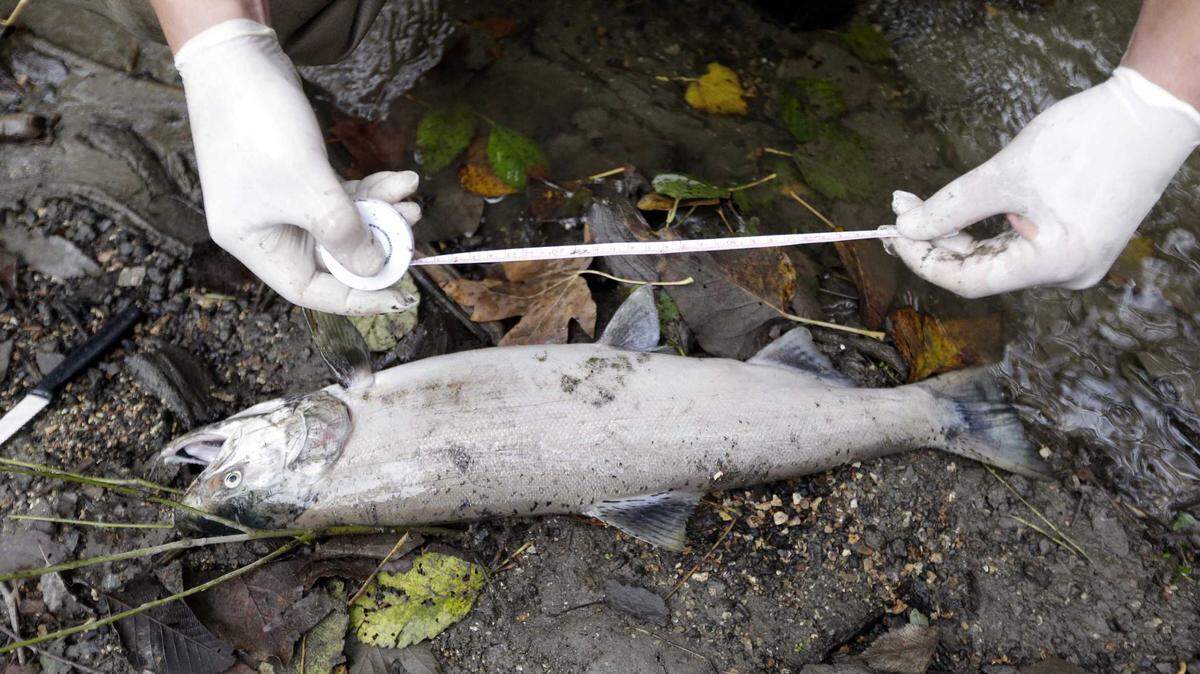
For decades it was a grim annual ritual: Pacific Northwest coho salmon swimming to Seattle’s Puget Sound to spawn only to die in droves once storms struck. Now scientists say they have unlocked the key to the mysterious deaths — a toxic chemical universally used on car tires, with implications for fish in California and elsewhere.
The salmon die-offs happened every year when stormwater runs off into urban creeks where the coho migrate to spawn.
The reasons why had long perplexed scientists until a team of university, state and federal researchers from Washington and California together with Canadian scientists pinpointed the cause: a toxic compound known as 6PPD-quinone.
The team’s research was posted online Thursday in the journal Science.
Scientists who have long had a name for the deadly phenomenon — “urban runoff mortality syndrome” — pointed to a number of factors including urbanization, intensified automobile traffic and the host of pollutants and contaminants the sprawl spawned.
But the team, including researchers from the San Francisco Estuary Institute and Costa Mesa-based Southern California Coastal Water Research Project, dug deeper.
Their research had previously found that waters associated with the urban runoff syndrome had similar chemical makeups to runoff from roadways and leachates from the tiny particles left behind by tread wear.
They knew that the tiny pieces of tire made their way from roadways and into stormwater, Ed Kolodziej, the University of Washington engineer and chemist whose laboratory led the study, told the Los Angeles Times.
In the lab, the scientists concocted a brew of tread wear particles taken from new and used tires that proved almost immediately lethal to young coho even in small doses.
“We were able to get all the way down to this one highly toxic chemical — something that kills fish very quickly and we think is probably found on every single busy road in the world,” Kolodziej told the Times.
It’s not a household name but 6PPD-quinone is applied to billions of rubber tires worldwide to shield them against ozone. Rainstorms wash the poisonous runoff into the creeks and streams where the salmon spawn.
More than 3 billion tires are produced each year for the world’s 1.4 billion vehicles, the researchers said. The tire wear particles left behind are among the most significant contributors of microplastics to fresh waterways, the researchers say, with as much as 45% of tire particles entering the waters.
Researchers also spotted the ubiquitous 6PPD-quinone across the West Coast including in Los Angeles region runoff and in creeks in the San Francisco area impacted by urban runoff, according to the study.
The findings also have implications for California’s endangered coho salmon.
California coho once thrived with a habitat that stretched from the Central Coast to near the Oregon state line, but their number had shrunk considerably by the early 2000s, confined mostly to the far north state, according to the California Department of Fish and Wildlife.
Coho salmon head for fresh water in the fall and early winter to spawn. Spawning usually occurs from November to January and the fish will live in freshwater for a year or more before migrating to the ocean.
But the toxic runoff threatens that cycle.
Researchers said in the watersheds most impacted by cities’ busy roadways, anywhere from 40% to 90% of returning salmon may die before spawning.
Coho aren’t the only fish vulnerable to the compound. The researchers found that residue from used tires was more toxic to rainbow trout than that from new tires.
The researchers also note the global problem of tire rubber disposal and its potential impacts on human health as a “potent source of 6PPD-quinone,” citing crumb rubber widely used on artificial turf surfaces and playgrounds as one example.
“The human health effects of such exposures merit evaluation,” the researchers wrote.
This story was originally published December 5, 2020 at 10:15 AM with the headline "Coho salmon mysteriously died in droves. A chemical in car tires may be to blame."
.JPG)