Kohberger’s Idaho defense attacks ‘prejudicial’ evidence in all-day hearing
A marathon evidentiary hearing in Bryan Kohberger’s Idaho murder case ended Wednesday with the judge overseeing the case hinting at the direction he planned to rule later on several of the more contested matters before him, but also issuing orders from the bench that set the boundaries for how attorneys may present some evidence at trial.
During the seven-hour day, which extended beyond closure of the Ada County Courthouse, 4th District Judge Steven Hippler peppered defense attorneys and prosecutors with questions on more than two dozen motions they’ve filed in recent months.
He decided to allow several pieces of key evidence — including Amazon records that show Kohberger bought the same brand of knife suspected in the killing of four University of Idaho college students — to be used during the 30-year-old’s forthcoming capital murder trial. He also granted the prosecution’s use at trial of a 3D model of the Moscow home where the students died for demonstration only, which the defense vocally opposed.
Authorities believe that Kohberger, a graduate student at Washington State University at the time, fatally stabbed four University of Idaho students to death in an off-campus home in Moscow, about 9 miles east of Pullman, Washington, where Kohberger was studying criminology. He’s charged with four counts of first-degree murder and, if he’s convicted, the state intends to seek the death penalty.
The victims were Kaylee Goncalves, 21, of Rathdrum; Madison Mogen, 21, of Coeur d’Alene; Xana Kernodle, 20, of Post Falls; and Ethan Chapin, 20, of Mount Vernon, Washington. The three women lived in the Moscow home with two other female roommates who went physically unharmed, while Chapin was Kernodle’s boyfriend and slept over for the night.
Hippler leans on attorneys abiding by rules of evidence
Early in the day, Hippler flew through and ruled on a handful of motions from the bench, deciding to bar the use of terms such as “psychopath” or “sociopath.” But several other key requests, like whether one of the surviving roommates could testify she saw a masked man with “bushy eyebrows” the night of the killings, will be addressed through a written order.
Over debate between the two opposing legal teams — including on “inflammatory evidence,” such as graphic crime-scene photos, and the use of the term “murder” — Hippler said it’s appropriate to highlight those concerns, but when it comes to fashioning an order, it becomes so broad and vague that it would be “essentially meaningless.”
Many of these issues are covered through the rules of evidence, Hippler said, adding that it would be misconduct for the prosecution to refer to Kohberger as a murderer aside from opening statements and closing arguments. The defense is led by attorney Anne Taylor, while Latah County Prosecutor Bill Thompson heads the prosecution.
“I don’t think I need an order,” Hippler said, “because as the name implies, they are rules, which means they will be followed.”
Hippler also warned both the prosecution and defense about making arguments outside of the closing arguments.
“I will tell you that the one thing that will get my dander up quickly is either counsel attempting to argue outside the one opportunity they have to argue in a case like this,” he added. “I will shut you down faster than you can imagine if I see that, and if I see it again, I will admonish you in front of the jury about it.”
Some of the other items Hippler addressed Wednesday included video from a traffic stop of Kohberger in Moscow, which the state aimed to introduce at trial, motions related to his autism diagnosis and at what point members of the defendant’s family may attend his summer trial in Boise.
He also pushed off a final determination on Kohberger presenting an alibi at the time of the homicides.
Kohberger Moscow traffic stop allowed, but could be redacted
During a traffic stop months before the students were killed, Kohberger questioned why the deputy who pulled him over needed his driver’s license and phone number. His attorneys argued during Wednesday’s hearing that body-camera footage from the August 2022 stop for failing to wear a seat belt was more “prejudicial than probative,” and could be construed as Kohberger wanting to hide his identity from law enforcement.
The footage is relevant evidence to the state, Hippler said, at least when it comes to identifying Kohberger and his 2015 white Hyundai Elantra. But in a win for the defense, the judge acknowledged that some comments in the footage weren’t relevant and indicated some portions of the video might need to be redacted.
But he didn’t go so far as choosing to block prosecutors from showing the video to jurors during Kohberger’s trial, as Kohberger’s attorneys sought.
“If the court allows this evidence in, the state has the ability to use this to make many other points beyond identity,” Elisa Massoth, one of Kohberger’s attorneys, told the court, “and the jury would have the ability to potentially seek to ask to rewatch the video and draw other conclusions that we are worried about.”
Hippler, who is presiding in Boise after the case was moved when a change of venue was granted, specifically pointed to the question Kohberger asked Latah County Sheriff’s Cpl. Darren Duke about why he needed to give him his phone number, and a comment made by the corporal about seat belts.
“I don’t think any of that is relevant,” Hippler said, “and it does potentially create … some danger of unfair or unnecessary prejudice.”
The Latah County Sheriff’s Office previously released a copy of the redacted citation Kohberger received during the traffic stop to the Idaho Statesman in a public records request. But the hearing Wednesday about his interaction with the deputy represented the first time the content of the interaction had been publicly released.
Past attempts by the Statesman to obtain the body-cam footage have been unsuccessful. The Sheriff’s Office denied its release, citing its potential to deprive a person of a fair trial.
In response to the defense’s arguments in a prior filing that jurors could presume a traffic violation makes Kohberger more prone to wrongful behavior, Hippler said that is unlikely.
“I think there is zero danger that the jury will conclude that because he didn’t wear a seat belt or speed, that he therefore has a propensity to commit murder,” he said from the bench. “I just can’t imagine any reasonable person coming to such a conclusion.”
Jurors will be instructed that the footage is only relevant to identify Kohberger and his vehicle, Hippler added.
Judge mulls when Kohberger family can attend trial
When Kohberger’s mother, father and two sisters are allowed to attend the trial also was taken up.
Prosecutors hinted last month in filings that they might call members of Kohberger’s family to testify, and during Wednesday’s hearing, Latah County Senior Deputy Prosecutor Ashley Jennings confirmed that they intend to call at least a few family members, but didn’t identify them.
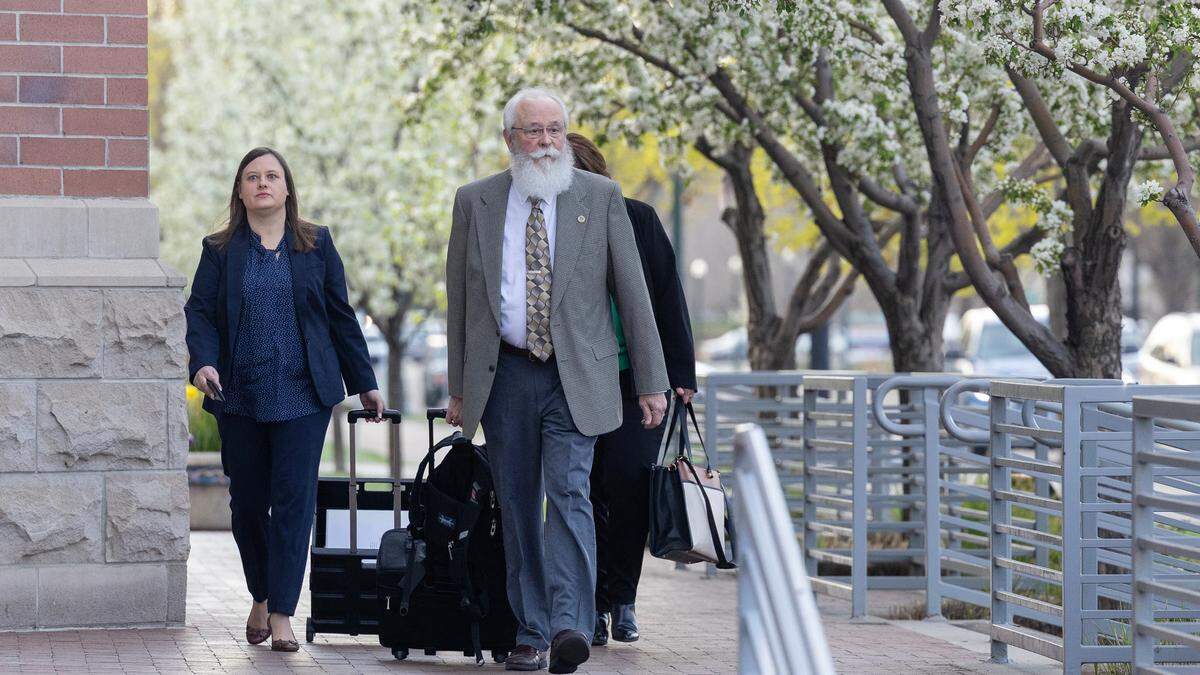
Typically, witnesses expected to be called to the stand cannot be present during others’ testimony until they have testified themselves — unless they are the victim’s immediate family members.
Massoth asked Hippler to impose an order to prevent the prosecution from putting Kohberger’s family on its witness list just to keep them out of the courtroom. His family has “no desire” to testify against him, she said.
The prosecution told the court it doesn’t plan to use subpoenas to exclude Kohberger’s family from the courtroom. But it would rather not ask family members to testify out of the prosecution’s preferred order, Jennings said.
Hippler interjected that with a three-month trial scheduled, the court “won’t be held hostage” by either side’s ideal case narrative.
“This is like a gumbo,” Hippler said. “You’re going to put all the pieces that go into the pot, and at the end of the day, the jury is going to decide whether it’s a good soup or not.”
Massoth also argued that Kohberger’s family needs to be in the courtroom to support him, and asked Hippler to use “a level of humanity” and his discretion to permit them into the courtroom as soon as possible.
A written order on the matter will be forthcoming, Hippler said, but the judge suggested that calling witnesses out of order would be a proper way to alleviate concerns.
“I can only imagine the family of Mr. Kohberger is devastated by these things,” Hippler said. “That’s nothing that they did, and I think their ability to be here to see the trial is important and, to the extent possible — while also preserving the state’s right to a fair trial — should be something that we seek to do.”
Kohberger’s murder trial is scheduled for this summer, with jury selection starting in late July.
This story was originally published April 9, 2025 at 12:23 PM with the headline "Kohberger’s Idaho defense attacks ‘prejudicial’ evidence in all-day hearing."