These are the candidates running for three Whatcom County Council seats
Primary elections are required Tuesday, Aug. 3 for three of the four non-partisan Whatcom County Council open positions, where more than two candidates filed for office.
In those races, the two candidates who receive the most votes will advance to the Nov. 2 general election, according to the state’s “top two” primary system.
Order of placement on the primary ballot was determined by a random drawing May 21 at the close of candidate filing week.
Some 158,882 active voters were registered in Whatcom County, Friday, July 29, according to the Auditor’s Office website..
Ballots were mailed July 14 and must be postmarked — not simply mailed — or placed in ballot drop boxes by 8 p.m. Tuesday.
This close to the election, new voter registration and address changes must be made in person at the Auditor’s Office in the County Courthouse, 311 Grand Ave.
Residents can register to vote or change their address at the courthouse until 8 p.m. on Election Day.
Candidates discussed their positions and reasons for running in emails and responses to a questionnaire from The Bellingham Herald:
Whatcom County Council At-Large (position A)
Three people are challenging Councilman Barry Buchanan for one of the County Council’s two at-large positions. Buchanan, who is serving as council chairman, was elected to the council in 2013 and re-elected in 2017.
His challengers are Kamal Bhachu, Misty FLowers and Bob Burr.
All registered Whatcom County voters can cast a ballot for the at-large position, which carries a four-year term.
▪ Bhachu, who lives in Blaine, told The Herald that he is a senior maintenance engineer at St. Joseph hospital.
He attended Bellingham Technical College, earning degrees in both automotive technology and construction technology. He also was a nursing assistant with Whatcom County Hospice.
Bhachu, who immigrated from India, didn’t respond to a Herald candidate questionnaire.
“We won’t all share the same ideas, but we can come together with mutual respect for the sake of our community and all within it,” he told The Herald in an email.
He’s raised $12,400 for his campaign, mostly from individual contributions, and also donated $4,500 to his effort.
Bhachu is endorsed by the Whatcom Republicans.
.jpeg "Misty Flowers, Whatcom County at large pillbox fit (2 of 2).jpeg")
▪ Flowers is a singer-songwriter whose Twitter account describes her as a “holistic practitioner, big smiler! Law of Attraction engager, clown, nature love.”
According to her website, Flowers attended the Southwest Institute of Healing Arts, Whatcom Community College and Shasta Community College.
“You, the hard-working people of this county, should be heard and have your constitutional rights restored. It is my goal to give you the voice you deserve,” Flowers said at her website.
“My top priority is to make sure Whatcom residents aren’t forced out of their homes by outside investors, while providing support to homeowners who carried the debt of the COVID rent relief,” Flowers said in response to a Herald questionnaire. “I also support HomesNow and other advocacy groups that provide shelter and social service support to those most in need.”
Online, Flowers’ tweets protest vaccines in general, including those against COVID-19, and masking and other measures to prevent the spread of COVID-19.
“The council should learn that all Whatcom residents matter and all jobs matter. Instead of ignoring some constituents in favor of others, they would serve our community better by including all voices in their decisions,” Flowers told The Herald.
“Many issues that stem from the pandemic are complex and require thoughtful, open listening and a real dedication to finding solutions for all,” Flowers said.
In recent months, Flowers has been a frequent speaker during the open public comment sections of the County Council and Bellingham City Council meetings.
She has criticized the business closures and social distancing measures taken during the new coronavirus pandemic, sometimes offering false or misleading information about COVID-19 and the vaccines against it, which have been approved for emergency use by the FDA.
Flowers has raised about $5,000 for her campaign, according to PDC reports. Scott Shean of Blaine contributed $1,000, her largest contribution.
She lists no endorsements by name at her website.
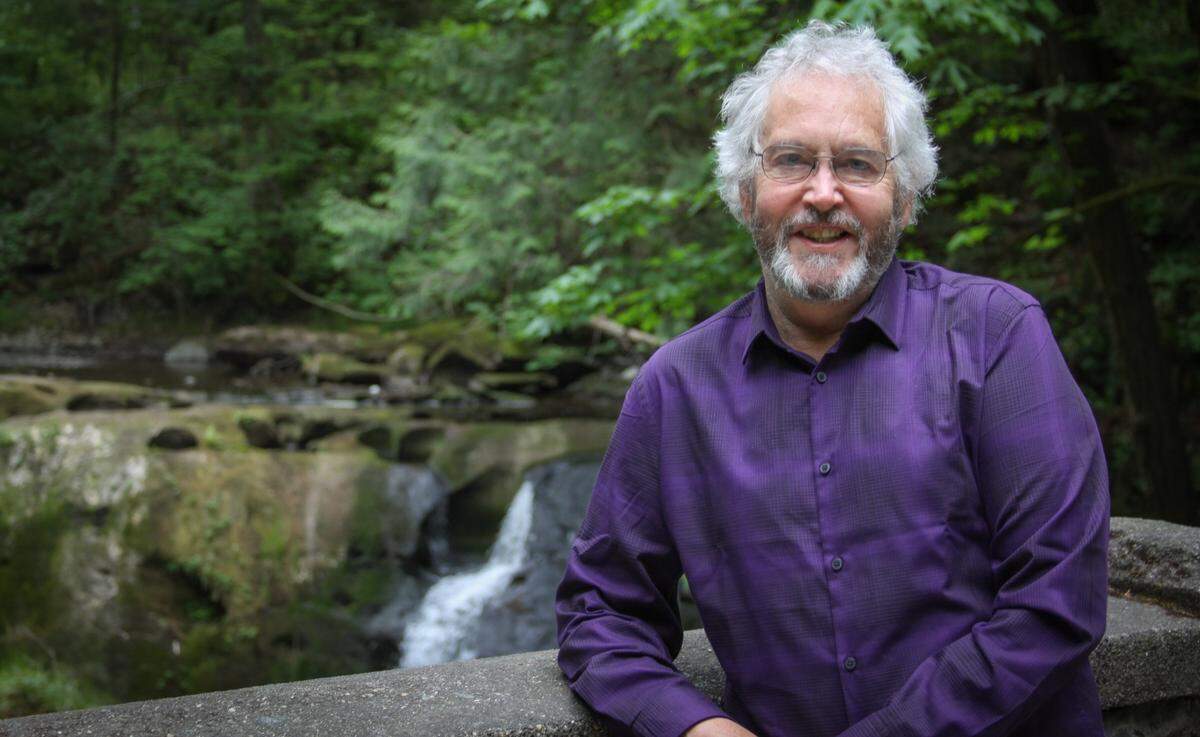
▪ Buchanan, who lives in Bellingham, served seven years in the U.S. Navy, working on aircraft electronics and later became an engineer at Lockheed Martin, where his project included the space shuttle and the Hubble Space Telescope .
He also served one term on the Bellingham City Council.
“As a County Council member, I have helped guide the Whatcom County community through the past seven years, including the COVID-19 pandemic,” Buchanan replied to a Herald questionnaire. “I have championed labor rights, affordable housing, and criminal justice reform in my time on the council. We’re at a time when our working-class families and workers need a steady, experienced hand to recover from the economic collapse of COVID-19.”
Buchanan co-sponsored an ordinance passed this year to spend 0.1% of the county’s share of local sales tax, about $2 million annually, on affordable housing countywide.
“While I wish we had better tools than adding a new layer to our already regressive tax system, this new program will make a real difference in the lives of Whatcom’s low-income residents and I’m proud to be standing up for them. We need more housing in Whatcom, period,” Buchanan said.
He emphasized his record on climate and environmental issues, “including helping to carefully regulate the refineries at Cherry Point and create a Climate Impact Advisory Council. It’s important we legislate every issue cognizant of its impacts on climate change and the environment, and that’s what I have done. I will continue to do this by emphasizing green infrastructure when creating jobs, sustainable policies when building affordable housing, and combating the effects of climate racism when addressing systemic racism and the criminal justice system,” he said.
Buchanan has raised more than $22,000 for his campaign, mostly in smaller contributions, according to the state Public Disclosure Commission.
But he’s also received nearly $2,000 from the Washington State Democrats and $1,000 from the Nooksack Indian Tribe.
He’s endorsed by the Whatcom Democrats, 40th and 42nd District Democrats, Young Democrats of WWU, state Rep. Sharon Shewmake, Bellingham/Whatcom Firefighters IAFF Local 106 and several other unions, the Sierra Club, Washington Conservation Voters, among others.
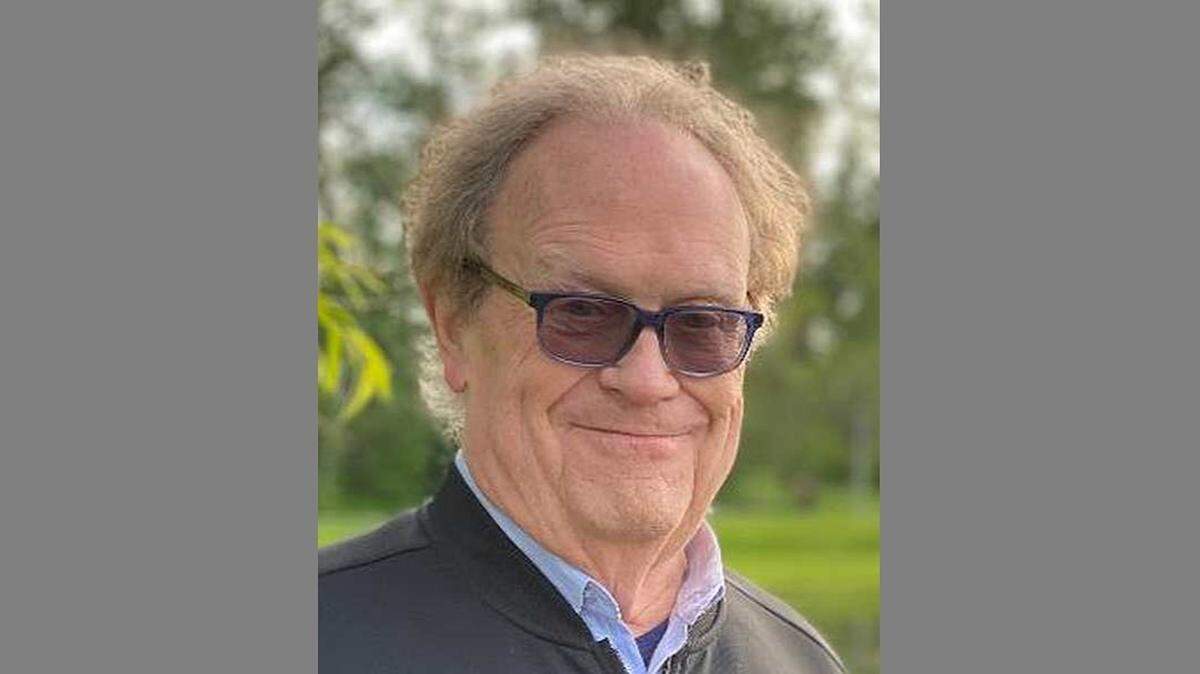
▪ Burr, who’s also from Bellingham, retired 26 years ago from Prudential Insurance, where he was a vice president in charge of research and development.
Burr described himself as “multipartisan” in an email to The Herald. He is a former vice-chair of the state Green Party and a former member of the Tea Party. He’s a precinct committee officer in the Democratic Party and an active member of the Libertarian Party.
Global warming and climate change are two issues that Burr said prompted him to run for office.
“The state is already doing a lot to address the looming climate catastrophe,” he told The Herald. “The county must most of all lead by example. It needs to progress to an all-electric fleet. It needs to retrofit existing county buildings to make them all-electric with solar roofing. And, no later than 2023, it must convert all new home and building construction to all-electric with solar roofing.”
For water rights, Burr favors the Department of Ecology’s adjudication process, in which courts will decide.
“My vision is the adjudication process will finally lead to us to a situation where all of the parties know their rights, even though some groups are likely to be unhappy. Certainly, I favor continued talks prior to an adjudication date, but such talks seem like they have been going on forever. I have little faith that a compromise will be reached and look forward to adjudication,” he said.
Because of the county’s housing affordability crisis, “I will be very reluctant to approve future housing developments unless they are vertical and unless the developers can convince me that the mitigation efforts leave things better than before,” Burr said.
He’s reported no campaign fundraising to the PDC.
Whatcom County Council District 1
Councilman Rud Browne isn’t seeking a third four-year term for Whatcom County Council District 1, which includes downtown Bellingham and its southern neighborhoods, as well as Western Washington University. Only registered voters in District 1 can vote for this position.
Three people filed to claim that open seat: Kaylee Galloway, Eddy Ury and Jeremiah Ramsey. Browne has endorsed Galloway.
.jpg "Kaylee Galloway, Whatcom County Council 1 (1 of 2).jpg")
▪ Galloway, a legislative aide for 40th District state Rep. Debra Lekanoff and a former aide to U.S. Rep. Suzan DeBene and U.S. Sen. Maria Cantwell, also serves on the Whatcom County Climate Impact Advisory Committee and the Bellingham Community Development Advisory Board. She has a bachelor of arts degree from Western Washington University and a master’s degree in policy studies from the University of Washington at Bothell.
“Serving at every level of government has deepened my knowledge and understanding of government processes and how to be an effective policymaker, leader, and community advocate,” Galloway told The Herald in her reply to a questionnaire.
“My multidisciplinary approach and balanced perspective helps bring people together to find common ground and solve complex problems. Working at the local, state, and federal levels, I have developed strong relationships and an understanding of the issues we face. I understand how the system works and my experiences will make me an effective leader, policymaker, and community advocate,” she said.
She cited four priorities, including business and economic development, climate change, housing and homelessness, and public safety and criminal justice reform.
“I want to be a voice for those who have been historically underrepresented at the tables where decisions are made — this means empowering those around me to create a collaborative and inclusive environment to make community-driven policy,” Galloway said. “I want to see more young people get involved in public service and continue to advocate against injustices and for protecting our environment and economy. Understanding the threat of climate change and seeing its impacts has instilled a sense of urgency for the need to act.”
Galloway has raised more than $26,000 in contributions, mostly from private donors.
She received $2,000 from the Washington State Education Association PAC and $1,000 from the Nooksack Indian Tribe. She also has endorsements from federal and state legislators: U.S. Reps. Suzan DelBene and Rick Larson, as well as state Reps. Lekanoff, Sharon Shewmake and Alicia Rule, along with state Sen. Liz Lovelett. She has further endorsements from County Executive Satpal Sidhu, and County Council members Todd Donovan, Carol Frazey and Barry Buchanan.
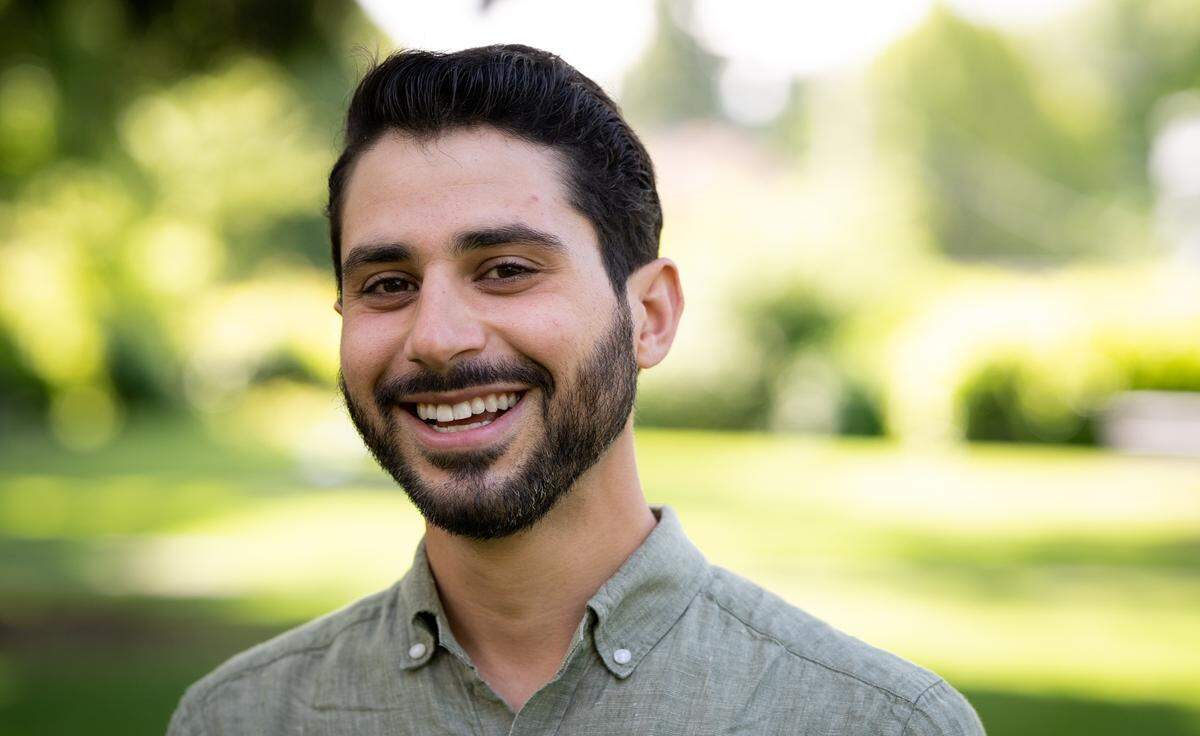
▪ Also running is Eddy Ury of Bellingham, who recently left his job at RE Sources for Sustainable Communities, where he had worked for seven years, most recently as climate and energy policy manager.
He has a bachelor’s degree in sociology from Western Washington University and works with the Whatcom Housing Alliance and the Bellingham Tenants Union.
Ury, who’s now doing private consulting, convened and facilitated a group of oil industry and environmental representatives who were working on new Whatcom County regulations for the Cherry Point industrial zone.
Those landmark measures regulating the oil industry were unanimously approved at the County Council’s July 27 meeting.
“The legislation’s final form is set to institute innovative development restrictions for existing industries that impose more stringent environmental review and safety compliance standards for upgrade proposals, preventing existing oil terminals from ever being used primarily for transshipment purposes, and completely closing the door to new fossil fuel terminals, refineries or plants,” Ury told The Herald.
“I was the leading environmental advocate in county procedures pushing for these rules, facing enormous opposition from some of Whatcom County’s (and the world’s) most powerful interest groups,” Ury said. “I learned how to craft legally sound municipal code effectively and apply leverage purposefully in negotiations. I’ve come away with a deep understanding of environmental policy and regulations pertaining to oil refineries and other major industries, and have built lasting relationships all around our county’s communities.”
Climate change remains a key concern, Ury told The Herald.
“I aim to enact zoning updates to development regulations for clean energy facilities (including wind turbines and energy storage), secure funding for major public projects, adopt time-bound plans and policies for total electrification of all municipal facilities by 2030, support the creation of an Executive Office of Climate Action, and oversee the implementation of innovative energy policies enacted this year: C-PACER and Cherry Point amendments,” he said.
Housing is also a priority, and Ury said the county must build thousands of affordable units, preserve existing housing and support renters’ rights, eviction prevention and rapid rehousing assistance.
“I will urgently push for the county to designate property and allocate funding for permanently affordable housing projects, multiple emergency shelters for a range of needs, ‘tiny home villages,’ and free public camping areas,” he said. “We need expanded and improved mental health care and addiction recovery services, with higher labor standards for fair compensation and benefits for the essential workers on the front lines, serving and saving lives.”
He also said he would improve Health Department functions in supporting the unsheltered and service providers and include unsheltered people directly in planning processes.
Ury has raised more than $10,000 for his campaign, mostly from individual donors in amounts below $500, according to PDC reports.
He’s endorsed by state Rep. Alex Ramel, Whatcom County Executive Satpal Sidhu, and County Council members Todd Donovan and Barry Buchanan, the Sierra Club, Washington Conservation Voters, the 40th District Democrats, the 42nd District Democrats and Young Democrats of WWU.
.jpeg "Jeremiah Ramsey, Whatcom County Council 1 pillbox fit (2 of 2).jpeg")
▪ Bellingham real-estate broker Jeremiah Ramsey has a bachelor’s degree in computer science from Thomas Edison State University, an online school in Trenton, N.J.
Ramsey said the housing crisis was his main reason for seeking office.
“Affordability is a passion of mine, and I see ways that the county government can improve to allow for more affordable housing. Two others issues I’m passionate about are (1) bringing more high-paying jobs for the working families of our county to the area, and (2) addressing the homelessness problem,” Ramsey told The Herald in response to a questionnaire.
“My priority is to look at the many different factors involved in managing growth: development of land, construction of housing, and transportation all play a role. As prices put Bellingham housing out of reach for more and more buyers, people start commuting longer distances, which puts a toll on county roads, as well as on vehicles, and keeps families away from their homes for longer periods of the day. If we work together with all our stakeholders, we can provide solutions to the problems that arise as our beautiful community grows,” he said.
Ramsey, who is endorsed by the Whatcom Republicans, has raised $5,600 for his campaign, mostly from individual donors, according to PDC reports.
He received $1,000 from the Whatcom County Affordable Housing Council, which is sponsored by the Building Industry Association of Whatcom County.
Whatcom County Council District 3
Councilman Tyler Byrd of Sudden Valley is seeking his second four-year term in District 3, which encompasses the rural Whatcom County cities of Everson, Nooksack and Sumas, along with the foothill communities of Kendall, Maple Falls and Glacier, the South Fork Valley communities of Acme and Van Zandt and the community of Sudden Valley. Only registered voters in District 3 can vote for this position.
He’s being challenged by Fred Rinard of Everson, Kathy Sabel of Bellingham and Rebecca Lewis of Deming.
▪ Rinard said he’s running for County Council because of his experience with union and labor issues.
“Homelessness has become a cancer in our area,” he told The Herald in response to a questionnaire. “You cannot appease this problem without standards to keep control. Seeing cardboard signs, tents, shopping carts, people loitering by our public buildings, leaving trash, getting drug money is an open sore.
“There are services for this problem. Appeasement should not overwhelm these services. Tents, signs, shopping carts should be picked up and discarded, not allowed in public. Have a law against panhandlers and enforce it,” Rinard said.
He said he would like to see “regulations to provide mother-in-law housing. Change regulations so that small acres of land could be zoned for lots. Give low-income starting families flexibility on permits to build their own house.”
He’s reported no contributions to the state PDC.
.jpeg "Kathy Sabel, Whatcom County Council 3 pillbox fit (2 of 2).jpeg")
▪ Kathy Sabel said she has experience as a government worker “working with people to implement projects.”
For the past three years she has participated in the Private Well Owner Caucus on the Washington Water Resources Inventory Area 1 Planning Unit, she told The Herald in response to a questionnaire.
“I was told my voice is only heard if it is expressed by the elected county representative, so I’m running to be a representative that makes sure all voices are heard and included,” Sabel said. “Water is the No. 1 issue for Whatcom County and the state. The state has made the political decision to bring all water-rights holders to court in an adjudication to determine senior and junior water rights, and what water rights are legal. Prior adjudications were surface water rights only; the Nooksack Basin will include surface and groundwater rights.
“The waters of Washington belong to the public and cannot be owned; water rights are a granted use. If all water-rights holders will negotiate in good faith, all gathered together virtually or physically, in the open, then water rights adjudication will not be needed.”
To build more housing, Sabel said she would change regulations so building in rural and urban areas is allowed, and can be done economically.
“The pandemic has shown people want to be in the county rural areas. Allow smaller units such as accessory dwelling units in rural areas and urban. Provide funding for groups like Habitat for Humanity to produce affordable housing. Find out what can be done to keep people in their existing housing,” she said.
She’s reported no contributions to the state PDC.
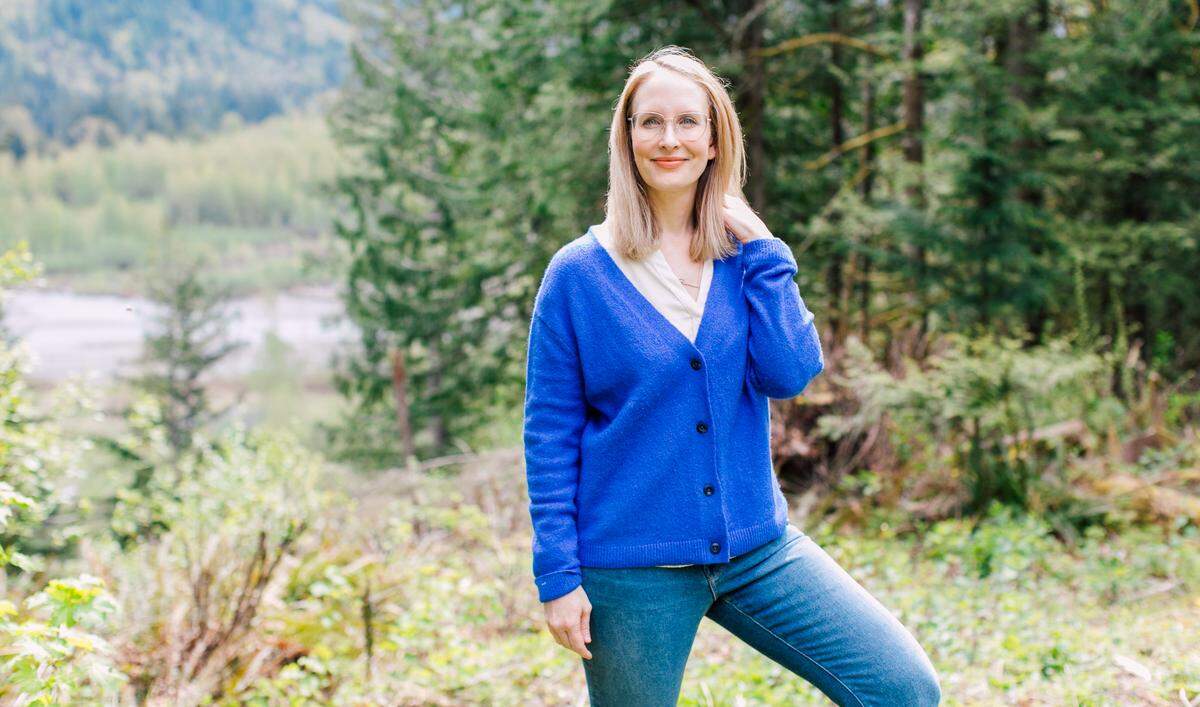
▪ Rebecca Lewis has a master’s degree in education from Western Washington University and teaches at Cascade Middle School in Sedro-Woolley, where she is president of the teachers union.
“I’m running to support labor in Whatcom County,” Lewis told The Herald in response to a questionnaire. “Labor and unions are the backbones to a strong economy. This area is in desperate need of infrastructure improvements and unionized labor is the way to achieve that. We know that affordable housing continues to be a challenge here and one way to help resolve it is to bring in good-paying union jobs to build affordable housing.”
She supports the state Department of Ecology’s push for a court ruling on water rights in the Nooksack River Basin, along with the county’s Climate Action Plan and measures to improve water quality in Lake Whatcom.
Lewis said the homelessness issue and the housing crisis are connected and linked to other issues, such as unemployment, drug addiction and mass transit.
“The first priority should be reactive to the people experiencing homelessness crisis,” Lewis said. “We should be using existing infrastructure, like unoccupied hotels, to provide safe areas for people to sleep and be clean. In these places, there needs to be systems to help people who need to find a job, may be struggling with drugs or alcohol, need access to mental health or other health services, and are experiencing domestic violence or abuse. The top priorities for proactive steps toward housing affordability and housing our growing population should include increasing high-density zoning and mixed-use zoning (industrial and commercial), increasing transit stops for areas and homes that are still affordable in east Whatcom County, and enforcement of fair market rental costs.”
Lewis has raised more than $22,000, according to the state PDC. About two-thirds of her support is from individual contributions. She also has about $4,700 from unions, including the Washington Education Association, the Teamsters, and Bellingham/Whatcom Firefighters IAFF Local 106.
She’s endorsed by the Whatcom Democrats, the 40th and 42nd District Democrats, the Riveters Collective, U.S. Rep. Suzan DelBene, state Reps. Debra Lekanoff, Sharon Shewmake, Alicia Rule and Alex Ramel, along with state Sen. Liz Lovelett. She has further endorsements from County Executive Satpal Sidhu, County Council members Todd Donovan and Carol Frazey, the Nooksack Indian Tribe, the Sierra Club and others.
.jpg "tyler-byrd (1).jpg")
▪ Byrd is CEO of Red Rokk, a digital marketing company in Bellingham, and has spent 18 years in financial services and business management.
“This experience has helped me work with all community members, regardless of political ideology, to introduce creative solutions to many of our issues. If re-elected, I will continue to engage our community openly, bring innovative solutions to our problems, and manage our tax money responsibly,” Byrd told The Herald in response to a questionnaire.
Byrd said Whatcom County should be proactive with water rights, investing in projects that increase water availability and rights.
“Several groups, such as the Department of Ecology, have successfully developed solutions to this problem — such as off-channel water storage. Combining flood mitigation with off-channel storage will allow us to generate better results while lowering our costs. This type of project will increase water-storage capacity, improve fish habitat, acquire new water rights, and improve overall water management,” Byrd said.
Steps that local government can take to reduce climate change include expanded recycling programs to limit dependency on landfills, investing in improvements to water quantity and quality, offering incentives for sustainable energy, and carbon-offset projects, he said.
“Measurable improvements in these areas can create long-term sustainable solutions with real impacts,” he said.
He said that the housing crisis is linked to other problems such as homelessness, job growth and income.
“We can significantly improve this problem in several ways,” Byrd said. “Streamlining our building code and permitting process will allow builders to build new homes faster while saving money on permitting costs and project time. Buyers will see these savings passed through as increased inventory and lower building costs stabilize the market. We should establish a program that encourages property owners to transfer development rights from environmentally sensitive locations, such as the Lake Whatcom watershed, to alternative building sites. Utilizing better-building sites and increasing housing density will allow us to build more affordable homes with less of an impact on the environment. Increasing the number of middle-income homes, investing in infrastructure, and incorporating urban growth areas are a few more ways we can work together to tackle this problem.”
Byrd has raised nearly $20,000 for his campaign, more than half from individual donors, and about $7,500 from business interests.
He’s endorsed by the Whatcom Republicans.
This story was originally published July 30, 2021 at 5:00 AM.