Five things we learned from the 2019 Whatcom County election
Key observations from the Nov. 5 general election in Whatcom County:
Council tilts right, executive left
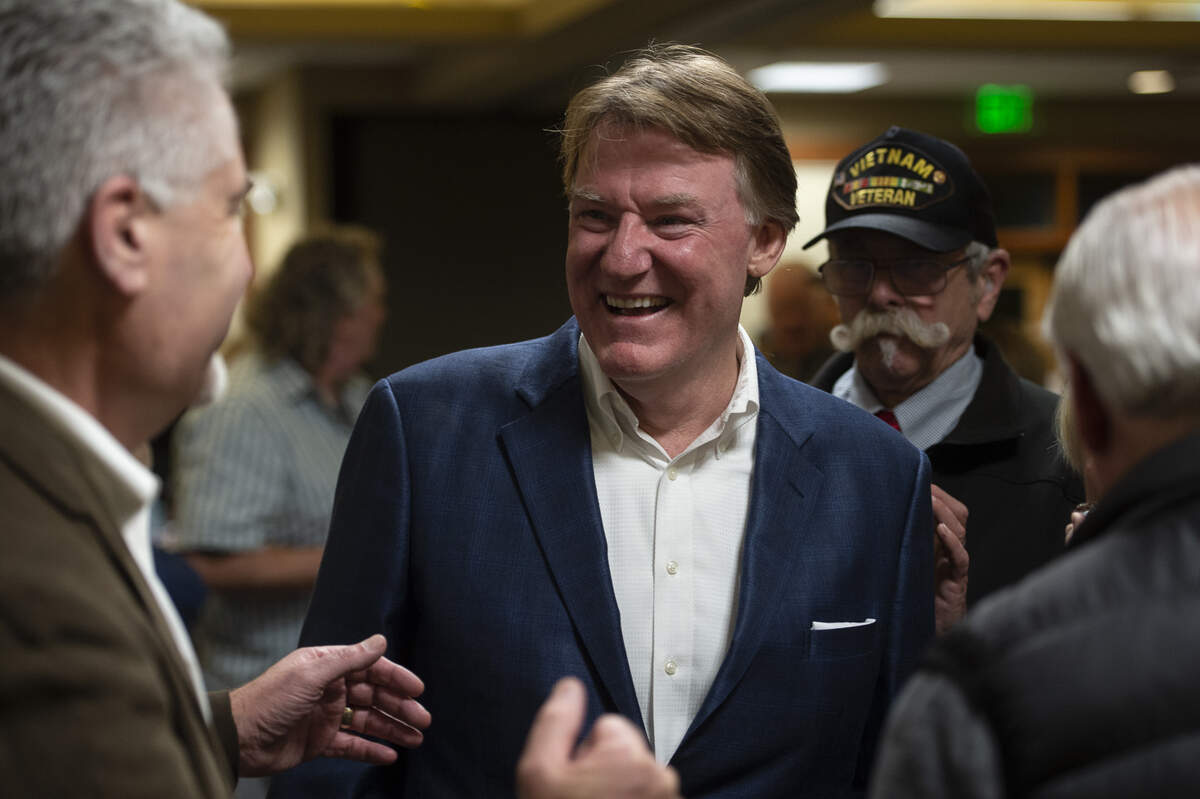
Conservatives increased their minority status by one seat — to three seats on the seven-member County Council with Ben Elenbaas’ victory over Natalie McClendon in the 5th District council race.
Elenbaas will join District 3’s Tyler Byrd and Kathy Kershner, who won the open 4th District council race.
Those three districts represent the residents of rural Whatcom County and its small cities.
Ferndale and Blaine are seen as growing less conservative — they voted blue in the 2016 presidential election, according to The New York Times.
But Elenbaas won handily, defeating McClendon 59% to 41% in the district that includes Custer, Birch Bay, Blaine, Ferndale and Lummi Nation.
It’s part of a district reorganization that voters approved in 2016.
Liberals control the two seats assigned to Bellingham and both at-large seats.
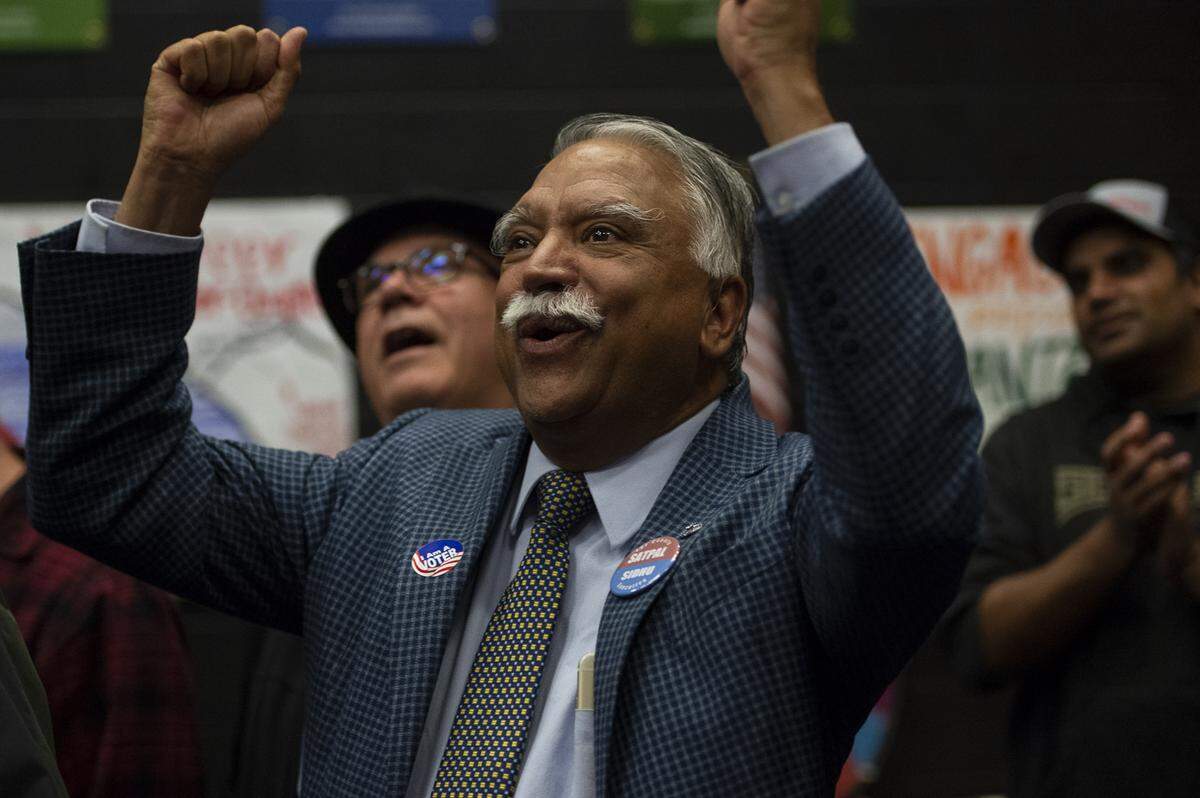
Council member Satpal Sidhu ran for county executive, backed by Democrats and environmental groups, and defeated businessman Tony Larson in a close race, 51% to 49%.
Sidhu replaces Jack Louws, a conservative leaving the post after eight years.
Liberal v. liberal
Seth Fleetwood defeated April Barker for Bellingham mayor, 53% to 46% in a race where both candidates boasted strong liberal credentials.
Fleetwood, a lawyer and former member of the County Council and the Bellingham City Council, had the support of Bellingham’s “old guard,” including Mayor Kelli Linville and several other former mayors and elected officials. Fleetwood was in office when the city and county were drafting new housing and transportation policies amid a forecast of unrelenting population growth. He was also instrumental in forging Bellingham’s lauded Greenways program of parks and trails.
Barker, a member of the City Council whose term is up this year, focused her campaign on climate change, racial and income inequity, and pushed plans to develop housing for residents of all income levels throughout the city. Barker was endorsed by Lummi Nation, the Bellingham Tenants Union and the progressive Riveters Collective.
Both candidates pledged to run positive campaigns and didn’t criticize each other despite appearing together in several community forums.
On Thursday, Barker told The Bellingham Herald that she briefed Fleetwood on key items before the city, including the Climate Action Task Force and the Housing Equity Assessment, in hopes that it will ease his transition back into government.
“Those are ways that he really can plug himself in and step in today,” Barker said. “He can be bold on climate action and housing affordability. His success is Bellingham’s success and we’re behind him.”
Big money
The race for Whatcom County executive drew considerable attention because the two candidates stood on opposite sides of some key issues, including a proposal to limit refinery expansion at Cherry Point in favor of “green” industry.
It pitted those worried about the future of high-paying jobs against environmental concerns.
Nearly $500,000 was raised in the county executive race, including $169,000 for Larson and $185,000 for Sidhu.
A political action committee called Coalition for a Better Northwest Washington raised $155,000 to support Larson and Elenbaas and to oppose Sidhu, according to reports filed with the state Public Disclosure Commission. Its biggest contribution was $70,000 from Phillips 66 Co., which operates a refinery at Cherry Point.
That PAC spent a total of $93,000 against Sidhu and to support Elenbaas and Larson. Another PAC, Washington Conservation Voters Action Fund, spent $6,200 to support Sidhu.
It was seen as an important race statewide.
Gov. Jay Inslee visited the Whatcom Democrats the night before Election Day to rally volunteers who were making last-minute voter phone calls.
“It’s exciting to have an engineer who understands science in Satpal,” Inslee told The Bellingham Herald.
“He’s just a can-do guy. He can make things work. (Sidhu and McClendon) both understand the job-creating potential of clean energy,” said Inslee, who made climate change the focus of his presidential bid.
Late ballots, close races
Diana Bradrick, chief deputy auditor, said elections officials feared a last-minute crush of votes in Washington’s vote-by-mail election.
“We really had slow return the first two weeks,” Bradrick said. “Statewide, everybody got bombed.”
Several key races were decided the first night, including Bellingham mayor and Whatcom County sheriff. But it took until Thursday to decide the race for county executive between Larson and Sidhu.
Another close race was for county assessor, where Ferndale Councilmember Rebecca Xczar was leading Chief Deputy Assessor John Romaker by 51% to 49% Friday night.
In one Ferndale Council race, Paul Bulanov led Ali Hawkinson by one vote Thursday — 1,993 to 1,992. On Friday, Hawkinson took a 26-vote lead and is outside the margin for a recount under state law.
Lower turnout, challenged votes
Unofficial voter turnout for Tuesday’s election was 55%, based on 81,043 ballots counted and 146,756 registered voters.
That’s higher turnout than the past two odd-year elections and on par for other races over the past decade. According to the Auditor’s Office website, turnout was 46% in 2017; 47% in 2015; 55% in 2013; 59% in 2011; and 54% in 2009.
But it’s extremely low compared to the 2018 election, which saw 77% turnout, and the 2016 presidential race, in which 82% of eligible Whatcom County residents cast a ballot.
In addition, there were 748 “challenged” votes — meaning they were unsigned, required ID, or the signature didn’t match the one on file, said Auditor Debbie Adelstein.
Those challenged votes could still count if the discrepancies are able to be fixed by Nov. 26, when the election is certified.
Note: Friday’s leader in the race for Ferndale City Council between Paul Bulanov led Ali Hawkinson was corrected Monday, Nov. 11, 2019.
This story was originally published November 10, 2019 at 5:00 AM.