
‘It’s time for us as women, and as women of color, it’s time for us to step in’
Whatcom County voters will find women seeking office in nearly every local ballot race, less than two years after a crowd of 8,000 or more rallied in downtown Bellingham as part of a worldwide event to support women’s rights.
In the year after the #MeToo and Time’s Up movements started, women who were demoralized at Hillary Clinton’s loss to Donald Trump in 2016 have turned that defeat into action on issues such as firearm limits, universal health care, education, a living wage and pay equity.
These women, many of them political newcomers, are emboldened and defiant as they rebel against a culture of sexual harassment and demand more seats at the political table.
“It feels way bigger than just me,” said Pinky Vargas, a Bellingham City Council member who’s running in the Aug. 7 primary against two men for the 42nd District state Senate. “Those women who are running right now are running to give all those other women a voice that we have not had in years,” Vargas said.
In Whatcom County, women from both major parties are on the ballot for U.S. Senate, for a U.S. House seat, three state House seats, a state Senate seat, for County Council and for the state Court of Appeals.
Only three Whatcom County races are without a woman candidate in 2018. That’s the largest number of women on the ballot ever – according to a survey of even-year ballots going back more than 20 years.
“It’s time for us as women, and as women of color, it’s time for us to step in,” said Debra Lekanoff, who is running for the 40th District state House seat being vacated by Rep. Kristine Lytton, D-Anacortes.
“There’s so much hope in their eyes,” said Lekanoff, who’s governmental affairs director for the Swinomish Indian Tribal Community. “We’re sitting at the table and saying that it’s our time.”
EMILY’s List, a national organization that supports pro-choice Democratic women running for office, said that more than 40,000 women have asked about running for public office since the 2016 election.
“They’ve never had so much interest as they have had in 2018,” said Vargas, who’s attended EMILY-sponsored seminars and training sessions. It’s translating into victory for women in primaries across the nation, as 472 women were running for the U.S. House of Representatives and 57 women had filed or were likely to file for the Senate, according to an April 18 article in The New Yorker.
And in a stunning upset last month, 28-year-old Alexandria Ocasio-Cortez ousted powerful 10-term Democratic Rep. Joe Crowley in a New York City primary.
Sharon Shewmake of Bellingham, an assistant professor of economics at Western Washington University, said both the 2016 election and the #MeToo movement influenced her decision to challenge state Rep. Vincent Buys, R-Lynden, for one of two 42nd District state House seats.
The other 42nd District state House seat is held by Luanne Van Werven, R-Lynden, who is seeking re-election.
“What people are saying is that they want to be able to vote for women,” Shewmake said. “Traditionally, that’s been a drawback. But right now, when I see our public institutions under attack, I think women especially are standing up to defend public institutions like schools.”
Shewmake said she was inspired to run by members of the Riveters Collective, a nonprofit civic action group formed by Bellingham resident Elizabeth Hartsoch immediately after the 2016 election.
“It became clear that there was a void in the community,” Hartsoch said. “(Riveters Collective) is definitely led by women and we make space in the leadership for women and people of other identities.”
Riveters Collective, which takes its name from the iconic Rosie the Riveter, has more than 4,200 members on its Facebook page.
Erica Littlewood of Bellingham, who was among the organizers of the Bellingham Women’s March in January 2017, said she sees more women running in reaction to the #MeToo movement and a perception that the Trump administration is regressive on women’s rights.
“There does seem to be a concerted effort and interest in women running and more support for women running,” Littlewood said. “But (Washington state) has always been pretty supportive of women.”
History confirms that observation.
Washington gave women the vote in 1910, a full decade before the 19th Amendment guaranteed that right for all American women.
As a result, Frances Axtell of Bellingham was elected to the state House in 1912, becoming one of the first two women in the Legislature.
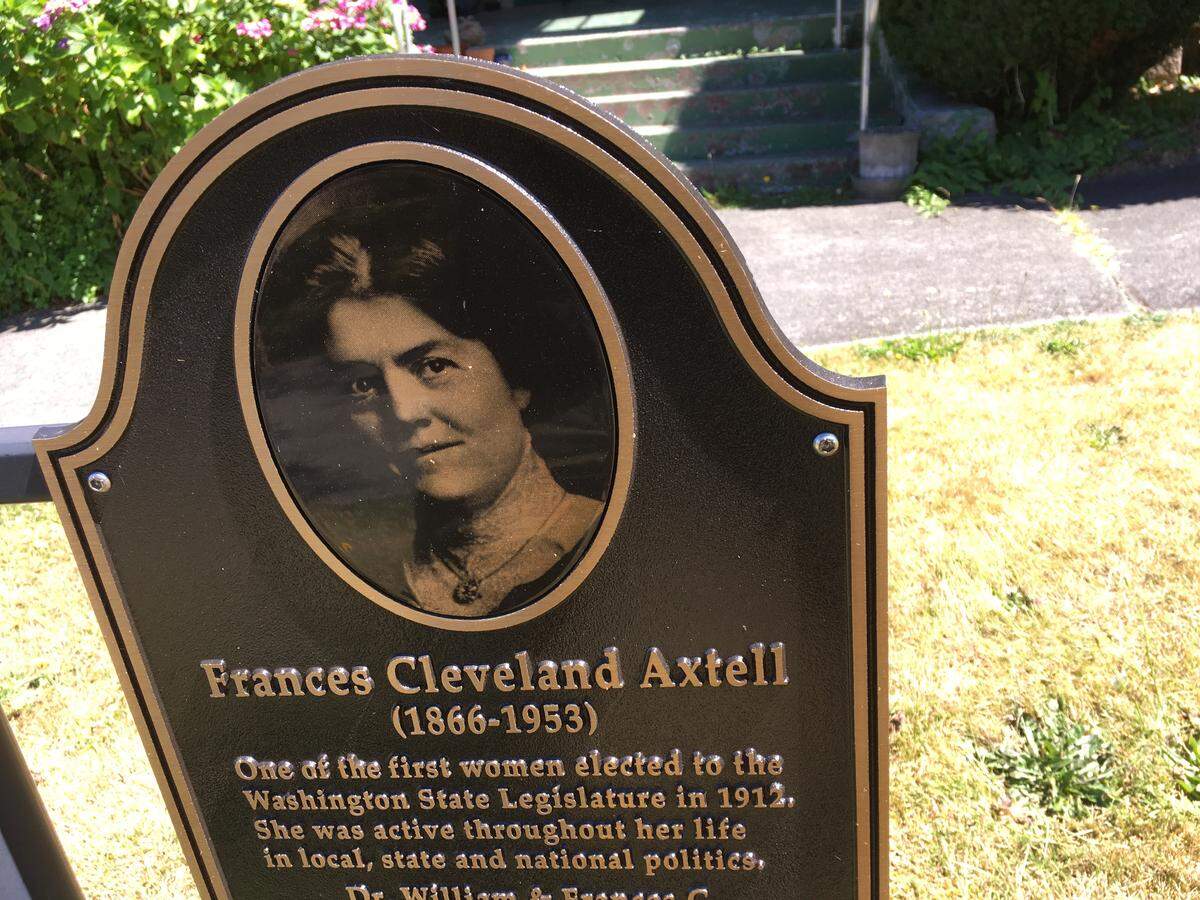
Axtell lost a 1916 bid for Congress and became an official in President Wilson’s administration, the first such high-level female appointee.
By 1972, 29 women were on the Washington state legislative ballot and 12 won, according to the Legislature’s website.
In 1982, women were 23 percent of the total legislative membership and were in leadership roles for the first time.
At the time, women made up only 12 to 13 percent of state Legislatures nationwide, according to the Center for American Women and Politics at Rutgers University.
In the mid-1990s, the Evergreen State led the nation with the highest percentage of women in its Legislature. Washington is now fifth in that category, behind Arizona, Vermont, Nevada and Colorado.
Nationwide, 61 percent of elected women are Democrats and 38 percent are Republicans, according the Center for American Women and Politics.
For the 2016 legislative session, 36 of 98 members of the House and 19 of 49 members of the Senate were women. The current Senate majority leader is Sharon Nelson, D., of Maury Island.
But the 2017-2018 legislative session was marked by allegations of harassment against Washington state legislators and staff members as the #MeToo movement toppled politicians of both major parties across the U.S. – including Sen. Al Franken, D-Minn., and Rep. Trent Franks, R-Ariz.
According to research by Stateline, part of the Pew Charitable Trusts, almost 20 legislators across the country had resigned or faced sanctions because of sexual harassment by December 2017.
Stateline also found that sexual harassment training is lacking in many U.S. state legislatures.
In March, more than 175 women signed a letter demanding an end to a culture of sexual harassment and misconduct in Olympia, according to a March 2018 story by a team of reporters from KNKX-FM, The Olympian newspaper and The News Tribune of Tacoma.
“The first thought that I had was that it’s about time,” said Lytton, who’s leaving after eight years in the Legislature, where she chaired the Finance Committee.
“And then I thought that it’s about damn time,” Lytton said. “I was shocked at some of the behavior.”
In response, the state Senate is working to change the way sexual harassment allegations are handled, KUOW-FM reports.
Members of the state House have created a working group to create a sexual harassment task force and update its rules on reporting and investigating complaints, The Seattle Times reports.
“There’s definitely a culture of sexual harassment in the state Legislature and we need to send people there who will address that,” the Riveters’ Hartsoch said.
Van Werven, who served as head of both the Whatcom County and state Republican Party organizations before she was elected to the Legislature, said she’s never felt disrespect from her male colleagues.
“I’ve always been an equal,” Van Werven said. “The men in our caucus have looked to women for their perspective on those unique issues” such as pay equity, family leave and education.
She said the current debate over workplace harassment can be traced the 1998 scandal that resulted in President Clinton’s impeachment.
“I think that coarsened our culture and it was a hard thing for parents to sit down and explain these things to their children,” she said.
Meanwhile, Van Werven said it is important for women in power to recognize the areas where they excel.
“As women, I think we are more naturally relational, which allows (us) to empathize or relate to the people we work with and the people we serve, for sure,” she said.
Barbara Brenner, who’s served on the Whatcom County Council since 1992, said she’s generally had a good relationship with her male peers in more than 25 years on the council.
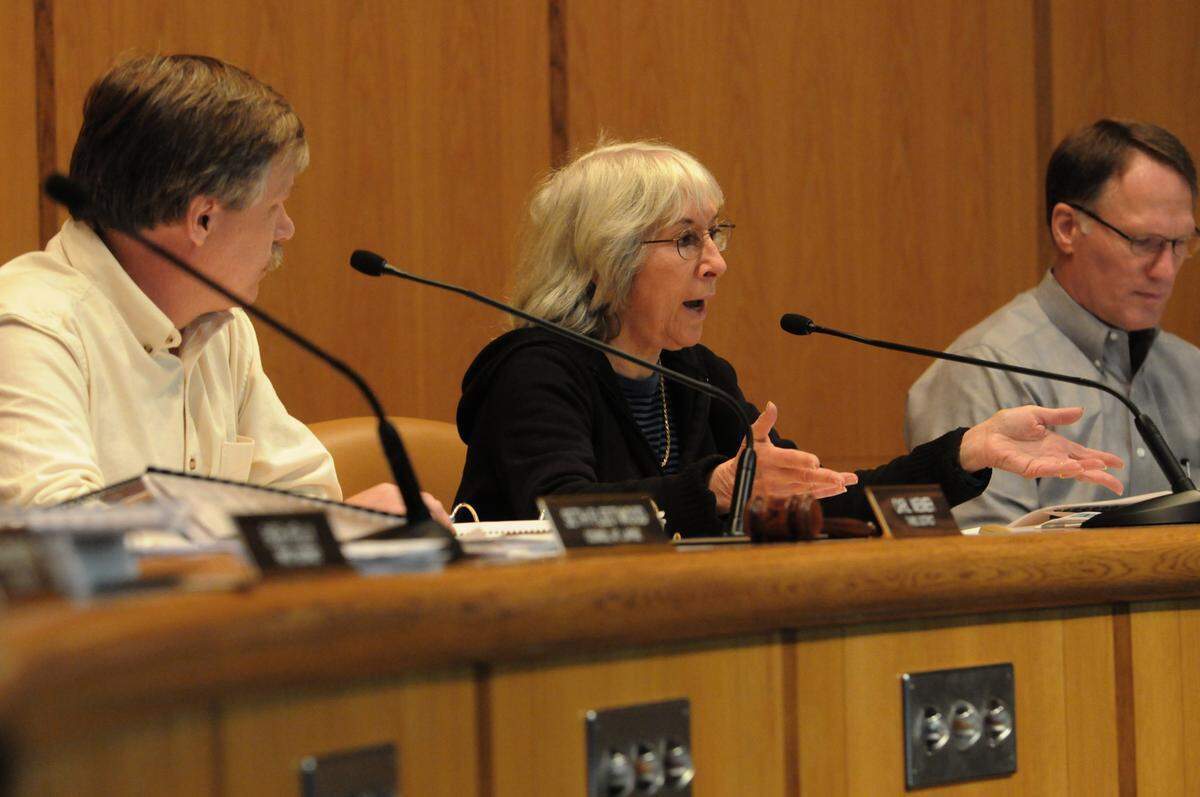
“I can think of only two who made me feel like they were sexist,” said Brenner, who’s the sole woman on the seven-member panel.
“But I’m an acquired taste. I’ve definitely rubbed people the wrong way. I feel I always have to do my best. It’s not because I’m a woman, but just because of who I am,” she said.
“When I have fights with other council members, it’s on the issues. Not because I’m a woman.”
Carol Frazey, a Bellingham businesswoman who’s running for Whatcom County Council, said she was inspired to run at the Women’s March — but she attended the main event in Washington, D.C., which was estimated to be the largest single-day protest in U.S. history and drew a larger crowd than Trump’s inauguration the day before.
“We can’t go backwards,” Frazey said. “We’re not trying to take charge. (But) we want to be part of the conversation. We want to be at the table.”
Lytton said that even though she’s leaving the Legislature, she’ll continue to advise and mentor women running for office.
“ ‘Go for your dreams,’ my dad always told me. You want to be in the Legislature? Well, run!” Lytton said. “I hope that the #MeToo movement has created a change. I hope we can move forward to realize the vital role that women play.”
About the 2018 election
The top two candidates from the Aug. 7 primary — regardless of party affiliation — will advance to the Nov. 6 general election.
Primary election ballots were mailed July 18.
Ballots returned by mail must be postmarked no later than Election Day, Aug. 7. The cutoff time for daily postmarking varies by office. The post office recommends mailing your ballot one week before election day. No stamp is needed. Washington state is paying the cost of postage this year in an effort to increase voter participation.
Ballots can also be returned in an official ballot drop box up until 8 p.m. on Aug. 7. Ballots deposited in a drop box do not need postage. All 18 drop box locations are printed on the insert that will be enclosed with the ballot.
Ballots now require voters to mark their ballots by filling in an oval rather than connect the arrow.