
What to know about WA ballot initiatives: Green energy, capital gains tax, long-term care

Candidates aren’t all that’s on the ballot in the Nov. 5 election. Washingtonians will get to vote on four statewide ballot measures as well.
- Initiative 2066 addresses regulations on gas utilities in Washington
- Initiative 2109 addresses Washington’s capital gains tax
- Initiative 2117 deals with the state’s “cap and invest” emissions reduction program
- Initiative 2124 would allow employees to opt out of the state’s long-term care program
Which ballot measures are on Nov. 5 ballot?
The Evergreen State splits its ballot measures into two categories. Initiatives to the people are statewide proposals, voted on directly by Washington’s residents, while initiatives to the legislature are first sent to state lawmakers and only passed along to voters if lawmakers don’t adopt them.
Any voter can propose a ballot measure, so long as they receive enough signatures, according to the office of Washington’s Secretary of State.
November’s ballot will contain one initiative to the people, I-2066, while the other three measures are initiatives the legislature opted not to take action on. Here’s what you need to know about each of them.
Initiative 2066: Climate plan and natural gas power
Concise description: Repeals section of state law that promotes electrification and discourages the use of natural gas power.
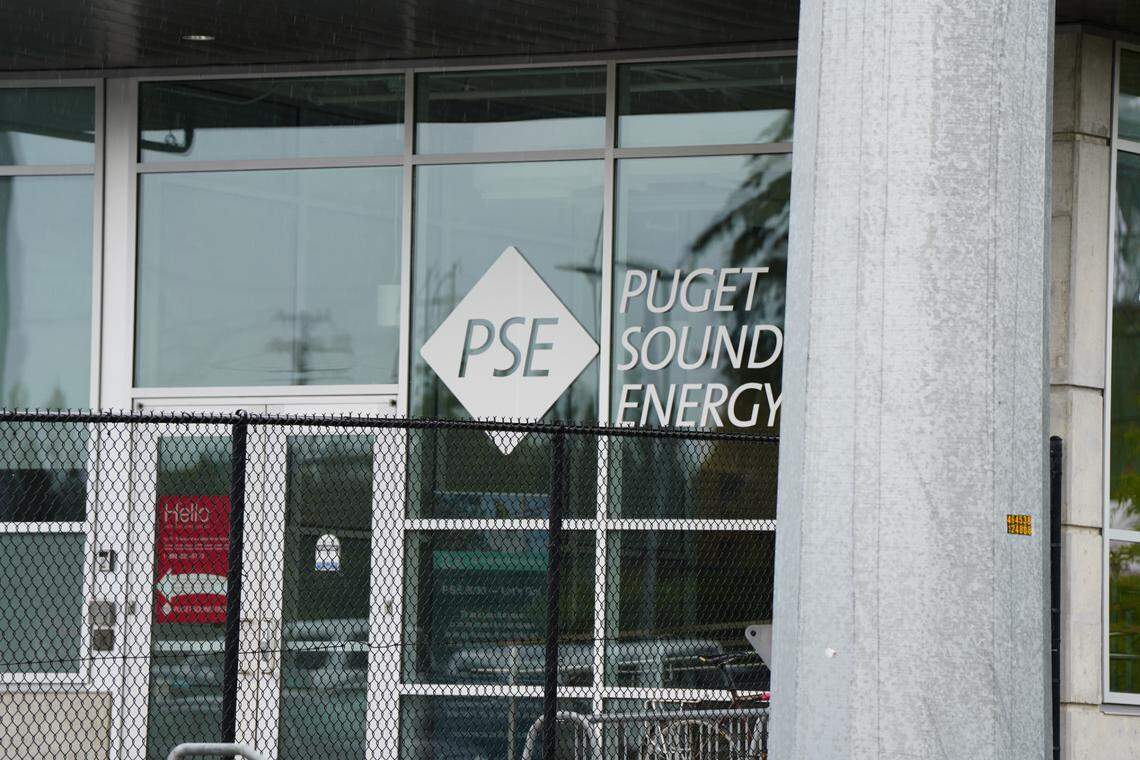
The initiative targets certain parts of the 2024 Washington Decarbonization Act. The law required “large combination utilities,” primarily Puget Sound Energy, to report an annual plan to the state that includes expected customer energy use and proposals to reduce the company’s greenhouse gas emissions and transition from gas to electricity. The law doesn’t allow utility companies to offer rebates to customers buying gas appliances, and requires them to inform customers of any rebate available for buying electric appliances.
I-2066 would amend parts of the 2024 law to broaden the availability of gas services. It prohibits large utilities from offering plans that restrict a customer’s access to gas, and allows the company to offer rebates for the purchase of gas appliances.
It also contains a pair of requirements that local governments and gas utilities would have to offer natural gas services, and wouldn’t be allowed to ban or disincentivize the use of gas.
You can read the full text of the ballot measure here.
The Secretary of State’s office lists experts’ arguments for and against each initiative on its website. Here’s what they had to say about I-2066.
Arguments in favor of I-2066
The argument for the ballot measure, written by a group that includes small business owners, a homeowner, home-builder and an engineer, say that it protects Washington residents’ power to choose the type of energy they would like in their home or business. They argue that disincentivizing the use of gas, which many small businesses rely on, will drive up prices, and that switching to all electric appliances, which can cost homeowners around $40,000 can be cost-prohibitive. Lastly, they point out that gas appliances don’t turn off when there’s a power outage, protecting people’s access to cooking and heat when the power grid is overloaded or out of service.
Arguments against I-2066
The opposition to the measure, written by three non-profit directors, a vice president of a construction company, the manager of a sheet metal workers’ union and a physician, claim that the measure would force utility companies to keep investing in “outdated technology and aging infrastructure.” The cost of this, they argue, would then be passed on to the customers, raising prices unnecessarily. Additionally, thye point out that the goal of the decarbonization act was to make buildings more energy efficient, which lowers costs in the long run. They also argue that I-2066 would contribute to fossil fuel pollution and represent a step backwards in the state’s progress towards addressing climate change.
Initiative 2109: Repealing the capital gains tax
Concise description: Repeals the state’s tax on capital gains above $250,000.
I-2109 would repeal RCW 87.82, Washington’s 7% tax on capital gains. The law applies only to capital assets held for longer than a year, such as stocks, bonds, precious metals or artwork; it doesn’t apply to the sale of real estate, retirement savings accounts, or deferred compensation accounts. The law allows for a $250,000 deduction, and taxes net gains, meaning that it only applies to each dollar earned over that amount in a calendar year. So if an investment’s value rises by less than $250,000 between the time you buy and sell it, the tax doesn’t apply.
Money collected from the tax goes to education. The first $500 million each year is allocated to the state’s education legacy trust account, which funds new enrollments, financial aid, early education and childcare. All the remaining money collected from the tax goes to the state’s common school construction fund.
You can read the full text of the ballot measure here.
Arguments in favor of I-2109
The argument for the measure was written by the state’s former attorney general Rob McKenna, along with a small business owner, state senator, software engineer and others. The group says that since Washington doesn’t tax income, it shouldn’t tax capital gains either. The Internal Revenue Service classifies capital gains as a form of income. The measure’s proponents claim that taxing capital gains is the first step towards taxing income, that it will drive businesses out of the state and that the state’s education system received plenty of funding before the tax was implemented.
Arguments against I-2109
The measure’s opponents, including an economist, school board vice president and officials from education nonprofits, claim that the measure needlessly eliminates hundreds of millions of dollars in school funding each year. They argue that it amounts to a tax break for the rich, as less than 1 percent of Washingtonians have to pay the state’s capital gains tax, which contains exemptions for retirement funds, family owned businesses, real estate and farms.
Initiative 2117: Climate Commitment Act and “Cap and Invest”
Concise description: Repeals Washington’s “cap and invest” program, setting a limit on the amount of carbon emissions that businesses can produce in the state each year, and bans similar programs.
Washington’s “cap and invest” program, established by 2021’s Climate Commitment Act, creates a set amount of carbon emissions that businesses in the state can use each year. That amount is then divided into carbon emissions credits that allow a business to produce a certain amount of emissions. Businesses can only produce as many carbon emissions as they have the credits for. Credits can be purchased from the state through quarterly auctions, or traded with other companies. The program aims to reduce the state’s emissions by 95 percent by 2050.
The program has received a lot of attention, with some praising it as being at the cutting edge of climate policy, while others have opposed it as an unnecessary burden on businesses. I-2117 would repeal the program and prohibit the state or any local government from implementing a similar program.
You can read the full text of the ballot measure here.
Arguments in favor of I-2117
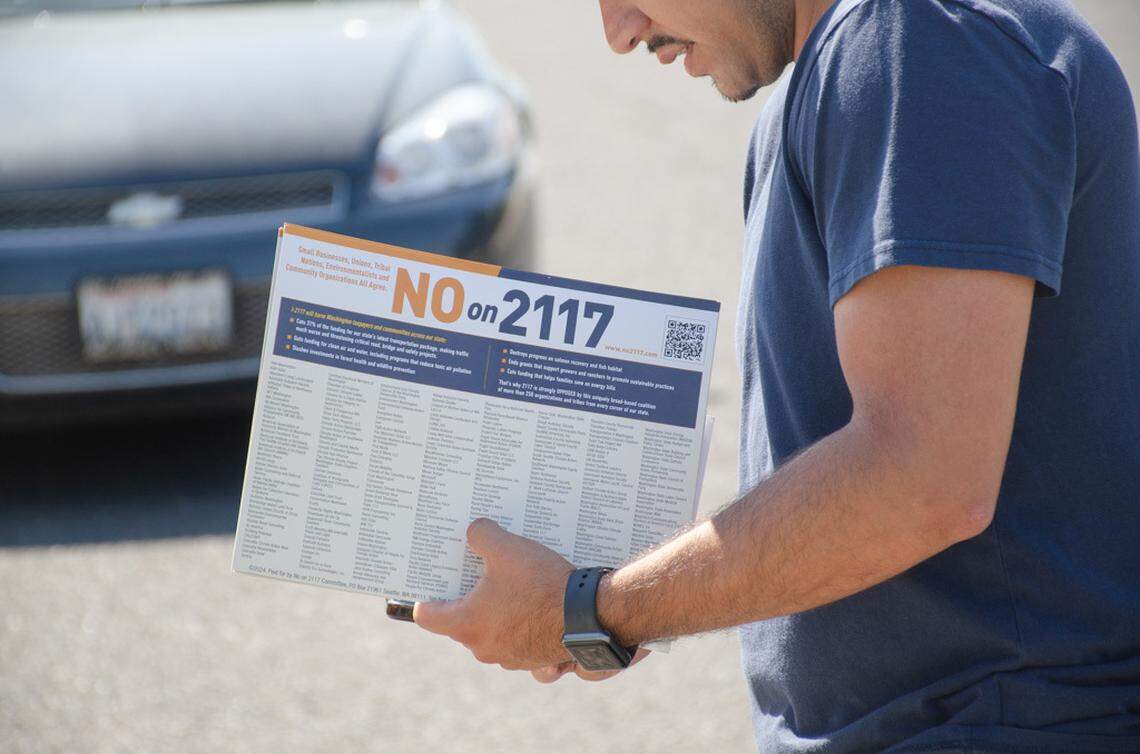
The argument in favor of the initiative says requiring companies to purchase permission to produce carbon emissions raises prices, particularly for gas and energy. That drives up the cost of living as a whole and hurts Washingtonians. Lastly, it claims that the funds generated by the program do little more than fund bureaucracy, and don’t do enough to address climate change. The opinion was written by a group that includes an atmospheric scientist, state senator, president of the Washington Trucking Association and an environmental justice advocate.
Arguments against I-2117
Its opponents argue that nothing about the program directly affects the state’s gas prices, and that if the initiative’s sponsors really want to address gas prices, they could target the state’s gas tax. Repealing the cap and invest program would increase the amount of pollution in Washington’s air and waters, all while devastating the state’s transportation budget, which is largely dependent on the program. The opinion was written by the chairs of the Suquamish Tribe, Nature Conservancy of Washington’s Tumwater branch, and a Washington Building and Construction Trade Council official.
Initiative 2124: Making optional the WA Cares program
Concise description: Allows employees to opt out of WA’s long-term care program under RCW 50B.04.
I-2124 addresses Washington’s long-term care program, known as WA Cares. Employees pay into the program through a 0.58 percent tax on their salaries. In return, they get up to $36,500 toward long-term care services, should they need them.
The program is mandatory for most Washington workers, although it’s optional for members of federally-registered tribes and anyone who’s self-employed.
The ballot measure would make the program optional for everyone. It would not only allow employees to opt out of the program, but it would also require them to elect to continue to participate if they want to keep their long-term care coverage.
You can read the full text of the ballot measure here.
Arguments in favor of I-2124
The primary argument in favor of the measure is that it promotes choice. If the initiative passes, employees can choose whether to allocate their money to the program, instead of being forced into it. Its proponents also argue that the program only covers a few months of long-term care, depending on the cost, and that some people will pay more into the program than they receive from it. At a time when many Washingtonians are struggling with the cost of living, they suggest giving the state’s residents a chance to opt out of an extra tax. The opinion was written by a bipartisan trio of state legislators.
Arguments against I-2124
The opposing argument — written by officials from AARP Washington, the Washington Nurses Association and the ALS Association — claims that I-2124 effectively takes WA Cares away, since the program relies on everyone’s buy-in to fund care. Many Washingtonians cannot afford to pay for private long-term care insurance, or are ineligible. Medicare does not cover this care. Additionally, while the measure claims to promote choice, the burden of providing or paying for elderly care often falls on individual families, and disproportionately women.
This story was originally published October 17, 2024 at 11:04 AM with the headline "What to know about WA ballot initiatives: Green energy, capital gains tax, long-term care."