A 54-unit Bellingham apartment building is planned with no parking. Here’s why
A 54-unit studio apartment building is proposed for development in Bellingham with no on-site vehicle parking.
The design proposes a five-level building, including one basement level and four upper levels, on Byron Avenue where it intersects with 35th Street. It is the latest project planned in the Samish Way Urban Village, an area that has seen major redevelopment in the last five years.
The lack of planned parking aligns with recent state law and local initiatives born out of the housing crisis that are meant to deregulate development and prioritize buildable land for housing while supporting climate mitigation.
The project documents point to Washington Senate Bill 5184, which eliminates local government authority to mandate minimum off-street parking for residences under 1,200 square feet, among other changes, beginning in January 2027.
In passing that law, the legislature found that “predetermined on-site parking requirements needlessly drive up the cost of development, particularly housing; discourage walking and multimodal transit usage; and encourage excessive reliance of automobiles with attendant impacts on human health and greenhouse gas emissions,” the bill states.
Project documents also point to an interim ordinance passed by the Bellingham City Council in January 2025 eliminating Bellingham’s minimum parking requirements and allowing new development projects to not provide vehicle parking while the ordinance is in effect.
Bellingham Director of Planning & Community Development Blake Lyon told The Bellingham Herald the city’s parking reforms are designed to prioritize “people, housing, and our environment.”
At the same time, he said the city acknowledges that it can be “challenging” when drivers can’t find parking near their destination.
“However, broadly speaking, allowing developers to right-size the amount of parking they provide based on anticipated need, rather than city mandates, allows for better use of land in Bellingham, including creating additional housing opportunities and preserving tree canopy. Also, when developments are in direct proximity to goods and services — such as transit, groceries, and pharmacies — they may have a reduced need for on-site parking,” Lyon told The Herald.
Councilmembers did not unanimously agree on the ordinance at the time it was passed, with some expressing concerns about whether every Bellingham neighborhood had the proper bikeable or walkable infrastructure to manage the change.
The ordinance does require developers to provide a certain amount of bicycle parking based on the type of residential or commercial use. ADA requirements and safety must also be considered, according to the city.
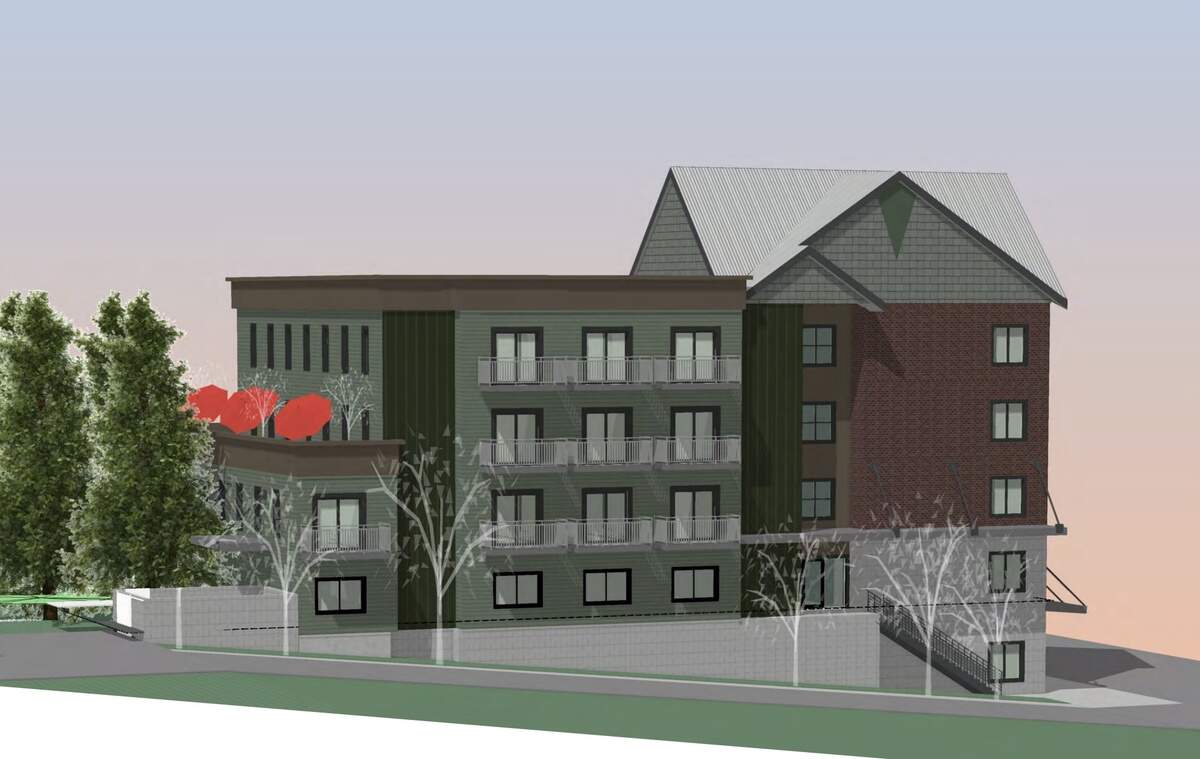
In the case of this project, it provides both “long- and short-term bicycle parking,” according to permit documents.
Prior to the interim ordinance being passed, a project of this scale would have required one parking space per unit, totalling 54 parking spaces, according to city code.
“Parking requirements limit what can be done with land and have led to an overabundance of parking in areas of the city. At the same time, the need for additional housing and environmental and climate mitigation measures have increased. Parking requirements don’t reflect our current priorities – the last time Bellingham’s parking requirements were substantially updated was in the 1960s,” the city’s parking reforms webpage states.
The City Council voted in June to approve a second six-month extension of the interim ordinance, keeping it in effect until at least January 2027.
Research published in 2024 suggests this kind of parking reform can boost housing construction by 40% to 70%.