Concerning vacancy rate for downtown Bellingham has leaders envisioning solutions
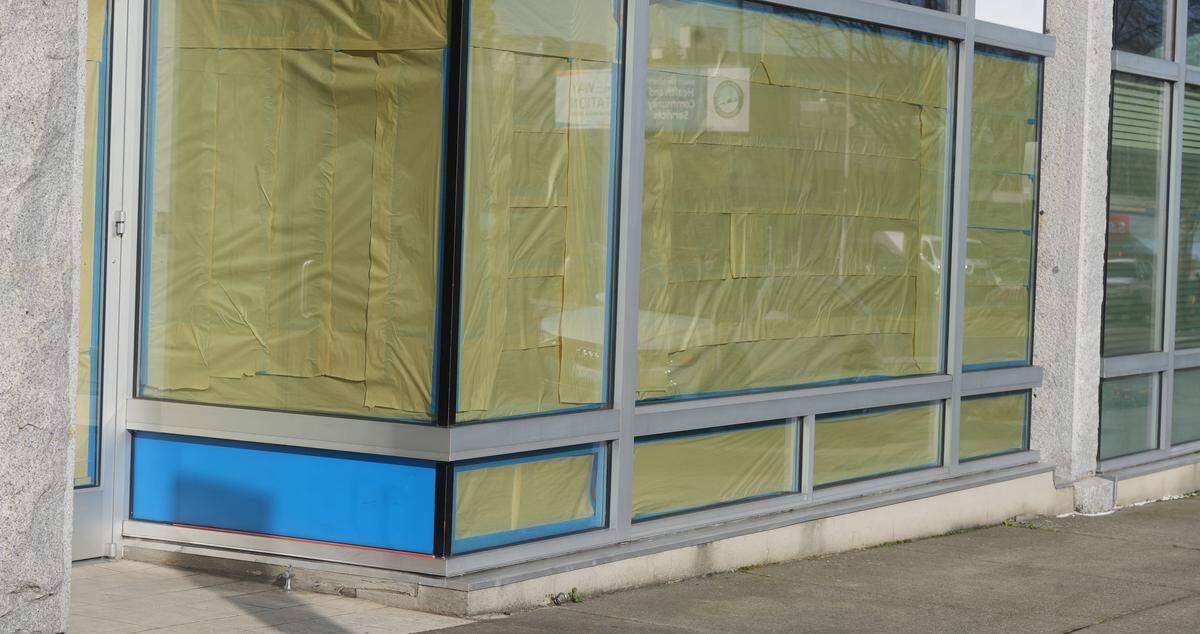
Bellingham is growing concerned about vacant retail space downtown — especially the downtrodden impression that empty storefronts make on visitors — and the City Council is considering several ways to correct it, city officials said in a report presented Monday afternoon and in interviews with The Bellingham Herald.
About 10% of first-floor properties in the city center are vacant, according to the 29-page “Vacancy & Vibrancy: Examining Occupancy Trends and Potential Strategies to Address Vacancies in Downtown Bellingham” that was prepared as part of Mayor Kim Lund’s initiative called Downtown Forward.
That 10% figure is at the high end of the 5%-10% range that’s considered a healthy occupancy rate, the report said.
Tara Sundin, community and economic development manager, told the City Council that city officials wanted to collect data before developing a strategy.
“Vacancies create visual blight. Empty storefronts break up sidewalk activity, and it reduces that engagement between pedestrian and storefronts in that interface. That weakens the vibrancy and removes eyes on the street. We’re all familiar with when we don’t have eyes on the street sometimes places can feel less safe or there’s a perception that a space can feel less safe,” Sundin said.
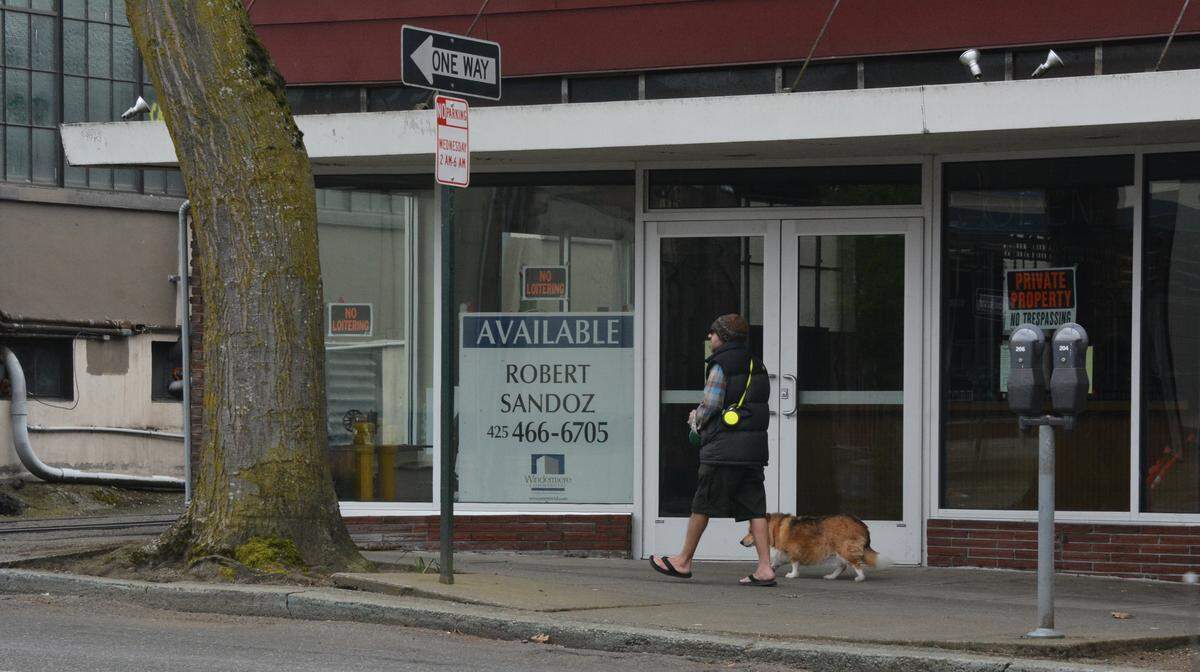
Visual blight has “a clear financial impact” because empty storefronts and fewer people on the street can discourage further investment in the downtown, she said.
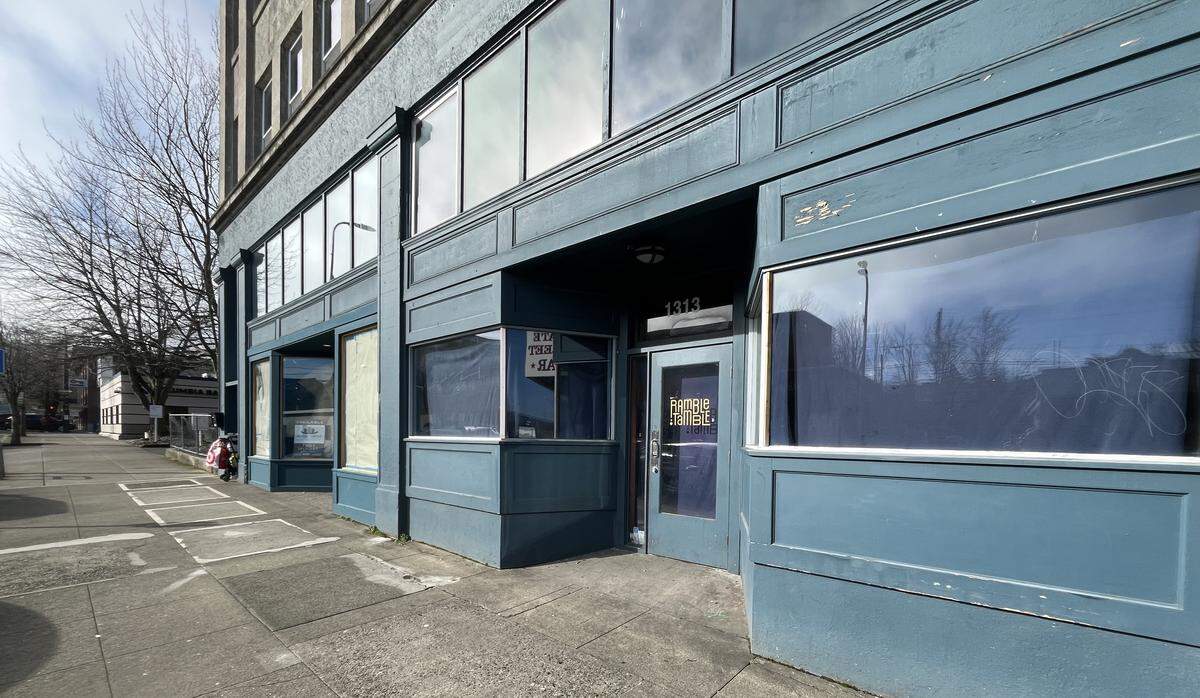
More worrying, however, is that vacancy rates rise to 14% in the “downtown pedestrian core,” an area roughly bounded by State, Chestnut, Bay and Champion streets, according to the report. Vacancies in that central area include the empty lot at Railroad and Magnolia, where nearly an entire block of buildings burned in separate 2019 fires, and the former J.C. Penney department store at 1314 Cornwall Ave., which left in 1988 when David Syre, owner of Cascadia Daily News, developed Bellis Fair mall.
“Whatever’s happening today is going to change again,” Sundin said. “But what’s happening today, as we know, (is that) people are buying things online, they’re not shopping the way they used to shop. They’re looking for experiences rather than just buying products. Tenants are strapped these days because labor costs are higher than they used to be. And in Bellingham, the minimum wage is higher than it used to be, and that puts pressure on our businesses downtown.”
Possible steps to help downtown property owners to find tenants or develop their holdings include financial incentives such as tax breaks for economic investment or penalties for retail space that’s intentionally kept idle. Fines and fees would require legislative action, according to the report.
Council member Hollie Huthman, who owns the Shakedown live music venue, said a vacancy tax has “been a lobbying priority” at the state level for several years.
Huthman said the report was “incredibly valuable. As a downtown person myself, I anecdotally hear a lot downtown, a lot of thoughts about challenges and how to tackle those challenges and priorities. I think it is so helpful to have this comprehensive analysis and framework to organize how we find solutions to problems.”
Data collection for the “Vacancy and Vibrancy” report began in September 2025 so city officials could “better understand and address commercial vacancies,” according to the report.
The overall business survey area included nearly 2 million square feet of first-floor retail space in the city center from Forest Street to Whatcom Creek and from City Hall to the State Street traffic circle in the south end of downtown.
“The study involved calculating the overall ground-floor vacancy rate, comparing that rate against industry standards, and exploring the underlying causes for vacancies within the context of broader market trends and area-specific impacts. Data was gathered through a variety of sources, including field observation, interviews with commercial brokers and stakeholders, as well as reputable case studies. The report ends by offering a variety of potential strategies aimed at addressing chronic vacancies, as well as recommendations for community-led efforts to improve the overall strength and vibrancy of downtown Bellingham.”
“Vacancy and Vibrancy” was published as part of this week’s City Council agenda packet, starting on Page 375.
Recent changes in the city’s real estate market varied drastically across Bellingham, according to a recent commercial real estate report by Ryan A. Martin, co-owner and broker at Pacific Continental Realty in Bellingham. Martin, who was consulted as part of the vacancy study, publishes a quarterly report on commercial real estate in Bellingham, according to previous Bellingham Herald reporting.
“My analysis of the strategies outlined in the report is that they are largely discussion-based rather than action oriented. I do not believe that initiatives such as roundtables, marketing campaigns, temporary activation efforts, or vacancy surveys will meaningfully impact downtown retail vacancy,” Martin told The Herald in an email. “At its core, the issue is structural. Downtown retail depends on a critical mass of people, both residents and workers, to sustain it. Currently, that density does not exist.”
Only about 5% of the city’s total population lives downtown, and that’s not enough to sustain a thriving retail center, he said.
“A second major factor is the downtown office vacancy rate, currently around 7.7%,” Martin said. “Daytime workers are essential to support restaurants, grocery stores and other street-level retail. These businesses rely heavily on consistent daytime traffic. The reality is that most small retail operators run on thin margins; they are the cultural backbone of downtown, but not its financial engine. That role is typically filled by professional office users’ insurance firms, accounting offices, and similar tenants who occupy upper floors, pay stable rents, contribute to the tax base, and employ workers who can afford to live in the community without subsidies.”
Mayor Kim Lund often talks about downtown Bellingham as a “third place” for everyone, a home away from home.
“Downtown is everyone’s neighborhood. It is the social, economic and cultural heart of the city,” she said in a promotional video for the Downtown Forward initiative.
“Downtown Bellingham’s vibrancy is something this community has built together and is worth protecting,” Lund told The Herald in an email. “As mayor, a thriving downtown is a top priority for me and is reflected in our Downtown Forward initiative. Addressing commercial vacancies is central to that work. This study gives us a clear picture of what’s happening on the ground so that we can take strategic steps to strengthen our urban core.”
“The city will be pursuing a range of actions based on this report — from business development investments to deeper engagement with property owners and advocating for a state-level vacancy tax to address the most persistent cases. We’re not waiting to get started,” she said.
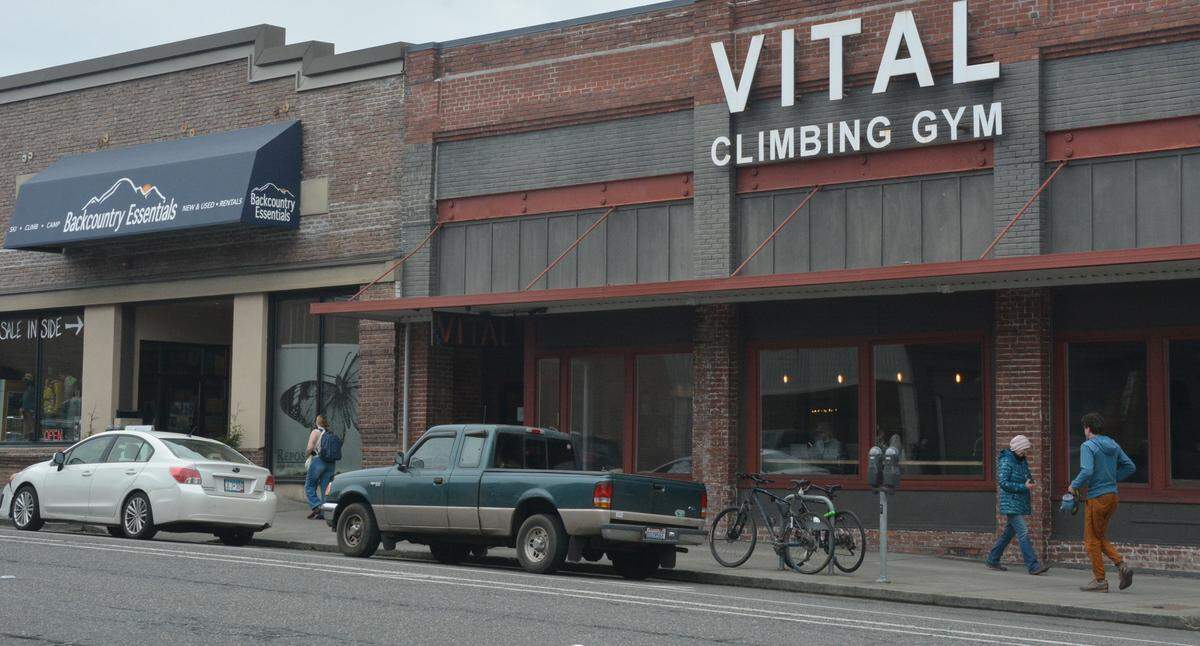
Signs of vibrancy downtown include the relocation of the Greenhouse and Backcountry Essentials downtown, where both owners bought their own buildings. Other bright spots include a resurgence of restaurants and related businesses near the Pickford Film Center’s new Grand Theater.
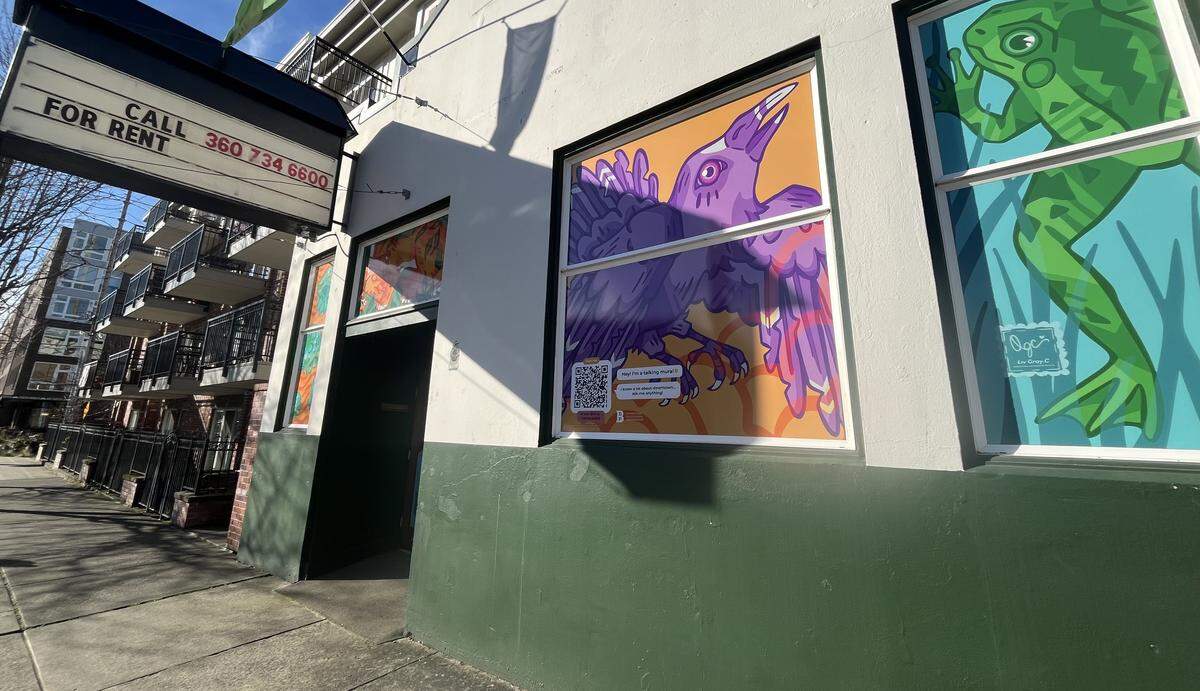
Bellingham officials have been working closely with the Downtown Bellingham Partnership, a civic organization to promotes the downtown by sponsoring activities such as Downtown Sounds and a monthly art walk. Further, the city’s Activation and Beautification Grant Program has dedicated $500,000 annually for street, sidewalk and alley cleaning; landscaping and graffiti removal; as well as police bike patrols, public restrooms, murals and other art, including “window wraps” to make vacant stores look more inviting.
Lindsey Payne Johnstone, the Downtown Partnership’s executive director, told The Herald that the report is a good first step.
“It’s especially important that the report looks at vibrancy alongside vacancy — a healthy downtown isn’t just about filling spaces, it’s about creating energy, activity and reasons for people to be here,” Johnstone said. “I also value how the study breaks vacancies into the three categories of market ready, large footprints and stalled assets because these spaces each have their own challenges and history, and will require a varied approach.”
One of those “stalled assets” is the former J.C. Penney building, where a public-private partnership to add two stories, apartments and retail space to the building fell apart in 2018 when the owner died.
Former City Council member Gene Knutson, who served 28 years, told The Herald that downtown has rebounded significantly since the mall opened and Sears, J.C. Penney, Bon Marche and others left the city center. Two decades ago, there was no nightlife, and downtown was pretty much deserted after 5 p.m. weekdays and on weekends.
“It was worse (then). Not only did we lose the big anchor stores, we also lost others. They went out there rent-free and we got nothing. It was rough,” Knutson said in a phone interview.
Johnstone, who has been with the Downtown Bellingham Partnership since the mid-2000s and watched downtown’s resurgence, told The Herald that she’s optimistic.
“Overall, I see this study as a helpful tool, and the proposed strategies reflect action needed to make progress,” she said. “I feel positive about where downtown is headed as we continue to prioritize public spaces and business support. We have strong collaboration with the city and community partners, and we’re continuing to build relationships with property owners, and that’s what it will take to advance this work.”
This story was originally published May 4, 2026 at 5:20 AM.