Bellingham homeless camp cleanup continues as city awaits court-ordered payments
Almost one year after the city of Bellingham began the initial clearing of one of Whatcom County’s largest encampments, the city has begun its second phase of cleanup and has yet to receive any of the court-ordered reimbursement by the property owner required to pay for it.
Dozens of unhoused individuals were known to be living at the encampment behind Walmart off E. Stuart and Deemer Roads for more than a decade. The encampment and its impacts had grown significantly in the years leading up to its clearing, causing nearby residents and businesses to express fears for their health and safety.
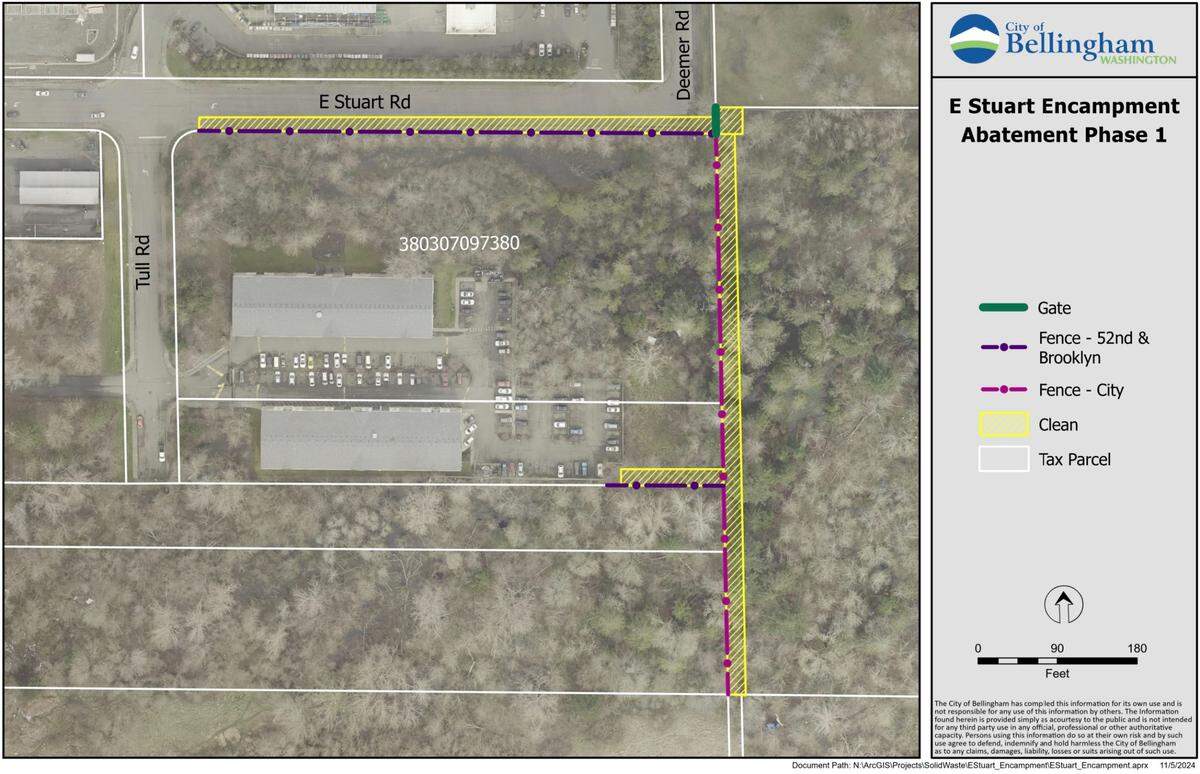
The city began the first phase of the cleanup effort in November 2024 after a lengthy litigation process that resulted in a lawsuit against the property owner, Li-Ching Fang. A judicial “nuisance” determination authorized city staff to enter the property to clean it when Fang did not address it privately.
That effort involved cleaning and fencing the northern areas of the properties, prioritized to protect the residents of nearby Tullwood Apartments from the negative impacts of the encampment, according to the city.
Whatcom County Superior Court Judge Lee Grochmal issued a judgment in August requiring Fang to pay $126,743.59 in reimbursement abatement costs to the city — none of which has been paid.
“According to the court, this property owner is responsible for all costs to clean up the property. The city will return to court as necessary to recover our additional costs as they are accrued. Our goal is to ensure the serious public health, safety, and environmental hazards on this property are addressed,” City Deputy Administrator Janice Keller told The Herald.
Keller said “much more work remains” to remove an estimated 1,000 to 2,000 tons of waste throughout the property.
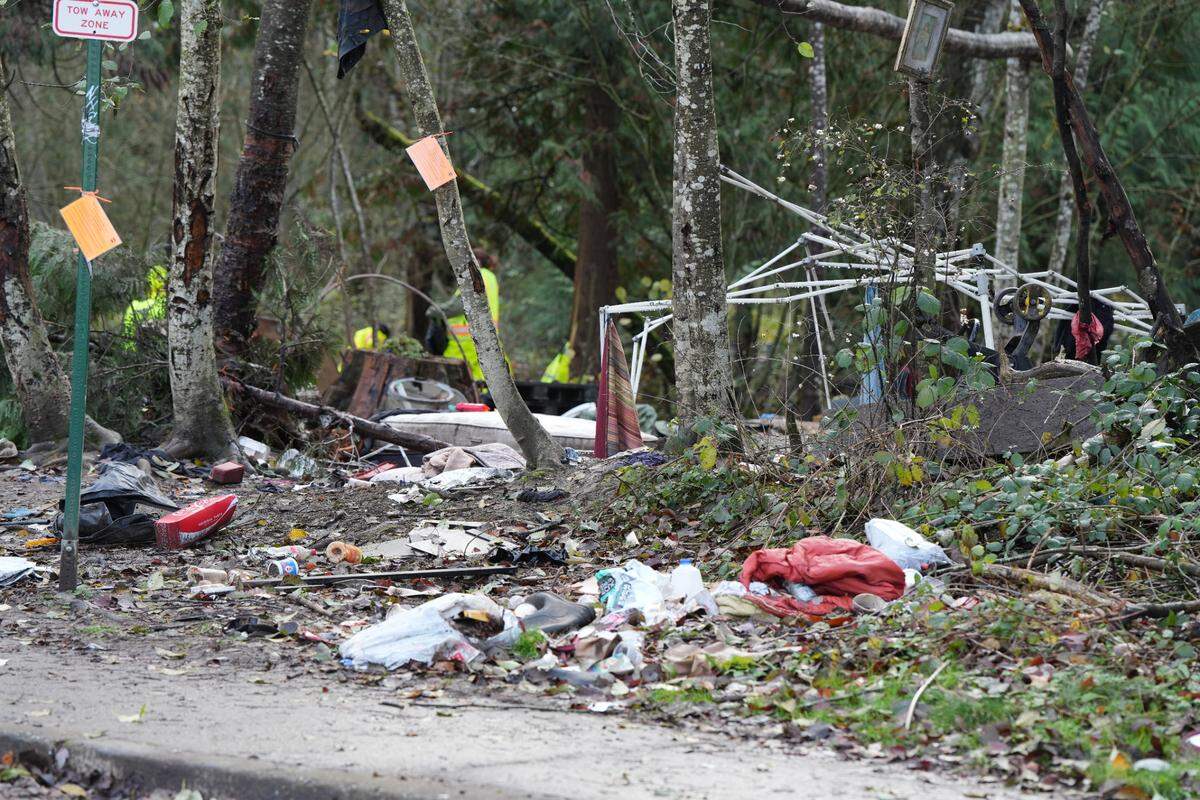
“We expect it will take several years and cost up to $6 million due to the difficulties in accessing the site, the extensive environmental damage, and other factors,” Keller said.
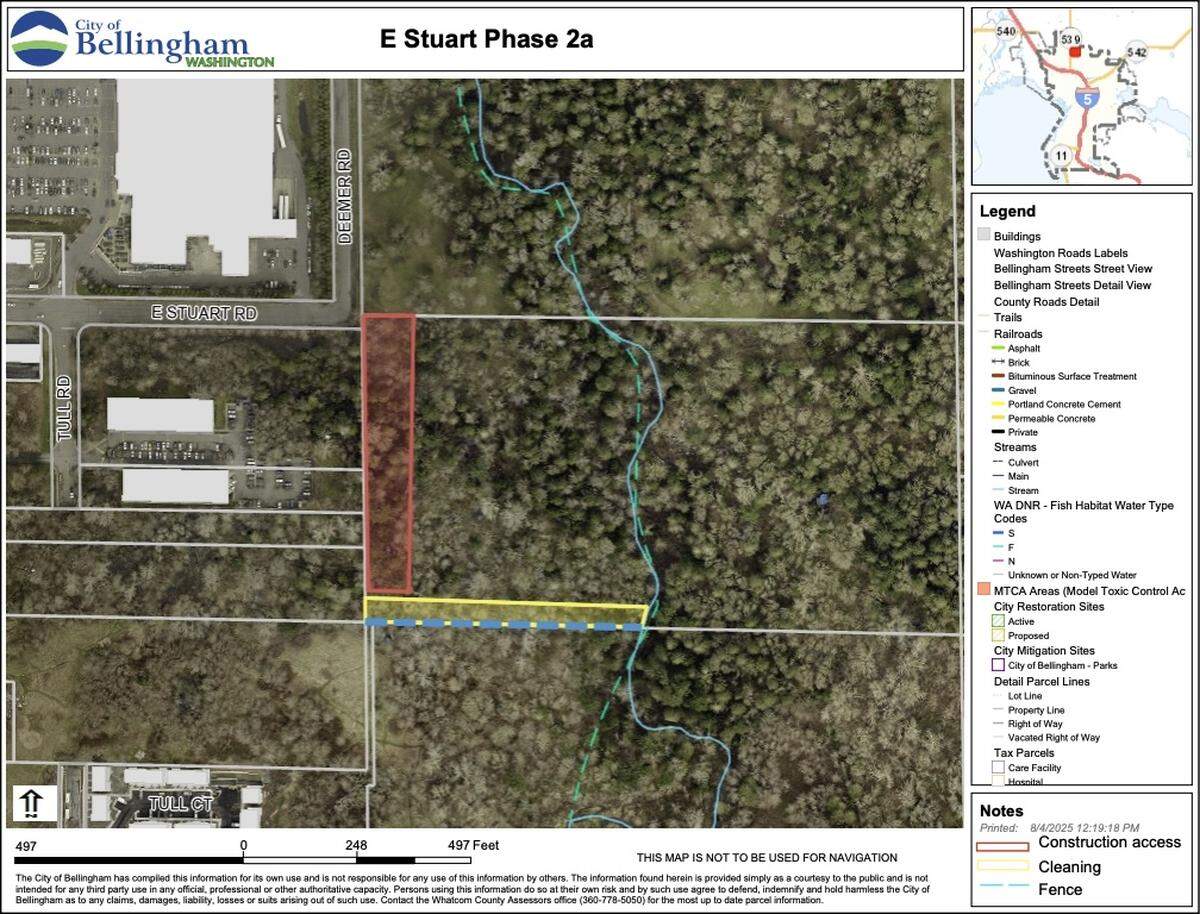
The city began the second phase of the property’s cleanup in mid-September. That included waste removal, vegetation clearing and soil stabilization.
“In total we removed 30,480 pounds of waste,” Keller told The Herald.
Individuals living on the property were informally notified over the summer of the impending second phase of cleanup. On September 18, formal notification was provided to about five tents that they would need to be moved ahead of the work set to begin the following week, Keller said.
Additional fence installation is expected to begin any day, Keller said. The fencing will extend along a portion of the southern border of the property, from the western edge east to the creek, according to the city.
This story was originally published October 28, 2025 at 5:15 AM.