Report highlights success of Whatcom County’s Permanent Supportive Housing
AI-generated summary reviewed by our newsroom.
- VillageReach report finds Whatcom County PSH meets safety and service goals.
- Tenants show high retention rates; 89–92% remained housed from 2019 to 2024.
- Overdose deaths rose slightly since 2019, reflecting broader state health trends.
An independent evaluation of Whatcom County’s Permanent Supportive Housing (PSH) programs is showing their overall success while also highlighting areas for improvement.
The evaluation was conducted by VillageReach, a nonprofit that works across the country to strengthen public health strategies in individual communities. The nonprofit presented the findings to the Whatcom County Council on Sept. 9.
The nonprofit compared Whatcom County’s programs to others across Washington and the U.S. to assess effectiveness, safety standards, policies and mortality rates.
Key findings
Some of the key findings from the report include:
- PSH tenants described the program as “life-changing and healing.” They also reported feeling respected, welcomed and significantly safer than when they were unhoused.
- PSH programs in Whatcom County have increased security in recent years and enhanced crisis protocols. The programs are also using harm reductions tools such as Narcan and wellness checks to support higher-risk tenants.
- When safety incidents occur in PSH, they can be traumatizing for tenants and staff. Not all PSH programs in Whatcom County have 24/7 staffing, which leads to challenges. External crisis responders can sometimes be inconsistent, delayed or unavailable.
- Some programs with the highest-needs tenants were found to face elevated safety incidents.
Overall, the report found that most PSH programs in Whatcom County are “implementing strong safety practices and meeting core goals.”
To make improvements for resident outcomes, VillageReach recommended programs implement a more streamlined data collection process, focus on program-specific quality improvement, support system-wide quality improvement and strengthen public understanding of PSH programs.
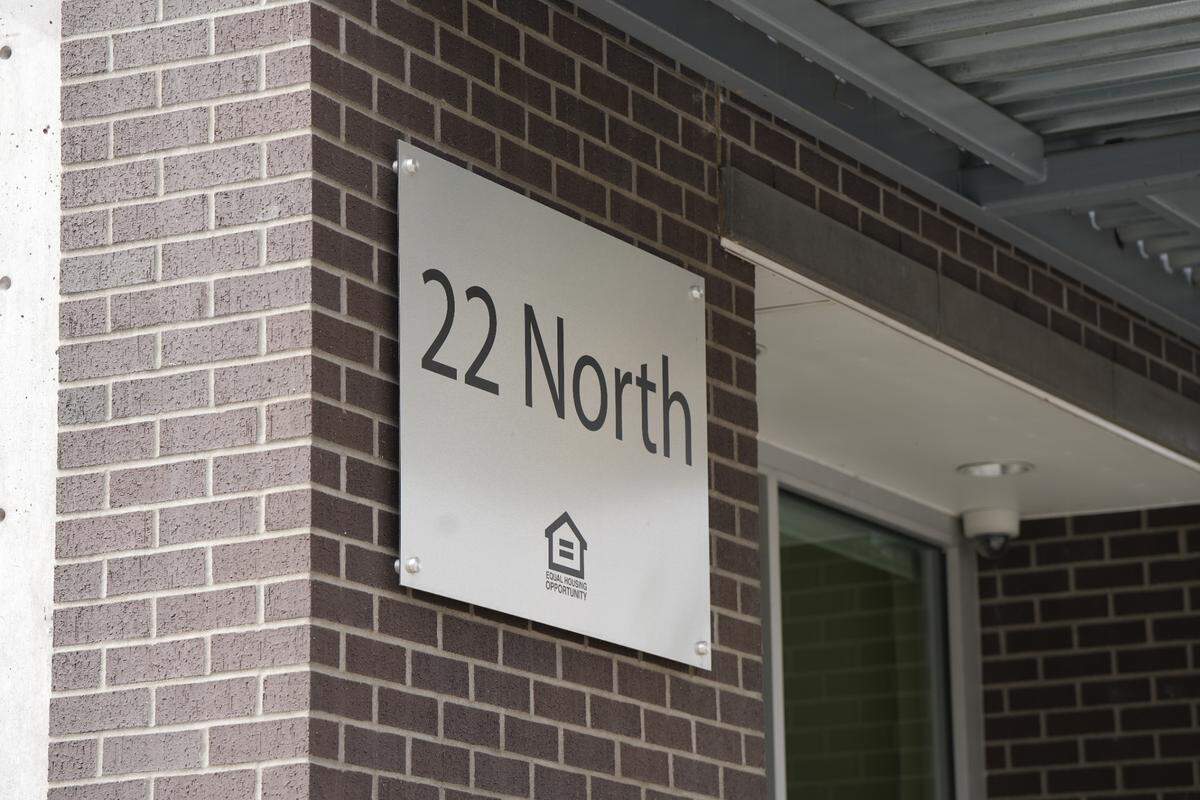
Leaders with local nonprofit Opportunity Council, which operates 22 North, a Permanent Supportive Housing program in Bellingham, said they were glad to see the report shared publicly because it confirms that PSH is helping people build safe and lasting homes.
“This independent evaluation affirms what we’ve seen for years: Permanent Supportive Housing works,” Opportunity Council Executive Director Greg Winter said. “It provides safety, dignity and a place to call home for people who’ve faced the hardest barriers to housing. There are always areas we can grow and evolve, and we look forward to continuing to work closely with our partners to do that for years to come.”
Who is PSH serving?
PSH is a housing model that combines affordable, long-term housing with voluntary services for individuals and families who have disabling conditions and experience homelessness. There is no time limit for how long tenants can remain in the program and they sign leases in accordance with Washington laws.
PSH has a low barrier for entry that emphasizes immediate access to housing with no requirements to demonstrate readiness, such as treatment compliance or participation in services. The programs emphasize choice, stability and individualized support.
From 2019 to 2024, Whatcom County PSH and other housing with services programs served 1,298 individuals, including 822 heads of households.
Of those heads of households, 88% were in a homeless, institutional or temporary housing situation prior to program entry. Forty-six percent were domestic violence survivors, and 88% had some type of disabling condition.
Among those heads of households with disabling conditions, 83% had a mental health disorder and 31% had a substance use disorder.
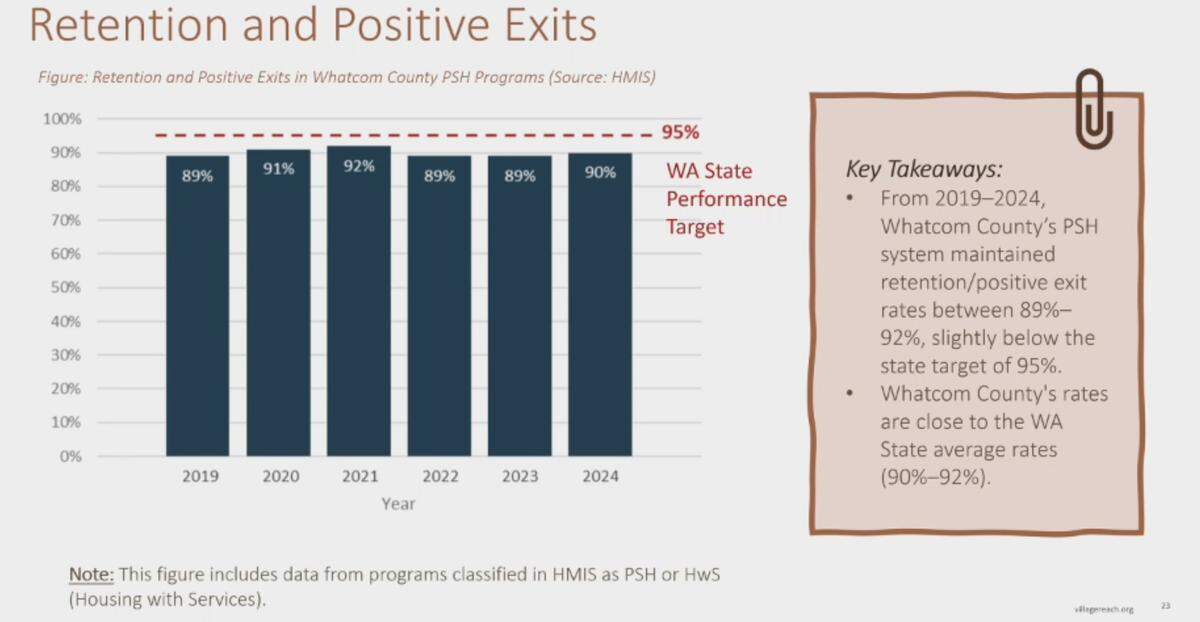
During that same period, Whatcom County maintained a resident retention/positive exit rate between 89 and 92%, mirroring the state average.
“The report shows that nearly nine out of 10 tenants are able to keep their homes. Having a home — and being connected to others — is what makes healing and rebuilding possible,” said Opportunity Council’s Director of Whatcom Homeless Service Center Teri Bryant.
In 2024, the average length of stay for a tenant living in Whatcom County PSH was 1,807 days, or about five years. That aligns with the PSH goal of providing long-term, stable housing for residents with complex needs.
Understanding mortality rates in vulnerable populations
Individuals experiencing homelessness face elevated mortality rates compared to the general population as a result of things like infection, exposure and overdose.
PSH is designed to serve the most vulnerable individuals, including those with complex medical conditions and co-occurring behavioral health conditions such as substance use disorders. So while national studies show PSH can reduce deaths from exposure and violence, the overall mortality rate of residents in PSH often remains comparable to that of the homeless population due to those chronic health conditions.
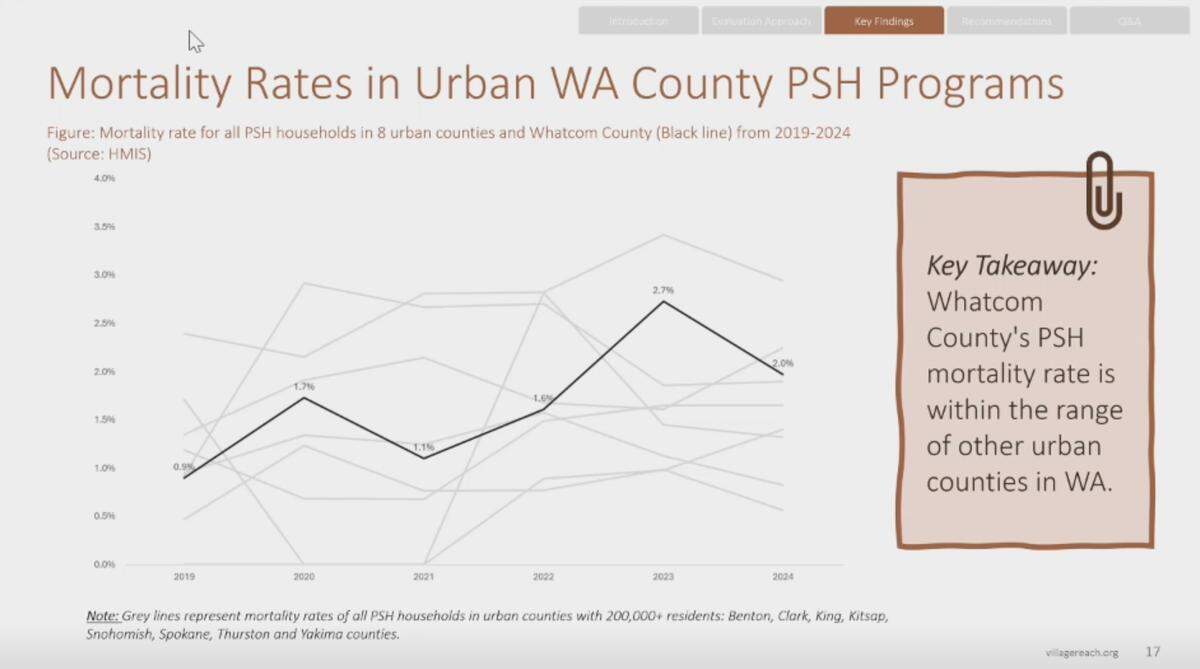
Although Whatcom County’s PSH mortality rate is within the range of other urban counties in Washington, the county’s PSH overdose death has slightly increased since 2019.
That increase is “not unexpected,” according to Emily Gibson with VillageReach, given the general increase in overdose deaths across Washington.
Still, some County Councilmembers expressed concerns with the report and the PSH model.
“Nowhere does it seem to have a goal of helping community members become happier, healthier, productive citizens of our county. That’s nowhere stated, and that’s extremely disappointing to me, for those people,” Councilmember Mark Stremler said during the meeting.
Councilmember Ben Elenbaas drew issue with the way some of the report’s mortality data was presented, saying its lack of specificity makes it challenging to identify whether certain local facilities are more challenged than others.
“I don’t think anybody has ever been up here saying, ‘Hey, Whatcom County is out of the norm.’ I think people have been up here saying, ‘Certain facilities are outside of the norm.’ And we should look at that and hold them more accountable,” Elenbaas said at the meeting.
Elenbaas has historically been outspoken about his opposition to some PSH models. He introduced a measure in July of 2024 to cut 22 North’s funding and turn it into a secure detox facility after the program came under public scrutiny due to instances of crime, drug use, several death investigations on site in the first six months of 2024, and a 2022 shooting death at the residence.
The council ultimately rejected the measure.
This story was originally published September 12, 2025 at 5:00 AM.