Electric vehicle ownership growing as Bellingham adds charging stations
AI-generated summary reviewed by our newsroom.
- EV registrations in Whatcom County doubled from 3,223 in 2023 to 6,297 in 2025.
- Bellingham installed 77 EV chargers since 2022, with 45 open to the public.
- Public charger use rose to 450,000 kWh in July 2025, doubling from July 2023.
Electric vehicles are surging in Whatcom County, with ownership doubling in two years, and the use of charging stations is growing exponentially, according to the city of Bellingham.
There were 6,297 EVs registered in Whatcom County through Aug. 11, according to the Washington state open data portal. That figure was 3,223 in 2023. Statewide data isn’t available specifically for Bellingham.
Seth Vidaña, the city’s climate energy manager, discussed progress in adding EV charging stations as part of Bellingham’s goals toward reducing its carbon footprint.
“Our intent is to install new electric vehicle charging, really, all over the city. We have new stations all over the city, north to south, east to west, with clustering in downtown and Fairhaven. (We’re) really trying to provide everyone with the opportunity to charge their vehicle,” Vidaña told the City Council in a committee meeting Monday.
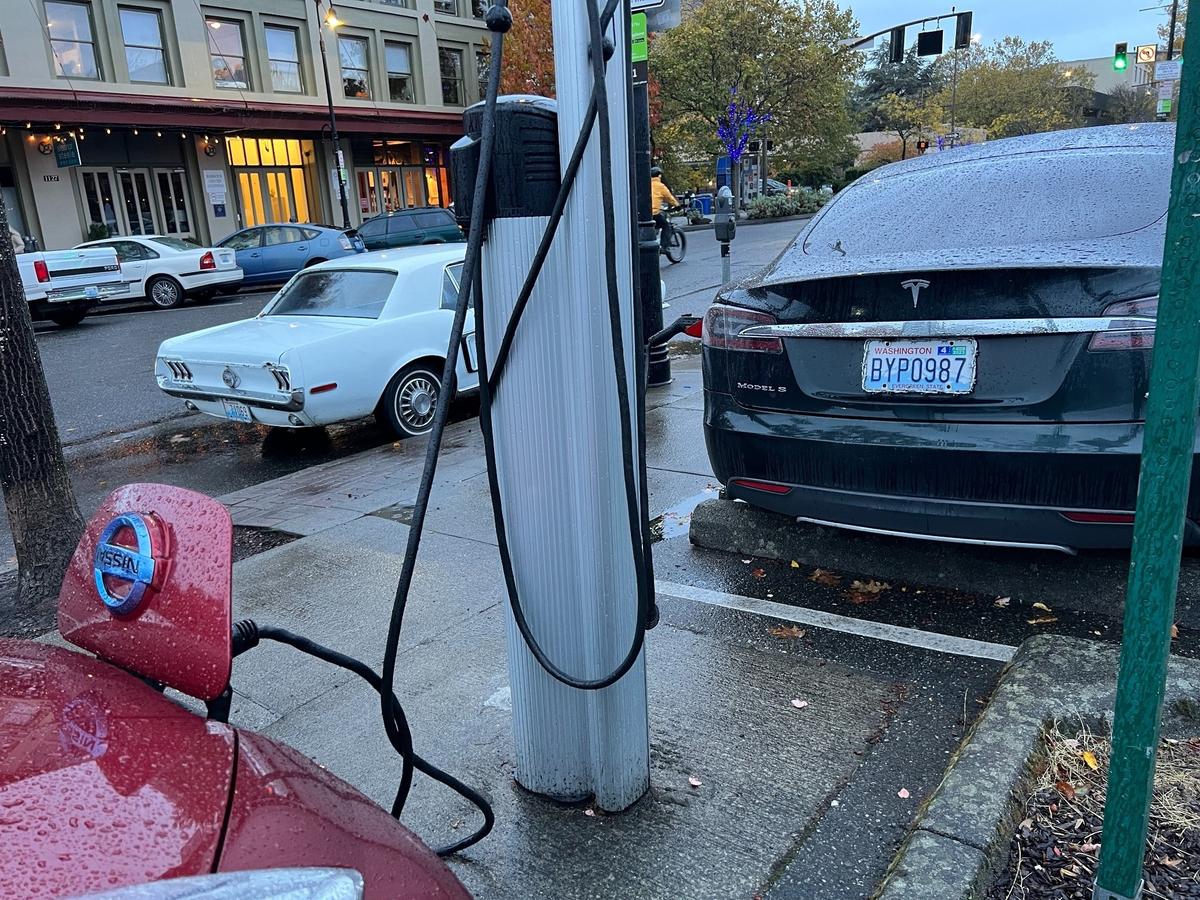
Building much of that EV charging infrastructure was accomplished with a $1.5 million grant to install chargers and a $2 million contribution from the city using funds from its transportation tax, city of Bellingham spokesman David Brauhn told The Herald.
“Since 2022, the city has installed 77 chargers, 45 of which are accessible to the general public. There are 32 chargers on city property for city use only,” Brauhn said in an email.
There are 76 electric vehicles or plug-in hybrid electric vehicles in the city fleet, he said.
Charging stations that can be used by the public have two connections, which makes for 90 total spaces. Five are fast chargers, located along Interstate 5, and four are solar-powered.
City Council member Michael Lilliquist told The Herald that public EV charging stations benefit commuters, travelers and tourists. They also help local residents who live in an apartment or another place where they can’t charge their cars easily . “Widely available EV chargers allow visitors to travel to Bellingham for work or enjoyment, confident that they can top up their battery for the return trip,” Lilliquist said in an email. “The second is for local people who don’t own a home where they can install a charger or hook up to electricity where they park at night. Even if they want to buy an electric car, these local residents may hold off until they are comfortable knowing there are enough convenient charging stations located around town.” In an email, Lilliquist said this is how the city is helping to make owning an EV easier.
“As with many new ways of doing things, there is a chicken-or-egg problem. Which comes first, the car or the charging stations? For people who can’t install an at-home charger, buying an electric car may be second, and publicly available EV charging stations need to come first,” he said.
Data from the chargers shows that they are being used frequently, Vidaña said in his presentation to the City Council.
Monthly kilowatt use more than doubled from about 200,000 July 2023 to 450,000 in July 2025.
“We think this is sort of a ‘if you build it, they will come’ sort of scenario, and we really have not seen an end to this exponential growth,” Vidaña said. “It’s not the same people who are charging more. We are seeing a lot of unique individuals.”
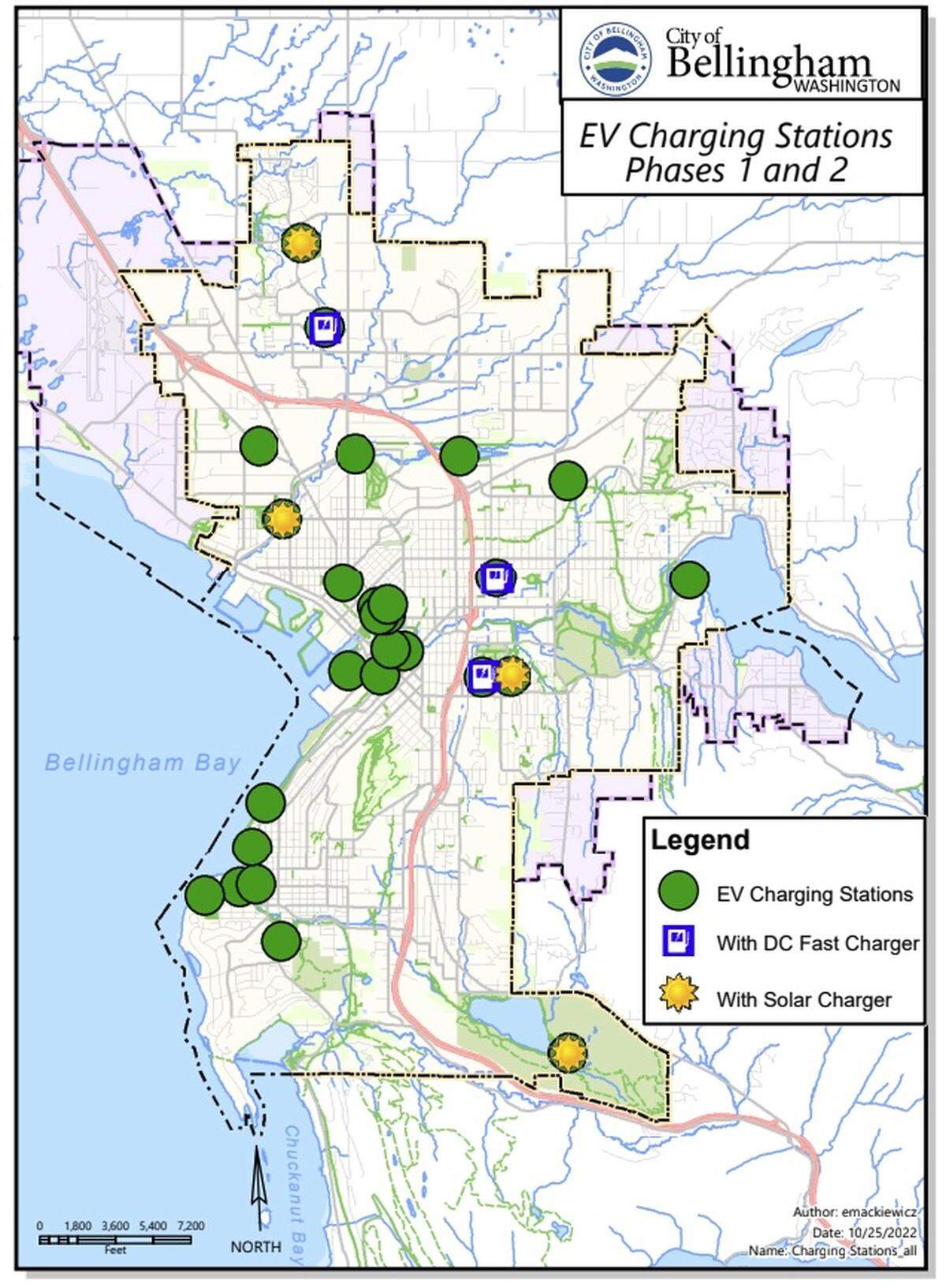
There were just under 2,000 unique drivers using the chargers in 2024, and that number is likley to reach 3,000 by the end of 2025, he said.
Bellingham charges 25 cents per kilowatt hour, plus the regular cost of parking if applicable, to use the pubic charging spaces.
There’s a $1 surcharge for using the fast chargers and a 25 cents per minute surcharge for staying in a parking space after EV charging is finished.
This story was originally published September 2, 2025 at 5:00 AM.