City of Bellingham approves plan to log 80-acre site at Galbraith Mountain
The city of Bellingham will begin negotiations for a selective timber harvest on protected land in the Lake Whatcom watershed following a unanimous Bellingham City Council vote Monday.
City officials and Janicki Logging and Construction Co. will discuss a deal to cut trees on the north slopes of Galbraith Mountain in the North Beaver Creek Preserve, which is above the Geneva neighborhood and along Lake Louise Road toward Sudden Valley.
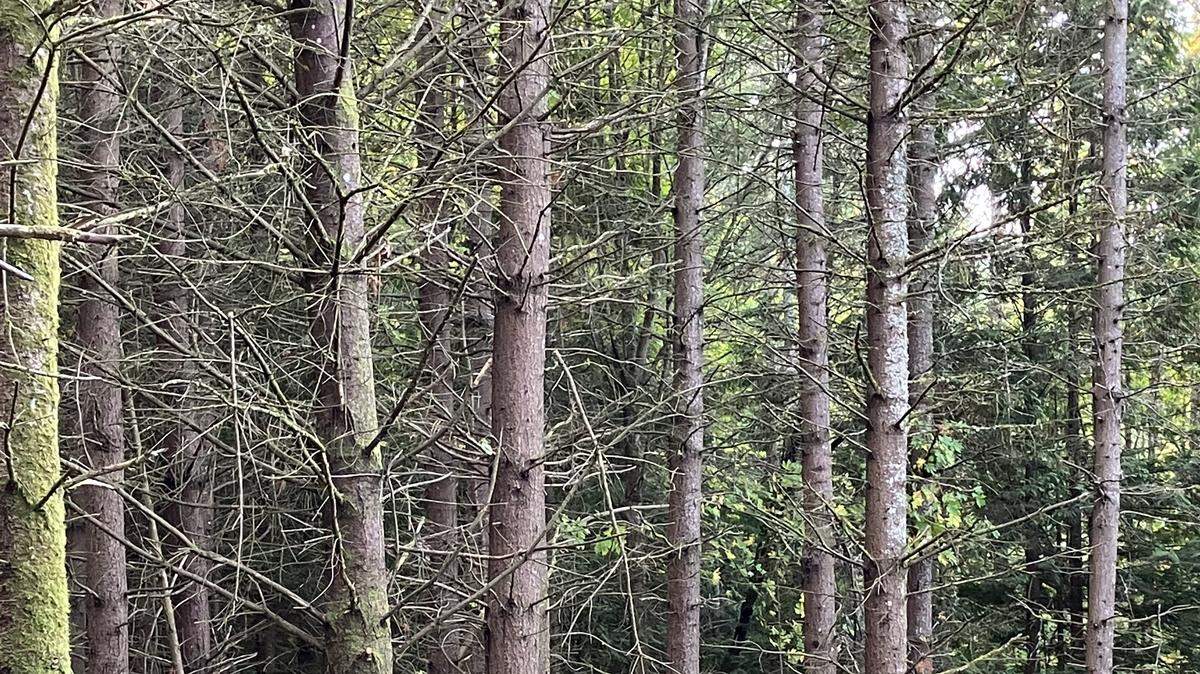
Trees have become too dense in the tract, which was purchased in 2012 through the Lake Whatcom Land Acquisition and Preservation Program to limit development near the lake, which is the drinking water source for more than 100,000 people. It was previously part of a commercial logging operation, according to a report from the city’s Department of Public Works. Logging is planned for summer 2026.
Mayor Kim Lund told the council Monday that she visited the site and confirmed what Public Works officials have said — the trees are growing too close together.
“There’s definitely a marked contrast in that forest,” Lund said. “As you stand there, you can hear diminished birdsong; there are no (ferns) growing on the ground. It just looks very different than a structurally complex and ecologically active forest should be looking.”
About 80 acres of Douglas fir in a 148-acre stand of hardwood and conifer forest should be thinned because of “overstocking,” the Public Works Department report determined.
Such “variable density thinning” will improve forest health, the report says.
“All harvest considerations will be focused on reducing impact to soils and preserving forest health throughout the duration of the project,” according to the report. “The only tree species to be harvested is Douglas fir; all other species will be left to increase tree species biodiversity across the stand. Any additional road building will need to be approved by the city prior to the harvest starting.”
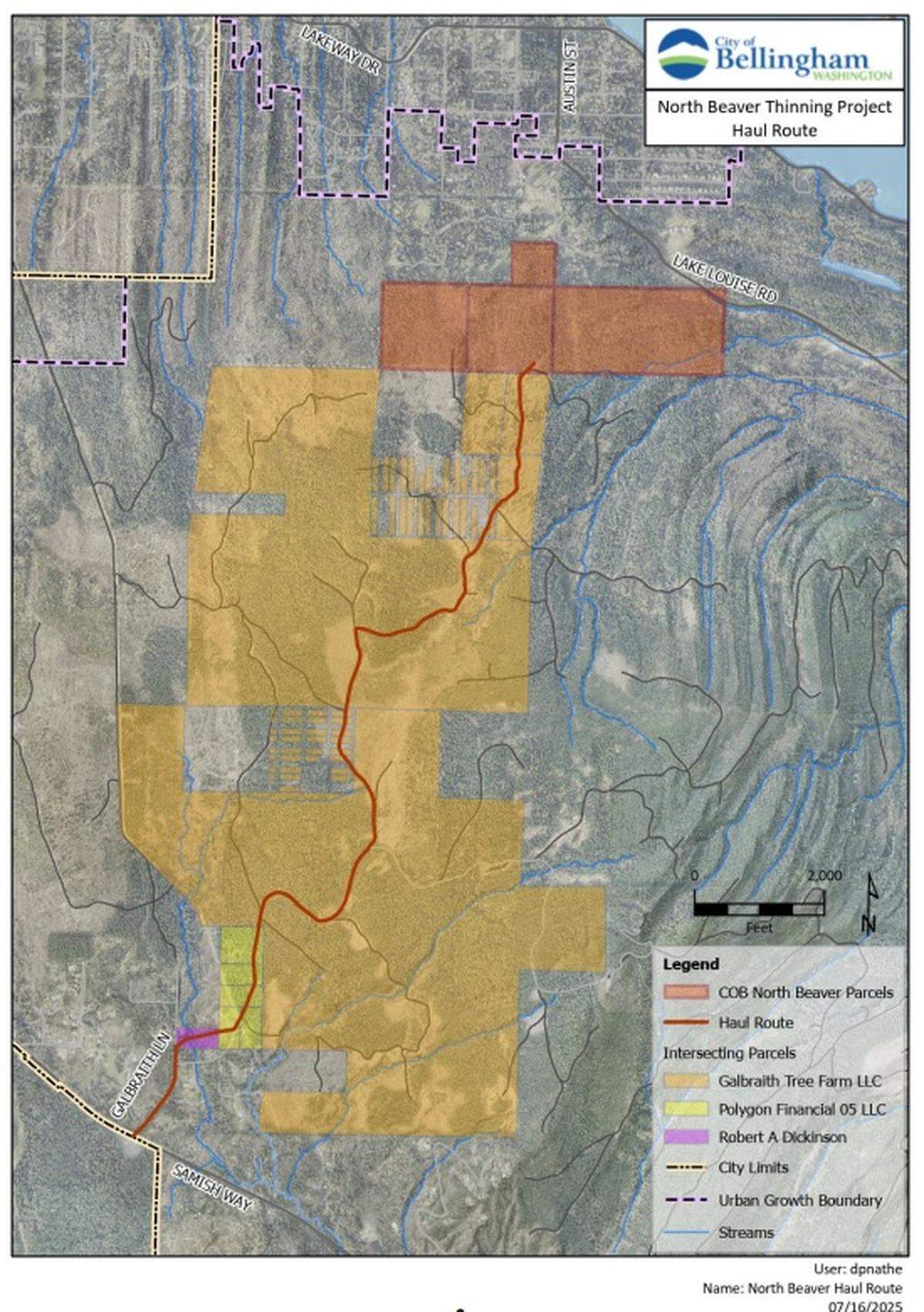
Trucks will access the site via established logging roads off Samish Way, according to a map provided in the report.
There are about 250 trees per acre, and and the plan is to reduce that to 150 trees per acre. Average tree spacing will go from 13 feet to 18 feet.
Revenue from the sale will be determined during contract negotiations, and funds will be reinvested in the watershed management program, the Public Works report states.
Acquisitions that make up the North Beaver Creek Preserve date to 2002, Public Works spokeswoman Stefanie Cilinceon told The Herald in an email. A 60-acre parcel in the preserve was added this year, according to previous reporting by The Herald.
“The decision to thin trees is only made if doing so will significantly benefit water quality or forest health,” Cilinceon said. “When thinning live trees, we conduct an extensive review process, often partnering with a forestry consultant to ensure the best practices are followed. We prioritize removing unhealthy, diseased, or dying trees to maintain the overall health of the forest. It’s important to note that we never cut old-growth trees, preserving these vital parts of our ecosystem.”
Overcrowded forests grow more slowly and hurt the ecosystem, she said.
“These densely planted trees also block out sunlight and nutrients for other plants, resulting in limited understory vegetation and a lack of variety of plant species,” Cilinceon said. “This makes the forest more susceptible to disease, wildfire, and pests. Thinning overcrowded forests allows the remaining trees to grow stronger and access more resources, making them better equipped to withstand drought and strong winds. Thinning also helps protect water quality by reducing the risk of severe wildfires, which can lead to erosion and runoff that harms Lake Whatcom.”
This story was originally published August 12, 2025 at 1:16 PM.