‘Putting Bellingham on the map’: Port celebrates sustainable energy system
Local leaders and community members gathered Thursday to celebrate a new sustainable District Energy system on Bellingham’s downtown waterfront.
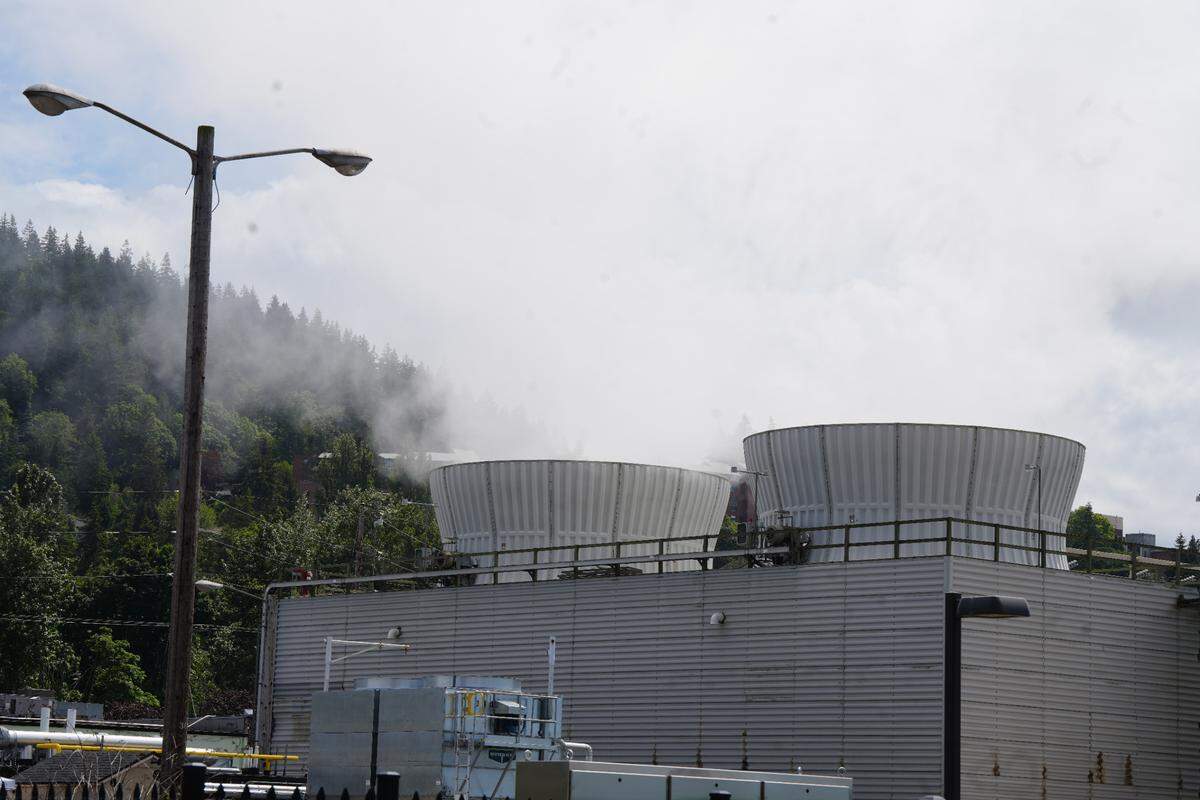
Located on the corner of Cornwall Avenue and West Laurel Street, the Bellingham District Energy Utility (BDEU) Energy Center taps into Bellingham’s existing Puget Sound Energy Encogen Plant, harnessing its waste heat and recycling it to provide low-carbon heating and cooling to the Waterfront District.
“This is the first system of its kind to meet Washington State’s energy standards, putting Bellingham on the map as a leader in green innovation,” the Port of Bellingham said in a social media post.
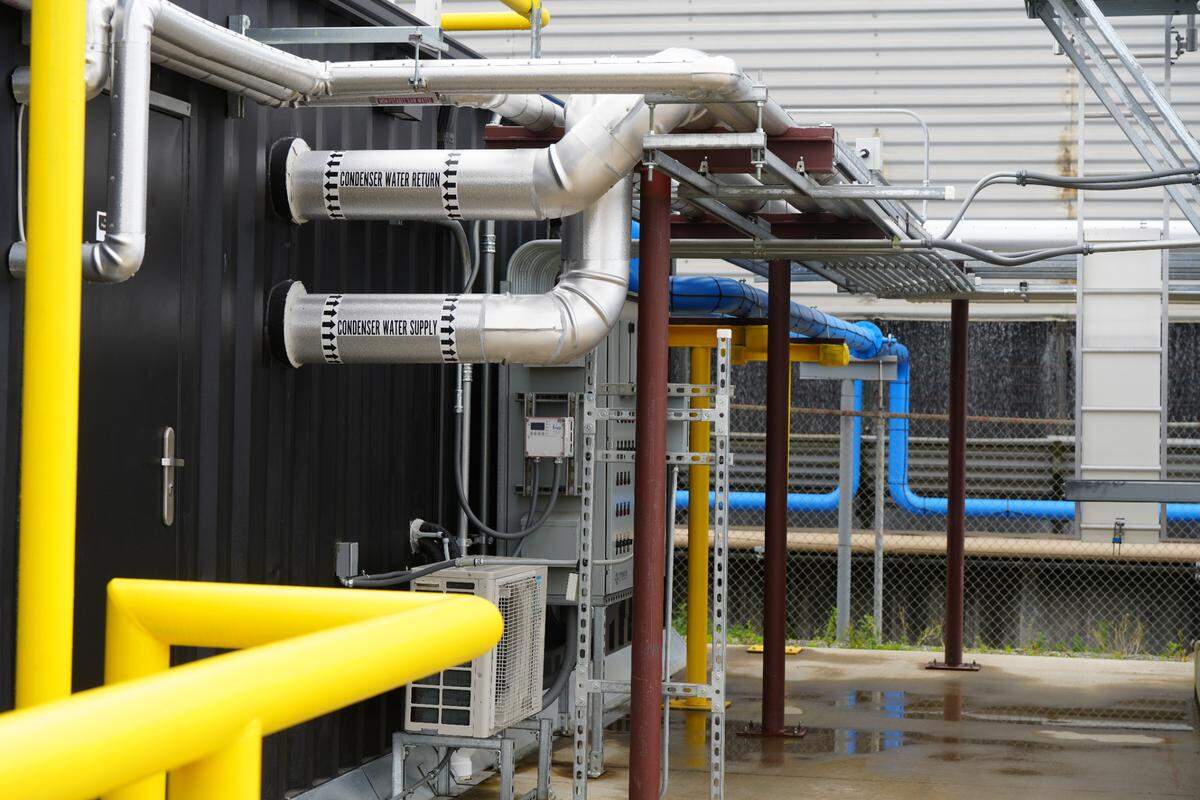
The system is a partnership between the Port of Bellingham, Puget Sound Energy and Corix, a sustainable energy system development company.
Already serving more than 200,000 square feet of development, the system has been providing heating to Phase I of The Millworks Project, an affordable housing development, since 2024. The system is also now providing heat to the first of three Harcourt luxury condominium buildings in the same development zone.
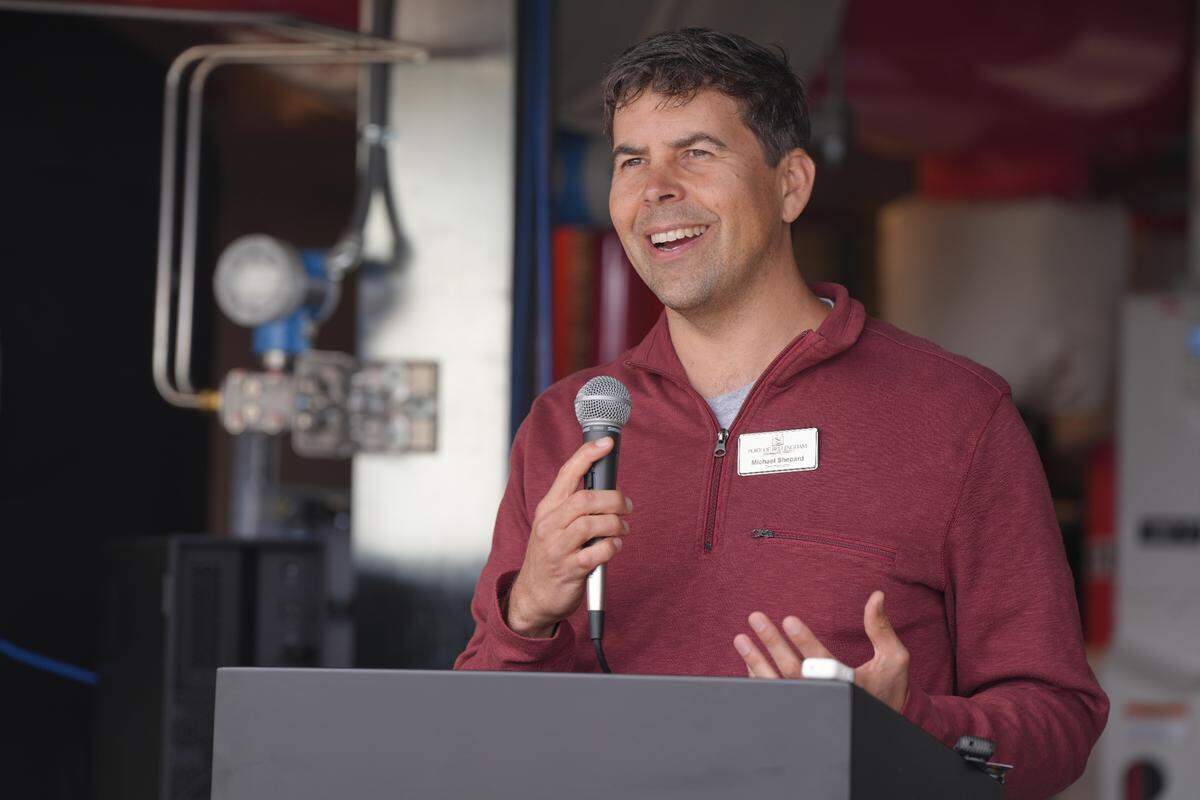
Speaking at the ribbon-cutting ceremony, Port Commissioner Michael Shepard said the project was the result of years of community planning that happened alongside efforts to clean up the former site of the Georgia-Pacific West pulp and paper mill.
“The cleanups were a big part of the story here. But there was also a vision that this site needed to be on the cutting edge of energy sustainability. That maybe felt like an aspirational dream at some point,” said Port of Bellingham Commissioner Michael Shepard.
Designed to scale up to 1.6 million square feet as growth continues, the system is expected to provide heat to Phase II of The Millworks Project, the two additional luxury condo buildings and the Boardmill Block project as they all come online over the next decade.
“Every building in the Waterfront District will connect to this facility. We hope they’re not the only buildings,” Shepard said.
Washington state Rep. Alex Ramel, D-Bellingham, contextualized the scope of the energy system at the ceremony. He said harnessing the waste steam from the plant alone is enough energy to supply heat for every building that could ever be built on the downtown waterfront on the coldest day of the year — and there would still be a lot of energy left over.
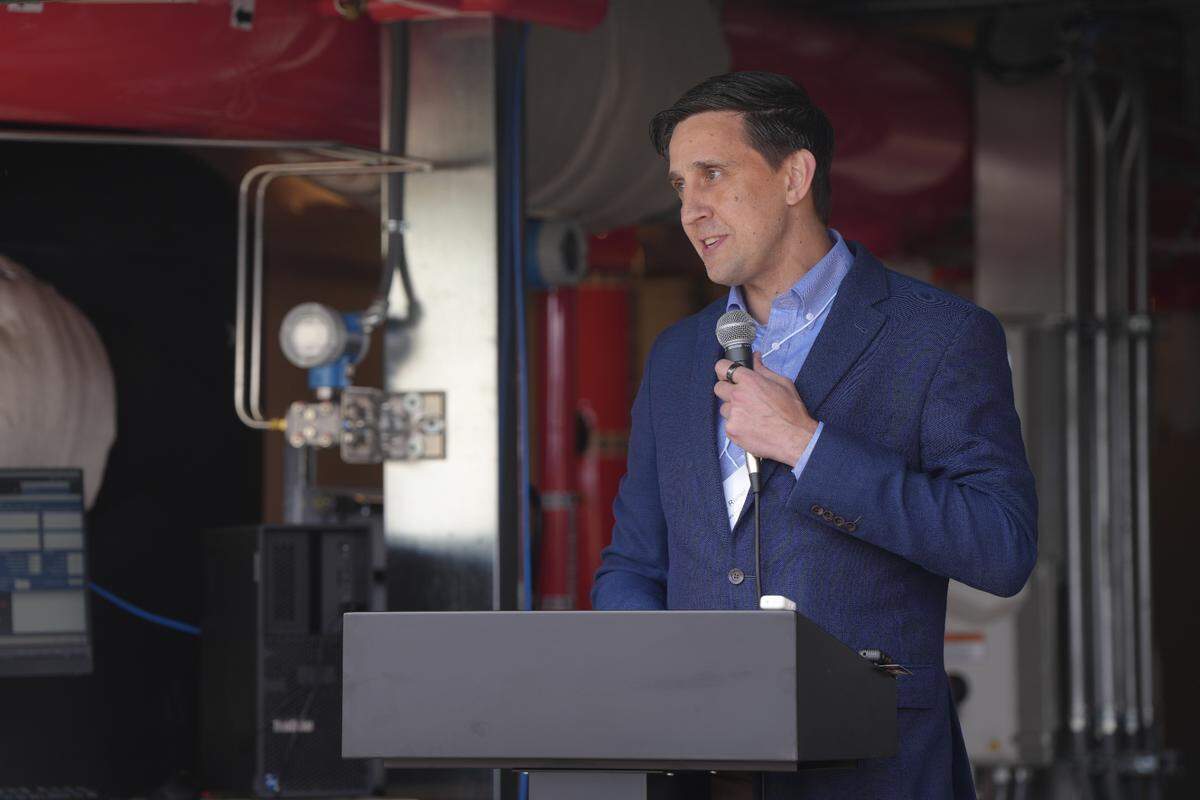
“In fact, enough left over, that if we ran a pipe just up the hill to Western, it would be enough energy to heat the whole campus and still have more left over to heat other parts of downtown in the future,” Ramel said.
Western Washington University may have the future opportunity to connect to the new energy system. The university is currently working to transition away from its “aging steam-powered heating system,” which accounts for about 86 percent of direct and indirect greenhouse gas emissions and releases more than 11,000 metric tons of carbon dioxide equivalent into the atmosphere each year, according to President Sabah Randhawa.
Randhawa also spoke at the ceremony, saying he was excited to see this kind of momentum in sustainable energy development.
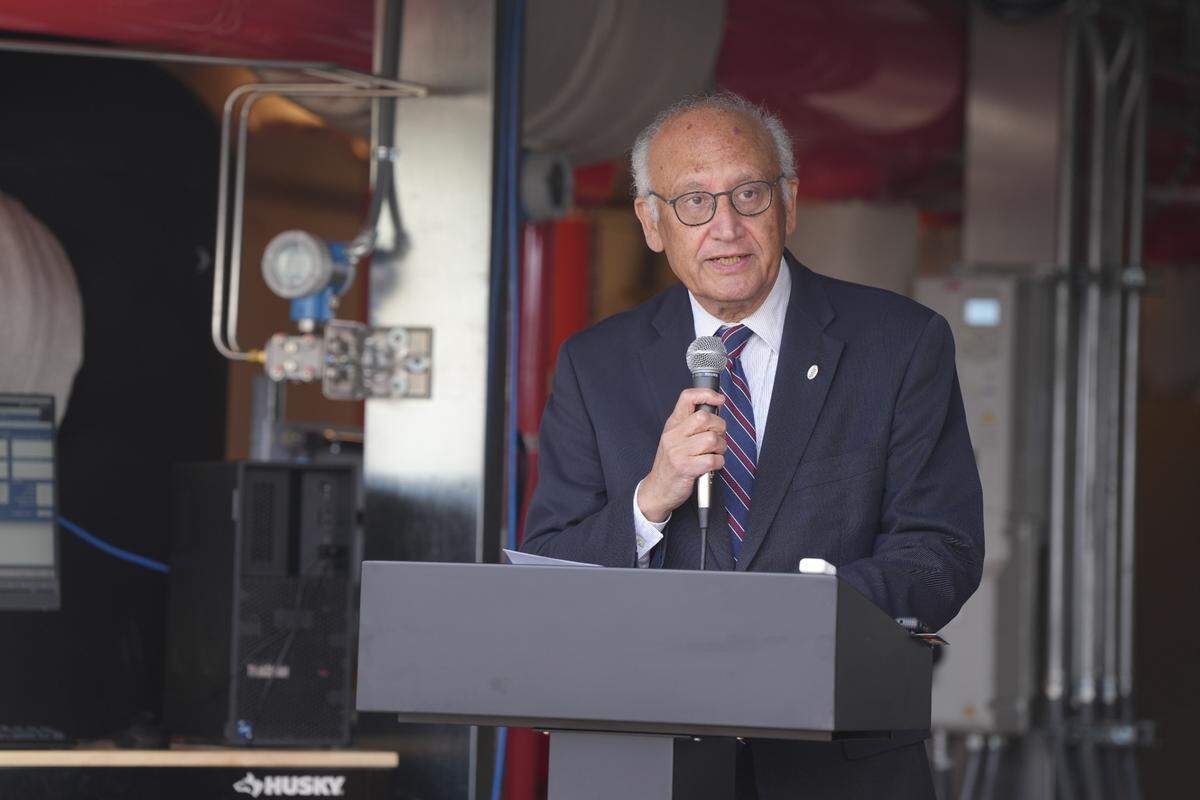
“This transition is not only vital for our campus infrastructure. It’s essential for our climate goals,” Randhawa said. “By moving to a low-carbon system, we aim to dramatically reduce our carbon footprint and serve as a model for how other state-owned campuses across the state can make similar transitions.”