Here’s how much the snowstorms cost Whatcom, and why some streets weren’t plowed
Snowstorms and frigid weather in late December and early January cost Bellingham and Whatcom County about $400,000 in materials, overtime pay and damages — and caused missed package deliveries and trash pickups, among other inconveniences.
“The snow started to fall, and we had a real unusual weather event,” Bellingham Mayor Seth Fleetwood said at a Jan. 10 City Council meeting.
“And it kept coming, and it got really, really cold for about a week,” Fleetwood told the council.
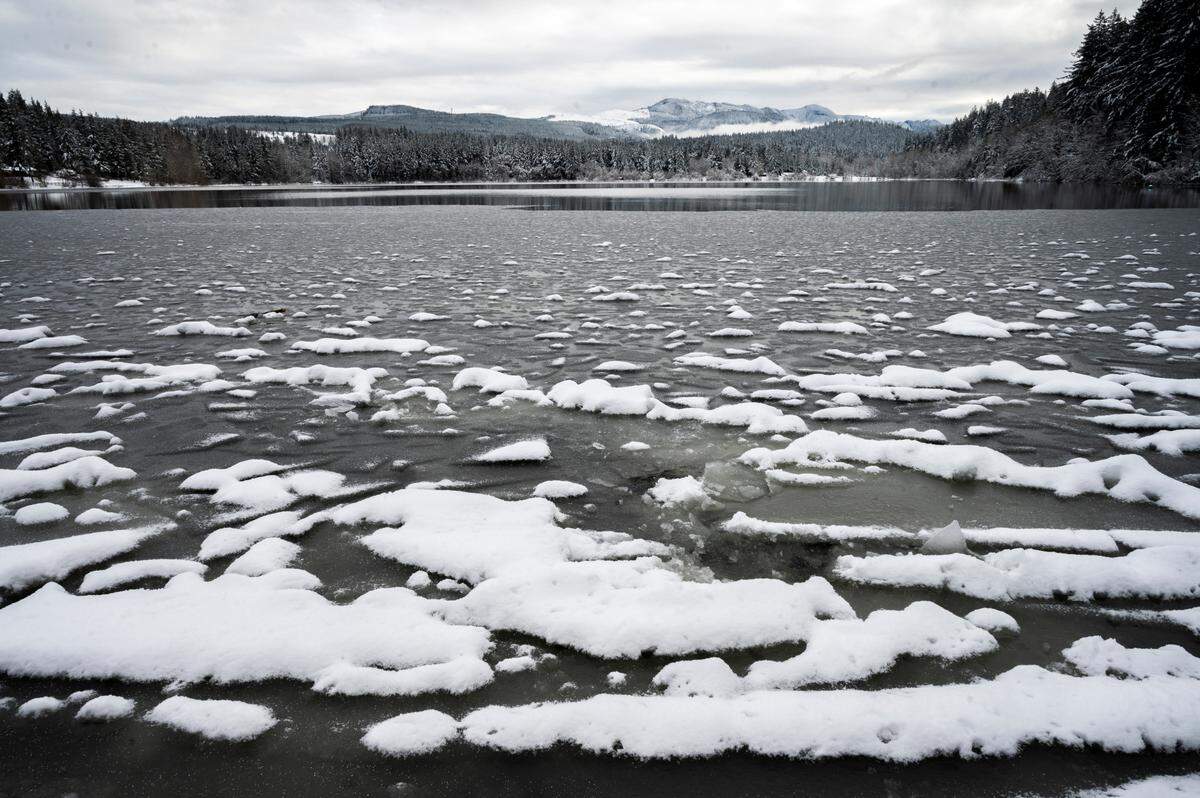
Bellingham and lowland Whatcom County got as much as 2 feet of snow over several days from Christmas Eve and into New Year’s, according to National Weather Service data and local observations.
Temperatures dropped below freezing on Christmas Eve and stayed there until a warm front blocked the frigid Fraser outflow winds on Jan. 1.
Three low-temperature records were broken during that time as overnight lows fell into the single digits and winds made it seem even colder.
And snow fell again Jan. 5-6 as temperatures remained below seasonal norms.
Storms’ toll
Bellingham spent $274,000 in labor, equipment and materials on the storm, Public Works Department spokeswoman Amy Cloud told The Bellingham Herald on Thursday, Jan. 20.
That includes $2,463 in overtime pay during the storms, Cloud said in an email.
For Whatcom County, overtime was about $83,000, said Public Works spokeswoman Marie Duckworth.
That doesn’t include the cost of repairs from broken pipes and other damage cited by city and county officials.
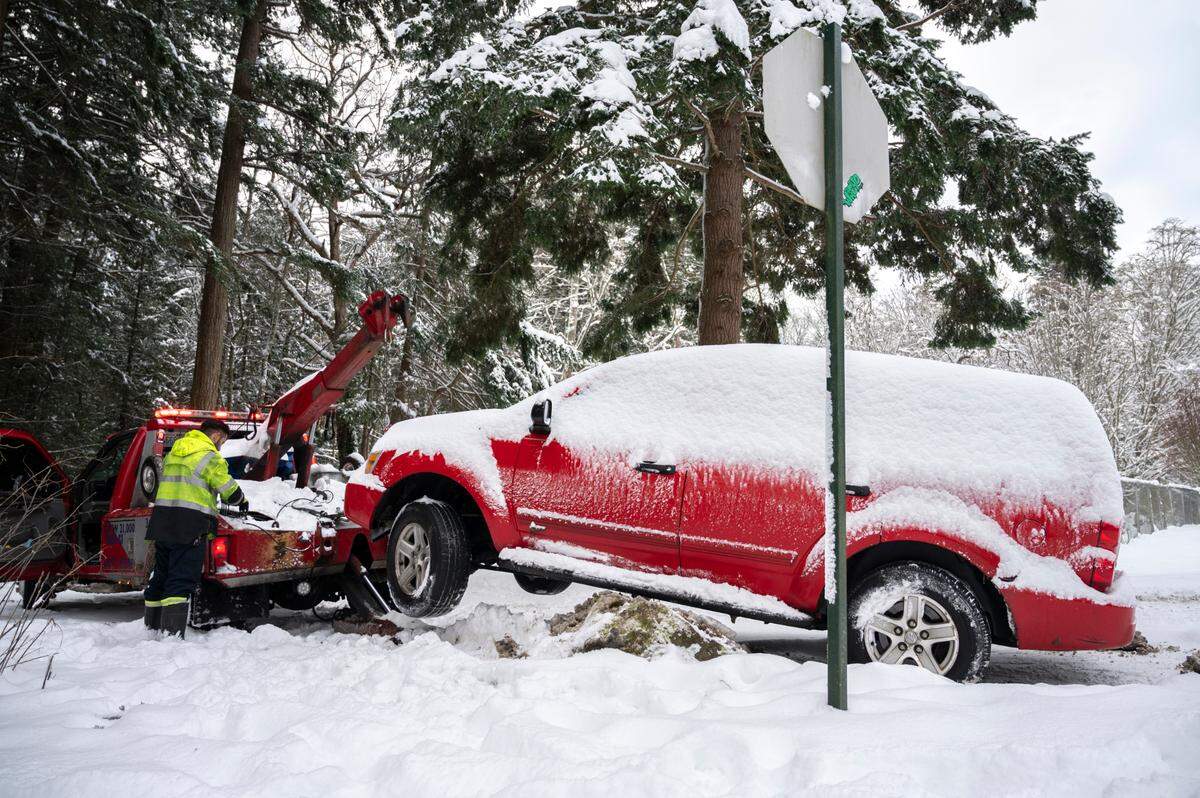
Public Works employees in both Bellingham and Whatcom County went to 24/7 operations with drivers, mechanics and other support staff working 12-hour shifts to plow major streets and commuter routes.
Clearing roads
“We have some truly dedicated employees that worked Christmas, worked Christmas Eve, worked New Year’s,” said Eric Johnston, director of the Bellingham Public Works Department.
“Employees who spent the night here, who took eight hours off to take their floating holidays and then came back for 16 hours. Employees whose water systems froze solid and they came in to do their job. Employees who just really responded when the time was needed to serve our community,” Johnston told the City Council on Jan. 10.
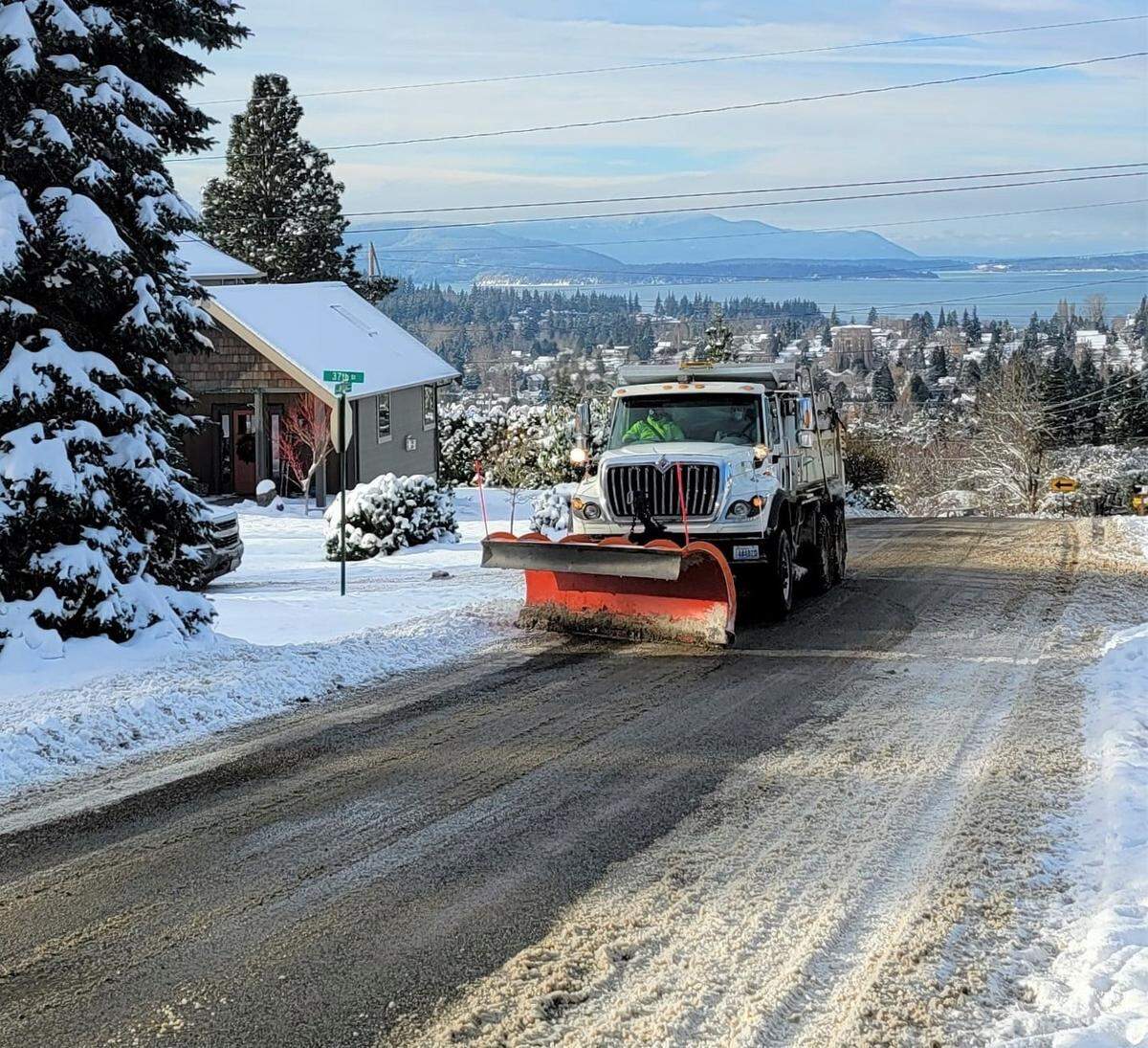
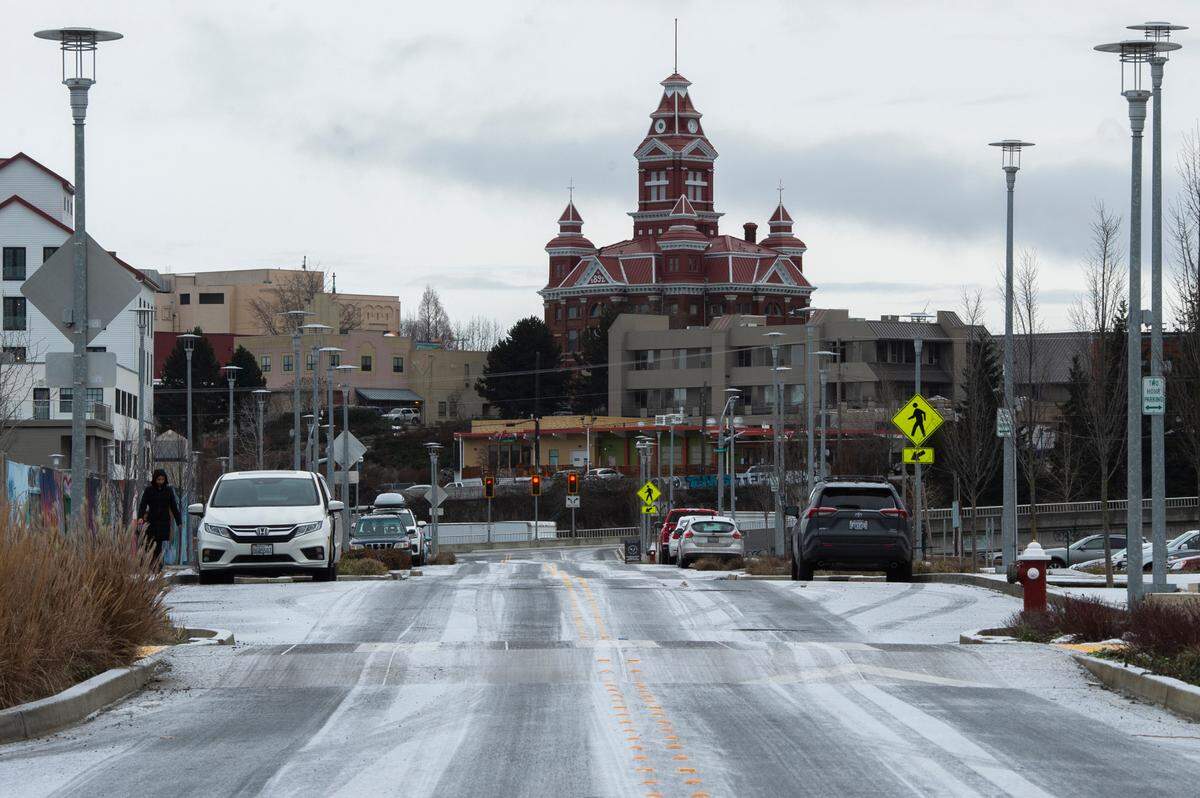
But most residential streets weren’t plowed and many roads were coated in compact snow and ice even after plowing because the city — unlike state road crews and others — uses rubber-tipped snowplows that don’t scrape down to the pavement.
“They use that equipment on the interstates because it’s very effective at removing thick ice,” Johnston said. “It’s very difficult to use that equipment on city streets. Every pavement marking, every water meter lid, every manhole cover or piece of curbing that gets hit by a steel plow is destroyed by that plow and the truck is damaged and the driver is potentially hurt.”
Spraying a brine mixture to keep roads from icing failed with the recent storms because rain fell before the snow, Johnston said.
“One of the challenges we’ve faced in Bellingham is it’s raining and then the temperature drops. It’s really tough to keep that product on the road when it starts to rain,’ he said.
Further, salt and the liquid brine sprayed on pavement to prevent icing don’t work below 15 degrees.
Bellingham’s daytime high temperature was 16 degrees on Dec. 26 and Dec. 27. The low was 6 degrees on New Year’s Eve.
Plowing priorities
Bellingham stockpiled 800 tons of salt and used 85% of it during the recent storms, operating seven full-sized snowplows and two smaller plows, Johnston said.
“Those trucks were running essentially 24 hours a day through that period of time,” he said.
“We did as much as we were able to do. It was really cold weather and tough conditions to be working in,” he said.
Focus of their efforts were the city’s busiest streets, commuter routes, roads used by buses and those used by workers driving to essential services such as medical offices, the wastewater treatment plant, pump stations and others.
“That meant the residential streets didn’t get plowed at all,” Johnston told the council.
Whatcom County road crews prioritize larger roads too, and the county maintains an interactive online map so rural residents can see which roads get plowed first.
Frozen pipes
Frigid temperatures mean hundreds of requests to turn off water where pipes had frozen and broken, Johnston said.
Pipes froze in restrooms at city parks, a couple city water meters broke and there was water damage at the county’s Civic Center downtown.
“On a typical week timeframe, we might have 20 or so requests to come and turn the water off,” Johnston said. “On one particular Tuesday when it was super cold we had more than 130.”
Lake Padden Park was inaccessible for several days.
Pipes froze at several public restrooms, including Whatcom Falls and Maritime Heritage parks.
“The fountain at Fountain Plaza actually formed an ice dome to protect the inside from freezing over,” said Nicole Oliver, director of the Parks and Recreation Department.
“The golf course had a massive water loss from a drinking fountain that blew,” Oliver told the council.
Minor damage was reported to Whatcom County buildings during the storms, Duckworth told The Herald.
“Things like snow pulling gutters away from buildings. One pipe broke in the parking garage of the Civic Building, luckily it was right over a drain and didn’t really cause any significant damage,” she said.
Rob Ney, project and operations manager for Whatcom County Facilities Management told The Herald that storm-related expenses reached about $10,000.
“We had our entire staff clearing snow for several days, including the 26th of December in anticipation of the county staff returning to work after the holiday break. That was a double-time expense,” he said.
“We also experienced damage from frozen pipes at the Civic Center and our new Crisis Triage facility. Both were fairly insignificant, but do have costs associated with them, around $3,000,” Ney said.
Ney said it was “fairly insignificant compared to the plows. But it does add up to our limited budget.”
Homeless shelters
Because of the extreme cold and because regular homeless shelters were nearly at capacity, Bellingham and Whatcom County staffed a daytime warming shelter at the Bellingham Public Library and an overnight shelter at the Civic Building, nearby at Lottie and Commercial streets.
About 30 to 40 people used those facilities daily and many volunteers helped during the seven days it was open, Fleetwood said.
“It was a heavy lift, but we’re glad we did it. It was well-used,” Fleetwood said. “It was an amazing thing to witness. It was a profound underscoring reminder of the failure of the American care system.”
Fleetwood said officials were prepared to open temporary shelters again, if needed.
Mail, trash pickups
Dozens of Bellingham residents turned to various social media platforms to lament missed deliveries during the snowstorms — including perishable food items and prescription medicines.
“Our street went a week without mail,” said Connie Sadler of Birchwood, at the social media site Nextdoor.
Both COVID-19 infections and foul weather caused troubles with mail delivery in recent weeks, said Ernie Swanson, a spokesman for the U.S. Postal Service in Seattle.
“I know Whatcom County was particularly hard-hit by the weather,” Swanson told The Herald in an email.
Some areas such as Sudden Valley — with its narrow, hilly streets — also missed garbage or recycling pickups.
“SSC was in operation every day during the snow and ice event with the exception of Thursday, Jan. 6,” said Ted Carlson of Sanitary Services Co., which provides garbage, compost and recycling pickups countywide.
“Our hard-working crew members performed exceptionally under the worst conditions. However, even with tire chains, there were portions of the service area that could not be collected due to unsafe road conditions,” Carlson told The Herald in an email.
Supplies restocked
Both Bellingham and Whatcom County have replenished their supplies of salt and sand and are ready for the next storm.
“We are lower on our inventory of salt than we typically like to be; however, we are prepared for future snowstorms, if they occur,” Cloud said.
Bellingham’s sand bunkers are full and the city has 115 tons of salt, and the city works with the state and county for additional resources, she said.
Whatcom County has added 420 tons of salt and 2,100 tons of sand, Duckworth said.
“While we cannot predict exactly what each year’s weather will be, we do plan ahead in supply purchases and budgeting for overtime. Additionally, our staffing model allows us to move personnel whose work might be impacted by inclement weather into work supporting inclement weather response,” Duckworth said.
“The winter snow season isn’t over. We are a long way from the end of winter, especially in areas affected by the Fraser Valley outflow winds and in our higher elevations,” she said.
This story was originally published January 23, 2022 at 5:00 AM.
CORRECTION: Information about frozen pipes was from Rob Ney, project and operations manager for Whatcom County Facilities Management. The attribution was corrected Jan. 23, 2022.