Bellingham petition drive seeks to Save the Trails, but raises ‘interesting legal issues’
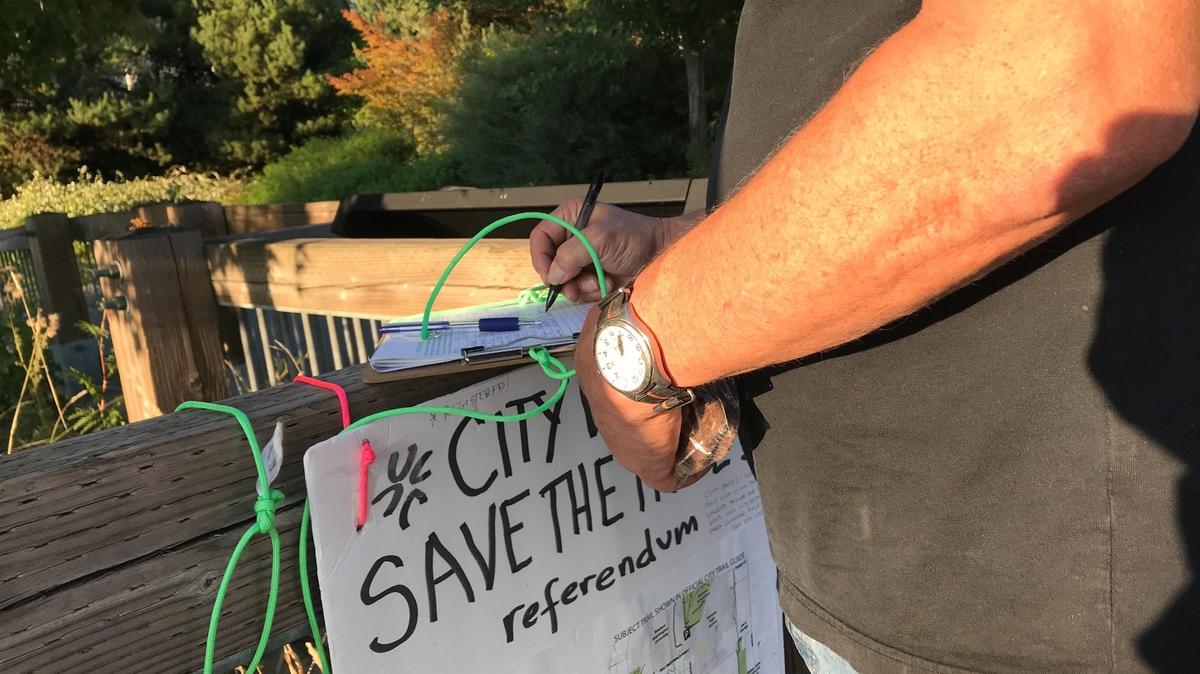
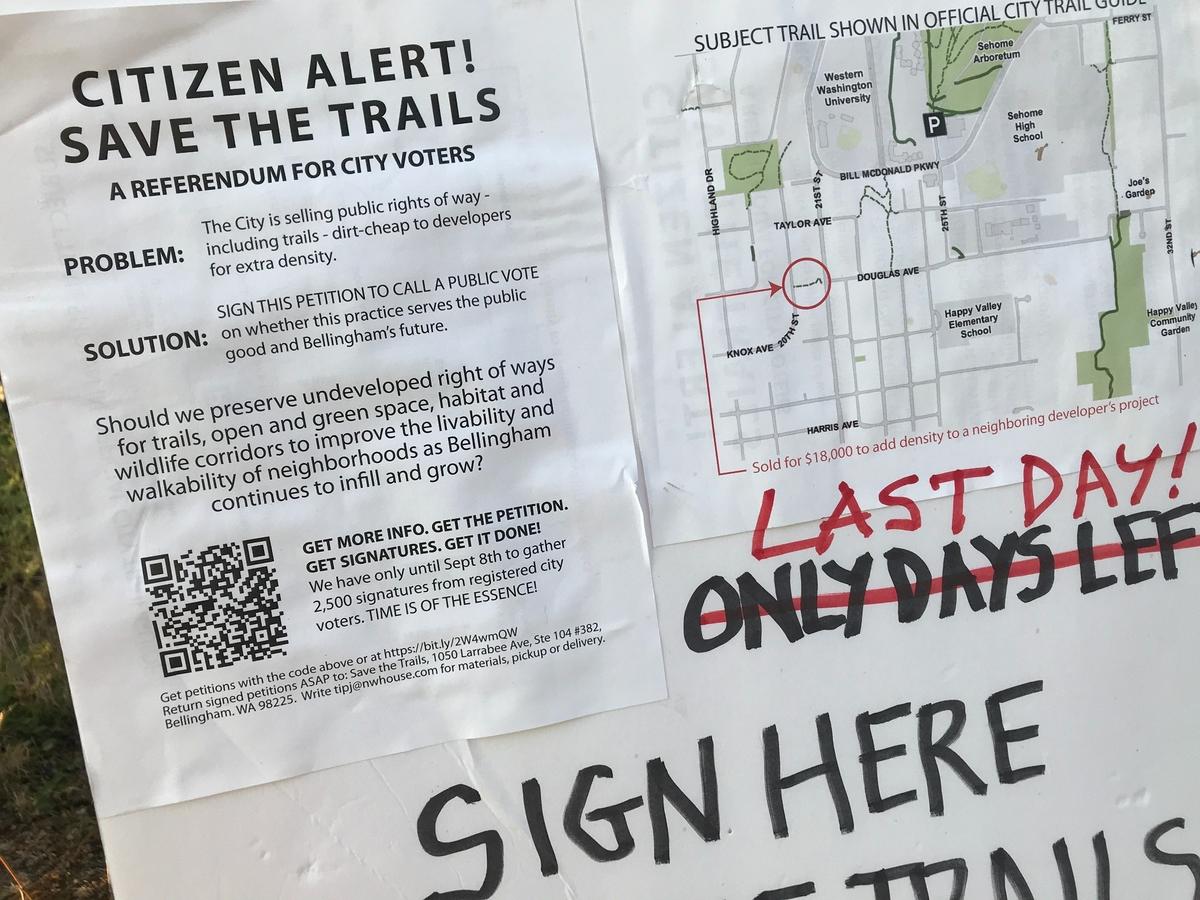
A Save the Trails petition drive asks Bellingham voters to overturn a City Council decision to give up — or “vacate” — its claim to extend Douglas Avenue west up a steep hill from 21st to 20th streets in Happy Valley, allowing a proposed apartment complex to use part of the former street right-of-way.
That so-called “street vacation” passed the council 5-2 on July 26, was recorded with the Whatcom County auditor and became effective Aug. 10, said City Attorney Alan Marriner.
So it’s unclear if the council’s action can be undone even if the Save the Trails measure qualifies for the ballot in November 2022 — the earliest that the matter could be heard unless there’s a special election.
“It raises a number of interesting legal issues,” Marriner told The Bellingham Herald.
To qualify, Save the Trails was working to submit about 2,500 valid signatures of registered Bellingham voters by Friday, Sept. 10.
Tip Johnson, one of several Happy Valley residents assisting the petition drive, said the issue isn’t about stopping an apartment complex, but rather about maintaining a trail shortcut that local residents built along the wooded hillside.
“Residents of Happy Valley have long championed good land-use policies and practices but have never been against density or a diverse housing stock,” Johnson told The Bellingham Herald in an email.
“In fact, we are on record recommending the city allow the transfer of the density to the project if they would retain our public rights to the trail. They say the trail will be preserved, but the restrictive ordinance refers to a public conveyance and the narrow margin reserved will make an on-grade trail impossible and necessitate stairs — as (the Parks and Recreation Department) has already affirmed,” said Johnson, who is retired and has lived in Happy Valley for 45 years.
Councilmembers Gene Knutson and Lisa Anderson dissented in the July 26 council vote to vacate the street right-of-way, citing concerns expressed to them by neighbors about loss of trail access and the small wooded area among student housing complexes just south of Western Washington University.
Trails vs. housing?
At issue is a proposal to build a 10-unit apartment complex in two buildings on the site.
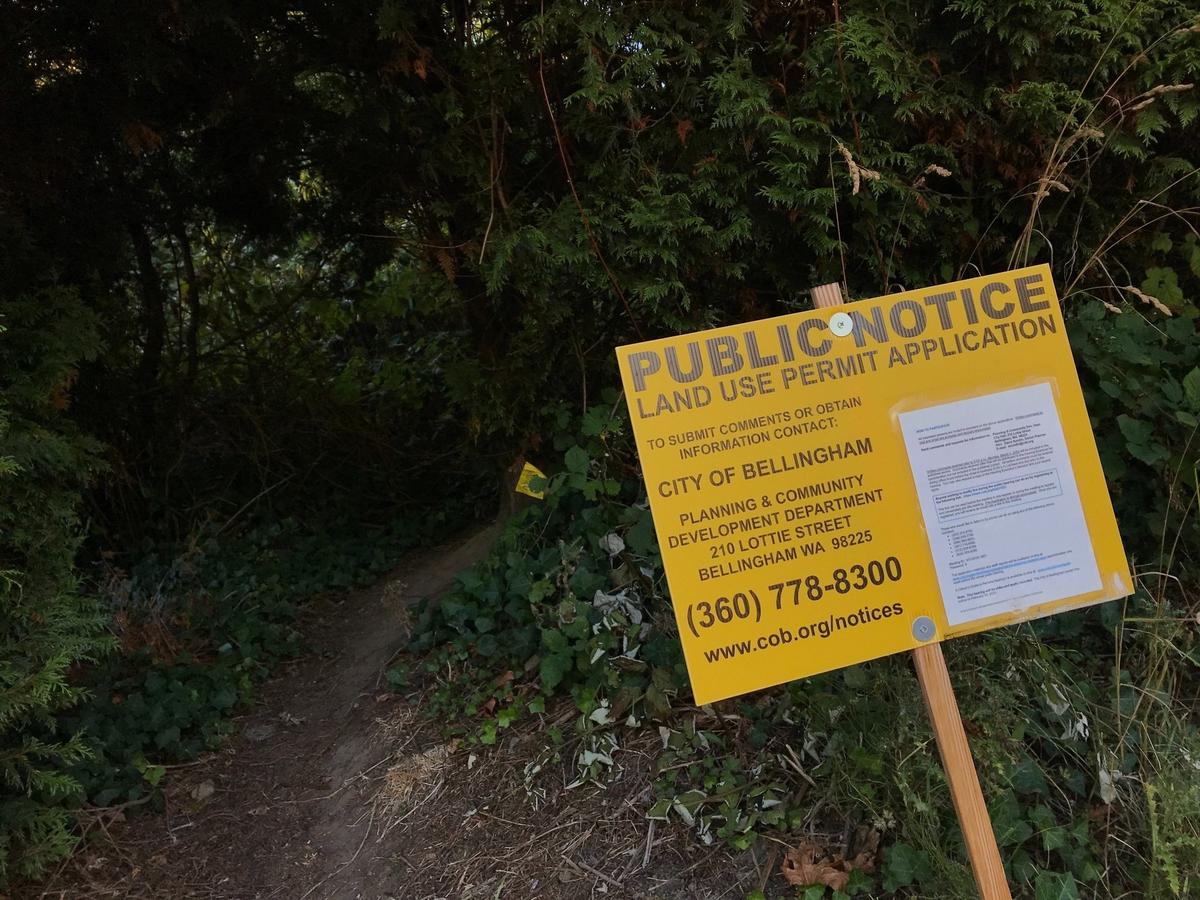
The landowner wants to extend part of the complex’s parking lot into Douglas Avenue, at a place where it exists only on paper as an unimproved public-access right-of-way and not an actual street.
Bellingham and utility companies retain easements through the site, but Bellingham gave up its street right-of-way claim for $18,000, an amount that was set as fair market value.
It didn’t sell the land itself, because the land is owned by the developer, Marriner said.
But a steep and narrow trail zig-zags through the wooded site, providing a shortcut for neighborhood residents and others.
And it’s that trail that’s drawn the anger of some residents — even though the City Council is guaranteeing that the pathway will remain open and improved to city standards, including stairs where required.
‘Small plot of land’
“It is a trail, and people use it. It means something to Happy Valley,” Councilwoman Lisa Anderson told The Herald.
“I don’t want to lose a lot of those small little patches of open space that bring serenity to people,” Anderson said.
“It’s not a big deal to lose a small plot of land. But every time you lose that plot of land, collectively it becomes a big deal. Some of our open space is extremely valuable. I don’t want to see everything paved over,” she said.
Mayor rebutts claims
Mayor Seth Fleetwood addressed the issue during an Aug. 30 City Council committee meeting, and later in the day at the full council session.
“It creates the impression that trails need to be saved in Bellingham,” said Fleetwood, who was a key part of the original 1990s Greenways program that established a citywide trail network and a means to fund it.
“It strikes me as a bit unfair to begin an effort citywide to overturn that decision and call it ‘Save the Trails’ plural, when in fact the city reserved the right-of-way on Douglas (Avenue),” he said.
“We’re going to guarantee that there is a city parks-quality trail that goes through that place on Douglas (Avenue). We’re going to require that there’ll be tree retention. For any trees that are removed in that process we’re going to ensure that they’re replaced at a 2-1 ratio. And there aren’t going to be any fences that block or impede that trail in any way when it finally gets built,” Fleetwood said.
Fleetwood said that other such “unvacated” and unimproved street rights of way throughout the city will be inventoried and assessed as part of a 2022 update to the city’s Bicycle Master Plan.
He criticized petitioners for placing Save the Trails signs in places like the Hundred Acre Wood and the Taylor Dock boardwalk — sites unaffected by the Douglas Avenue vacation.
Making a statement
But Johnson, who served on the City Council from 1986-1994, said he sees the issue as making a statement, even if it fails.
“We hope, either by qualifying the referendum or through general public engagement, to stimulate a broader conversation about the value of undeveloped (rights-of-way) for the future livability and walkability of our neighborhoods. We believe the city’s view of (rights-of-way) is impoverished and the policies require reform,” he said.
Legal requirements
Johnson and his neighbors must submit their petitions to the Whatcom County Auditor’s Office, where they will be checked and verified for the required number of signatures from registered Bellingham voters.
Because the petition is being circulated as a referendum, it needs signatures from 8% of the 30,937 residents who voted in the last mayoral race, according to the city’s charter.
That’s about 2,500 signatures — as opposed to the 20% of Bellingham voters or 6,000 signatures that were required for each of four citizen initiatives that qualified in August for the Nov. 2 ballot.
Ideally, the petitioners would have consulted Auditor’s Office elections staff about the ballot language, but “we haven’t seen anything yet,” said Deputy Auditor Stacy Henthorn.
Still, she said that doesn’t necessarily mean the petitions will be invalidated.
If the referendum petitions qualify, the City Council would be required to place the matter on the next general election ballot, which is November 2022, or call a special election, according to the charter.
This story was originally published September 11, 2021 at 5:00 AM.
CORRECTION: The effective date of the street vacation was corrected Sept. 13, 2021.