
Hurricane Melissa heads toward Cuba after historically powerful Jamaica landfall
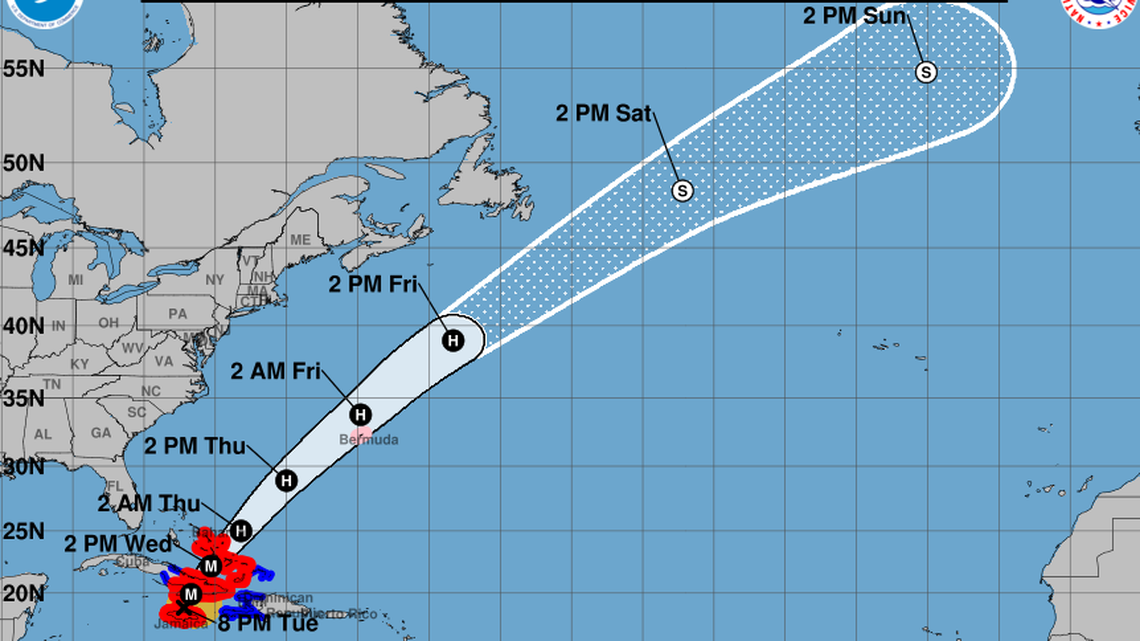
Category 5 Hurricane Melissa made landfall on Jamaica Tuesday morning as the most powerful hurricane to ever strike the island, as well as the third-strongest hurricane ever recorded in the Atlantic.
By nightfall, the powerful storm finished its tear through the island and was on its way to Cuba but massively weaker — dropping two categories.
Jamaica was left devastated, but the extent of the destruction was still largely unknown in the immediate aftermath of the fearsome storm. A quarter of a million Jamaicans were without power and hospitals on the western coast had sustained damage.
The National Hurricane Center formally declared landfall — when half the eye of a storm is over land — at 1 p.m. in the town of New Hope on the southwestern tip of the island. By 8 p.m., forecasters said Melissa was past Jamaica and already moving toward eastern Cuba.
At landfall, it had maximum sustained winds of 185 mph and a pressure of 892 mb. Melissa tied with the Labor Day Hurricane of 1935 for the most powerful storm to make landfall in the Atlantic.
As of 8 p.m., the storm had vastly weakened down to 125 mph maximum sustained winds — a Category 3 as landfall in Cuba becomes imminent.
About 50 miles east-northeast of Montego Bay, the popular tourist destination and second most populous urban area in Jamaica, and 160 miles southwest of Guantanamo, Melissa was moving at 8 mph toward Cuba.
Cuba braces for Melissa’s second landfall
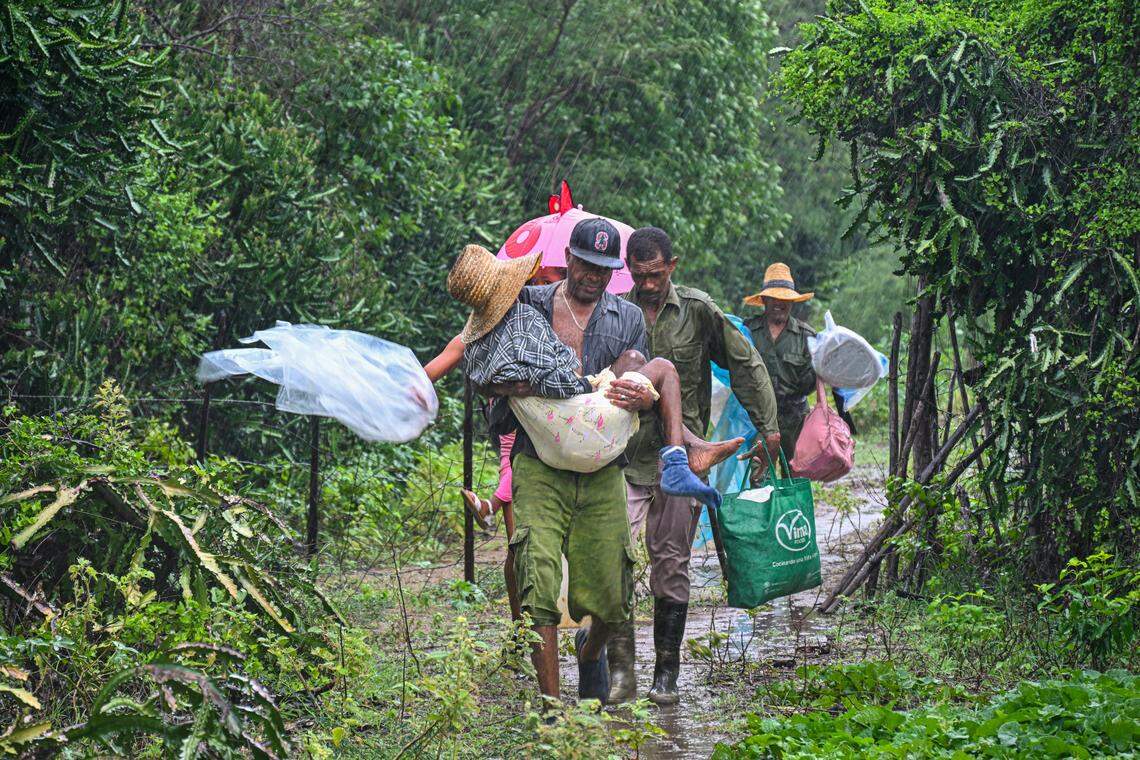
Melissa is expected to make its second landfall on Cuba’s east coast Tuesday night before moving over the island overnight into Wednesday morning. More than 650,000 people have been evacuated from the eastern end of the island nation.
“Melissa is expected to remain a powerful hurricane when it moves across Cuba, the Bahamas, and near Bermuda,” the hurricane center said in the 8 p.m. update.
Forecasters said it could strike as a Category 3, bringing up to 25 inches of rain and 8 to 12 feet of storm surge to a nation already struggling with a failing power grid and recovering from previous storms.
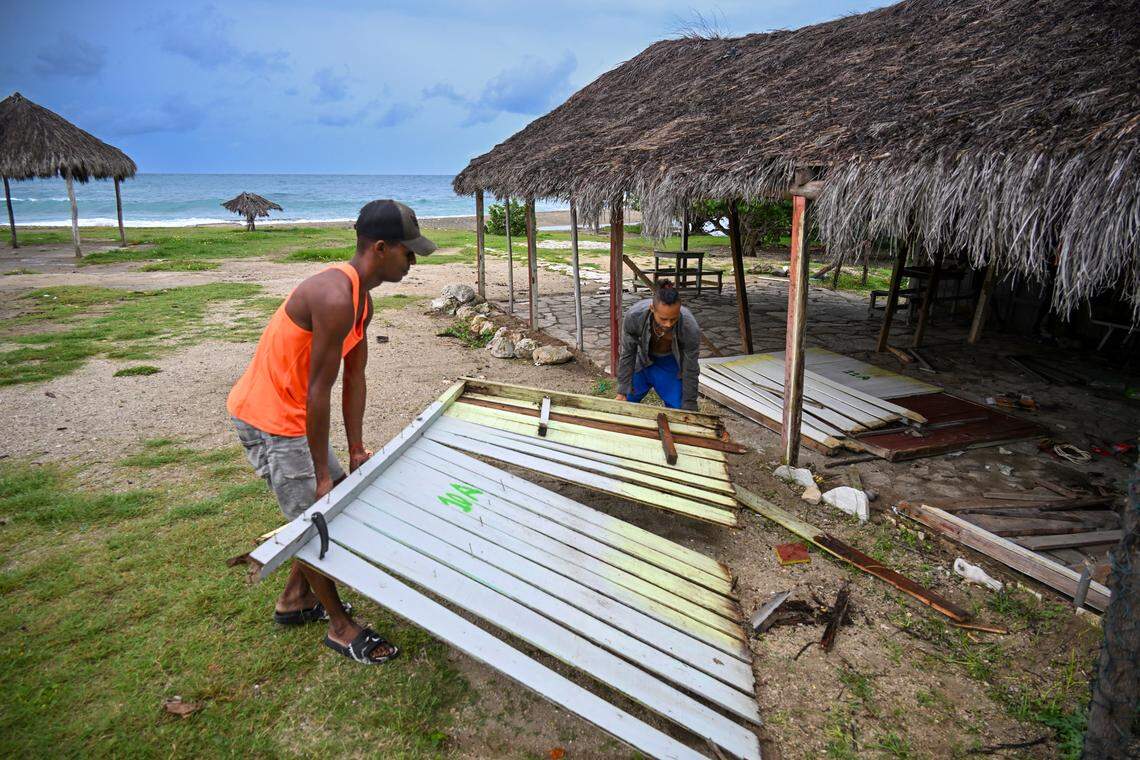
After grinding across the eastern end of Cuba, forecasters expect Melissa to gear up for a third landfall in as many days, this time on the central and southeastern Bahamas as a Category 2. It could bring up to 10 inches of rain and 5 to 8 feet of storm surge, enough to cause flash flooding and power outages on the islands.
Melissa also could lash Turks and Caicos with tropical-storm-strength winds and 1 to 3 inches of rain. In response, American Airlines added an extra flight to help people evacuate on Tuesday ahead of Melissa’s arrival.
And that might not be the end of Melissa’s destruction. The latest forecast has Bermuda in the cone on Friday, when Melissa could cross near the island as a Category 1 hurricane. For now, it’s too soon to tell if this could be another landfall or just a close call for Bermuda. The island is under a hurricane watch.
Melissa plows through Jamaica as Category 5 storm
As Melissa makes its way toward Cuba, the storm is still lashing Jamaica with strong wind.
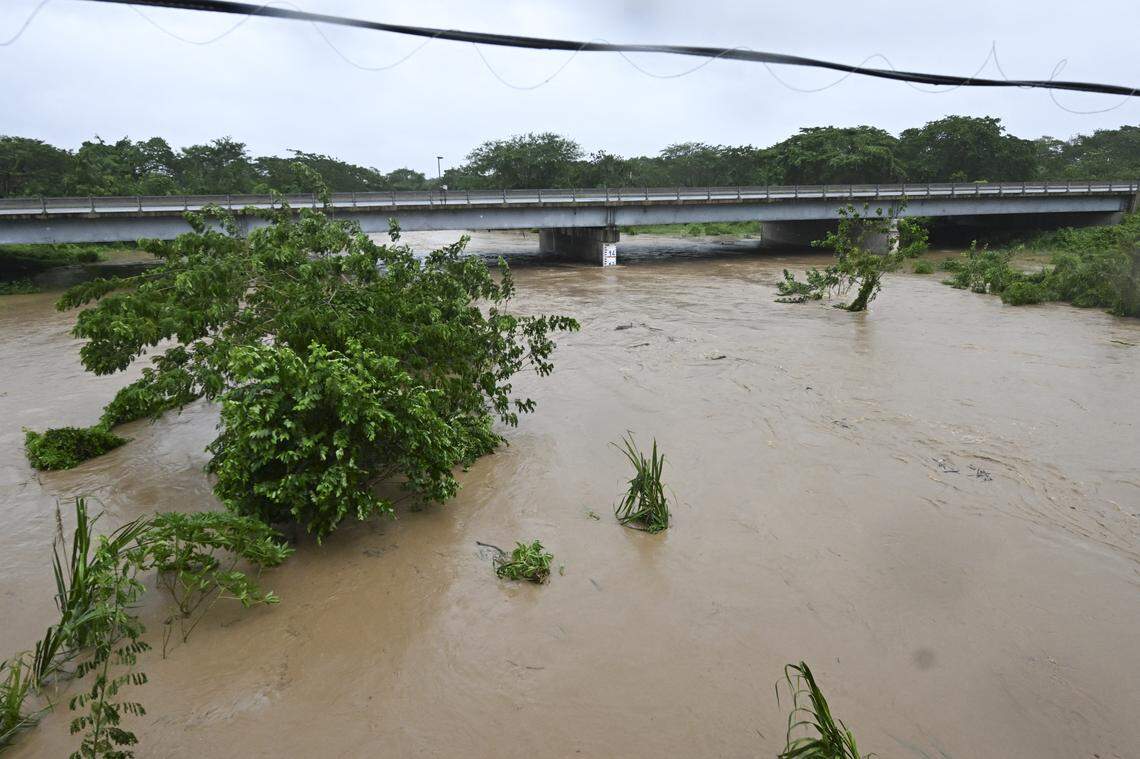
While there were early reports of widespread flooding and rivers spilling over, it will take many more days to fully assess what is expected to be catastrophic damage — particularly in parishes closest to the powerful eye.

While the most extreme winds are concentrated about 30 miles from the eye of the storm, the broad and powerful storm will affect the entire island — as well as Haiti some 300 miles away. It’s bringing up to 30 inches of rain to Jamaica, plus 2 to 4 feet of storm surge above dry land, but forecasters say flooding should subside late Tuesday.
Colin Bogle, an advisor for charity Mercy Corps based in Portmore, Jamaica, told the Herald that he worried this could become “a humanitarian emergency” for the country in its hardest hit areas.
“Early this morning we heard a loud explosion, and everything went dark. I am sheltering with my grandmother in Portmore amid widespread blackouts. Outside, trees are being violently tossed in the wind, and the noise is relentless. People are anxious and just trying to hold on until the storm passes,” he said.
One encouraging sign, early televised images from the capitol of Kingston — some 70 miles from Melissa’s compact eye and fiercest winds — showed little structural damage. But waters continued to rise in rivers across the entire island; mud slides and flash floods also remained a major threat.
Jamaica’s health minister told the Herald that some hospitals had seen damage.
Ahead of the storm’s arrival, Minister of Local Government Desmond McKenzie said there had been an uptick in Jamaicans going to shelters. However, there were still people on the streets.
“We are seeing an increase over the last couple of hours of persons responding and have gone into the shelters, which is good, but we still have a few that is still out on the road,” he said in a press conference.
Meanwhile, for tourists who were still in Jamaica, hoteliers across the islands were offering distress rates to assist visitors who may need to extend their stay. Shelter spaces also had been made available to them in a number of locations including the Montego Bay Convention Center and the James Hunter Conference Centre in Negril.
“The safety and security of our visitors are paramount,” Tourism Minister Edmund Bartlett said.
A scramble for aid
Caribbean officials are using these final days and hours to pre-position aid and staff to kickstart recovery as soon as the coast is clear.
Stéphane Dujarric, spokesman for U.N. Secretary General António Guterres, said thanks to the pre-positioning of relief supplies ahead of the hurricane season, the World Food Program is coordinating a sea lift operation from Barbados carrying supplies. UNICEF is also planing to provide 2,000 relief kits once airports reopen and the weather conditions permit flights.
Joint warehouses established earlier this year in Barbados by the Caribbean Disaster Emergency Management Agency and the World Food Program, with support from the European Union and Canada, are also proving instrumental in the unfolding disaster, the U.N.s said.
In Cuba, where the hurricane is expected to make landfall overnight in the eastern part of the island, preparations of pre-positioning of supplies and assets are still underway.
“Authorities plan to evacuate about half a million people to safer ground,” said Dujarric. “And in Haiti, more than 3,600 people are sheltering in emergency sites.”
WFP has also pre-positioned more than 800 metric tons of food to assist 86,000 people, the U.N. said.
This story was originally published October 28, 2025 at 10:07 AM with the headline "Hurricane Melissa heads toward Cuba after historically powerful Jamaica landfall."
