How long can someone be detained by immigration? Judge asked to weigh in on Haiti case
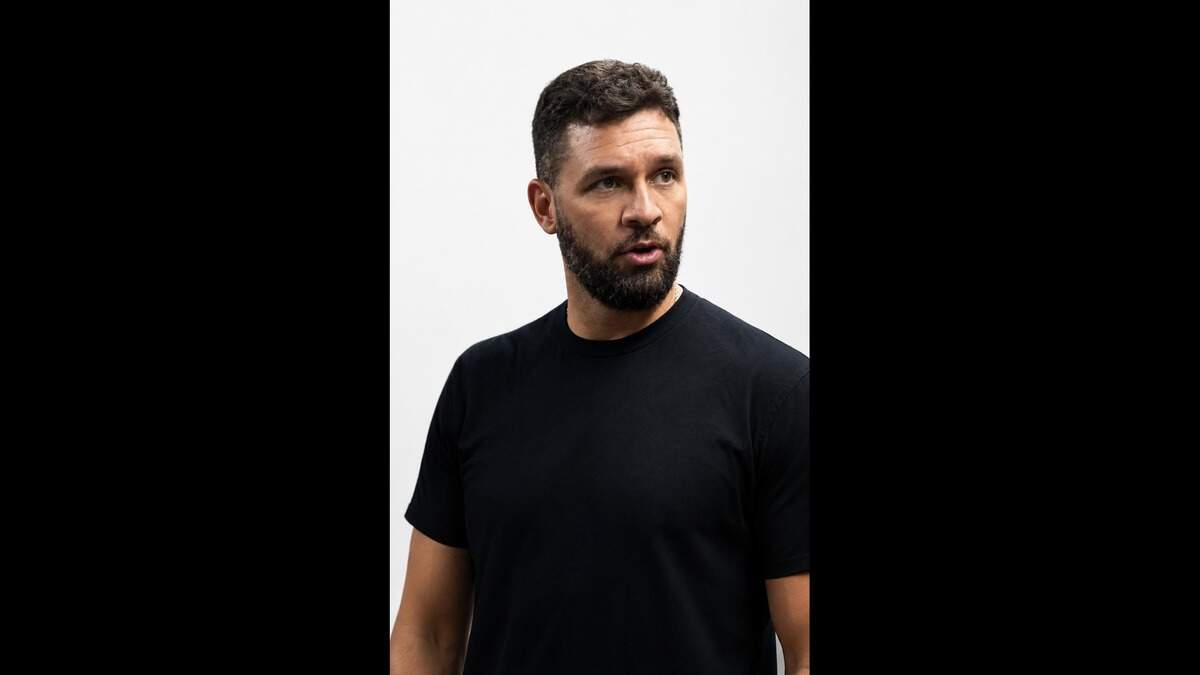
The question of how long is too long to keep someone in immigration detention is at the center of the Trump administration’s effort to remove a prominent Haitian businessman from the United States.
Dimitri Vorbe, who owned one of Haiti’s biggest electric power providers until a clash with then-President Jovenel Moïse made him a target of Haitian and U.S. authorities, entered the U.S. with a valid U.S. visa in January 2020. But he was arrested in Miami five years later, on Sept. 23, 2025, and has remained in detention ever since — though no immigration judge has ordered his removal from the United States.
Vorbe, 52, has been detained for nine months inside the Krome North Detention Center because U.S. Secretary of State Marco Rubio declared that he has acted against the foreign policy interests of the United States by allegedly consorting with Haitian gangs — a position the Trump administration says is not reviewable by the federal courts.
Earlier this week, Vorbe’s lawyers, who have denied the allegations against him, appeared in Miami federal court seeking either his immediate release or a bond hearing, arguing that his prolonged detention warrants judicial review.
But that review, they argued, should take place in federal court rather than before an immigration judge. The Trump administration’s aggressive agenda targeting illegal immigration, coupled with the unusual nature of the proceedings against Vorbe, has made it difficult for him to receive a fair hearing, attorney Mark Prada told U.S. District Judge Darrin P. Gayles on Tuesday.
“In our recent submission, we have shown evidence of immigration judges being fired when they vote favorably for people in these circumstances,” Prada said. “We submit the only way a bond hearing would be fair and comply with due process is if this court or a magistrate conducts the bond hearing.”
Gayles questioned whether he has the authority to make such a ruling, but kept returning to one central question:
“How long can the government just keep him in custody if it can’t effectuate his removal?” the judge asked government lawyers, who struggled to respond.
Federal courts flooded
Since the Trump administration’s immigration crackdown, federal courts have been flooded with habeas corpus petitions from detained individuals such as Vorbe pleading for the opportunity for release.
The poor conditions inside detention centers and the prolonged confinement often compel detainees to give up their quest for a court hearing and opt to leave the country of their own accord. Vorbe tried negotiate to be deported to a third country, the Dominican Republic, in May, but was rebuffed by Dominican authorities.
Vorbe’s case raises questions about indefinite detention, and about a rarely used authority, under the Immigration and Nationality Act of 1952, by the secretary of state to deport individuals on foreign policy grounds.
In his habeas petition, Vorbe points to an undated memorandum, which forms the basis of the administration’s removal proceedings. The letter from Secretary of State Marco Rubio asserts that Vorbe has “engaged in a campaign of violence and gang support that contributed to Haiti’s destabilization.”
Prada told the judge: “Given the nature of the removal charge and the Rubio letter, there’s a likelihood we still would not get a proper and fair bond hearing.”
The case is one of the most prominent examples of Rubio’s use of the authority, which administration officials have invoked in a handful of cases, including that of Mahmoud Khalil, a Columbia University graduate student and pro-Palestinian activist. Khalil, who is married to a U.S. citizen, faces an immigration judge’s removal order, but his deportation has been put on hold as he appeals his case to the U.S. Supreme Court. In the meantime, he has been released from immigration custody.
Prada told the court he is not challenging the secretary’s authority to make foreign policy determinations. Rather, he argued in the court filings, the government has failed to provide “zero evidentiary support for their claim” beyond the Rubio letter.
“What we’re saying is that there still needs to be a factual basis in the statute,” Prada told Gayles. “There must be a reasonable ground to believe that a certain person is adverse to foreign policy concerns.”
The government, Prada said, has maintained it does not “need to show anything beyond a letter” that reaches a conclusion.
“In the removal proceedings, we’re not permitted to challenge the underlying facts,” he stressed. “But for this court to conduct meaningful habeas review under Supreme Court precedent, we have to be able to do so.”
DHS warns judge
Assistant U.S. Attorney John Ghannam, representing the government, argued that Vorbe, a member of one of Haiti’s more politically active families, had not exhausted his immigration process, including going before the Board of Immigration Appeals. He also maintained that Rubio’s termination “is an unreviewable” political question.
“If your honor were to try to order any kind of evidentiary hearing or any kind of documentation, your honor would be challenging the executive branch and delving into theories of foreign policy considerations,” Ghannam said.
Miami attorney Ira Kuzban, one of the country’s preeminent immigration lawyers, said the government is wrong that Rubio’s letter is not reviewable by a court.
“It’s reviewable, first, to determine whether it’s even facing legitimate and bona fide. It’s reviewable to determine whether there’s a constitutional violation. It’s reviewable to determine whether or not there’s any basis for the letter,” said Kurzban, whose Miami-based firm is challenging Trump’s termination of Haiti’s Temporary Protected Status designation.
The case is before the Supreme Court after two lower courts blocked the termination; as part of its argument, the Department of Homeland Security has specifically mentioned Vorbe’s arrest on why Haiti’s TPS designation should end.
U.S. District Judge Judge Ana Reyes in Washington, has questioned the government’s reliance on Vorbe’s case in its TPS argument.
Vorbe “has denied any involvement with Haitian gangs, she wrote, and “U.S. authorities have not offered any proof to back up their claim that he has fomented violence in Haiti.”
Meanwhile, while Judge Gayles is questioning whether he has jurisdiction, Kurzban said federal courts exists “to look at agency actions that on their face appear to be pretextual and predetermined.” The government, he also stressed, does not have the right to keep individuals detained indefinitely.
“Given the fact that he’s now been in detention for nine months without a bond, with no proof that he’s a danger to the public or likely to abscond… why would they keep him in detention, except for punitive reasons?” said Kurzban, whose immigration cases after often cited in legal arguments. “It’s unconstitutional to be keeping somebody in detention solely for punitive reasons. It’s a violation of due process, and in this case, I’d also say it’s a racially motivated violation because this administration has a long history of discrimination against Haitians, and that’s the issue right now in front of the United States Supreme Court.”
Federal judge’s central question
Gayles did not immediately issue a ruling, and asked both sides to provide with additional arguments by Friday. Throughout the more than hour-long proceeding attended by dozens of members of Vorbe’s family members, the judge repeatedly returned to the matter of prolonged detention.
“The merits of whether or not he should be detained, I don’t know that that is something that I can consider,” he said. “It’s the length of the detention … that’s what I’m interested in.”
Ordinarily, bond hearings are conducted by immigration judges, who are appointed by and operate under the authority of the U.S. Attorney General. But Prada told the court that immigration judges are being “fired en masse” for giving bonds and that the private bar has even raised concerns about detained individuals can get fair and meaningful reviews.
“At a minimum, if the court were to order the bond hearing of an immigration judge, we would request that you retain jurisdiction in case we end up having claims that the proceeding itself was procedurally deficient under due process,” he said.
Prada described the current moment as extraordinary.
“We are asking for some review that goes beyond the Rubio letter,” he said. “I have been practicing immigration law for 15 years, and I had never seen these types of Rubio-letter cases until the past year.”
Gayles acknowledged the concerns, though he suggested those issues were not directly before him.
“I get the whole point about… whether or not immigration judges are actually making independent determinations versus whether or not the decisions are predetermined based on direction from the secretary of state and the attorney general, or fear of losing their jobs,” he said. “But I am concerned about the whole idea that petitioner can just be detained, indefinitely.”
Vorbe’s arrest
Vorbe’s arrest last fall outside his Miami home came amid a broader State Department effort targeting members of Haiti’s political and business elite after the administration designated some of the Caribbean nation’s most powerful gangs as foreign and global terrorists organizations.
Several people had their visas revoked upon arriving at Miami International Airport from Haiti. Others like Vorbe became the targets of public accusations and Haitian bloggers, linking them to instability and violence.
One of the first prominent Haitian figures detained was one-time presidential hopeful Pierre Réginald Boulos. A wealthy entrepreneur and physician who once counted senior State Department officials in his close circle, Boulos was arrested in July 2025 by federal agents in Palm Beach County. He was accused of failing to disclose his political involvement when he applied for a green card after renouncing his U.S. citizenship, and of supporting Haitian gangs
Like in the cases of Vorbe and Kahlil, Rubio applied the same “foreign policy ground” letter to Boulos, whose efforts to get evidence and factual assertions underlying the determination was met with resistance, first from Homeland Security and later through federal courts in habeas corpus proceedings.
By the time the court handed Boulos a favorable ruling, he had already elected to depart for Colombia after the South American nation agreed to receive him. His lawyers, Catherine Walker and Patrick Taurel, have joined Vorbe’s team.
Kurzban said the Vorbe case, the administration’s designation of Haitian gangs as foreign terrorists and a recent Coast Guard announcement that boats coming from Haiti will need to undergo greater security protocols, leads him to believe the administration is trying to ”create a fiction that somehow Haiti and Haitians are related to terrorism, and Vorbe has been in the middle of this as a pawn by this administration for no reason other than their political desires.”
Vorbe’s detention is part of a political decision “that has nothing to do with immigration... part of a broader scheme to tarnish the Haitian community, and particularly people who have Temporary Protected Status,” Kurzban said.
“Vorbe is caught up in that and the government has kept him there for no reason at all, except for punitive and other political reasons unrelated to his presence in the U.S., so I think he’s got a great case in federal court,” Kurzban said.
Target of Haitian government
A one-time confidant to the late Haitian President René Préval, Vorbe traces his legal troubles back to a yearlong dispute with Moïse over his family-owned company’s electricity contracts. The company, Société Générale d’Énergie, was seized by the Haitian state, and Vorbe came to the U.S.
His lawyers are challenging the removal of Vorbe’s TPS protection as well.
“If the agency took away his TPS status unlawfully based on the same Rubio letter,” Prada said, “he shouldn’t have been detained at all these last nine months, and that to us is our most important claim, because we want him to be released right now.”
This story was originally published June 12, 2026 at 9:11 AM with the headline "How long can someone be detained by immigration? Judge asked to weigh in on Haiti case."