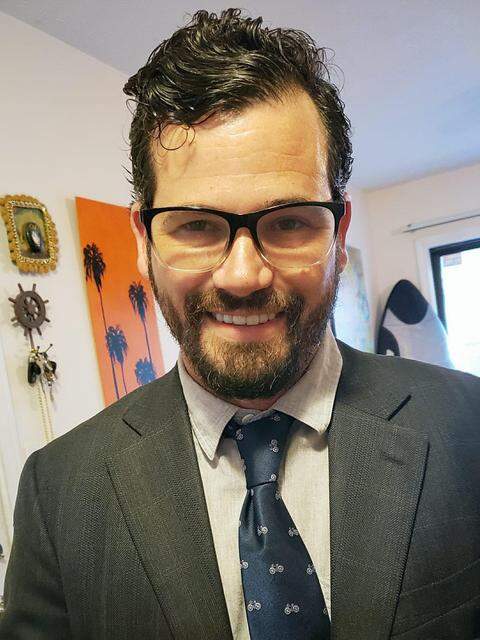
‘We followed the president’s orders’: EU ambassador says he had to work with Giuliani
Testifying in the impeachment inquiry, the United States ambassador to the European Union said he did not want to work with Rudy Giuliani on Ukraine policy.
“We followed the president’s orders,” Amb. Gordon Sondland said during his opening statement during the impeachment hearing Wednesday.
“We worked with Mr. Giuliani because the President directed us to do so. We had no desire to set any conditions on the Ukrainians. Indeed, my personal view — which I shared repeatedly with others — was that the White House meeting and security assistance should have proceeded without pre-conditions of any kind,” he told the U.S. House Intelligence Committee.
The U.S. House of Representatives’ impeachment inquiry into President Donald Trump’s Ukraine dealings continued Wednesday as Sondland testified in public before the House Intelligence Committee.
“Secretary (Rick) Perry, Ambassador (Kurt) Volker and I worked with Mr. Rudy Giuliani on Ukraine matters at the express direction of the President of the United States. We did not want to work with Mr. Giuliani. Simply put, we played the hand we were dealt. We all understood that if we refused to work with Mr. Giuliani, we would lose an important opportunity to cement relations between the United States and Ukraine,” Sondland said Wednesday morning.
“Mr. Giuliani’s requests were a quid pro quo for arranging a White House visit for President Zelensky. Mr. Giuliani demanded that Ukraine make a public statement announcing investigations of the 2016 election/DNC server and Burisma,” he said.
Sondland testified before the committee in private last month, and Democratic Committee Chairman Adam Schiff of California released the transcript of that interview on Nov. 5.
The Washington Post describes Sondland as “a Trump campaign donor who was rewarded with a cushy job” as ambassador, and reports that he will speak “about his work negotiating with Ukrainians to launch investigations into President Trump’s political rivals. He is one of the most crucial witnesses, in that he could be the witness who can link a quid pro quo directly to Trump.”
Sondland, a 62-year-old Portland, Oregon, hotelier, has already changed his testimony from the private interview: He “first told Congress that the president was simply interested in battling corruption” and didn’t ask Ukraine’s leader to investigate political rival Joe Biden and his son in exchange for security aid, NPR reports — but “Sondland later amended his testimony, saying the aid package was in fact contingent on an investigation into the Bidens.”
Lt. Col. Alexander Vindman, the top Ukraine expert on the National Security Council, and Jennifer Williams, an aide to Vice President Mike Pence, testified before the committee Tuesday morning. Kurt Volker, former special envoy to Ukraine, and Tim Morrison, a former National Security Council aide, testified at Republicans’ request Tuesday afternoon.
What’s Trump accused of doing?
Trump is accused of withholding $400 million in military aid to Ukraine — which Congress had already approved — to get the Eastern European country to investigate the son of political rival and former Vice President Biden. The Associated Press reports a whistleblower complaint revealed a call between Trump and Ukrainian President Volodymyr Zelensky when the American president asked his Ukrainian counterpart to investigate Biden’s family and Ukraine’s possible role in influencing the 2016 election.
Ukraine was, and still is, fighting with Russian-backed separatists in a war that has lasted five years and killed 13,000, PBS News Hour reports.
“Trump put his personal and political interests above those of the United States,” House Intelligence Committee Chair Adam Schiff (D-Calif) said at the opening of Wednesday’s hearing.
Democrats say the withholding of aid is evidence of a “quid pro quo.” It’s illegal “to solicit anything of value from a person from a foreign country in U.S. elections” under federal law, as noted by The Associated Press.
A whistleblower complaint filed by a member of the CIA on Aug. 12 gave details about the president and his personal attorney Rudolph Giuliani’s moves to get Ukraine to investigate unfounded allegations of corruption against Biden and his son Hunter Biden, The Washington Post reported. “The complaint also alleges that the White House moved to ‘lock down’ the details of a July 25 call between Trump and his Ukrainian counterpart,” The Post reported.
What do Trump’s defenders say?
A Republican strategy memo released last Tuesday argues the evidence doesn’t show Trump tried to pressure Ukrainian leaders into investigating Biden’s family by holding up military aid, CBS News reported.
The strategy memo says Zelensky has denied feeling pressured in the July 25 call and that Ukrainian officials were unaware at the time that the aid had been put on hold, though this has been disputed by U.S. officials testifying in the inquiry, according to the network. The memo also says the U.S. released the aid package in September without any Ukrainian investigation of Biden’s family taking place.
Trump, who has frequently described the July 25 call as “perfect,” has denounced the impeachment inquiry as a “witch hunt” and demanded lawmakers instead investigate his accusations against Biden’s family, Fox News reported.
What happens next?
The U.S. House Intelligence Committee, led by committee chair Schiff, began open hearings on the impeachment inquiry last Wednesday following a series of closed-door depositions.
William Taylor, acting U.S. ambassador to Ukraine, and Deputy Assistant Secretary of State George Kent testified last Wednesday before the committee and took questions from representatives. Both said withholding desperately needed military aid for partisan reasons damaged U.S. relations with Ukraine and other nations.
Marie Yovanovitch, who testified Friday, served as the U.S. ambassador to Ukraine from 2016 to May, when she was removed by Trump. Yovanovitch told the panel Trump axed her in part because she resisted efforts by Giuliani and others to get Ukrainian officials to investigate the Bidens.
During Yovanovitch’s testimony, Trump tweeted that “everywhere (she) went turned bad. She started off in Somalia, how did that go? Then fast forward to Ukraine, where the new Ukrainian President spoke unfavorably about her in my second phone call with him. It is a U.S. President’s absolute right to appoint ambassadors.” Schiff said that tweet constitutes “witness intimidation.”
Lawmakers have not outlined a timeline for the impeachment inquiry, but House Speaker Nancy Pelosi has said she wants to move through it “expeditiously,” The Associated Press reports. Democrats have said they hope to complete the inquiry by the end of the year.
The full House of Representatives would then vote on whether or not to impeach Trump. The matter would then go to the Republican-controlled U.S. Senate for trial, with Chief Justice John Roberts of the U.S. Supreme Court presiding.
This story was originally published November 20, 2019 at 7:00 AM with the headline "‘We followed the president’s orders’: EU ambassador says he had to work with Giuliani."