
‘Biggest achievement’: Whatcom County celebrates 10 years of Mental Health Court
Going to jail was not a new experience for Alexander Reed.
He said he slept on stone no matter what, whether it was a cell or the street outside. Going from incarceration to homelessness and back again was a routine that his mental health and substance abuse issues made nearly impossible to break.
But when Reed was arrested in 2023, something was different.
He was facing a long potential prison sentence, and he said he didn’t know if he’d survive it. That was when his attorney offered him a way out: the Mental Health Court.
Mental Health Court (MHC) is a therapeutic alternative to the regular legal system for people with serious mental illnesses. Participation is voluntary, and the program requires individuals to complete specific treatment and compliance goals over the course of 18 to 24 months.
MHC began in January 2015, and is hosting a 10-year anniversary celebration this month. Between its inception and March 2025, 87 people fully completed the program.
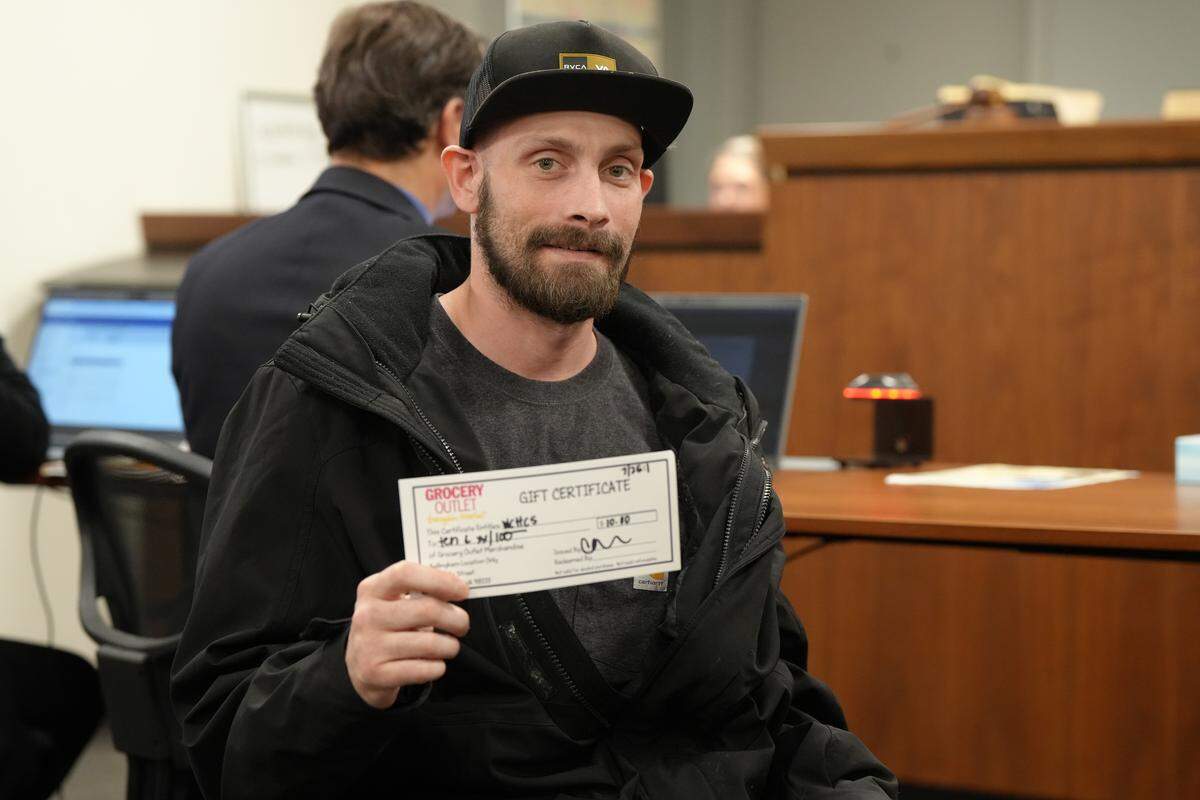
Graduates have their felony charges downgraded to misdemeanors or misdemeanor charges dismissed. And for people like Reed, who finished the program in July, it offers far more than just a diminished criminal record.
Reed now has stable housing and access to mental health resources to keep himself healthy. He got his driver’s license, volunteers in the community and helps others who are struggling.
But the road to get there wasn’t easy.
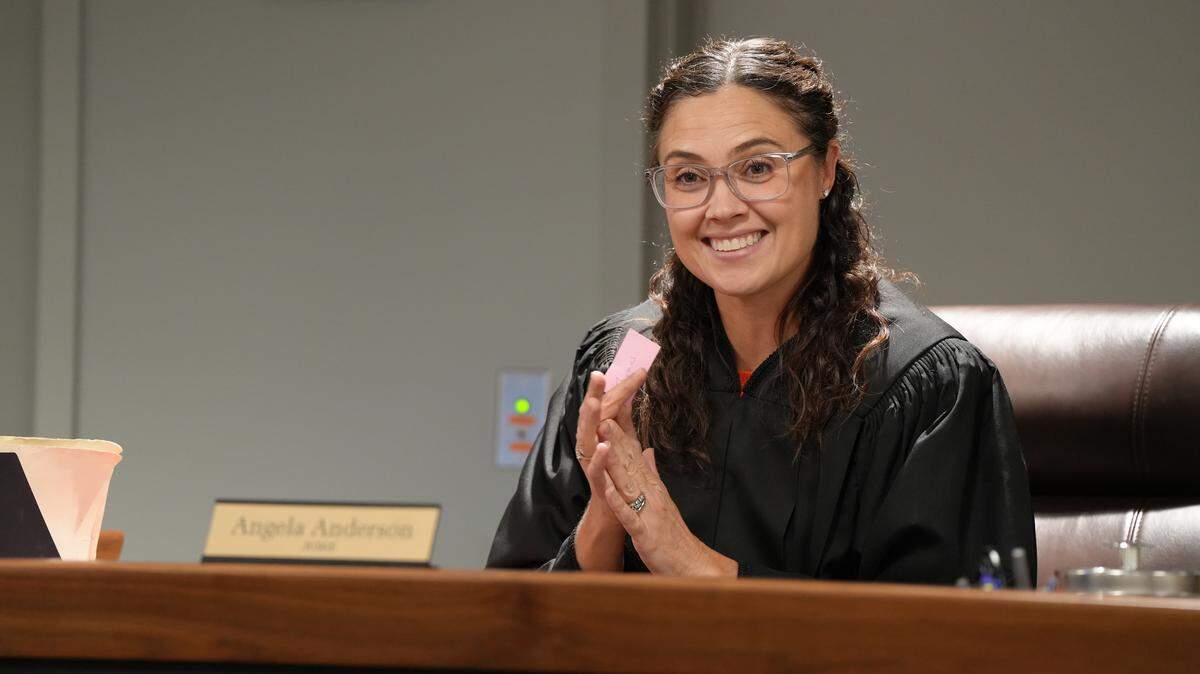
“Most participants don’t come into this program lightly,” said Judge Angela Anderson. “They really want to see a change in their life.”
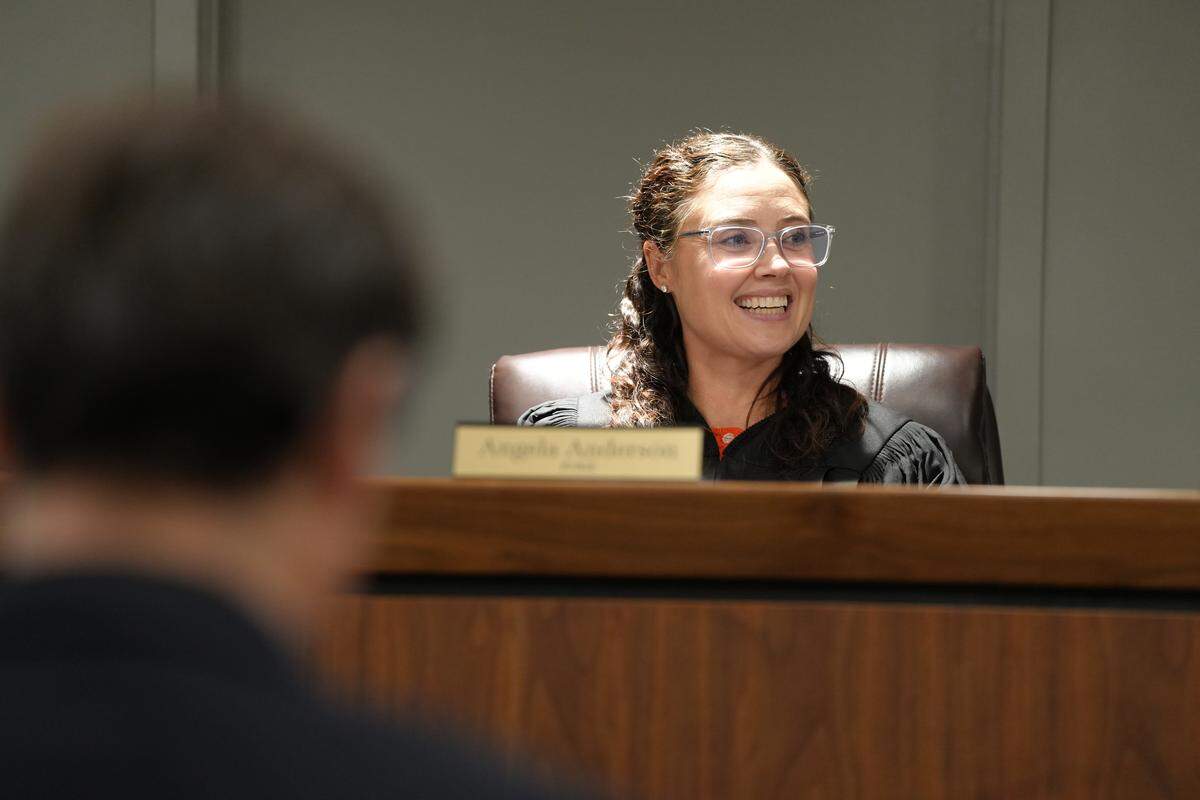
Anderson has presided over MHC in Whatcom County District Court since 2022. She said that the program isn’t a “get out of jail free” card; if anything, it’s more difficult than taking a plea deal and serving jail or prison time.
“It balances holding individuals accountable for the crimes that have been committed, while working very hard to stabilize and rehabilitate,” Anderson said.
Mental Health Court Program Manager Robin Willins said the program is divided into five phases, though they aren’t always linear. In the first phase, participants are connected with services. In the second, people learn about their mental illness. During the third, they reconnect with the community and learn coping skills. In the fourth, they’re working, volunteering or looking at some type of education. The final phase is all about independence, Willins said.
Each phase takes about three months. As they move through them, participants are required to attend weekly court hearings, though they aren’t run like typical court proceedings. MHC is more informal, and Anderson and participants engage in actual conversations about the previous week. Other participants are present the entire time, and clap for and encourage one another.
If participants meet their goals and requirements, they can be entered into drawings to win prizes. If they don’t, their support team is there to come up with a plan to help them move forward.
How does someone enter the program?
Not everyone with a mental illness who’s arrested qualifies for – or would benefit from – MHC. The program is completely voluntary, and potential candidates are referred by their defense attorney.
The attorney will reach out to the prosecutor and, if they also agree that the person would be a good fit and is legally eligible, they contact Willins, who determines with her team if the person meets the criteria for the program.
Participants must live in Whatcom County and have or qualify for a diagnosis of a serious mental illness as defined by the Substance Abuse and Mental Health Services Administration. A serious mental illness is one that “substantially interferes with a person’s life and ability to function.” This includes conditions like bipolar disorder, major depressive disorder and schizophrenia.
Willins said there must also be a connection between a person’s mental health issues and criminal charges. And most importantly, they must be willing to participate.
When Reed was informed of the program by his defense attorney, he said he was initially wary. “Don’t set me up for failure,” he told his lawyer.
Ultimately, he decided to join. He said he wanted to prove himself – and everyone else – wrong; to show that he wasn’t worthless.
“I couldn’t live with myself if I didn’t give myself an honest opportunity to try and get out of it,” Reed said.
Why mental health court?
Therapeutic courts have two major goals: helping people achieve recovery and reducing recidivism.
MHC is not the only program of its kind in the county. Whatcom County Superior Court has two recovery courts: one for adults with substance use disorder facing criminal charges, and one for parents involved in a child dependency case where parental addiction is a concern.
Bellingham Municipal Court is currently in the early stages of creating a dedicated DUI court to deal with an influx in cases.
Willins said that MHC focuses a lot on the intersection of recidivism – or the tendency for someone to reoffend – and the social determinants of health, which are conditions like poverty and healthcare access that shape daily life.
“That’s the puzzle that we’re putting together with the person who’s coming into the program,” Willins said.
They then work together to come up with a treatment plan with wraparound services to help individuals meet their recovery and sobriety goals while also following their requirements with the legal system.
The legal angle
Prosecutors and defense attorneys will typically reach a deal before someone enters the program, with the understanding that the charges will either be downgraded or dismissed upon successful completion.
North County Public Defender Robert Lockhart said working with clients in MHC differs greatly from those he represents in the regular legal system.
He said that in his nearly five years in this role, he’s been able to provide advice and support for his clients, rather than just filing motions and other legal documents. And as someone living with bipolar disorder, Lockhart said he has a personal connection that makes the work even more meaningful.
“For me, it almost feels like I’m going through the program with them because there’s always opportunities for me to learn as well,” Lockhart said.
On the prosecutorial side, there’s a similar emphasis on collaboration between parties and support systems.
Ryan Anderson, lead prosecutor with the City Attorney’s Office, has been involved with MHC since its inception. Over the years, he’s seen the program grow and expand. The dual diagnosis of substance use disorder has also become a larger component.
Ryan Anderson said the hope for the court has always been to reduce the flow of people who need full prosecution, whether through mental health court or other diversion programs.
He explained that he has to wear a “completely different hat” as a prosecutor in MHC than he does in other proceedings. Court is typically adversarial, Ryan Anderson said, but therapeutic courts are more collaborative and conversational.
“It’s definitely still a level of accountability, but it’s just a totally different concept of how to run court,” he said.
How successful is Mental Health Court?
MHC served 155 people between January 2015 and March 2025, according to newly released statistics.
The data, which was prepared and analyzed in consultation with Mikala Meize-Bowers, Senior Research Associate at the Washington Center for Court Research, showed that about 71% of participants across Whatcom County District and Bellingham Municipal Courts successfully completed the program.
Willins said anything over 50% is considered a “really big success” for a program that targets a high risk, high need population.
Even those who didn’t graduate still reported an impact.
Eighty-eight percent of all participants reported improved mental health, and 82% reported an improved quality of life. Ninety percent of graduates in the workforce said their employment status improved, and all graduates in the past five years had secured housing.
For those who completed the program, data showed there was a 90.4% decrease in legal system involvement in the year following graduation, and a 69.5% decrease after five years. Ignoring graduation status, all participants recorded an 89.8% decrease in legal system involvement one year after exiting the program, and a 48.8% decrease after five years.
Looking forward
Those involved in the operation of MHC all had a similar hope for the court going forward: reaching more people.
The program typically has about 30 participants at a given time across Whatcom County and Bellingham Municipal Courts. Most people who qualify for and want to participate in the program are able to, but sometimes there’s a significant gap between arrests and entry to MHC.
“The sooner we can get people into mental health courts, the sooner we can get them connected with services,” Angela Anderson said.
Even if MHC isn’t the right fit for them, there are other resources available. Lockhart said he’d like to see expanded diversion to other community or therapeutic court options.
“This was the biggest achievement of my life,” Reed said. “It’s set the tone for my future.”
Editor’s note (Oct. 20): A previous version of this article reported an incorrect completion rate for Mental Health Court. Research has shown 71% of participants across Whatcom County District and Bellingham Municipal Courts successfully completed the program.
This story was originally published October 20, 2025 at 5:00 AM.