
State Supreme Court overturned his conviction, but he’ll likely stay in prison
A Bellingham man will receive a new trial after the Washington State Supreme Court ruled in a split decision last week that a Whatcom County Superior Court judge improperly dismissed a juror during the man’s 2014 trial.
Adrian Sassen Van Elsloo, 36, will receive a new trial for a Sept. 7, 2012 high-speed car chase that went along Sunset Drive in Bellingham.
Sassen Van Elsloo allegedly bailed out of the car, which contained guns and drugs, and ran from police, according to court records. Officers also found a backpack with papers bearing his name in the car.
Sassen Van Elsloo was convicted in July 2014 of nine felonies for the chase, the latest of his 19 felony convictions. Most of the others were related to drugs.
The state Supreme Court ruled 5-4 to overturn his conviction for the nine felonies, vacating his 10-year prison sentence.
“We’re pleased the majority of the court concluded the juror was improperly dismissed during trial,” said Jared Steed, Sassen Van Elsloo’s defense attorney for his appeal to the state Supreme Court. “Fair trials require fair juries and we believe the opinion demonstrates a majority of the Supreme Court agrees.”
The Supreme Court’s decision also established a new rule that a defendant’s constitutional right to a unanimous verdict is violated if the trial court dismissed a juror because of their views of the evidence, said Kimberly Thulin, a senior appellate deputy prosecuting attorney for Whatcom County.
She said the state Supreme Court looked at the case from a new perspective when making its decision regarding the case.
“We’re always disappointed when a case is reversed, but going forward it will be remanded for a new trial, so that will be what occurs,” Thulin said.
The state Supreme Court has 30 days from its decision to mandate a new trial for Sassen Van Elsloo in Whatcom County Superior Court. A trial date will be set after that.
Supreme Court ruling
During the trial in 2014, the defense argued that Sassen Van Elsloo was misidentified as the driver of the vehicle. A key witness said Sassen Van Elsloo was at her house the night of the chase, and therefore couldn’t have been driving the car, according to the state Supreme Court decision.
Following the witness’s testimony, one of jurors told a court bailiff she recognized the witness. The woman said the witness worked as an inpatient coordinator and drug and alcohol counselor for the Lummi Nation, and the juror had gone to the witness’ office to get information to help her nephew get chemical dependency treatment.
The juror said she didn’t socialize with the witness, had only met her twice and didn’t recognize her until after she testified.
The juror was questioned by both the defense and the prosecution about her experience with the witness. Chief Criminal Deputy Prosecuting Attorney Eric Richey, who handled the case against Sassen Van Elsloo, asked the woman whether she had a “positive feeling” toward the witness. The juror replied that she had no positive or negative feelings regarding their interaction, records state.
Richey didn’t point to any bias the juror had against the witness, but sought dismissal of the juror because the defense witness was important and that “if jurors believe (the witness) then it’s a big deal” because “that means my case goes nowhere,” according to Supreme Court records.
Sassen Van Elsloo’s public defenders argued the juror’s interaction with the witness was “perfunctory and minimal, noting that juror 12 stated nothing about being unable to be fair, and pointing out that juror 12 was the only tribal member on the jury panel,” according to court records.
Judge Deborra Garrett said it was a “close case” and dismissed the juror because the witness was critical for defense.
Garrett said “even though there is not a real strong relationship between the juror and the witness, I think given the importance of the witness’ role in the case, it’s appropriate for juror 12 to be excused,” court records state.
The state Supreme Court ruled the court abused its discretion when it dismissed the juror, because she was found to have no bias toward the case, even though she had briefly met a key witness prior to trial.
The Supreme Court decided the juror was dismissed because of the defense’s critical witness, not because she had displayed actual bias or was unable to try the case fairly.
Per state law, a juror must be excused if they are unfit to continue serving due to bias, prejudice, indifference, inattention, any physical or mental defect or by reason of conduct, or practices incompatible with proper and efficient jury service.
In the dissenting opinion, four justices argued that while the trial court abused its discretion in removing the juror, Sassen Van Elsloo is not entitled to a new trial and his conviction should stand.
The dissenting justices said Sassen Van Elsloo doesn’t have a constitutional right to a particular juror, and that he must show the juror’s dismissal resulted in a prejudice against him, which they argue did not happen.
Well-known to law enforcement
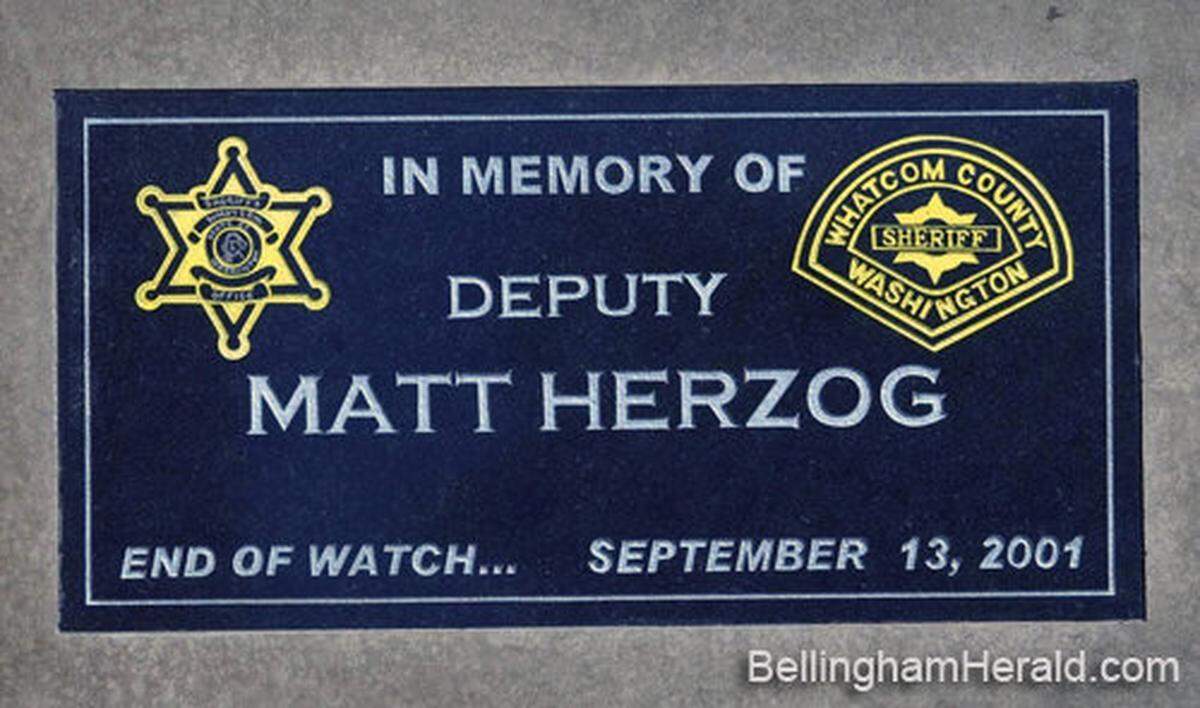
Sassen Van Elsloo’s name is well-known by members of local law enforcement for his involvement in the chase that led to the death of Whatcom County Sheriff’s Deputy Matt Herzog.
In September 2001, Herzog sat in the passenger seat of a squad car, with a deputy-in-training behind the wheel. when Sassen Van Elsloo led them on a high-speed chase through the outskirts of Bellingham.
The chase ended when the patrol car crashed into a tree by Samish Way and Elwood Avenue. Herzog died the following day.
Sassen Van Elsloo was sentenced to four years in prison for the chase, and spent time in and out of jail after his release.
He also led police on two more high-speed chases - the September 2012 chase and one in December 2012, when he ran at least five cars off the road, hit spike strips and got into a police stand-off where he held a revolver to his head, records state. Police fired bean bag rounds at him and he was arrested, according to court records.
Sassen Van Elsloo was sentenced to a little more than 9 1/2 years for the December case, which went to trial before the case for the September 2012 chase.
Although the state Supreme Court overturned Sassen Van Elsloo’s convictions for the September chase, he will remain in prison serving time for the December chase.
This story was originally published September 21, 2018 at 2:47 PM.