
Judge grants injunction sought by Lummi Nation over disturbed ancestral remains
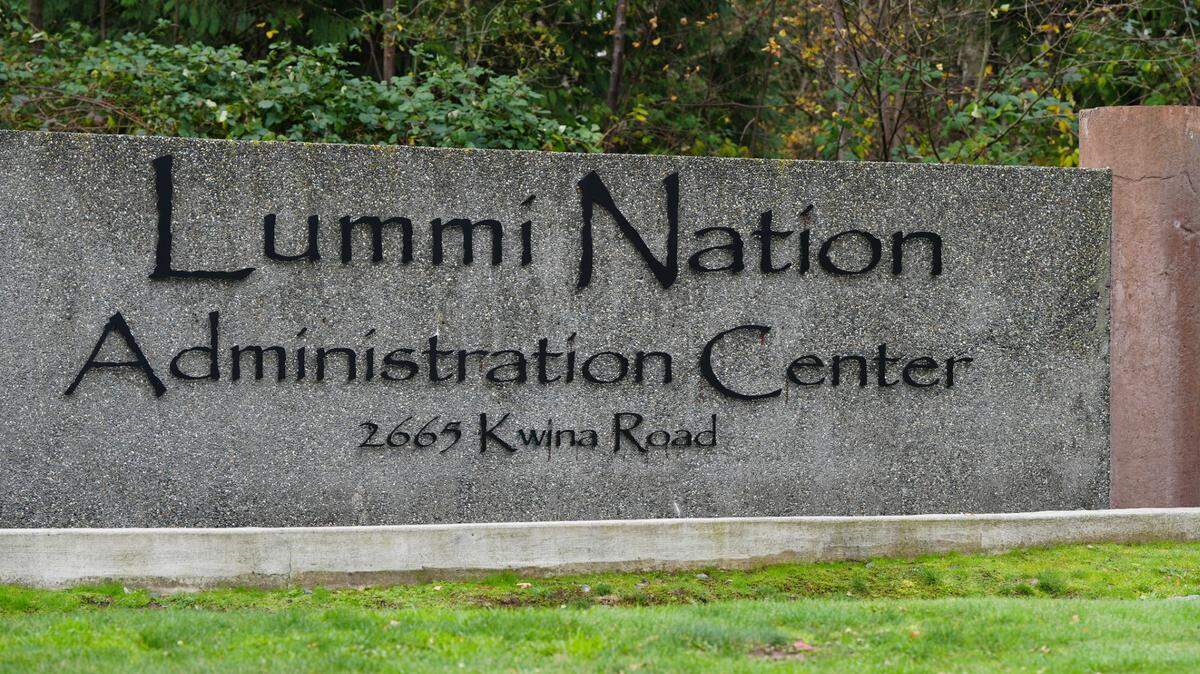
A federal judge has partially granted Lummi Nation’s request for a preliminary injunction to stop Whidbey Telecom’s construction at Point Roberts, where the company faces allegations of disturbing ancestral remains.
In an order issued Wednesday, Judge Kymberly Evanson wrote that Lummi Nation is “likely to succeed” in its claim that Whidbey Telecom disturbed burial sites and has not reinterred remains under Lummi Nation’s supervision, as is required by law.
Lummi Nation sued Whidbey Telecom — as well as Whatcom County, the U.S. Department of Agriculture and the U.S. Department of Commerce— on April 28, alleging that a series of federally funded construction projects repeatedly cut through known burial grounds at Point Roberts.
On May 7, Lummi Nation filed for an emergency injunction to halt construction and give Lummi Nation full access to the sites to document damage and recover and rebury ancestors.
Evanson wrote in her court order that Lummi Nation has not yet applied for the necessary permits from the county to conduct an assessment, and since there is no objection from the county or Whidbey Telecom to such an assessment, some of the relief sought by Lummi Nation in previous filings is “premature.”
The request for an order halting groundwork was also “premature,” Evanson wrote, as no work is currently ongoing, and Whidbey Telecom stated it was unlikely to occur before this case goes to trial. In a joint status report filed Tuesday, all parties estimated the case will be ready for trial by Oct. 5, 2027. It will likely last two to four weeks.
If groundwork does commence before then without Lummi Nation’s knowledge, Evanson wrote that Lummi Nation “faces irreparable harm.” The new order requires Whidbey Telecom to give Lummi Nation 30-day notice before any ground-disturbing work — including trenching, boring, potholing or grading — is done at Point Roberts.
Lummi Nation may renew the motion in the future if: defendants prevent Lummi Nation from accessing the sites; the county denies the permit application; groundwork “becomes imminent;” or Lummi Nation identifies “specific measures needed to preserve particular disturbed burial sites” following an assessment, according to court filings.
The Bellingham Herald reached out to Lummi Nation for a comment on the ruling and is awaiting a response.