
Trial of sex offender detained at McNeil Island begins in Whatcom County court
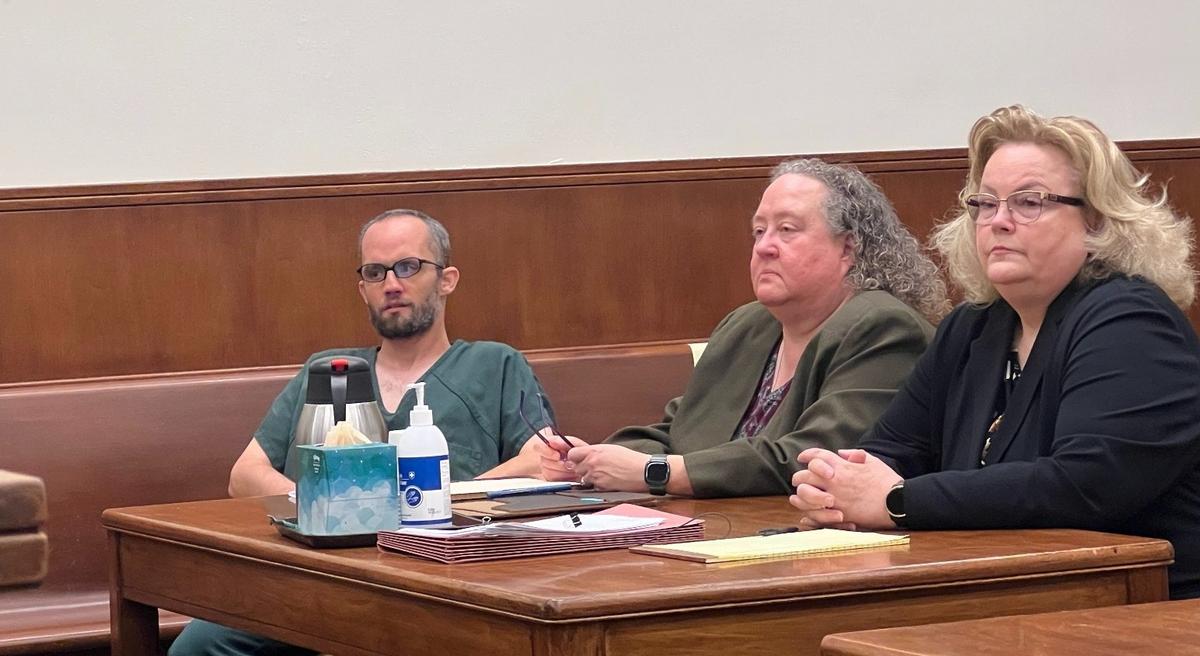
The trial of a Whatcom County man being held at a correctional facility for sex offenders on McNeil Island began Monday in Whatcom County Superior Court.
The Washington State Attorney General’s Office filed a petition in September 2024 seeking to civilly commit Jake Unick, 41, indefinitely to McNeil Island Special Commitment Center, which houses “sexually violent predators” after their prison terms have ended.
Unick was initially arrested for attempting to kidnap two girls and one woman off the street and briefly taking a 2-year-old girl from the Fred Meyer grocery store on West Bakerview Road in 2013.
He was convicted in 2014 of one count of first-degree kidnapping, two counts of second-degree kidnapping with sexual motivation and one count of harassment. He was sentenced to 10 years in prison, with three years probation. However, before his release, then-Attorney General Bob Ferguson petitioned for Unick to be held at McNeil Island instead, citing the danger he posed to the community.
Prosecutor Rose McGillis called Unick an untreated sex offender with a “long history and pattern” of sexual offenses and issues. She said that when Unick was a teenager, he molested two young girls who were known to him. Sex became a “focal point” of Unick’s life at a young age, according to McGillis, and he has a history of public masturbation.
McGillis said that Unick continued to engage in similar behavior while incarcerated, requesting photographs of young-looking girls in the mail and trying “obsessively” to get them back when the Department of Corrections confiscated them. She said he also refused sex offender treatment while in DOC custody.
The defense’s argument
Defense attorney Kelli Armstrong-Smith also laid out a timeline of Unick’s life. She said that as a child, Unick was bullied and “socially awkward,” wanting to belong but not being able to. He had obsessive compulsive behaviors and was put on medication for attention-deficit/hyperactivity disorder (ADHD).
When he graduated from high school, Unick was “lonely and isolated,” Armstrong-Smith said. In college, he had no support system or close friends. She said an email he sent to another student detailing a fantasy about a violent break-in, rape and abduction — which the state also referenced in opening arguments — was a cry for help.
She also laid out the conditions that Unick would be under if he was not civilly committed that would keep him from potentially reoffending. Unick would have to register as a sex offender, not be allowed to visit or work at places frequented by children, and undergo a sex-offender evaluation and recommended treatment.
Armstrong-Smith said Unick has been “doing well” since he finished his sentence in 2024. She asked the jury to keep an open mind as the state presents its case, as the defense’s expert witness will discredit some of the testimony.
What the state must prove
In order to civilly commit Unick, a jury must find that Unick is a sexually violent predator. This requires the state to prove that Unick has been convicted of a crime of sexual violence and that he has a mental abnormality or personality disorder that makes him likely to engage in predatory acts of sexual violence if he’s not confined in a secure facility.
McGillis said that the state’s expert witness evaluated Unick and diagnosed him with pedophilic disorder, sexual sadism, antisocial personality disorder, exhibitionistic disorder and a neurodevelopmental disorder.
However, Armstrong-Smith said the defense’s expert witness diagnosed Unick with autism, a tic disorder and ADHD — none of which meet the definition of a mental abnormality or personality disorder.
Jurors must find that Unick meets all the conditions of being a sexually violent predator for the state to civilly commit him.