
Race restrictions impact 1,600 Whatcom County properties. Is yours on the map?
Research conducted by a team at the University of Washington is giving Whatcom County property owners the opportunity to see whether their land is tied to any racially restrictive covenants that historically prevented non-white residents from owning or living on it.
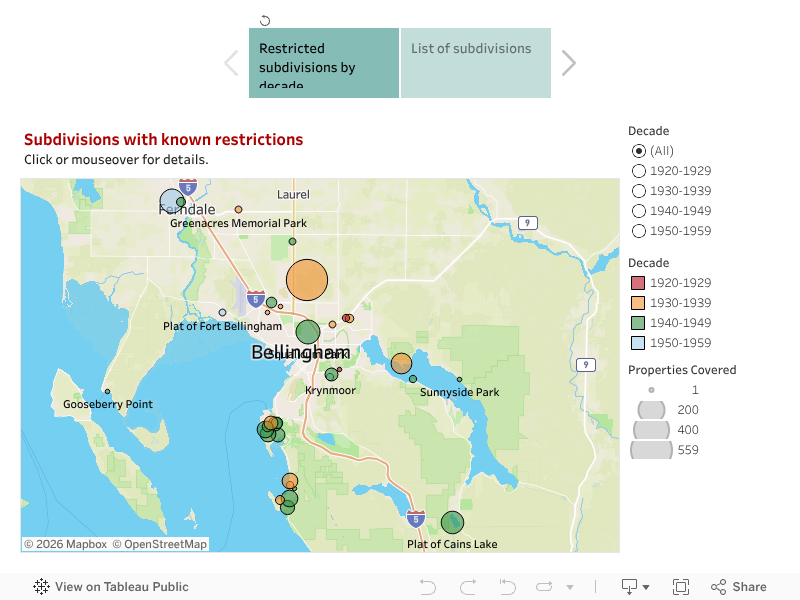
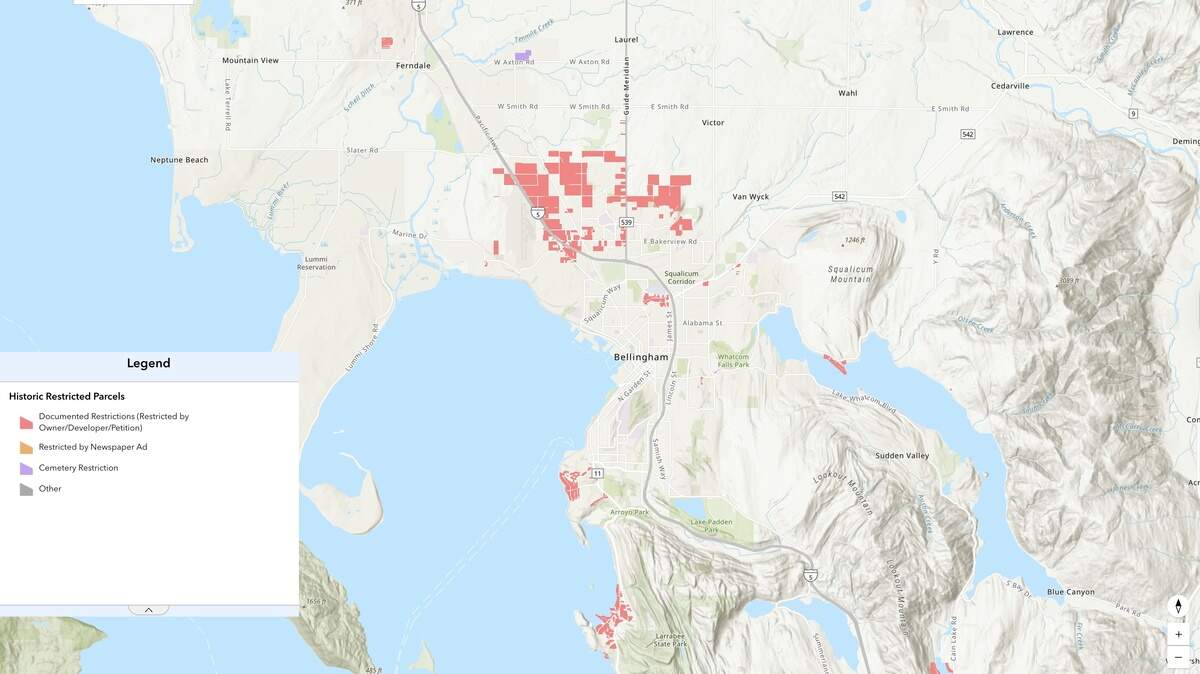
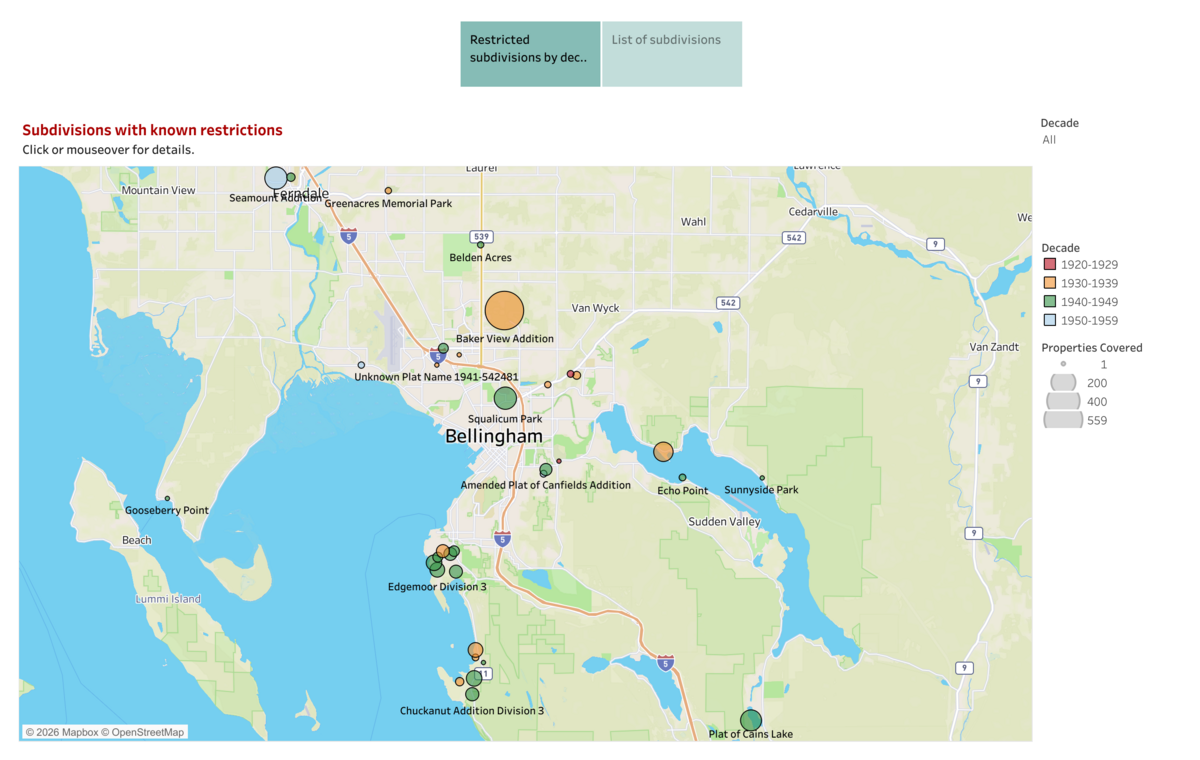
The Washington State Racial Restrictive Covenants Project identified more than 1,600 properties in 26 subdivisions in Bellingham and Whatcom County with racial and/or religious restrictions added to property records.
The restrictions, which are no longer legally enforceable, were implemented to prevent non-white folks from buying, leasing, renting or otherwise occupying land.
‘Cumulative effect’ of WA housing discrimination
James N. Gregory is a professor of history at the University of Washington and director of the UW Racial Restrictive Covenants Project. Although the covenants have no current legal standing, he said identifying affected properties is critical for understanding how history impacts the present.
“This has had a really cumulative effect on homeownership rates throughout the state. Black families in particular own homes at a much lower rate. That has to do with the way that homeownership was suppressed for generations,” Gregory said in an interview with The Bellingham Herald.
“By the time the restrictions began to dissipate, home costs were escalating at such a rate that it became virtually impossible without wealth to buy a home. A lot of families get their wealth through previous generations’ homeownership. It’s had this really lasting effect on differential homeownership rates as well as residency patterns,” Gregory said.
Researchers began this work in Seattle about two decades ago. That effort expanded across the state in 2021, when the Washington Legislature passed HB 1335, which funded the University of Washington and Eastern Washington University to do this work.
City of Bellingham Senior Planner Elizabeth Erickson said the research project has “significant value,” and working to reverse the impacts of restrictive covenants is important.
“When we understand our history, we can better understand the continued impacts from that history and work to counteract those impacts,” Erickson said in a statement to The Herald. “A variety of policies restricted residents of ‘desirable’ areas in the past, and the government played a role in allowing and at times directly implementing these racist or exclusionary policies, such as restrictive covenants.”
Erickson said city staff worked to educate the community about the impacts of restrictive covenants and exclusionary policies during outreach for the Bellingham Plan. She said staff found that many community members did not realize the extent to which these policies impacted how Bellingham grew and changed over time and continue to impact land patterns and opportunity access today.
“Helping the community understand this past provided a framework for discussing proposed changes to our planning documents and processes that help to reverse those impacts, such as opening up more of our neighborhoods to more housing opportunities for all,” Erickson told The Herald.
Local extent of racial restrictive covenants
Researchers reviewed local property records from 1910-1960 provided by the Whatcom County Auditor’s Office.
Restrictive covenants were found on properties located in the Edgemoor, Puget, Sunnyland, Cornwall Park and Barkley neighborhoods of Bellingham.
Restrictive covenants were also found on properties along Chuckanut Drive, surrounding Cain Lake south of Lake Whatcom, along Dellesta Drive east of the Silver Beach Neighborhood, as well as in Ferndale and large areas of development north of Bellingham.
Researchers also found that the Bellingham Community Mausoleum at Bayview Cemetery and Greenacres Memorial Park cemetery along Axton Road east of Ferndale had racial burial restrictions.
To date, researchers have identified more than 80,000 impacted properties across Washington, which Gregory said was certainly an underestimate.
Gregory told The Herald that while their research highlights properties with very clearly documented racial restrictions, there are likely more that researchers missed, as well as other neighborhoods where exclusionary practices kept people away.
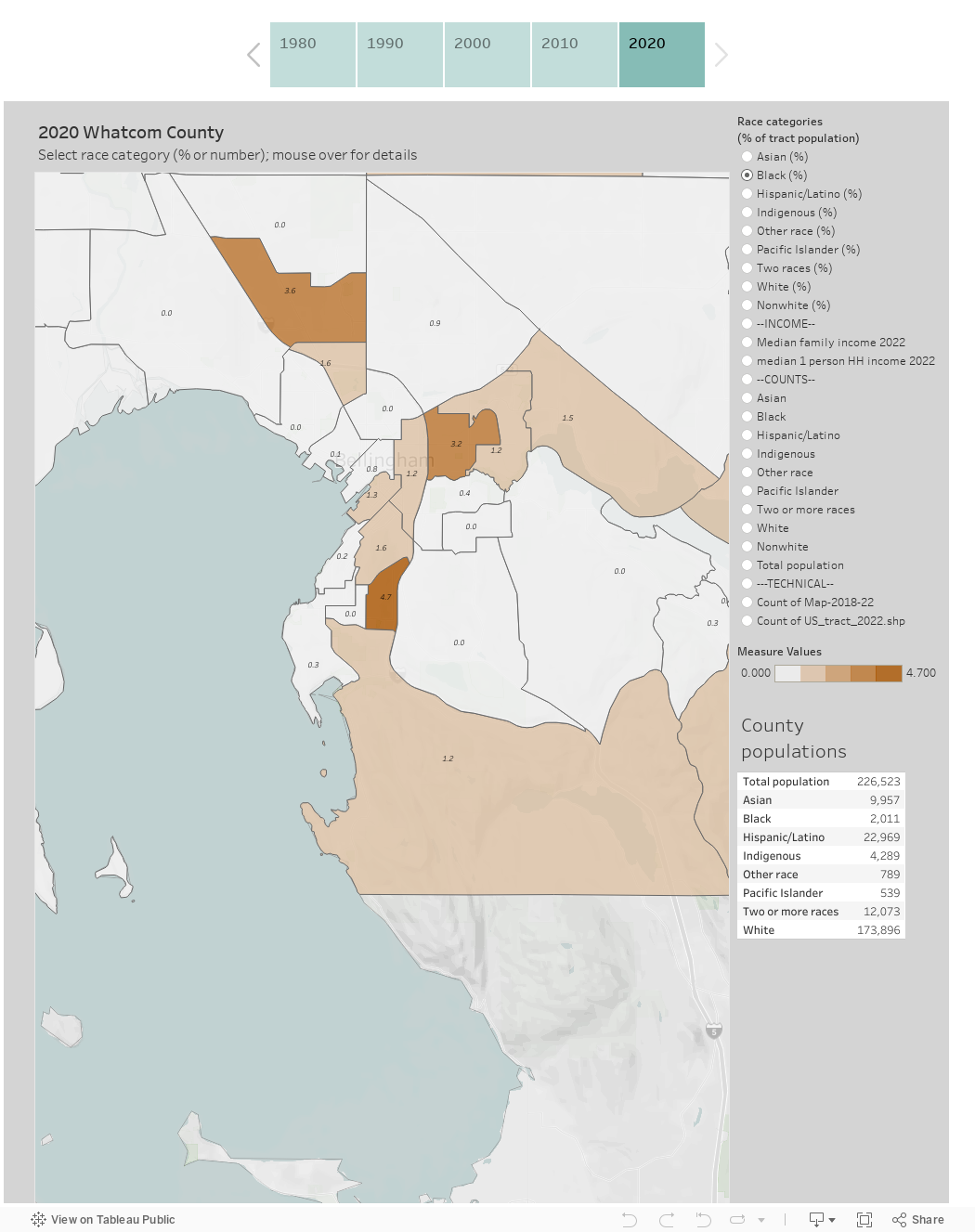
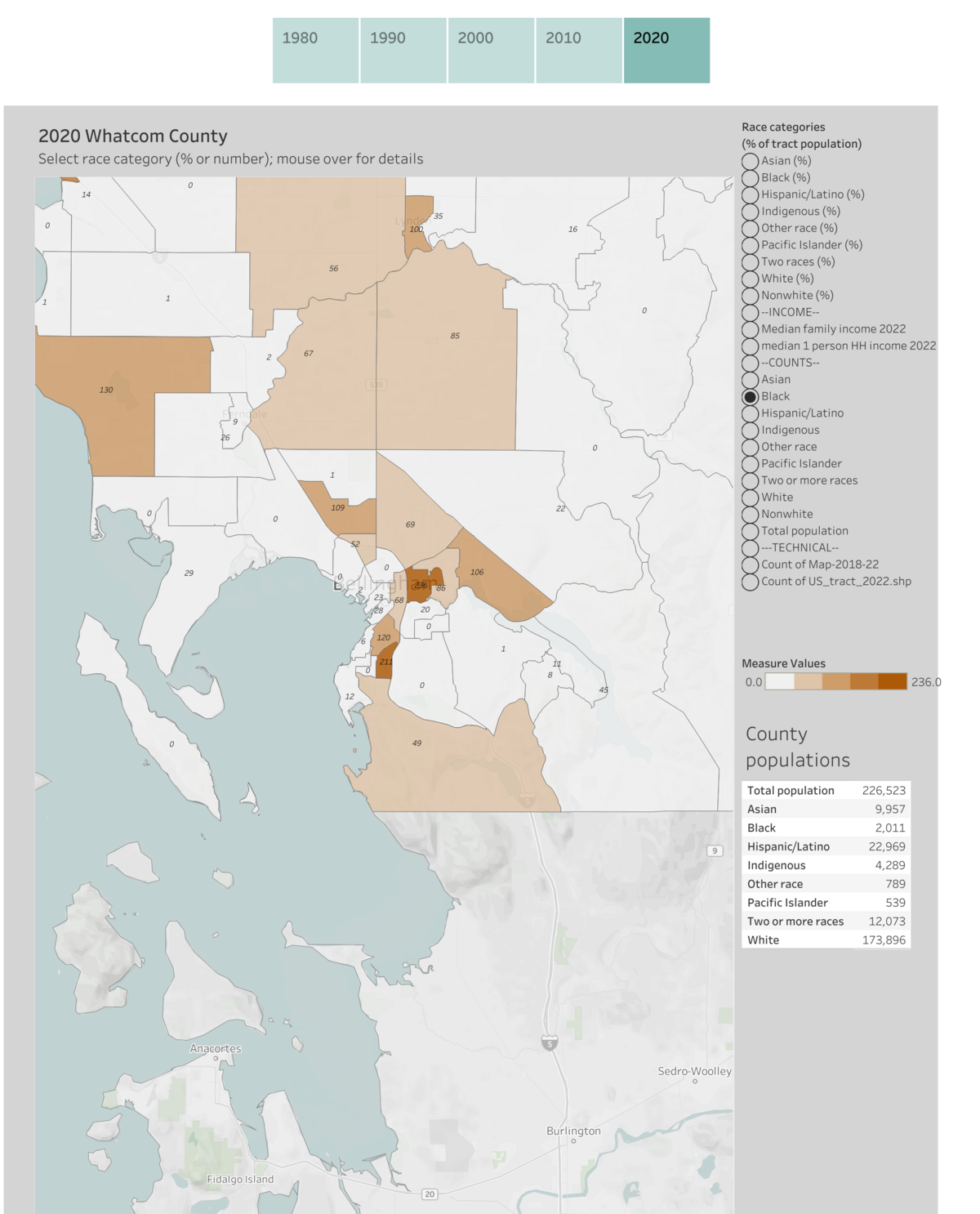
In 1970, the county’s population was 96.7% white, U.S. Census data show. The county had just 201 Black residents, 543 Asian residents and 1,949 Indigenous residents who were mostly Lummi. Gregory said the numbers speak to the impacts of both racial segregation and exclusion.
“A lot of neighborhoods that look like they did not have any racial restrictive covenants actually were practicing exclusion by other means. This is actually kind of the tip of the iceberg in terms of how race and housing discrimination worked,” Gregory said. “In most neighborhoods, Realtors wouldn’t show Black people houses. If they did, a neighborhood would make a family feel so unwelcome that they stayed away or moved away.”
Making an impact across Washington
In 2018, Washington amended the law to provide property owners a way to strike racially restrictive covenants from their property title documents. If your property had a racially restrictive covenant recorded in the past, you can record a modification document with the county auditor.
For more information about how to do that, visit Whatcom County’s restrictive covenants informational webpage.
The Whatcom Racial Equity Commission is working on developing a plan for removing racial covenants as part of its policy agenda, according to the group’s executive director, Miriam Karamoko. The commission is also aiming to help educate people about the impacts of racial covenants and help offer them a more concrete way to remove these policies in partnership with the county.
“Even though racial covenants may not currently be enforced, it’s important that our policies reflect our values as a county,” Karamoko said in a statement to The Herald. “Everyone should have the written and legal right to buy or lease a home.”
The state also passed HB 1474 in 2023 to help individuals who have been generationally impacted by restrictive covenants purchase a home. Called the Covenant Homeownership Program, first-time homebuyers who meet the appropriate qualifications can be provided down-payment and closing-cost assistance.
As of Dec. 31, 2025, 1,087 homes had been purchased through the Covenant Homeownership Program across 24 Washington counties. Thirteen homes had been purchased through the program in Whatcom County, according to a program impact report.
This story was originally published April 24, 2026 at 5:15 AM.