
Hundreds of salmon released into Whatcom Creek near Maritime Heritage Park
Bellingham’s annual community salmon release is an opportunity for the public to participate in the local ecosystem.
Hundreds of community members took turns releasing young salmon, called salmon fry, into Whatcom Creek on March 26 at Maritime Heritage Park in Bellingham.
The program was created through a partnership between the Nooksack Salmon Enhancement Association (NSEA) and the Bellingham Public Library.
“The program allows community members to have the opportunity to witness the life cycle of salmon unfold before their eyes in a community aquarium while learning about salmon swimming in a creek that goes through the hearth of Bellingham, Whatcom Creek,” Nathan Zabel with NSEA told The Bellingham Herald. “Annually, thousands of salmon fry are released through this program, helping bolster salmon populations while connecting people to actions they can take to care for salmon.”
On Thursday, 226 young chum salmon were released into the wild by the Bellingham public. Each family was limited to a single salmon fry, which they named before releasing into Whatcom Creek.
The salmon fry were raised in a freshwater tank at the central branch of the Bellingham Public Library where they hatched in January, according to Zabel. The release is the culmination of the program, as the salmon make their way to the ocean to begin the next stage of their life, according to Zabel.
The community salmon release was part of the larger Students for Salmon program, which provides salmon aquariums, similar to the one in the library, to 18 schools across Whatcom County, Zabel said.
“This is our third year running this program in conjunction with the library,” Zabel said. “We really wanted to make sure we could bring this program outside of schools to connect community members with salmon and the importance of salmon and have an opportunity to witness the lifecycle of pacific salmon unfold before their eyes.”
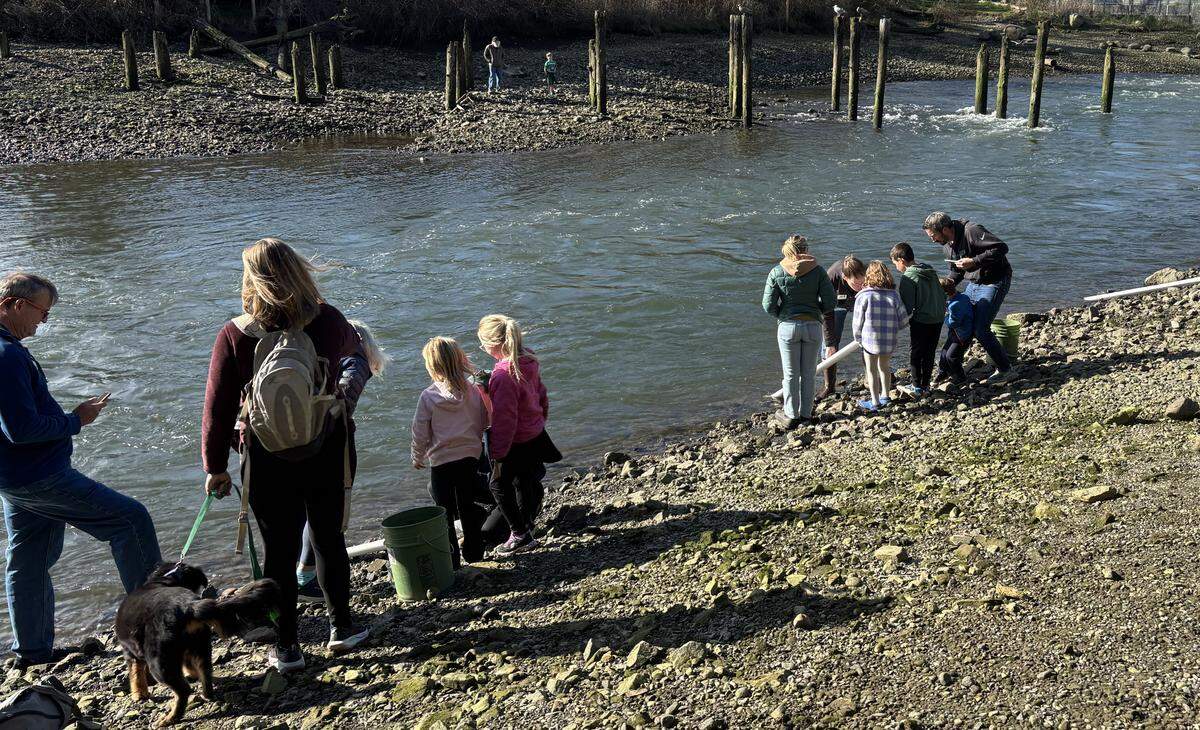
The event began at 4 p.m. at the Maritime Park Amphitheater with a blessing ceremony performed by representatives of the Nooksack Indian Tribe and Lummi Nation.
Other events included a community mural, so people could add to local art, and a station that teaches about the lifecycle of salmon as well as their food source of aquatic macroinvertebrates.
“It’s a great opportunity to both learn about the stages, in particular the fry stage of the pacific salmon, learn about their food source that they will be searching for out here in the creek and also have an opportunity to work collectively on a community art piece,” Zabel said.
Before the salmon were released, NSEA had to get the fry used to the different water types so they could live a healthy life in the ocean. There is a significant difference between a freshwater aquarium in the library and the salt-and-freshwater mix that occurs when Whatcom Creek meets the Bellingham Bay.
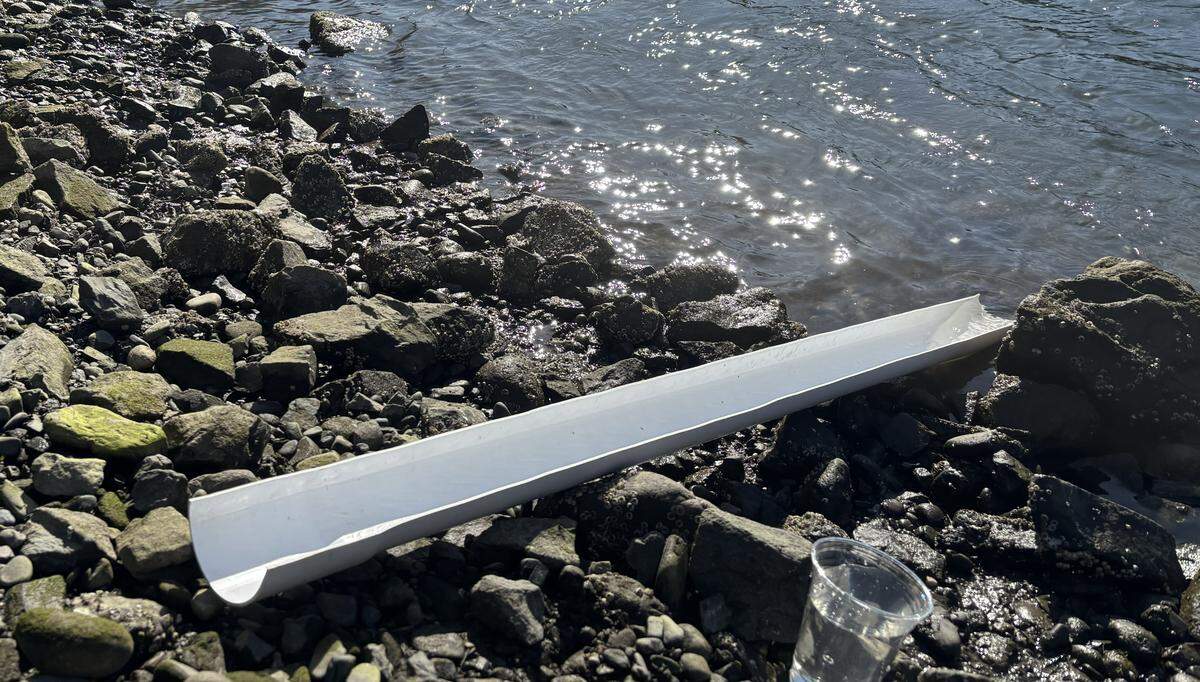
“So chum salmon — the type of salmon that we are releasing — they typically don’t like to spend a lot of time in freshwater in the wild. They like to head out to the ocean pretty soon in their life cycle so they can have access to bigger food, and that will allow them to grow bigger and have the space to swim around. We strategically chose that type of salmon specifically because they would have the best chance to survive in this environment as they head out to the sea,” Zabel said.
The Students for Salmon program started in 2021 with a grant from the state Office of the Superintendent of Public Instruction. In 2023 the program was expanded to all Whatcom County public elementary schools as the result of funding from the Environmental Protection Agency. Some elementary schools in Bellingham have had salmon aquariums before 2021 through the Salmon in the Classroom program, according to Zabel.
.jpg)