Future of Bellingham subdivision proposal to be decided after years of pushback
The fate of a proposal to develop a new residential subdivision on a large forested site in Bellingham’s Edgemoor neighborhood will soon be decided after years of pushback from community members.
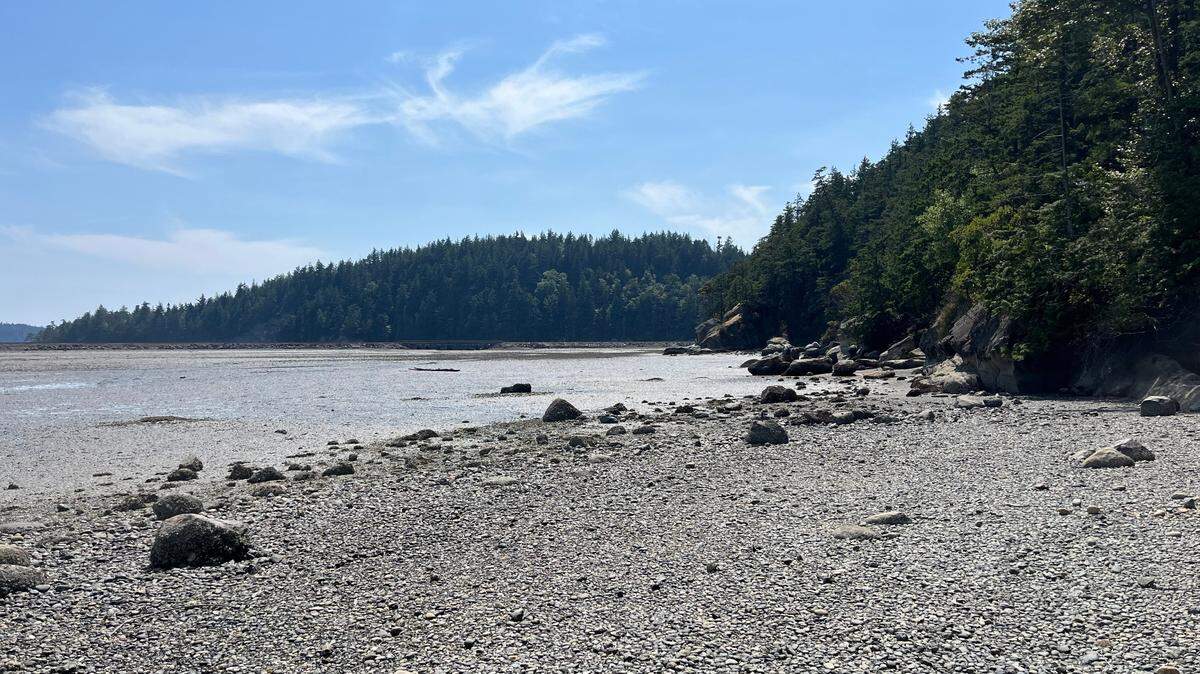
The project — called Woods at Viewcrest — would result in the development of 38 lots for single-family homes and three open-space tracts on about 38 acres of land along Viewcrest Road. The development would be situated near an area known as the Mud Bay Cliffs, which rise above the Chuckanut Bay estuary below.
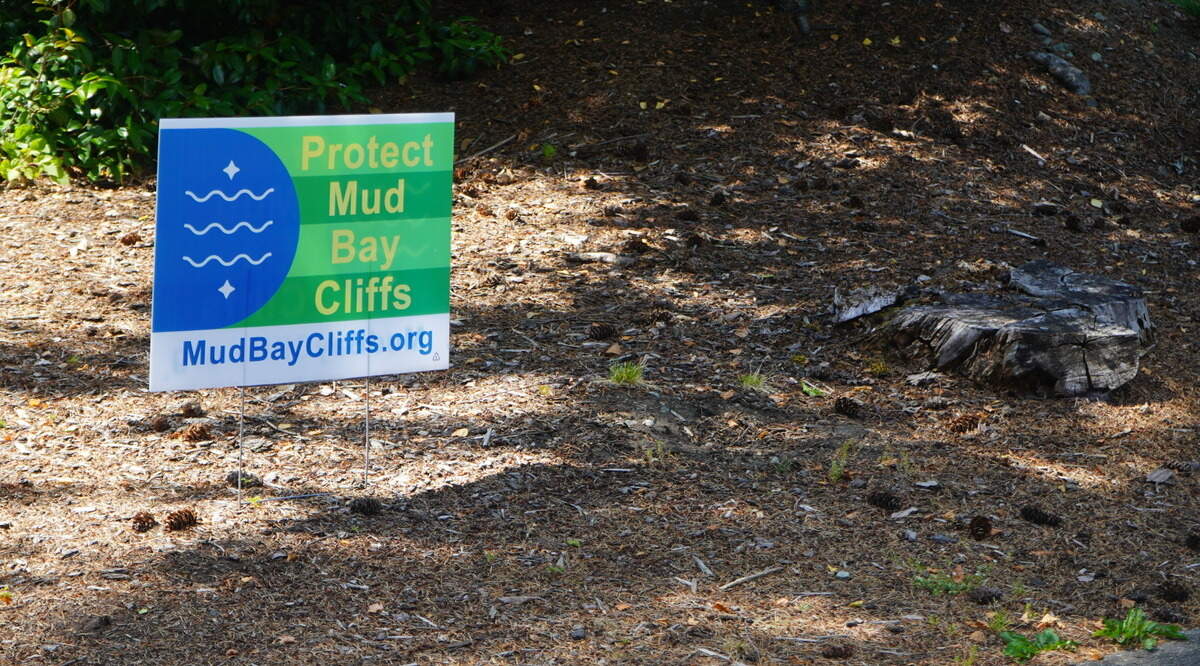
A neighborhood group known as Protect Mud Bay Cliffs (PMBC) was formed in opposition to the development after detailed planning for the site began in 2019.
The group’s goal has long been to preserve the forested project area, expressing concerns about impacts to water quality, habitat degradation and geologic instability. Its members have asserted for years that the development would cause “significant adverse impacts” on the surrounding natural environment and the people living nearby.
Despite those claims, the city of Bellingham issued a Mitigated Determination of Nonsignificance (MDNS) for the project last year after determining that any negative environmental impacts could be reduced to an insignificant level through various required mitigation measures and that an environmental impact statement (EIS) would not be required.
PMBC appealed that decision, in an effort to force an EIS under the State Environmental Policy Act (SEPA).
This week a hearing examiner is taking testimony from PMBC, the project applicant, and the city to determine whether to allow the project to move forward as it is proposed.
In a statement to The Bellingham Herald, PMBC called the project application materials “fundamentally flawed” and the city’s MDNS “erroneous.”

“An MDNS is appropriate only where the lead agency has taken a ‘hard look’ at the environmental consequences of the proposal and reasonably concluded that impacts are not significant. The city did not meet that standard here,” PMBC told The Herald.
“Independent expert review and agency guidance demonstrate that the proposal may increase erosion and sediment delivery, alter hydrologic flow regimes, discharge untreated or inadequately treated pollutants to Mud Bay, degrade estuarine and wetland functions, and exacerbate existing public safety risks related to slope instability, traffic, and pedestrian exposure,” according to the PMBC statement.
Ali Taysi of Bellingham-based AVT Consulting, the permit consultant company for the project, pushed back on this classification of the project proposal, saying much of the information provided by PMBC is “inaccurate, misleading and not based in science or fact.”
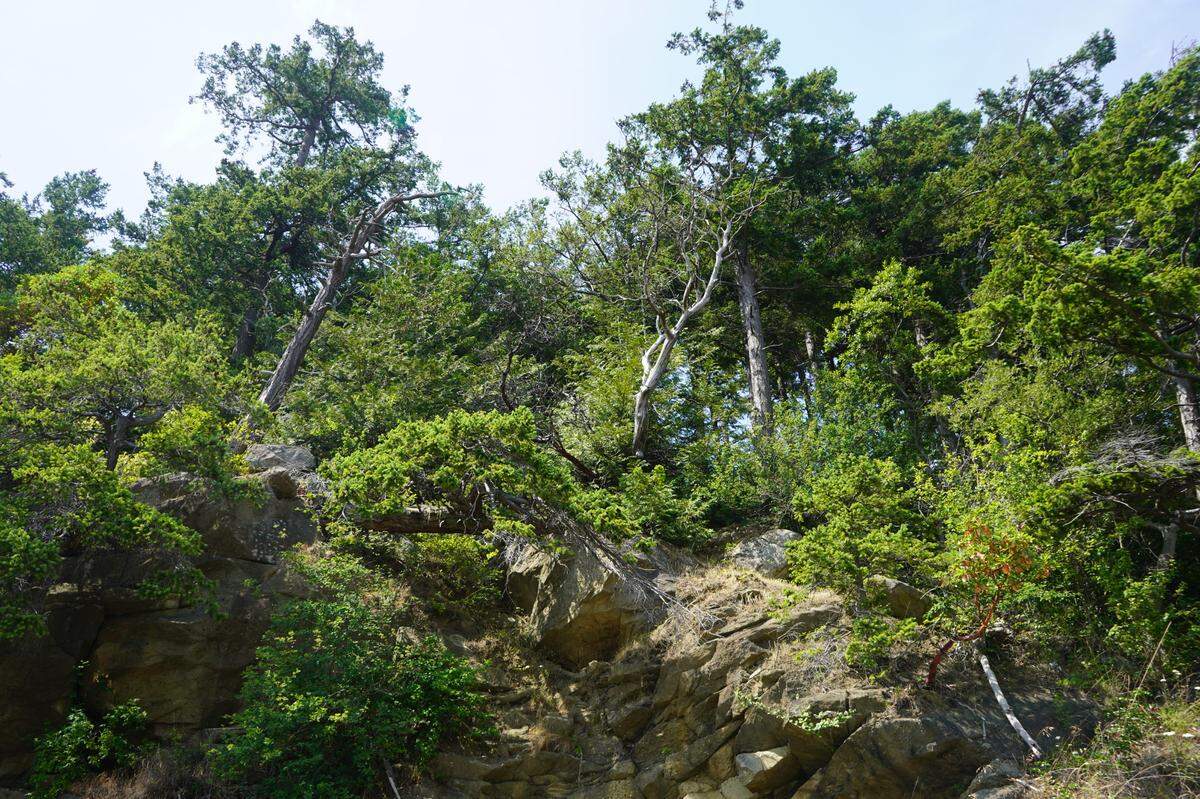
Taysi said the project is proposing to develop less than half of the available density, with 38 lots proposed instead of the 82 allowed. No direct wetland impacts are proposed; the entire 200-foot shoreline buffer would be preserved; all critical areas and buffers would be placed in permanent conservation easements; and about 80 percent of the total forest on site is expected to remain, according to Taysi. He also said the project is voluntarily proposing enhanced stormwater treatment beyond what code requires, and most homes would be more than 400 feet from the shoreline.
“Quite literally, the ‘cliff’s’ that opponents are concerned about protecting are entirely protected due to the design and mitigating measures that the project incorporates,” Taysi told The Herald.
Owners of the proposed development area, the Jones family, said they have “a strong sense of stewardship” over the property, which has been in their family for more than 70 years.
When they decided to move forward with this project, the family told The Herald “they built a highly qualified local team of professionals to evaluate the site conditions, including topography, wetlands, habitat areas, steep slopes and other topics, with the intention of ensuring that development would be responsible and balance housing needs with environmental impacts.”
Still, PMBC members say their concerns aren’t addressed thoroughly enough, and they worry about the future of Mud Bay.
“The receiving environment is inherently sensitive, has limited assimilative capacity, and functions as a long-term sink for sediments and pollutants. These characteristics heighten the environmental significance of stormwater discharges, sediment transport, and pollutant loading associated with the proposal,” the PMBC statement said.
Hearing examiner proceedings began Jan. 12 to consider the appeal to the SEPA determination. A public hearing on the land-use applications began Jan. 14. The hearing examiner said she expects to make a decision by March.
This story was originally published January 15, 2026 at 5:20 AM.