Bellingham scientist part of team that found clue to possible life on Mars
AI-generated summary reviewed by our newsroom.
- Mars rocks show iron-based patterns linked to microbial activity on Earth.
- NASA’s Perseverance rover collected samples from Jezero Crater's dry riverbed.
- Congressional budget cuts threaten 2040 mission to return Martian samples to Earth.
A Western Washington University researcher has helped mankind take a giant leap toward learning if we are alone in the universe.
WWU’s Melissa Rice, an assistant professor who teaches planetary geology, is one of more than 50 authors of a report published last week in the scientific journal Nature describing how they found a rock that might show evidence of a microbe eating and digesting food — in this case, iron oxide.
It’s a sign that primitive life forms may have flourished millions of years ago on the Red Planet, Rice told The Herald in a phone interview.
“Finding life on Mars would make it much more likely that life is a common occurrence throughout the universe. If it’s not life — why would a planet that is so similar to Earth not have life? That could mean that life is extremely rare,” Rice said.
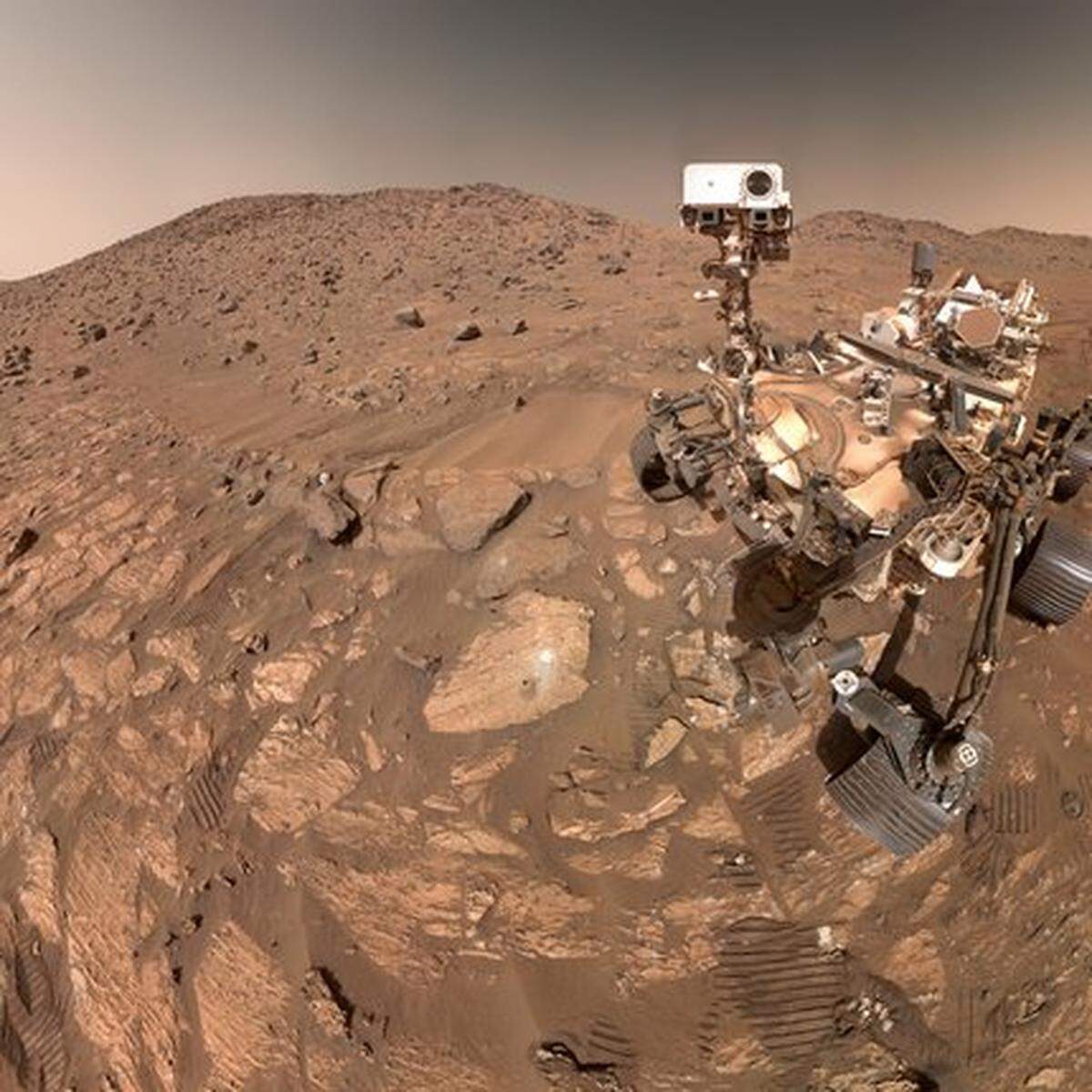
Samples that Rice and her team examined are among Mars’ oldest rocks, exposed in a dry river bed near the rim of the Jezero Crater. Rocks were collected last summer by the rover Perseverance, which does what scientists like Rice tell it to do every day. A river bed seemed like a good place to look for clues to the planet’s past, because where there is water, there is the possibility of life.
Rice has been a member of NASA’s Mars rover team for almost 20 years. Before Perseverance, she was one of several scientists who took turns controlling the rover Curiosity, keeping a Martian time schedule and logging on to the rover from her home. Rice and her students helped design and build the Mastcam Z, which holds Perseverance’s robotic eyes. They tell the rover what rocks to look at, what rocks to sample and what rocks to photograph and uplink to Earth.
”We’re often the first humans to put eyes on those images. We tell Perseverance to reach out, and grind rocks, take pictures, and analyze (samples). That’s how we found these iron phosphate and iron sulfide minerals that are associated with microbial feasting,” Rice said.
‘Potential biosignature’
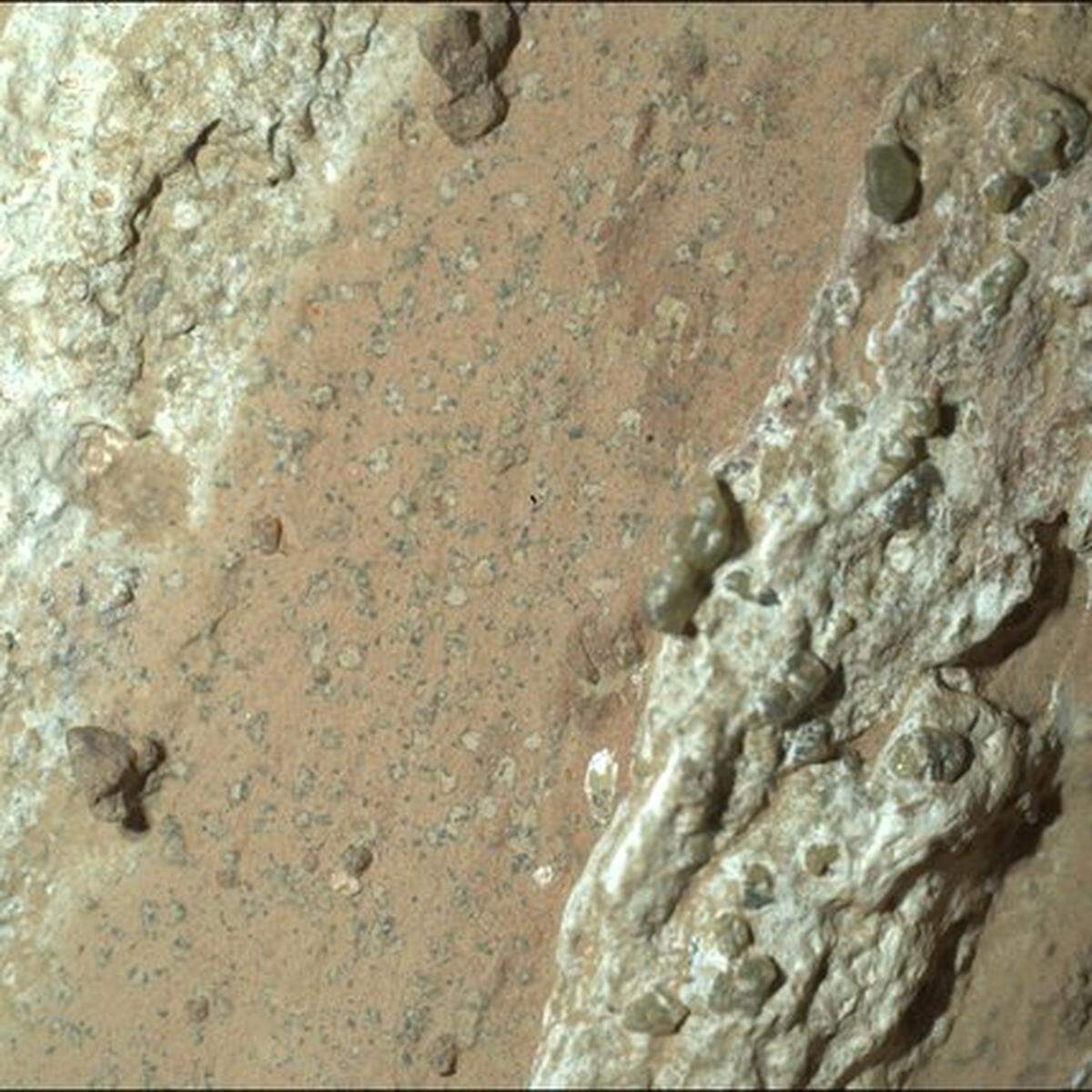
Last summer, Perseverance picked up something with a “potential biosignature.” What Rice and others saw were tiny specks in mudstone collected from the dry river bed, something that they thought resembled poppyseeds and leopard spots.
On Earth, geologists know that those kinds of markings in rock are the remains of microbes that feed on organic matter such as oxidized iron — rust, Rice said. Such rock formations are found in many places on Earth — from Australia to the United Kingdom, Greenland and the iron oxide-rich “redbed” sediments of the Red Rock River Valley in Montana.
It took Rice and dozens of other scientists nearly a year to “work through the possibilities” and rule out other reasons that Martian rocks could contain those features.
What could it be?
“A microbe is a reasonable possibility. But it’s not the only way that we can imagine” the significance of the poppyseed and leopard spot markings, Rice said.
Then they published their findings, discussing what they found, how they found it and what it might mean.
“This publication means that the discovery has gone through a rigorous peer-review process, and the possibility that life created these spots cannot be ruled out,” Rice told WWU’s Mikayla King for a university publication this week.
Knowing for certain
There is one way to know for sure if there was life on Mars, and that’s to get the rock samples back to Earth, where they can be studied under an electron microscope and with other instruments at the Johnson Space Center in Houston.
“We have to do that here on Earth because we don’t have the technology to miniaturize them and send some of these really sensitive instruments to Mars,” Rice said.
That’s what NASA has been planning to do, directing the rover to stash caches of rock until they can be retrieved in 2030. Cost increases have pushed that mission out to 2040, and it could be scrapped altogether because the Trump administration has cut the Mars retrieval program from its proposed 2026 budget.
For now, Rice and her colleagues are hoping that the House restores those funds.
“If we did have confirmation, that is the start of an entirely new branch of science,” she said.
Even if the samples that Perseverance found are not life, “it could be evidence of steps along the way, from no life to life. (The rocks) still might have a story to tell us about how life evolved. It gets back to the biggest question: How did we get here and are we alone?”
This story was originally published September 22, 2025 at 5:00 AM.