
Fire crews protect Whatcom County buildings from growing Perry Fire
AI-generated summary reviewed by our newsroom.
- Perry Fire grows to 1,763 acres; crews protect park structures with fire wrap.
- Helicopters support containment as terrain limits ground crew access to fire.
- Smoke impacts air quality; trails and several campsites remain closed for safety.
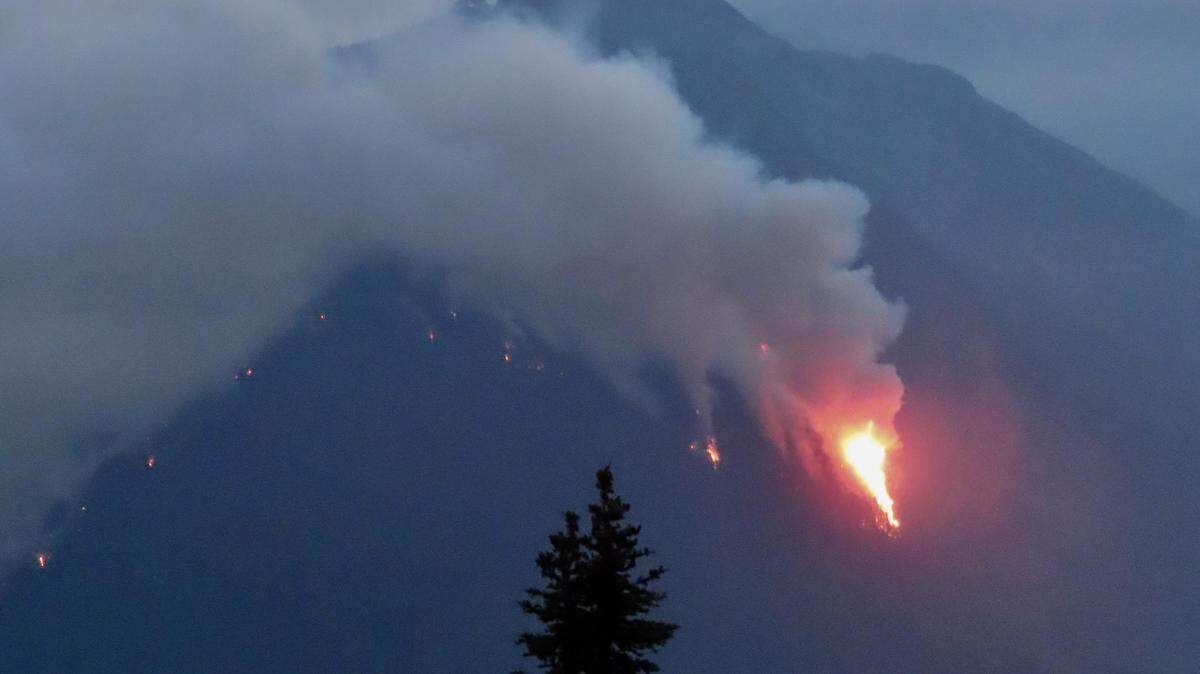
The Perry Fire in eastern Whatcom County has increased to 1,763 acres, and measures taken by firefighters have protected park infrastructure in the area, according to Katy Hooper with the North Cascades National Park Service Complex.
Firefighters removed brush, trees and needles that could serve as fuel for the fire. They also wrapped buildings and other flammable infrastructure in a fire-resistant material to protect them. Some ground fuel was burned away with a drip torch in a controlled manner to remove it from the path of the wildfire, Hooper said.
Officials say the fire was caused by lightning strikes. It was first reported around 6:45 p.m. Aug. 27, and is located west of Ross Lake, about 16 miles northeast of Newhalem, according to InciWeb, an interagency all-risk incident information management system.
There are 22 personnel working on the fire, and the perimeter remained 0% contained as of Sept 12, according to InciWeb. However, there is an estimated containment date of Nov. 15.
The cliffs and mountainous terrain surrounding the fire have made it difficult for foot crews to access it, with fire managers taking advantage of a type-3 helicopter for support. The type-3 is the smallest helicopter used in wildfire containment, but it offers a high cruise speed, according to the National Interagency Fire Center.
A type-1 K-MAX helicopter was recently provided to help with the fire as well, according to a Sept. 12 fire update from the North Cascades National Park Service Complex.
Type-1 helicopters are usually the largest, fastest and most expensive helicopter used on wildfires. They can typically carry 700 gallons of water via a bucket or an internal tank that is filled by a snorkel, and upgrade to the 180 gallons usually carried by type-3 helicopters, according to the National Interagency Fire Center.
Visitors to Ross Lake should keep away from fire resources, especially aerial resources such as helicopters using the lake as a source of water.
Drones are also banned in the area of the fire, as they can interfere with helicopters. If any drones are seen near the fire, all helicopters in the air will be grounded, according to a Sept. 8 release from the North Cascades Park Service Complex.
The current weather near Ross Lake shows clear skies, according to the National Weather Service.
The clear skies brings the concern that the fire may become more active in the next few days as fuels start to dry out from the sun, according to InciWeb. However, rain is expected Sunday.
Air quality reports show moderate smoke conditions north of the fire, according to the AirNow interactive map. People should be careful when outdoors in smokey conditions, especially those who are sensitive to poor air quality or with respiratory problems.
Trails and campgrounds near the fire are still closed, including The Little Beaver Trail from Ross Lake to Stillwell Camp. Cross-country zone access from trails is also prohibited. Closed campsites include Silver Creek boat-in, Little Beaver boat-in, Little Beaver Group, Perry Creek and Stillwell.
Other nearby fires include the Arctic Fire, which is at 0.25 acres, and the Neve Fire at 0.75 acres, according to the Sept. 12 update from the North Cascades National Park Service Complex.
Firefighters are having trouble reaching the Arctic Fire due to its location in steep cliff terrain. Air operations are planned for the future as conditions allow, according to the update.
A handline has been completed around the Neve Fire, with the Type-1 KMAX providing support. More ariel operations are planned for this fire as well.
.jpg)