
Whatcom County food banks bracing for impact of federal SNAP program cuts
AI-generated summary reviewed by our newsroom.
- Whatcom County food banks expect rising demand as federal SNAP benefits are cut.
- Bellingham Food Bank anticipating $880,000 loss in federal food funding.
- Directors urge monetary donations and local advocacy to offset resource shortfalls.
Food banks across Whatcom County are bracing for a likely influx in need following the passage of President Trump’s budget bill, which will reduce access to SNAP benefits for the roughly 1 million Washington residents who rely on them.
About 11% of households in Whatcom County receive food stamps, according to census data. Of those households, almost 37% have children under 18 years old.
Many SNAP benefit recipients already have to supplement their food purchases with assistance from food banks, and many food banks across the county have reported an increase in use even before the bill’s passage.
Whatcom County is already home to the busiest food bank in the state. Bellingham Food Bank serves 5,000 households every week, and roughly 60,000 people annually.
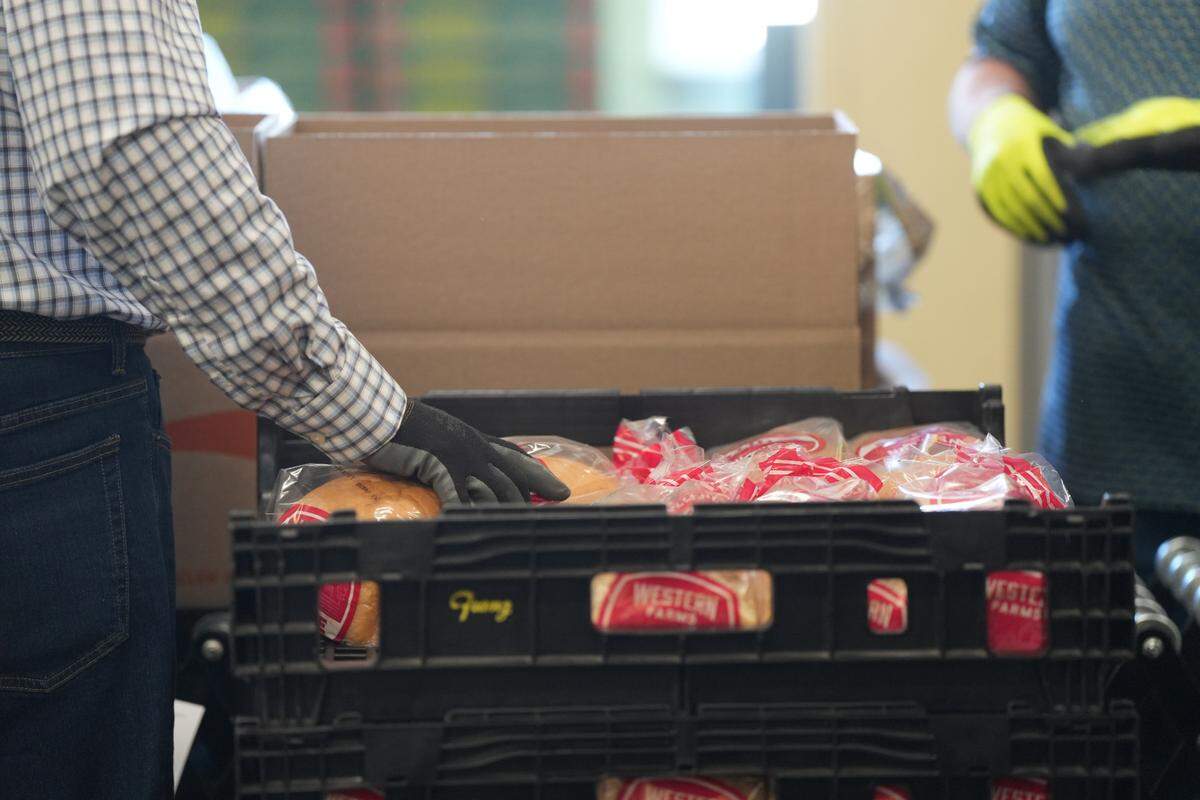
At Blaine Food Bank, director Lisa Dobbin said it’s not uncommon to see 10 to 20 new families each day the food bank is open. The total number of households served by Blaine Food Bank almost doubled between May and June, and Dobbin expects the trend to continue.
It isn’t just low-income households relying on the food bank, either; Dobbin said a rising number of median-income households have been coming to Blaine Food Bank because of job insecurity and rising costs of rent and medical care.
Experts warn that health care costs will likely go up due to a provision in Trump’s “Big Beautiful Bill” that cuts funds to Medicaid and Medicare.
The bill in its entirety will have “pretty dire impacts for the people in Whatcom County and throughout Washington state,” U.S. Rep. Rick Larsen told The Herald.
Larsen also expressed concern over potential cuts to the Emergency Food Assistance Program (TEFAP), a federal program thta helps supply food to organizations like food banks.
Losing funding
Cuts to SNAP benefits are not the only challenge that food banks are facing when it comes to a rising need among the community.
A recent Bellingham Food Bank newsletter details concerns over roughly $880,000 in financial assistance that Whatcom County food banks will no longer have access to due to cuts by the U.S. Department of Agriculture. The funds were used to provide TEFAP food aid to Whatcom County, award relevant grants and purchase food from local farms.
Bellingham Food Bank Executive Director Mike Cohen said the food bank is already nearing its limit with the growing need and simultaneously decreasing resources.
“We’ll do our best to meet those needs, but at the end of the day, it’s going to increase food security and scarcity for thousands of low-income folks in Whatcom County,” Cohen said.
Cohen said Bellingham Food Bank will spend more than $4 million on food purchases for its pantry this year. And even as the food bank tries to work for funding from the local community, businesses and government, Cohen said it’s likely that going forward, people won’t be able to receive as much food when they visit the food bank.
Who uses food banks?
While there is no single demographic that encompasses all people relying on food banks, food bank directors across the county have seen similar trends. Roughly a third of all people served by food banks are children, and about 20% are seniors — both higher percentages than those in the population as a whole.
In general, people who are disabled, older or living with children tend to have a higher reliance on food banks and government assistance programs like SNAP. The proportion of the population that falls into these demographics varies across locations.
In eastern Whatcom County, census data shows higher rates of poverty and an older median age than the county as a whole. Because of this, Foothills Food Bank, which serves that region of the county, expects an even greater increase in need with the cuts to SNAP.
Henry Fisher, executive director of Foothills Food Bank, said he’s already seen a slight spike in need, though nowhere near the sudden influx during the pandemic.
Fisher said he’s also worried about the end to funding for SNAP-Ed, a program that provides nutrition and cooking education to help improve health outcomes. Foothills Food Bank had a “robust partnership” with SNAP-Ed, and Fisher said it was a “critical component in advancing health equity.”
Bridging the gap
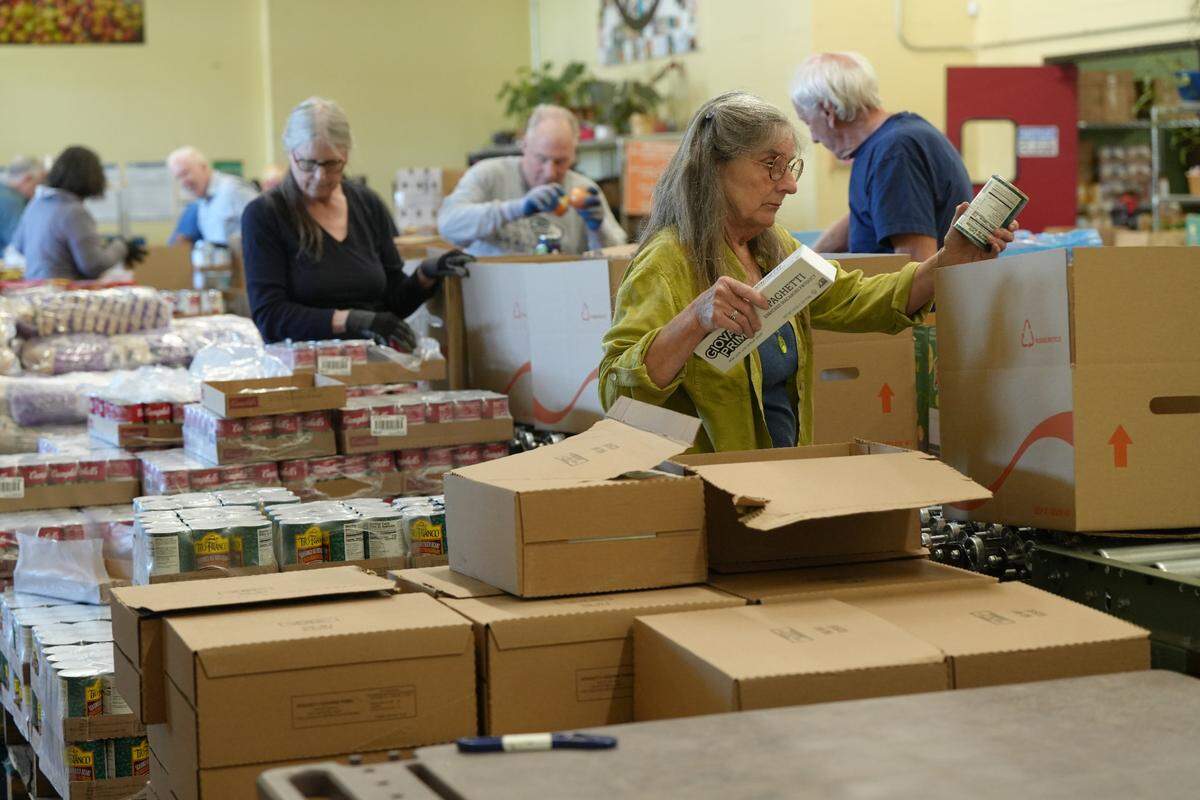
With less assistance from the government and an impending jump in need, food banks across Whatcom County are working to make up the funding.
Ferndale Food Bank has already increased its food purchasing budget, executive director Sierra Crook said, and has been working to raise funds and apply for grants to meet that goal. The food bank is also considering potentially having to limit the variety of food it offers in order to prioritize the volume of food available.
Ferndale Food Bank has also been partnering with community events to help raise awareness for both potential donors and those who may need the food bank’s services but don’t yet feel comfortable.
The stigma associated with food banks, while slightly decreased in recent years, presents a barrier seen by food banks across the county.
“We live in a culture where there’s a really dominant emphasis on individual responsibility and pulling yourself up by your bootstraps, and that makes it hard to lean on your community for support,” Fisher said.
How can people help?
Donating food is often where minds go when thinking about assisting food banks. However, food bank directors say this isn’t the most effective way to help.
Dobbin explained that food banks can purchase food in bulk and have better “buying power” than individuals, so monetary donations to help food banks purchase food go much farther than purchasing food to donate oneself.
If you already own unexpired food that you decide you don’t want, Cohen said it’s always appreciated as a donation to food banks. However, shelf-stable items often aren’t the ones that people utilizing food banks actually want or need.
Cohen said most visitors to the Bellingham Food Bank are seeking fresh produce, frozen protein and dairy items. The food bank is always open to donations of excess produce that one grows.
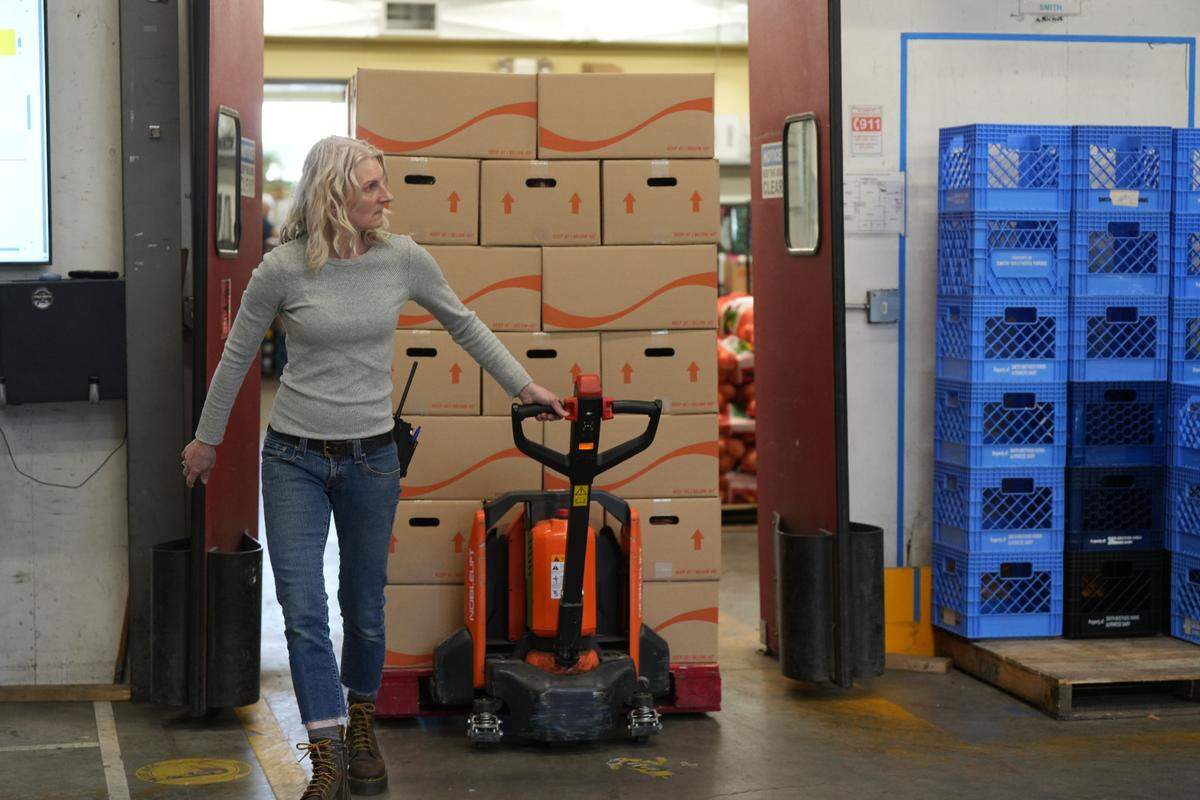
In addition to monetary donations, food banks are always looking for volunteers. Most local food banks have information and applications on their website about how to help out.
Political involvement was also suggested by some food bank directors, as well as Larsen. By reaching out to elected officials about your opinions on bills with impacts like the cutting of SNAP benefits, similar decisions in the future could be prevented.
“As much as we are bracing for increased numbers and impact, what we might be experiencing is only a sliver of what we know the folks who are actually impacted by the specific cuts are going to be experiencing,” Crook said. “We’re here as a resource for them, but the impact will be heaviest on those individuals.”