Solar energy, new buses lead Bellingham Public Schools’ progress on sustainability goals
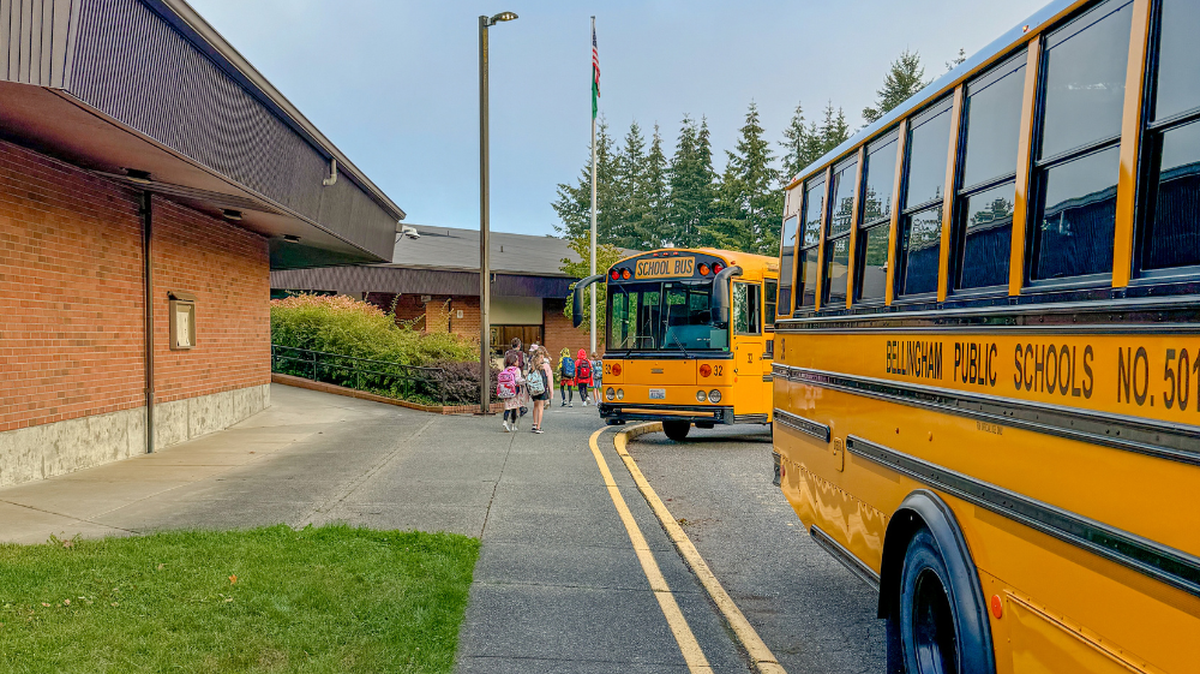
With focuses on solar energy installation, air quality monitoring, facilities improvements and transportation updates, the Bellingham Public Schools (BPS) district is sharing recent progress toward its sustainability goals as part of its 2023-2028 Climate Action Plan.
“We envision that this plan will help build a hopeful and healthy future for our community through a systematic and enduring commitment to addressing the climate crisis,” said Bellingham Public Schools Superintendent Dr. Greg Baker in a statement to The Bellingham Herald.
Dr. Baker told The Herald that investing in climate action projects can help create local jobs, build strong community connections, conserve natural resources, improve health and support financial savings.
“For example, sustainability initiatives can result in energy efficiency measures (EEMs), that if funded and implemented, save the district money now and in the future. Those savings can go directly to the district’s mission of k-12 education,” Baker said.
Solar Arrays
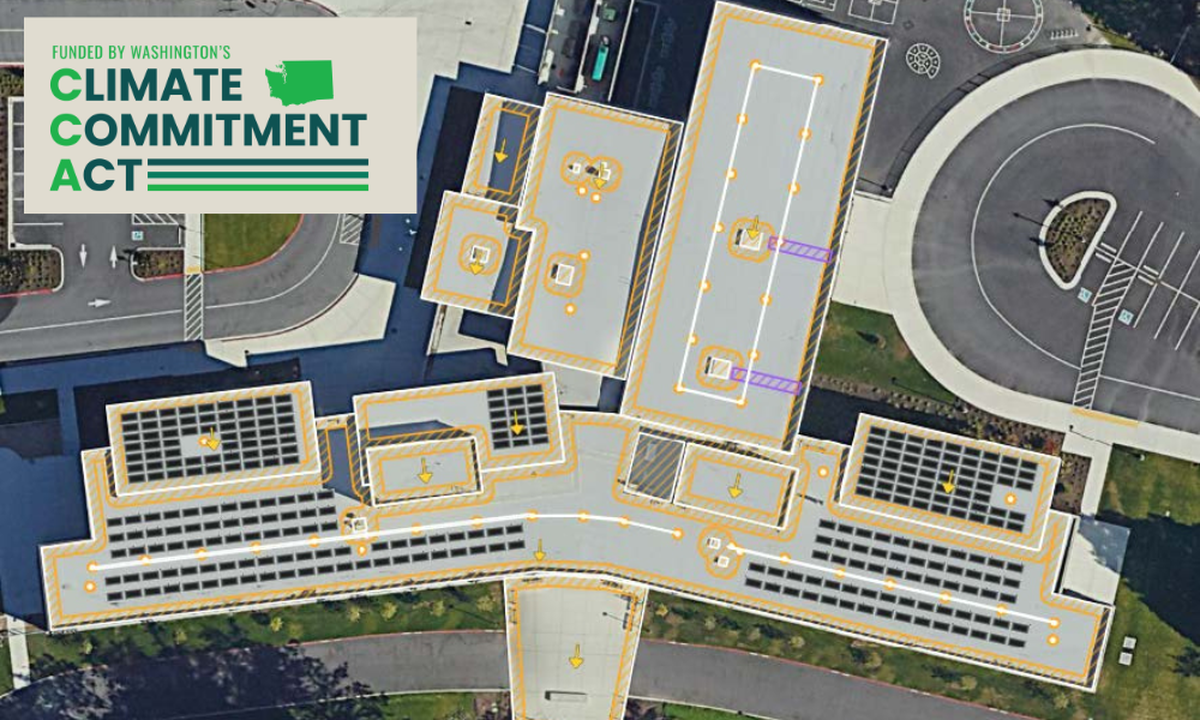
The district was awarded a $2.7 million grant last summer from the Washington State Department of Commerce to install solar panels on five of its schools.
The DOC Community Decarbonization Grant, as it’s called, will cover the complete cost of the installation at Options High School, Shuksan Middle School and Alderwood, Sunnyland and Happy Valley elementary schools.
The project will yield about 1 megawatt (MW) of solar energy, according to the district. That’s 10 times the energy yield of Sehome High School’s 100 kilowatt (kW) solar array completed in 2020.
Transportation Updates
To upgrade the efficiency of the district’s school bus fleet, Bellingham Public Schools purchased three propane school buses.
District officials considered emission reduction in the decision. They also said propane buses were chosen in part because they require the same maintenance setup as regular gas buses, so the district won’t need to retrofit its shop.
“Propane buses are an alternative to electric and emit fewer emissions with comparable pricing to diesel buses,” the district said in the update. “According to the Propane Education and Research Council, propane buses are 90% cleaner than the strictest EPA federal emissions standard.”
The district’s transportation staff are also working to reduce idling along with increasing and re-mapping bus routes to encourage bus ridership and reduce emissions. The buses run 32 more routes this school year compared to last year, totaling 147 routes, according to the district.
“Every bus run takes approximately 40 cars off the roads if students ride,” the district said in the update.
Air Quality Monitoring
All of the district’s schools are expected to be fitted with air-quality sensors to monitor both inside and outside air pollution. Each school will have two Attune monitors installed and HVAC assessments conducted, covered by a $364,400 grant from the Environmental Protection Agency.
“In recent years, the district has relied on air quality information to assess whether it was safe to send students outside for recess or whether to hold outdoor sports activities,” BPS said in an update about its sustainability efforts.
The monitors will allow the district to “detect and mitigate the harmful effects of wildfire smoke and other air quality threats,” according to Attune.
“Once installed, Attune’s devices measure airborne pollutant levels 24/7. In addition, air quality monitoring equipment allows district personnel to view facility data in real-time, measuring changes in temperature, as well as the concentration of carbon dioxide, volatile organic compounds, and particulate matter in the air,” Attune said in an announcement about its partnership with BPS.
Ten schools in the district already have air-quality monitors installed as of this fall.
Facilities Improvements
The district has made facility upgrades across its buildings this year to reduce energy use.
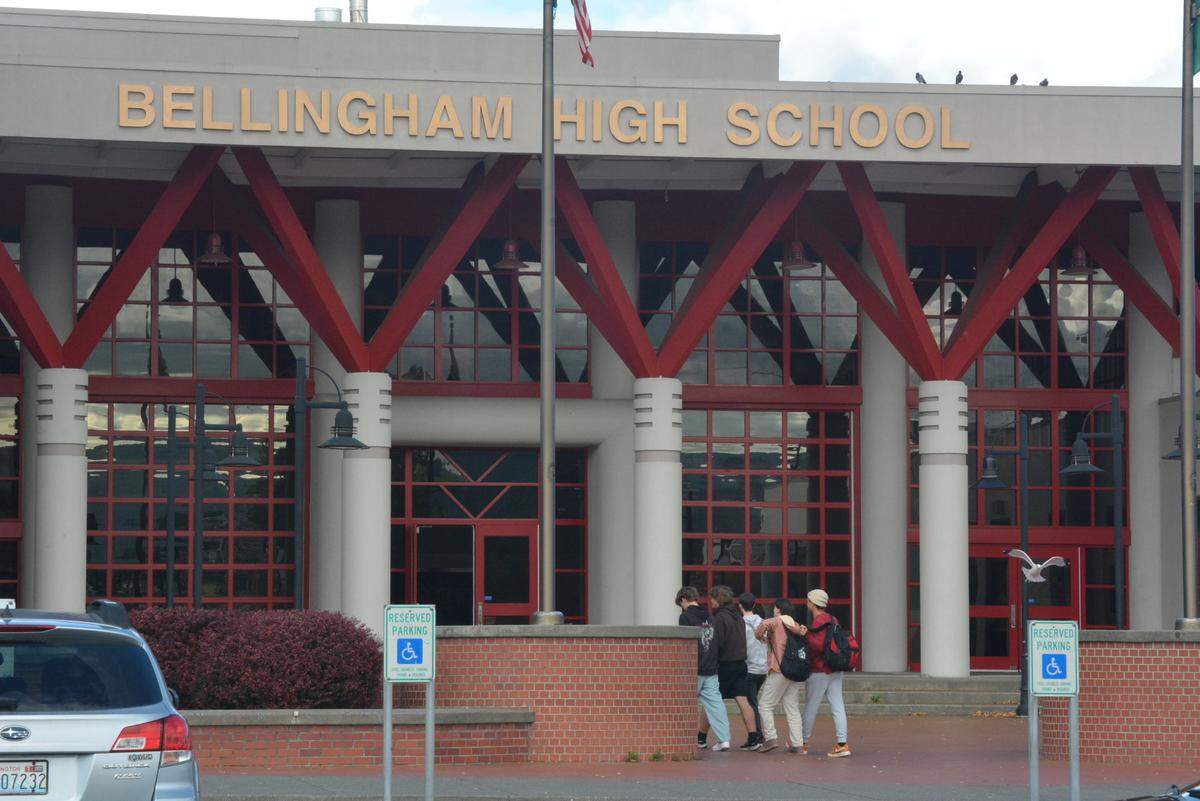
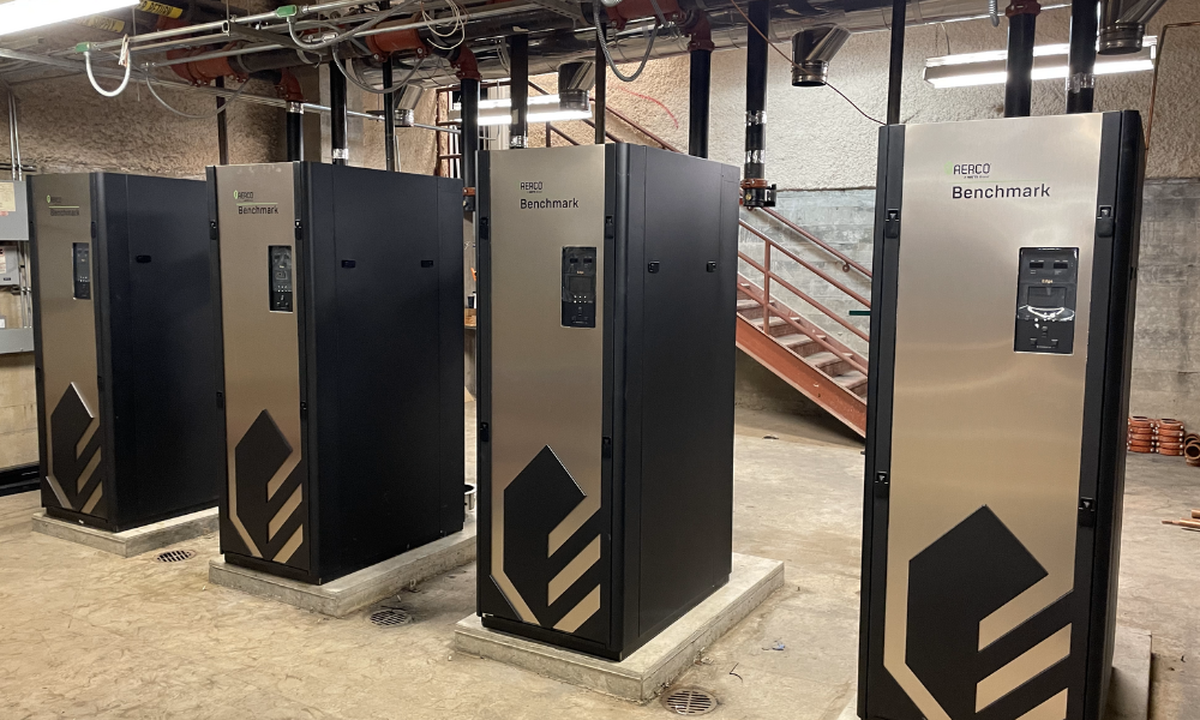
For example, new high-efficiency boilers were installed at Bellingham High School and Wade King Elementary School. Other buildings made the swap to full LED lighting.
The district is also now working with a new paper and cleaning product vendor, Waxie, to allow it to use more than 85% green products.
The products are “formulated to reduce potential impacts on human health as well as the environment,” according to Waxie’s website.
“Waxie also impacts our carbon footprint through consolidation of orders and intentional purchasing, reducing associated transportation costs for small and special orders. We continue to use our purchasing power to find partners in climate action,” the district said in the update.
Electric Vehicle (EV) charging stations are now operational at two locations in Bellingham Public Schools including Sehome High School and the new District Office building. More EV charging stations are expected to be operational at Sunnyland Elementary School in the next several months.
The district tracks its energy and carbon usage on a publicly available dashboard on its sustainability webpage, allowing anyone to view the energy and carbon use within the district’s schools and buildings.
Editor’s Note (Dec. 16): A previous version of this article incorrectly identified one of the schools expected to receive solar panels. It also incorrectly stated the operation timeline for EV charging stations at Sunnyland Elementary School.
This story was originally published December 16, 2024 at 5:00 AM.