State book award finalist will discuss WWII graphic novel ‘We are not Strangers’ in Fairhaven
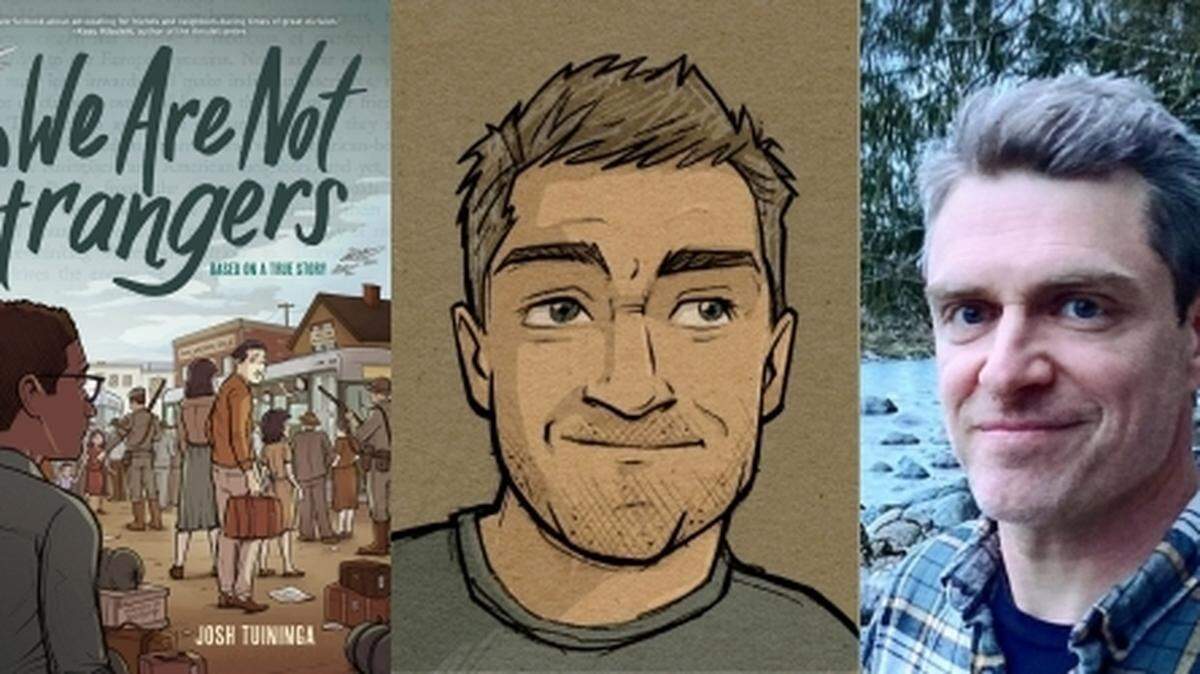
An acclaimed Washington writer will discuss his graphic novel about a little-known part of Seattle’s recent past at an event set in Fairhaven this week.
Josh Tuininga, whose “We Are Not Strangers” was a finalist for the Washington State Book Awards earlier this year, tells the true story of how Jewish immigrants helped their Japanese-American neighbors during World War II, when people of Japanese ancestry were imprisoned.
“The strong connection between the Jewish and the Japanese communities in Seattle, it’s pretty unknown, unless you were a part of that,” Tuininga told The Bellingham Herald in a telephone interview.
Tuininga appears from 6 to 7 p.m. Thursday at Village Books, 1200 11th St. Tickets are $5 and can be reserved online. It’s co-sponsored by the Ray Wolpow Institute for the Study of the Holocaust, Genocide, and Crimes Against Humanity at Western Washington University, Hillel of WWU, Congregation Beth Israel, and the Bellingham Social and Environmental Justice Committee.
As a historical novel, “We Are Not Strangers” follows in the footsteps of such works as former U.S. Rep. John Lewis’ “March” series and Marjane Satrapi’s “The Complete Persepolis” as it explores true stories outside the mainstream of history.
“We Are Not Strangers” grew out of tales that Tuininga heard from his grandfather and others of that generation. It’s set in the Central District of Seattle, which is a melting pot of immigrants.
“He really opened my eyes into that history,” Tuininga said.
The action of the novel takes place as the U.S. is being drawn into war and the loyalty of those with Japanese ancestry are drawn into question. It revolves around the friendship between Marco, a Sephardic Jew from Turkey, and his neighbor Sam, a Japanese American.
When Sam and others are shipped off to internment camps, Marco makes sure that Sam doesn’t lose his home and possessions, as many internees did.
“That is the coolest part of the story. It makes me wonder if I am capable of doing that. (But) everybody is capable of doing that,” Tuininga said.