Local

Whatcom County launches 24/7 Narcan dispenser program with first location operational

A new county initiative to increase access to opioid overdose reversal medication naloxone, known by the brand name Narcan, launched this week.

On Tuesday, Whatcom County Health and Community Services announced that it had opened the first of a series of naloxone dispensers to be placed across the county. The dispenser is located at the Ferndale Community Services building, at 5694 2nd Avenue.

The dispensers can be accessed 24 hours a day, and are free to use. According to WCHCS Health Officer Amy Harley, they’re designed to increase access to the potentially life-saving drug even at times when it wouldn’t otherwise be available.

“Making naloxone readily available in public spaces is a critical step in our ongoing efforts to reduce opioid-related deaths in Whatcom County,” Harley said in a news release. “These dispenser boxes ensure that community members have access to this lifesaving tool whenever and wherever it’s needed.”

The county plans to open three additional dispensers, although their locations have not yet been determined. Health and Community Services said they intend to work with community organizations to choose the best location for each additional dispenser, based on where they’ll be most useful for the community and for populations vulnerable to opioid overdoses.

In an email to the Bellingham Herald, a department spokesperson said that the county is working to install the additional dispensers as soon as possible, but that the timeline is still largely up in the air.

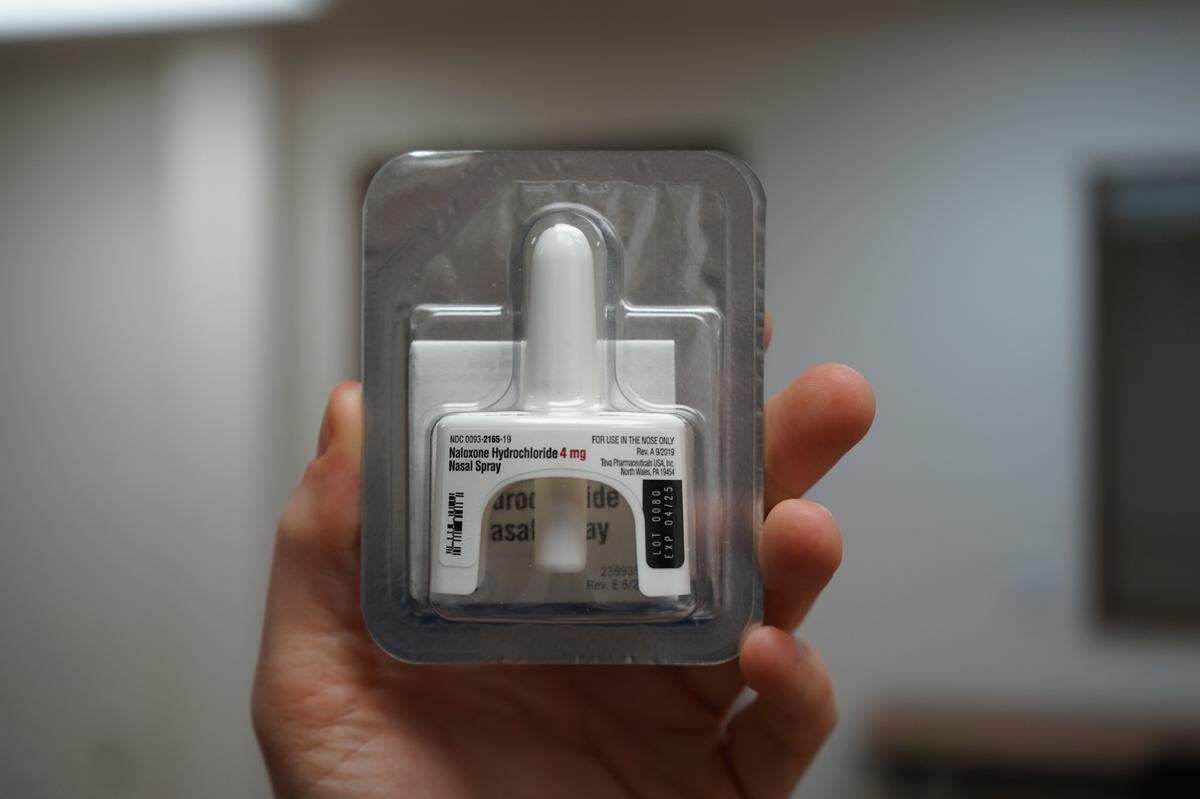
Narcan nasal spray can save someone who’s overdosing on an opioid drug such as oxycodone, heroin or fentanyl.
Narcan nasal spray can save someone who’s overdosing on an opioid drug such as oxycodone, heroin or fentanyl. Rachel Showalter The Bellingham Herald

How to administer naloxone

Naloxone is considered an effective treatment to reverse opioid overdoses. According to a study cited by the National Institute on Drug Abuse, the drug reversed 89% of 399 observed overdoses where it was administered. Other estimates put that number even higher. If the drug is administered to someone who isn’t overdosing on an opioid, it won’t do harm, according to the Centers for Disease Control and Prevention.

According to the Washington State Department of Health, if you ever need to administer naloxone, you should follow these steps.

Check if the person is conscious and able to respond.

Call 911.

Administer naloxone.

If the person still isn’t breathing, start rescue breathing.

If they haven’t responded after three minutes, give a second dose.

Wait with the person until help arrives.

If they are breathing but not awake, turn them onto their side into a recovery position.

The drug can be administered in two forms – nasal spray and injection. The Ferndale dispenser is stocked with the nasal spray.

In order to administer the nasal spray, you should:

Peel back the packaging and remove the naloxone.

Place the nozzle in one of the patient’s nostrils.

Press the plunger to release the dose.

Do not test the spray before administering it, since each device only contains a single dose.

In order to inject naloxone, you should:

Remove the vial of naloxone.

Remove the needle.

With the vial facing upside-down, insert the syringe into the vial, pull back the plunger, and fill the syringe to a milliliter.

Inject into an upper arm or thigh muscle.

How to spot an opioid overdose

According to the Substance Abuse and Mental Health Services Administration, if someone’s displaying any of the following symptoms, it could be a sign they’re overdosing on opioids.

Pale face or clammy skin.

Their body goes limp.

Blue or purple lips or fingernails.

Vomiting or gurgling.

They’re unable to speak.

You can’t wake them up.

Their breathing slows or stops.

Their heartbeat slows or stops.

This story was originally published August 14, 2024 at 2:29 PM.

DS
Daniel Schrager
The Bellingham Herald
Daniel Schrager is the service journalism reporter at the Bellingham Herald. He joined the Herald in February of 2024 after graduating from Rice University in 2023. Support my work with a digital subscription

Get unlimited digital access
#ReadLocal

Try 1 month for $1

CLAIM OFFER