WWU engineering faculty, students push for change amid widespread culture, conduct concerns
Two years ago Western Washington University engineering student Allison Mazurek was elected as the first woman to lead the university’s Formula SAE racing team, which builds race cars, as its project manager.
Mazurek told The Bellingham Herald she quickly became aware that the culture within the student-run, male-dominated club was unprofessional, unwelcoming and misogynistic.
She said she personally experienced sexist and demeaning comments made at her expense, and she was also made aware of team members doing illegal activities and violating university policy by using drugs and alcohol inside campus facilities, breaking into lab spaces and stealing equipment.
“Right from the start of the year, I felt very isolated and ‘othered’ from the team because I was that person who was trying to fight this and call it out. That kind of escalated,” Mazurek said.
Mazurek said she and other members of the team felt unsafe. So she began to speak up about the issues in an attempt to create a more inclusive environment.
“I wasn’t willing to just be complicit in that any longer,” Mazurek said.
Mazurek said she experienced countless documented instances of bullying, harassment and physical assault from her team members and other students within the department, and she was eventually ousted from the team for coming forward.
The Bellingham Herald independently confirmed Mazurek’s accounts through documents, reports, and multiple interviews with faculty and students in the WWU Engineering and Design Department.
In a statement to The Herald, WWU Racing Team advisor David Gill, who is an associate professor of manufacturing engineering and former department chair, said this year’s team has “worked hard to continuously improve the culture of the team throughout the year and has made important decisions with professionalism as the primary consideration.”
“Moving forward, the team will continue its work within its revised code of conduct, and assisted by a group of volunteer alumni as well as faculty and staff, make sure that building the team and supporting fellow students is as important as building the car,” Gill told The Herald.
Unsuccessful reporting
Mazurek reported her experiences to the University’s Office of Student Life, Civil Rights & Title IX Compliance (CRTC) and met with the University Police Department.
One report to CRTC resulted in a formal investigation, but it ultimately found insufficient evidence that any conduct violated policy. No disciplinary action has been taken.
The university does not comment on individual student conduct or Title IX cases due to concerns about student privacy and confidentiality. Michael Sledge, executive director of WWU’s Office of Student Life, did verify that two situations involving two different students from the Engineering Department were reported to Student Life in 2023-24.
In 2023, CRTC received five reports from students in the College of Science and Engineering. Two of them resulted in a formal investigation, according to the director of the Office of Civil Rights and Title IX Compliance Daniel Records-Galbraith.
Associate professor of engineering Jill Davishahl helped Mazurek navigate WWU reporting procedures. Davishahl also serves as a community ambassador for the College of Science and Engineering (CSE) and acts as a liaison between students, faculty, staff and the Dean of CSE for issues related to advocacy, equity and diversity in STEM.
“From what I learned during our conversations, (Mazurek) started bringing these things up and, as a result, received a good deal of backlash from members of the club. The club seems to have a pretty strong ‘bro-culture,’ which shows up through various sexist and unprofessional behavior that certainly do not belong in an academic environment,” Davishahl said.
Mazurek told The Herald that at least six other women left the racing team after she did. Her mental health suffered as a result of her experiences, and she failed a class.
Mazurek was able to get back on track academically with help from Davishahl and other faculty members. She is graduating this spring. But she says that was the extent of the support she received from the university.
A broader culture problem
Mazurek’s experience is not an isolated one. Davishahl and other faculty and students interviewed by The Herald for this story said the culture throughout the department is not just impacting Mazurek but many other students as well.
“In my opinion, the team is a symptom of a bigger cultural problem that has fairly widespread and deep roots within our department, as well as the engineering industry,” Davishahl said. “It’s not new or unique to our institution, and it is really challenging to unpack. But, it is something we need to start talking about and working to change. We are educating the next generation of engineers, it’s our responsibility as educators to ensure they are prepared for industry and can contribute to a supportive environment free from harassment and hostility.”
“Being a community ambassador, I’ve worked with students who have shared their experiences with sexism, hostility and bias. Students have reported being subject to racist comments, sexual innuendos, homophobic comments and jokes told in the classroom and labs, and hostile work environments, just to name a few,” Davishahl said.
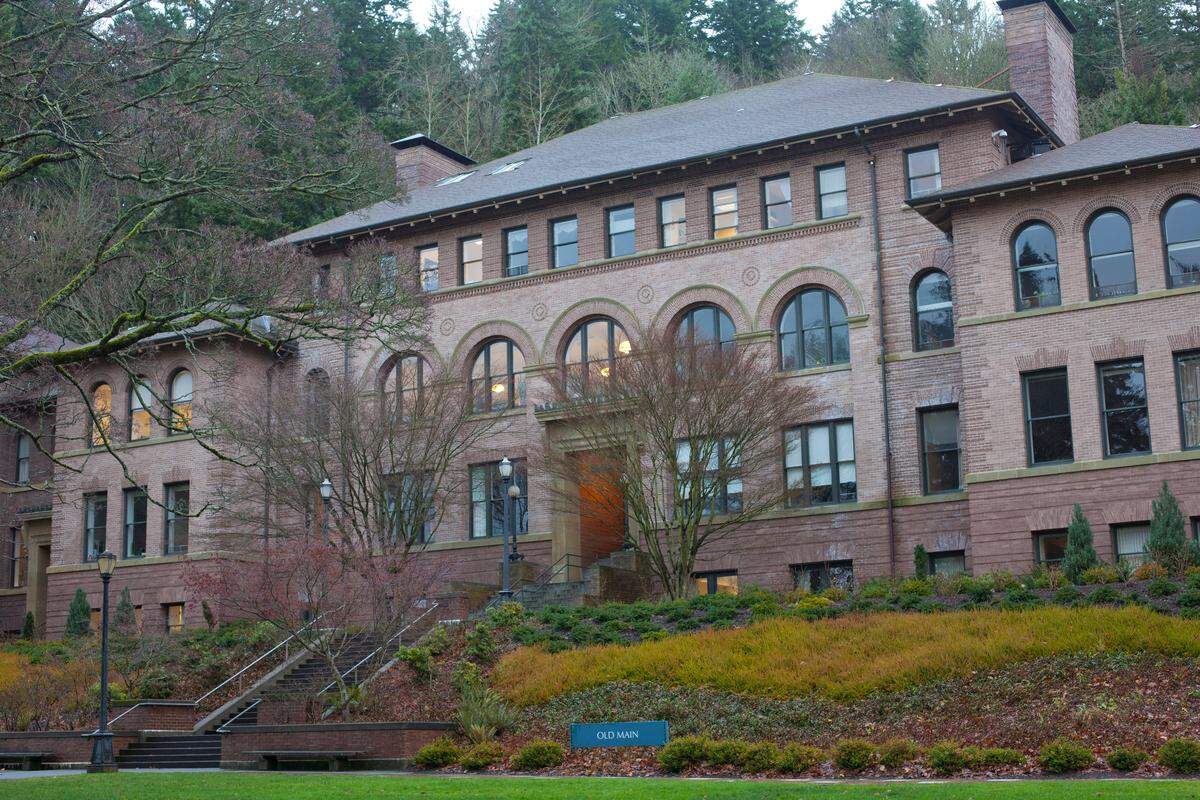
Since 2017 the department has held several listening sessions and focus groups with hundreds of students and faculty members. The department has also conducted multiple surveys to get a sense of how widespread this issue is.
The Engineering & Design Department also supports the work of people like Kylea Assayag-Nodine, who serves as a student engagement liaison to address the department’s inclusivity concerns.
“Students have expressed to me, and I feel, that this is not a safe environment that is welcoming or conducive to learning at all,” Assayag-Nodine said. “This does not feel like a modern engineering department. It feels like we are put back in the 60’s or something. It’s very unfortunate.”
Assayag-Nodine’s team recently collected anonymous responses from 112 students within the department through surveys, comment boxes and listening sessions that all echo concerns about culture and safety. Her team held two presentations with this information along with suggested solutions for about 40 faculty and staff members.
“The results are always the same — the department is an unwelcoming and unsupportive environment, particularly for gender minorities. Students don’t feel supported and worse, they don’t feel safe,” Davishahl said.
A call to action
Faculty and students say the concerns are documented, reported and have a broad impact throughout the department. But Davishahl said not enough students are held accountable for inappropriate actions. She said stronger policies need to be implemented to prevent these issues from continuing.
“It’s very clear to me that the problem is pervasive,” Davishahl said. “We keep asking the students for feedback and they keep telling us the same things. Some of the things they share are truly shocking and, in my opinion, qualify as severe. We know what is going on, but we fail to act. That’s a big problem because the problems persist. A failure to act is, in fact, an action. It essentially sends a message that we condone the behavior.”
Davishahl and other faculty members have worked alongside the student-engagement liaisons to work on solutions. However, students and faculty say they have not had enough support from the university to make the necessary improvements.
“We’ve gone everywhere,” Assayag-Nodine said. “We’ve spoken to everyone. ... It just feels like nobody is listening. We’re just at a lost point now.”
In a statement to The Herald, College of Science and Engineering Dean Janelle Leger said both the college as well as the Engineering and Design Department “are committed to providing an accessible, equitable and inclusive environment for all students in our classes and programs.”
“The concerns brought forth by students recently have been taken very seriously, and will continue to be prioritized in the work of the department and college moving forward,” Leger said. “At the same time, there is so much to be proud of within that department that I don’t want to lose sight of — students and faculty collaborating on incredible research, and of course the alumni it produces each year who leave campus to become amazing citizens and push engineering, in all its forms, to new heights in our state and our region. We are also proud of how hard we work to recruit, retain and graduate our female engineering students, and this will continue to be a focus for the department moving forward.”
Davishahl said faculty have been running into constant roadblocks to get policies changed. She said she wants that work to also come from the top down and she wants to see a stronger commitment from the University administration.
“The university is really good at saying how committed they are to equity, inclusion, diversity and justice,” Davishahl said. “It’s written into our strategic goals, core themes and mission statements. The words are printed on banners that hang all around the university. But when it comes to doing the work and taking action, we fall flat.”
In an email to The Herald, Dean Leger listed key steps the department and college have taken and are planning to take to address culture concerns, including:
▪ Funding a project led by faculty to better understand and address existing issues.
▪ Supporting the work of the student engagement liaisons to address inclusivity issues.
▪ Launching a climate assessment through CRTC to identify severe or pervasive issues in the department and college. A report is expected to be completed this summer with an action plan expected to be implemented in the fall.
▪ Supporting faculty and staff to create a policy outlining expectations for student groups utilizing community spaces in the department. This is expected to be implemented next academic year.
▪ Appointing CSE Associate Dean Jackie Caplan-Auerbach to assist the Racing Team in making progress on their goals around culture and appropriate behavioral expectations of club members.
▪ Assigning an after-hours TA to alleviate safety concerns associated with after-hours access to labs.
▪ Creating an ad hoc ADEI committee within the department.
▪ Increasing the position of Associate Dean in the college from a half-time position to a ¾ time position, with increased duties associated with coordinating student support and climate and inclusion efforts in the college and its departments, as well as partnering more closely with Western’s Office of Equity.
“Engineering is not just about numbers and calculation,” Assayag-Nodine said. “It’s about people, and it’s about solving problems for people. We can’t continuously create problems for people when we are supposed to be the problem solvers. That doesn’t make any sense.”
“This is a call to action to ‘Walk the Talk,’” Davishahl said. “We need a comprehensive approach to change that includes policy development, improved communication, accountability, engagement across the university, training/advocacy, and the development of an assessment and evaluation process to ensure we are meeting our goals. It’s going to take more than a small group to do this and it won’t happen overnight. It’s a big job that will require commitment and support from the administration. And it can’t wait any longer, “ Davishahl said.
This story was originally published June 1, 2024 at 9:20 AM.