Washington’s ban on Styrofoam plates, coolers, cups, containers and trays goes into effect June 1, 2024.
Joe Tarica
jtarica@thetribunenews.com
Between coolers, takeout containers and cups, polystyrene foam, better known by the brand-name Styrofoam, was once a staple of dining. But pretty soon, you’ll have trouble finding it in Washington state.
In 2021, the state passed a ban on the material. The first part of the law went into effect in June of 2023, banning Styrofoam packing peanuts from the state. On June 1, 2024, the rest of the ban will kick in. Here’s what you need to know.
What’s covered by the Styrofoam ban?
Starting June 1, it will be illegal to sell or distribute Styrofoam coolers, plates, bowls, containers, trays or cups.
Egg cartons, Styrofoam blocks, and packaging for raw meat, fish, produce, drugs or medical devices are exempt from the ban.
What if you still have Styrofoam?
If you have a Styrofoam cooler lying around, there’s no need to panic. The ban only applies to the sale or distribution of Styrofoam, not its use.
However, restaurants and stores with an existing inventory of Styrofoam have to stop distributing it by June 1. Businesses that violate the ban will be given resources and instructions on alternatives to Styrofoam, according to the state’s Department of Ecology, and in some cases a fine of up to $250. After repeated violations, they are subject to a $1,000 fine.
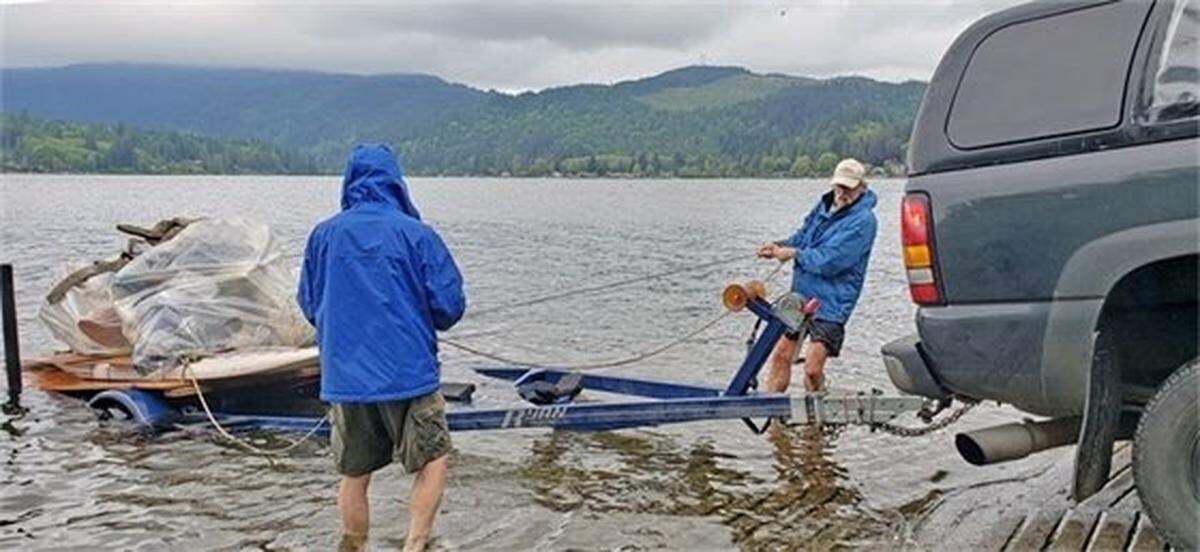
Lake Samish community members haul Styrofoam for disposal at a cleanup event out of the lake south of Bellingham, Wash., in early May 2021. Lake Samish Association Courtesy to The Bellingham Herald
Why a Styrofoam ban matters
According to the Department of Ecology, Styrofoam is difficult to recycle and typically ends up in landfills. In 2018, the Environmental Protection Agency reported that 80,000 tons of Styrofoam containers were produced across the country, and less than 6.5% of that ended up being recycled.
Styrofoam is also easy to break into small pieces, which means that its potentially toxic particles spread very easily when not disposed of properly.
This story was originally published May 28, 2024 at 12:46 PM.
Daniel Schrager is the service journalism reporter at the Bellingham Herald. He joined the Herald in February of 2024 after graduating from Rice University in 2023.Support my work with a digital subscription